Showing posts with label Italy. Show all posts

Friday, July 24, 2020

Why America Failed to Beat Covid-19 in One Word: Trump

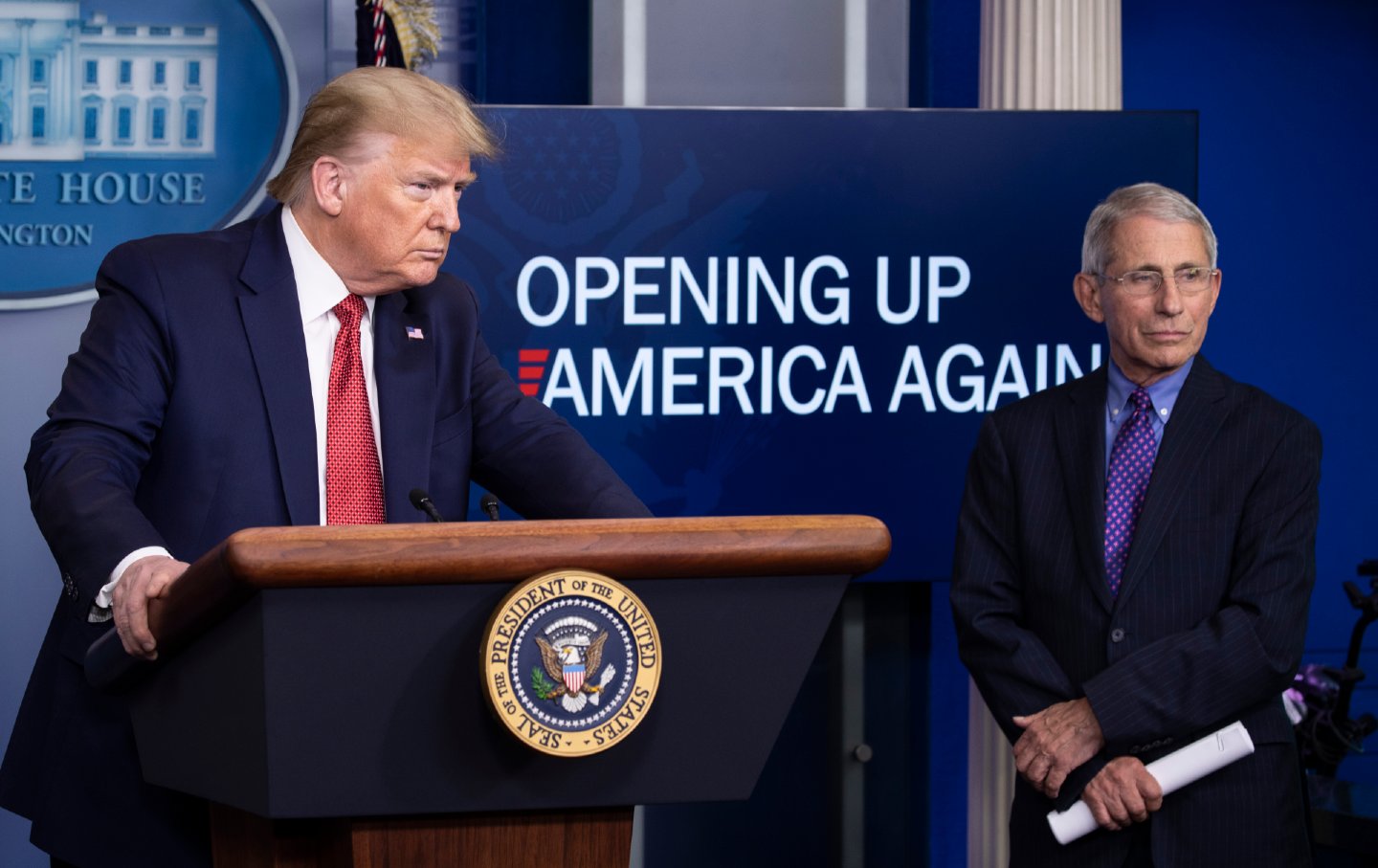
The myth of American exceptionalism drives me to distraction.  Almost every nation sees itself as exceptional in some ways and history is littered with former empires and so-called great powers that disappeared or seen their glory days fade away.  Now, in the age of a worldwide pandemic, America has shown itself to be exceptional in the worse way possible: the pandemic is out of control in many states and Americans are banned from traveling to most parts of the world. Europe, Canada, Mexico, most of the Caribbean region, including the Bahamas, will not allow Americans to visit.  America finds itself somewhere between a laughing stock and an object of pity.  How did this happen?  One word - actually, one name - explains it all: Trump.  A column in the New York Times compares the US response to that of Italy, a country often viewed by many as dysfunctional, especially its bureaucracy, and the comparison is damning.   Of course, besides Trump, America has another huge negative working against it: the fake news outlets of the far right and "conservatives" who reject science and knowledge and blindly support the con-artist in the White House.  Here are column highlights:

A few days ago The Times published a long, damning article about how the Trump administration managed to fail so completely in responding to the coronavirus. Much of the content confirmed what anyone following the debacle suspected. One thing I didn’t see coming, however, was the apparently central role played by Italy’s experience.
Italy, you see, was the first Western nation to experience a major wave of infections. Hospitals were overwhelmed; partly as a result, the initial death toll was terrible. Yet cases peaked after a few weeks and began a steep decline. And White House officials were seemingly confident that America would follow a similar track.
We didn’t. U.S. cases plateaued for a couple of months, then began rising rapidly. Death rates followed with a lag. At this point we can only look longingly at Italy’s success in containing the coronavirus: Restaurants and cafes are open, albeit with restrictions, much of normal life has resumed, yet Italy’s current death rate is less than a 10th of America’s.
Donald Trump keeps boasting that we’ve had the best coronavirus response in the world, and some credulous supporters may actually believe him, my guess is that many people are aware that our handling of the virus has fallen tragically short compared with, say, that of Germany. It may not seem surprising, however, that German discipline and competence have paid off (although we used to think that we were better prepared than anyone else to deal with a pandemic). But how can America be doing so much worse than Italy?
For all its problems, Italy is a serious and sophisticated country, not a comic-opera stage set. Still, Italy entered this pandemic with major disadvantages compared with the United States.
Unfavorable demography and economic troubles are also major Italian disadvantages. The ratio of seniors to working-age adults is the highest in the Western world. Italy’s growth record is deeply disappointing: Per capita G.D.P. has stagnated for two decades.
When it came to dealing with Covid-19, however, all these Italian disadvantages were outweighed by one huge advantage: Italy wasn’t burdened with America’s disastrous leadership.
Italy quickly moved to do what was necessary to deal with the coronavirus. It instituted a very severe lockdown, and kept to it. Government aid helped sustain workers and businesses through the lockdown. The safety net had holes in it, but top officials tried to make it work; in a supreme case of non-Trumpism, the prime minister even apologized for delays in aid.
And, crucially, Italy crushed the curve: It kept the lockdown in place until cases were relatively few, and it was cautious about reopening.
America could have followed the same path. . . . But the Trump administration and its allies pushed for rapid reopening, ignoring warnings from epidemiologists. Because we didn’t do what Italy did, we didn’t crush the curve; quite the opposite. Matters were made worse by pathological opposition to things like wearing masks, the way even obvious precautions became battlegrounds in the culture wars.
So cases and then deaths surged. Even the promised economic payoff from rapid, what-me-worry reopening was a mirage
Incredibly, Trump and his allies seem to have given no thought at all about what to do if the overwhelming view of experts was right, and their gamble on ignoring the coronavirus didn’t pan out. A miraculous boom was Plan A; there was no Plan B.
[T]ens of millions of workers are about to lose crucial unemployment benefits, and Republicans haven’t even settled on a bad response. On Wednesday Senate Republicans floated the idea of reducing supplemental benefits from $600 a week to just $100, which would spell disaster for many families.
For someone like Trump, all this must be humiliating — or would be if anyone dared tell him about it. After three and a half years of Making America Great Again, we’ve become a pathetic figure on the world stage, a cautionary tale about pride going before a fall.
These days Americans can only envy Italy’s success in weathering the coronavirus, its rapid return to a kind of normalcy that is a distant dream in a nation that used to congratulate itself for its can-do culture. Italy is often referred to as “the sick man of Europe”; what does that make us?

Tuesday, February 25, 2020

CDC: Officials Warn Coronavirus Outbreaks Likely in the U.S.

A woman in Milan, Italy where a coronavirus outbreak has occurred.
While Donald Trump and his sycophants are ignoring the advise of experts and saying that the coronavirus has been contained and that no outbreaks are likely in the USA, medical experts are telling a very different story.  Indeed, some are saying that Americans need to be prepared for major disruptions with schools closed, businesses shut down, and potentially areas quarantined.  From its huge drop over the last two days - roughly 1900 points - the stock market is believing the medical experts and not the liar-in-chief in the White House.  Just as disturbing is the reality that the Trump/Pence regime has been cutting funding to the CDC and eliminating health officials who speak the truth based on scientific fact and knowledge during the regime's misrule.  A piece in the New York Times looks at what medical experts are saying in contrast to the lies of the Trump/Pence regime.  Here are article excerpts:
Federal health officials starkly warned on Tuesday that the new coronavirus will almost certainly spread in the United States, and that hospitals, businesses and schools should begin making preparations.
“It’s not so much of a question of if this will happen anymore but rather more of a question of exactly when this will happen,” Dr. Nancy Messonnier, director of the National Center for Immunization and Respiratory Diseases, said in a news briefing.
She said that cities and towns should plan for “social distancing measures,” like dividing school classes into smaller groups of students or closing schools altogether. Meetings and conferences may have to be canceled, she said. Businesses should arrange for employees to work from home.
“We are asking the American public to work with us to prepare, in the expectation that this could be bad,” Dr. Messonnier said.
Shortly after the news conference, stock markets plummeted for the second day as investors dumped stocks and turned to the safety of government bonds. The S&P 500 fell by more than 3 percent, following a 3.4 percent slide on Monday — the worst day for the American markets since February 2018.
In contrast to his own health officials, President Trump, traveling in India, played down the threat, saying, “You may ask about the coronavirus, which is very well under control in our country.”
[G]iven the outbreaks in more than two dozen countries, officials at the C.D.C. seemed convinced that the virus’s spread in the United States was inevitable, although they did not know whether the impact would be mild or severe.
“We cannot hermetically seal off the United States to a virus,” Alex M. Azar II, the secretary of health and human services, told a Senate panel on Tuesday. “And we need to be realistic about that.”
Globally, public health officials are confronting a multipronged threat. China’s battle to contain the epidemic has shown signs of success, with a plunge in the rate of new infections.
But this has been overshadowed by new clusters of infections in Iran, South Korea and Italy. The emergence of these new hubs underscored the lack of a coordinated global strategy to combat the coronavirus, which has infected nearly 80,000 people in 37 countries, causing at least 2,600 deaths.
In Iran, a spike in coronavirus infections — including to the top health official in charge of fighting the disease — has prompted fears the contagion may spread throughout the Middle East. In Italy, one of Europe’s largest economies, officials are struggling to prevent the epidemic from paralyzing the commercial center of Milan.
[L]awmakers from both the Democratic and the Republican parties grilled Mr. Azar and other members of the administration at the Senate hearing, apparently unconvinced that the Trump administration was prepared for the outbreak that the C.D.C. is forecasting.
Senator John Kennedy, Republican of Louisiana, grew exasperated when the acting secretary of the Department of Homeland Security, Chad F. Wolf, could not say how many people were expected to become infected.
Senator Patty Murray, Democrat of Washington, asked the health secretary whether he thought the United States currently had enough health masks in stock.
Hospital officials were assuming the efforts to contain the virus would delay, not prevent, a pandemic — sustained transmission of the coronavirus on more than one continent.
“We are really staging it, from a minor issue of small numbers of patients, to a full-blown community spread,” said Dr. Mark Jarrett, the chief quality officer at Northwell Health, which operates 23 hospitals on Long Island and elsewhere in New York.
Hospital administrators nationwide anticipate a wave of patients that could strain their intensive care units and isolation rooms. Many are starting to conserve medical supplies, including specialized masks and ventilators.
W.H.O. officials have also warned that the world is unprepared for a leap in infections, which could overwhelm medical resources in many countries. They also cautioned that new cases could suddenly resurge in China, as the government struggles to get people back to work.
And there are persistent doubts about the accuracy of infection figures reported by the Chinese government, raising the possibility that the true magnitude of the outbreak remains under reported.   

Saturday, March 30, 2019

After Brexit, Other European Countries Say: No Thanks


Across Europe right wing political factions have played the nationalist and racist, anti-immigrant card that motivated many pro-Brexit voters in the United Kingdom - and, of course, Trump voters in the USA - to build their own followings and to argue against remaining in the European Union.  Now, witnessing the UK's self-inflicted political and economic catastrophe, many of those elements are quickly saying "no thank you" to what they had heretofore clamored for.  Suddenly, the reality of the consequences of savoring and fanning racial hatred and resentment have served as a bucket of ice water on ugly motivations.  Would that Trump supporters would learn form their own idiocy who continue to back a narcissistic megalomaniac who wants to slash the healthcare and social programs many of these toxic individuals rely upon.  A piece in the Washington Post looks at reality crashing down on ultra-nationalists and far right elements across Europe.  Here are excerpts:  
Just three years ago, in country after European country, populist politicians were drawing up plans to follow Britain out the door. The French nationalist party leader spoke of a Frexit. The Dutch far-right leader wanted a vote on Nexit. Some politicians predicted a secessionist contagion. Might there be a Swexit? A Czech-out? An Italeave?
“Now it’s our turn,” the leader of Italy’s ascendant far right, Matteo Salvini, said at the time about exiting the European Union.
But the 2016 Brexit vote has spawned no copycats. Nor did it lead to the crackup of the E.U. Even the most ardent Brussels-bashing politicians have concluded it is better to stick with the bloc than endure a messy, years-long divorce.
On Friday, the day Britain was supposed to leave the E.U. and “take back control,” the British Parliament was still fighting over how and whether to leave. Lawmakers rejected, for the third time, the withdrawal deal negotiated between Prime Minister Theresa May and E.U. leaders. The pound fell on fears that Britain will abruptly crash out of the bloc on April 12, with massive disruptions to trade and travel.
Even if Britain manages an orderly departure, economic forecasters say Brexit could dampen growth for years. And the political and social divisions between “leavers” and “remainers” may persist.
Watching all this, the continent’s influential Euroskeptic parties — from Scandinavia to the Mediterranean — have recast their message. They have dropped calls to leave the E.U. and are instead advocating for the less drastic approach of changing the bloc from within. The European political scene has scarcely a party remaining advocating for a Brexit-style departure.
“The agony of Britain in the last two years has clearly been a subtext for ‘Let’s try to make this thing work’ ” within Europe.
The shift does not mean that the E.U. has averted turmoil or that Europe’s political insurgents are happy with the status quo. . . . Those populists want to decentralize power within the E.U. and are hoping to use European parliamentary elections in May to expand their influence and carry out their ideas.
But even as Europeans find reason to grumble about the bloc, voters do not seem to have the appetite for an irrevocable split. In fact, some have grown fonder of the European Union.
The E.U.’s approval rating increased sharply in 2017 as Britain began to debate the terms of its exit. A new Pew Research Center survey of 10 European nations shows that 62 percent of people hold a favorable view of the E.U.
separate poll from last year showed that 67 percent of Europeans believed their country benefited from E.U. membership — the highest figure in 35 years.
“You had the Brexit referendum. Also the Trump election,” said Stefan Lehne, a visiting scholar at Carnegie Europe in Brussels. “It created a lot of fear and uncertainty, and the response [from Europeans] was, we want the known over the unknown.”
The reasons to stick with Europe go beyond a distaste for Brexit redux. A significant number of Europeans, even those who support Euroskeptic parties, appreciate the freedom of movement allowed by E.U. rules and the ability to live in other countries. They also like the outsize influence of the unified bloc, which makes it easier for countries to contend with China and the United States.
For now, some parties have simply dropped exit-the-E.U. plans from their platforms.
[I]n Italy where the evolution of the populist message on Europe is perhaps most stark. The country’s government is composed of two Euroskeptic parties that cheered Britain’s Brexit vote when it happened. Now, those parties say it would be inconceivable to follow suit.
As messy as Brexit has been, the exit process could be even more turbulent for a euro-zone nation that would have to contend with not only customs and border headaches but also the introduction of a new currency — or the return to an old one.
Marta Grande, a Five Star member who heads a parliamentary committee on foreign affairs, said that within her party, views on Europe were all over the map several years ago. But those views have gradually converged on the idea that the European Union needs to be criticized constructively and improved. She acknowledged that politicians in Italy continued to cast blame at Brussels but said, “People don’t want to leave the E.U.”
Analysts say that insurgent parties across Europe hope to curtail E.U. power over budget-making and bring their hard-line migration ideas to Brussels.  But the elections are a referendum on the strength of the union — not on whether the union should exist.

Thursday, January 24, 2019

Setting the Stage for a Possible Global Recession.

Racism and greed were, in my view, the main motivations for those who voted for Trump in 2016.  The racists were the angry whites fearful of lost white privilege while never looking in the mirror to see their own role in the plight.  The other group was comprised of the very wealthy and others of a similar mindset who want to horde their money and never contribute to the best interests of the nation.  Now, thanks to the actions of Der Trumpenführer - trade wars, tax cuts ballooning the federal deficit, and the government shutdown - , actions  of like minded anti-immigrant racists in the UK and other parts of Europe, and China's structural economic problems, these same people may be about to see the start of a recession that will worsen their plights.  A column in the New York Times looks at the potentially coming Trump/GOP recession.  Here are highlights: 
The last global economic crisis, for all its complex detail, had one big, simple cause: A huge housing and debt bubble had emerged in both the United States and Europe, and it took the world economy down when it deflated. 
[The slump] in 1990-91, was a messier story. It was a smorgasbord recession — a downturn with multiple causes, . . . . The best guess is that the next downturn will similarly involve a mix of troubles, rather than one big thing. And over the past few months we’ve started to see how it could happen. It’s by no means certain that a recession is looming, but some of our fears are beginning to come true. Right now, I see four distinct threats to the world economy. (I may be missing others.)
China: Many people, myself included, have been predicting a Chinese crisis for a long time — but it has kept not happening. China’s economy is deeply unbalanced, with too much investment and too little consumer spending; but time and again the government has been able to steer away from the cliff by ramping up construction and ordering banks to make credit ultra-easy.
But has the day of reckoning finally arrived? Given China’s past resilience, it’s hard to feel confident. Still, recent data on Chinese manufacturing look grim.
And trouble in China would have worldwide repercussions. We tend to think of China only as an export juggernaut, but it’s also a huge buyer of goods, especially commodities like soybeans and oil; U.S. farmers and energy producers will be very unhappy if the Chinese economy stalls.
Europe: For some years Europe’s underlying economic weakness, due to an aging population and Germany’s obsession with running budget surpluses, was masked by recovery from the euro crisis. But the run of good luck seems to be coming to an end, with the uncertainty surrounding Brexit and Italy’s slow-motion crisis undermining confidence; as with China, recent data are ugly.
And like China, Europe is a big player in the world economy, so its stumbles will spill over to everyone, the U.S. very much included. Trade war: Over the past few decades, businesses around the world invested vast sums based on the belief that old-fashioned protectionism was a thing of the past. But Donald Trump hasn’t just imposed high tariffs, he’s demonstrated a willingness to violate the spirit, if not the letter, of existing trade agreements. . . . . For now, corporate leaders reportedly believe that things won’t get out of hand, that the U.S. and China in particular will reach a deal. But this sentiment could turn suddenly if and when business realizes that the hard-liners still seem to be calling the shots.
 The shutdown: It’s not just the federal workers not getting paid. It’s also the contractors, who will never get reimbursed for their losses, the food stamp recipients who will be cut off if the stalemate goes on, and more. Conventional estimates of the cost of the shutdown are almost surely too low, because they don’t take account of the disruption a non-functioning government will impose on every aspect of life.
As in the case of a trade war, business leaders reportedly believe that the shutdown will soon be resolved. But what will happen to investment and hiring if and when corporate America concludes that Trump has boxed himself in, and that this could go on for many months?
So there are multiple things going wrong, all of which threaten the economy. How bad will it be?
The good news is that even taking all these negatives together, they don’t come close to the body blow the world economy took from the 2008 financial crisis. The bad news is that it’s not clear what policymakers can or will do to respond when things go wrong.
Monetary policy ­— that is, interest rate cuts by the Federal Reserve and its counterparts abroad — is normally the first line of defense against recession. But the Fed has very limited room to cut, because interest rates are already low, and in Europe, where rates are negative, there’s no room at all.
Fiscal policy — temporary hikes in government spending and aid to vulnerable workers — is the usual backup to monetary easing. But would a president who’s holding federal workers hostage in pursuit of a pointless wall be willing to enact a sensible stimulus?
Finally, dealing effectively with any kind of global slump requires a lot of international cooperation. How plausible is that given who’s currently in charge?
Again, I’m not saying that a global recession is necessarily about to happen. But the risks are clearly rising: The conditions for such a slump are now in place, in a way they weren’t even a few months ago.

Thursday, August 18, 2016

Is Vladimir Putin playing Trump?


Many in America's foreign policy and national security agencies have expressed alarm over the apparent bromance between Donald Trump.  Many fear that either Putin is playing Trump for a fool - one hears constant concern over his ignorance in foreign affairs and disinclination to educate himself, always claiming to know everything.  Now, a piece in Politico looks at parallels between the Trump-Putin relationship and that of former Italian prime minister Silvio Berlusconi who ultimately left office amidst numerous scandals.  As the piece noted, many believed that Berlusconi had personal financial benefit from his ties to Putin.  With rumored Russian money propping up Trump's business empire, one needs to wonder whether Trump would sell out America and its allies to further enrich himself.  Here are article excerpts:
In January 2009, the U.S. ambassador in Rome cabled Washington to raise an alarm. Russian President Vladimir Putin, the diplomat wrote, had cultivated a troubling relationship with the country’s prime minister, Silvio Berlusconi.
“Berlusconi admires Putin’s macho, decisive, and authoritarian governing style, which the Italian PM believes matches his own,” wrote the ambassador, Ronald P. Spogli. “From the Russian side, it appears that Putin has devoted much energy to developing Berlusconi’s trust.“
The ambassador noted with concern that the brash Italian billionaire, who was driven from office by scandal in 2011, was openly challenging U.S. policy toward Russia and echoing Putin’s views on issues from NATO expansion to Kosovo to missile defense.

And he shared reports from opposition party contacts of a more “nefarious” factor: talk that “Berlusconi and his cronies are profiting personally and handsomely” from business ties to Russia.
Seven years after that cable, disclosed by WikiLeaks, the Berlusconi-Putin bromance has acquired a new resonance, as foreign policy analysts and even some U.S. officials see unsettling echoes in the recent long-distance kinship between the Russian leader and Donald J. Trump.
It may even suggest that Putin is applying a specific method to the GOP nominee. In recent years Putin has befriended several major Western European politicians, including former leaders of France and Germany, who openly challenge U.S. and European policies toward Russia, including NATO’s buildup in Eastern Europe and economic sanctions punishing Putin’s annexation of Crimea from Ukraine.
But Trump is most frequently compared to the 79-year-old Berlusconi. Both men are wealthy populists known for their expensive tastes, outrageous rhetoric, relationships with women and all-around showmanship. Like Berlusconi, Trump has demonstrated an unusual affinity for Putin — along with notable dissent from confrontational U.S. and Western European policies toward Russia.

To some, however, it hints at something more.
“The parallels with Trump are a little too disturbing,” says a U.S. government analyst who closely tracked Russia’s relationship with Europe when Berlusconi was in office. “Putin is very strategic. He would focus on people’s vulnerabilities — whether their vanity or greed or financial needs.”
That view echoes the analysis of former deputy CIA director Michael Morell, who recently wrote in The New York Times that Putin, drawing from his background as an intelligence officer, had made a “calculated” overture to Trump early in the presidential campaign, “playing upon Mr. Trump’s vulnerabilities by complimenting him,” and turning Trump into an “unwitting agent” of Russia.
Though Trump, in recent interviews, has downplayed his affinity for Putin, the Republican nominee has also taken several policy positions that echo the Kremlin line. He has questioned the relevance of the 67-year-old NATO alliance, called for U.S.-Russian cooperation against the Islamic State, and questioned U.S. and European sanctions imposed on Moscow after Putin’s forcible March 2014 annexation of Ukraine’s Crimean peninsula.
Trump’s relationship with Putin — whom Trump says he’s never even met — remains embryonic compared to the extraordinary kinship between the Russian leader and his Italian chum.
As the January 2009 cable noted, the officials also suspected that illicit money might be fueling the friendship. One October 2008 U.S. cable from Rome noted that “many (including his own party officials) suspect [Berlusconi] has a personally and financially enriching relationship” with Putin’s oligarch allies.
In recent weeks, allies of Hillary Clinton have fanned rumors and speculative press reports suggesting that Russian investments in Trump business ventures have influenced his views. Trump and his son Donald Jr. have made numerous trips to Russia exploring business deals there, and in 2008 Donald Jr. told an audience that Russian money makes up a “disproportionate share” of the family company’s assets. Trump has denied having financial ties to Russia, though his refusal to release his tax returns makes that impossible to verify.

Thursday, May 12, 2016

Italy Passes Civil Union Law, Joins Rest of Modern World


The Roman Catholic Church suffered another huge defeat in a country that has been a bastion of Catholicism as Italy enacted a civil unions law granting same sex couples largely all marriage rights except in name.  As elsewhere, the Church has been a defender of anti-LGBT bigotry and discrimination even as the clerical sex abuse scandal continues around the world, especially in Australia currently, and shows that in the Church fathers view, the abuse of children and youths was akin to a droit de seigneur for supposedly celibate priests.   And it goes without saying, Pope Francis' alleged tribunal to punish bishops and cardinals who aided and abetted such abuse still has done nothing, and in my view, likely never will.  The Advocate looks at this historic progress in Italy. Here are highlights:
Italy’s Parliament today gave final approval to a bill establishing civil unions for same-sex couples, a vote that came over the objections of the Roman Catholic Church and after years of activism by LGBT rights groups.
The Chamber of Deputies, the lower house of Parliament, passed the bill by a vote of 371-51, with 99 members abstaining, The New York Times reports. The Senate had approved it in February. President Sergio Mattarella has a month to sign it into law, but this “is usually a formality,” the Times notes.
With most Western countries having already established marriage equality or some other form of relationship recognition for same-sex couples, “Italy was perhaps the most prominent exception,” the Times reports. Legal recognition for same-sex unions was first proposed 30 years ago, and the delay in enacting it was due in large part to the church’s influence, as its headquarters, the self-governing Vatican City, is contained within Italy’s capital city, Rome. Pope Francis, although more liberal than his predecessors in some regards, had spoken out against the civil unions bill, saying in January, “There can be no confusion between the family God wants and any other type of union.”
But the legislation had the support of Prime Minister Matteo Renzi, whose government received a vote of confidence in the House of Deputies today, and he had advised the church to stay out of the civil unions debate. Also, the European Court of Human Rights ruled last year that Italy was violating citizens’ civil rights by not recognizing same-sex unions. The ruling did not force Italy to enact such recognition but did put pressure on the government.
The vote in the Chamber of Deputies received extensive applause, and activists celebrated by rallying at Rome’s Trevi Fountain, the Times reports. Advocates expressed satisfaction. “The wall erected mostly by the Vatican against civil rights in this country has fallen, so it is a historically and politically important moment,” Franco Grillini, the honorary president of LGBT rights group Arcigay, told the paper.
Some activists, though, noted that the new law falls short — civil unions are not marriage, and the law does not allow same-sex partners to adopt each other’s biological children. An adoption provision had to be deleted from the legislation to assure its passage.
“This law is born as an old law, that should have been voted 20 years ago,” liberal politician Michela Marzano told the Times, adding, “Italy remains a culturally backward country where the only possible family” is a traditional, heterosexual one. “It prefers to penalize children rather than recognize the multifaceted families that already exist.”

"Conservative" religious belief, be it Christian or Muslim, remains the main bulwark for ignorance and bigotry.  Such beliefs have no place in the civil of modern nations.  Believers are free to cling to ignorance if they choose, but they do not get to force it on the rest of the populace.  Hopefully, they will become mmore and more politically and socially ostracized over time.  

Thursday, February 25, 2016

Italy's Senate Approves Same-Sex Civil Unions


In another major defeat for the Roman Catholic Church, the Italian Senate passed a a bill that would put in place civil unions for same sex couples.  While gay adoption provisions were stripped out of the final bill, much to the dissatisfaction of LGBT advocate, the bill does bring Italy finally in line with other developed western nations.  True, it is not marriage equality, but it is progress and a huge defeat for the Catholic Church.  Here are highlights from The Advocate:

Italian Prime Minister Matteo Renzi's political gamble paid off today, with his nation's senate voting overwhelmingly to approve a bill to legalize non-religious civil unions for gay and lesbian couples. After being held up for weeks in the country's upper house of parliament due to heated controversy over a provision that would allow for one partner to adopt the biological child of the other, the bill will now head to the lower house—stripped of the adoption clause—where its passage is expected to be easy.

Renzi has made it a personal mission to bring his country into alignment with the rest of Western Europe—Italy is the only major country without any legal recognition or protections for same-sex couples, let alone marriage equality. In an attempt to force the bill's passage, he called a confidence vote in his leadership and his legislative agenda today. Had the motion failed, he would have been forced to resign. The vote was successful, passing by a margin of 173:71, an outcome that Renzi has hailed as "historic." 

Gay rights activists, however, have described the bill as a betrayal, according to the BBC. Renzi had long insisted that the provision for gay adoption remain included. His unwillingness to back down on the issue is why the bill stalled in the senate for so long. However, after Italy's highest court refused yesterday to recognize a gay partner adoption performed in the United States, Renzi decided to move ahead with a version of the motion stripped of the controversial adoption provision. 

Flavio Romani, president of the LGBT rights group Arcigay, told Reuters:
"This text once again does not take into consideration children who need definite laws and protection. The law that has come out of all this is lacking its heart."

Monday, January 25, 2016

Italy’s Gay Rights Showdown with the Vatican

For all those in the LGBT community who nearly had the vapors over Pope Francis' supposedly kinder and more accepting approach to LGBT individuals, look no farther than Italy to see the Catholic Church's real attitude towards gays.  With the Italian parliament now considering same sex partnership legislation, the Church is fighting tooth and claw to oppose any legislation that would grant gays increased rights.  Events in Italy mirror the Church's anti-gay efforts in Slovenia and across the globe where  keeping LGBT individuals third class citizens - or less - is a Church priority even as the cover up of sex crimes against children and youths continues. Meanwhile, Italy now finds itself as the last western European nation where religion still trumps equality under the civil laws.  A piece in The Daily Beast looks at the contest in Italy.  Here are excerpts:

ROME — Same-sex couples in Italy might as well be invisible. They cannot adopt children. They cannot inherit pensions or share state-funded benefits. They are not recognized as legal couples for the purpose of tax breaks. They cannot even visit each other if one partner is in the intensive care unit, or on his or her death bed, in a public hospital, no matter how long they may have been together even if they were married legally in another country. But all that may soon change. 
Italy is the last major European nation with a complete blind spot when it comes to recognizing same-sex couples as legal partners. Last June, the European Court of Human Rights ruled that Italy was in “breach of human rights” because it offered no option that would allow same-sex partners to share the same benefits as straight partners, specifically citing adoption, shared pension benefits, and tax breaks as key rights that are missing. 

On Jan. 28, Italy’s Senate will start debating the so-called Cirinna law, named after Monica Cirinna, the senator from Prime Minister Matteo Renzi’s center-left Democratic Party who officially introduced the bill last October. 

Renzi has made the recognition of civil unions a priority in his premiership and vows to pass the bill into law. “We can hardly think we can go to Europe beating our drum about immigration or the deficit limit, and then be last in the line when it comes to human rights," Cirinna told Reuters last week. "But we live under the shadow of the Vatican dome and Catholicism here is different than in other countries. It is a presence."

[T]he bill is simply about allowing same-sex couples the right to be recognized the same way non-married straight couples are, as a “social formation” or life-long partnership that isn’t bound by a marriage certificate, much as France has done with its PACS (civil solidarity pacts) for more than 15 years.  

One reason it has taken so long to get such a bill to a vote is because of the need to determine what exactly to call the same-sex unions to avoid any connotation of marriage. Meanwhile, naysayers have threatened to tack on thousands of amendments. The right-wing Nuovo Centro Destra or New Center Right party run by Angelino Alfano, Silvio Berlusconi’s former wingman, has had considerable success delaying the bill’s progress. 
 
Alfano, who recently said the use of surrogate mothers should be treated as a sex crime, is not-so-subtly backed by several high ranking Catholic cardinals, who have managed to keep this law out of parliament for years.

Late last year at the Vatican’s Synod on the Family under Pope Francis, those in attendance agreed that while gays are welcome in the Church pews, they will never be allowed to walk down the aisle. 
“Regarding proposals to place unions of homosexual persons on the same level as marriage, there are absolutely no grounds for considering homosexual unions to be in any way similar or even remotely analogous to God’s plan for marriage and family” the synod fathers wrote in their final document.
 
On Saturday, a coalition of gay-rights groups held demonstrations in more than 80 public squares across Italy under the banner “Svegliati Italia,” or “Wake up Italy.” Anyone attending was asked to bring alarm clocks and timers as props to make the wake-up point. 

“The law, if passed, will change the lives of many gay and lesbian people, and especially their children, whose lives it will undoubtedly improve,” says Arcigay’s Piazzoni. “We need to give people back their dignity to remind our government that their objective at hand is to ensure equality for all, a goal that so far remains elusive.” 

But not to be outdone, Italy’s Catholic bishops are holding their own demonstration on Jan. 30 under the banner “Family Day” . . .
The bill debate kicks off on Jan. 28, and, barring unforeseen delays, could come to a vote within a week. If it passes in any form, which it surely should, it will be seen as a major defeat to the conservatives of the Catholic church. And even if it passes as just a shell of its original incarnation, it will be seen as a worthy compromise by many in the LGTB community—a necessary first step toward equality for all. 

Tuesday, October 20, 2015

Italy Poised to Pass Gay Unions Bill


In yet another example of the waning influence of the Roman Catholic Church in educated parts of the world, Italy is at long last on the verge of passing a gay unions bill akin to the German model that would give same sex couples the rights of marriage without the formal title of marriage.  Up until now, the Catholic Church has always managed to kill such legislation.  As The Local.it reports, with church attendance dwindling and some seeing Pope Francis as ushering a more conciliatory tone, it appears that this time the Church's efforts to thwart modernity and equality will fail.  Here are article highlights:
Two days after Italy’s Senate voted to curtail its powers, premier Matteo Renzi swiftly got to work on the next cornerstone of his mandate: the civil union bill.

With Italy being the last major state in western Europe not to offer gay couples any legal rights, Renzi is under mounting pressure to usher the law in, pledging several times to get it passed by the end of the year.

Soon after the debate got underway came the opposing voice of the Catholic Church, with Nunzio Galentino, the secretary general of the Italian bishops conference, saying it was unthinkable that a government would put so much of its energy into a debate that would erode traditional family values.
But with the majority of Italy’s opposition parties, including Silvio Berlusconi’s Forza Italia, supporting the proposals, it doesn’t look as if Galentino’s words will carry much weight in the latest debate.

The Church’s influence on Italian politics has managed to derail attempts by previous administrations to get the law enacted, and while it still plays a strong role in Italy, its influence over the gay rights debate seems to be diminishing.

"It’s not like 30 years ago,” Paolo Segatti, a political sociology professor at the University of Milan, told The Local.

“There are fewer practising Catholics in Italy...this decline has been happening for some time. The Church’s influence is now very small, so I don’t think it will be able to block this.”

The bill, which is based on the German model, stops short of allowing gay marriage but would recognize same-sex unions. Gay couples would also get some of the benefits of marriage, such as being able to receive part of a deceased partner's pension and automatic inheritance.

The most contentious part, which is fiercely opposed by Renzi’s smaller coalition partner, the New Centre Right ()NCD party, is the proposal to allow a gay person to adopt the child of their partner if it only has one legal parent.

[R]ecent opinion polls have indicated a majority of voters favour reform, with support for civil unions and gay marriage having risen significantly after Ireland voted strongly in favour of allowing same sex couples to wed.

If the Church loses this battle after having received a stunning rebuke in Ireland, it will have lost in the last historical bastion of Catholicism.  Pope Francis and the bitter old men in dresses at the Vatican truly need to decide whether the Church will change with the times and modern knowledge or opt instead to become a much smaller, Africa based denomination.  If they choose the latter, much of the money that flows in primarily from the west may decline even further.  Bigotry does have a monetary price. 

Sunday, May 24, 2015

Ireland Approves Same Sex Marriage by Wide Margin


Friday's vote on same sex marriage in Ireland saw more than 60% of voters voting "Yes" to approve same sex marriage.  Less than 38% voted "No" and the opponents appear to have had a majority in only one county.  The results of the referendum are a sharp rebuke to the Roman Catholic Church which seemingly is in a death spiral in terms of its influence and ability to control public opinion.  There are many factors to the Church's decline and the shift in public opinion, but the aftermath of the sex abuse scandal and complicity of the Church hierarchy in it and a populace which is becoming far more educated with independent access to information.  Education and easy access to information and knowledge are religion's true worse enemies.  

I do not believe that the rights of any minority should be put to public referendum, as a piece in The Economist correctly notes:
The idea that the majority can legitimise the right of a minority is fundamentally flawed. In the words of Ayn Rand, the Russian-American novelist, “individual rights are not subject to a public vote; a majority has no right to vote away the rights of a minority; the political function of rights is precisely to protect minorities from oppression by majorities.”

There are plenty of examples on how popular votes could have catastrophic impacts in societies if they were to be sought on minority matters. The obvious example is the issue of marriage between white and non-white people in the US.
That said, the vote does have that attraction of making it difficult for lying blowhards like Brian Brown of the National Organization for Marriage to claim that "redefining marriage" was forced upon the public.  Moreover, if Ireland, a one time bastion of Catholicism, can move to support marriage equality, other nations may be more inclined to follow suit.  The New York Times summarized the outcome well:
The opposition, aided by some Catholic bishops who campaigned for No votes, peddled the hollow arguments that have same-sex marriage opponents around the world on a losing streak. They warned that legalizing same-sex marriage would undermine unions between a man and a woman and argued that marriage has an inherently reproductive purpose.

In a statement conceding defeat, the Iona Institute, the main opposition group, said it would continue to affirm “the importance of biological ties and of motherhood and fatherhood.” The absurdity of that statement speaks for itself.

As soon as the referendum is ratified by Parliament, Ireland will join 19 nations that have legalized same-sex marriage — an honor roll that does not include the United States.
Here are highlights from BuzzFeed on the potential wider implications of the historic vote:
When historians write about the global LGBT rights movement, they will probably divide their timeline into “Before Ireland” and “After Ireland.”

Not only did the vote held Friday make Ireland the first country in the world to enact marriage equality by popular vote, but the Yes side crushed the No side by a margin of 25 points. The Yes campaign won with a message that was about far more than the rights of gays and lesbians, asking voters to cast their ballot for “a fairer Ireland” and “because marriage matters.” They succeeded in making it a referendum on what kind of country voters — the vast majority of whom are straight — wanted to live in, and they resoundingly chose one where gay and lesbian couples are part of Irish families just like straight couples are.

Ireland can be the game changer,” said Mauricio Albarracín, head of the Colombian LGBT rights group Colombia Diversa and a lawyer who has worked on marriage equality litigation scheduled to soon be argued before Colombia’s Constitutional Court. The vote, he said in a phone interview with BuzzFeed News, shows that “the historic tendency is support of marriage equality.”

What’s more, conservative activists agree at least in part, telling BuzzFeed News that this vote shows that their strongest arguments against marriage equality have lost their impact in key parts of the world.

“We’re losing the marriage battles — that’s the truth, especially in Western Europe,” said Ignacio Arsuaga, a Spanish activist who founded a global online campaign platform called CitizenGo. (Its board includes Brian Brown of the United States’s National Organization for Marriage.) “Our arguments are not reaching the majority of society. The majority of society just think in the terms that were promoted by the gay lobby: ‘This is a question of rights …and marriage is a human right.”

The vote was a “powerful clarion call” to decision makers around the world, said Evan Wolfson of the U.S. organization Freedom To Marry, which has been advising marriage equality efforts in several other countries. “The resounding affirmation of the freedom to marry across every demographic [in Ireland] … adds to the global momentum we have all created.”

This may have a special significance in countries like Italy. Now that Ireland has marriage equality, Italy is the only Western European country without any partnership rights for same-sex couples despite multiple court orders calling on parliament to create them.

The fact that Ireland is “considered one of the most Catholic countries in the region, makes this [vote] a very meaningful and historic step for Ireland itself and for the region,” he said. “In the past, when a pop vote was called on the rights of a minority, the minority lost,” he said. “The majority decided the minority’s rights had to be granted, and that was a huge step.”
Friday's vote was historic for many reasons.  The message to the Catholic Church and other anti-gay churches is that the times are changing and either they drop their 13th century "natural law" arguments and embrace modern knowledge and science or run the risk of either becoming extinct themselves or, in the case of the Catholic Church, becoming a black, Africa based church.  Part of me hopes these denominations opt for eventual extinction.

Tuesday, November 25, 2014

Immigration Is Not Just and American Issue


Following the American news media, one would often think that America is the only nation where a surge of immigrants seeking a better life is a problem for the citizenry and governmental services.  As a piece in the New York Times makes clear, its truly a northern western hemisphere problem.  What drives it?  Ultimately, repressive religious regimes that generally overlap with corrupt and dysfunctional governments that seem either indifferent to or incapable of providing for the needs of their citizens.  In Europe, the flow of immigrants - some of whom risk their lives crossing the Mediterranean in small boats come from (i) the repressive and war torn Middle East where incompetent/utterly corrupt/undemocratic governments battle with religious extremists and (ii) Africa where corruption is rampant and now American Christofascists are helping to push religious extremism and the embrace of ignorance.  Like the USA, the countries of Europe are not ready for the influx.  Here are highlights from the New York Times piece that focuses on Italy in particular:

The depressed outskirts of Italian cities are ticking time bombs; far from the eyes of well-heeled vacationers perambulating the Colosseum, the country’s fuse is sputtering short.

An entire suburban district of Rome — Tor Sapienza — recently took to the streets to protest an influx of recent immigrants, blaming them for robberies and violence and drawing a public warning of an impending “social emergency” from Pope Francis. In the Corvetto and Giambellino neighborhoods of Milan, clashes broke out over the eviction of squatters. Rioting residents in outlying areas of Naples kicked police cars, making it clear that they have more faith in the Camorra, the local Mafia, than in officialdom.  

“What else is new?” people might wonder in France or Britain. To them, unrest in the banlieues and council estates is nothing new. Even in Italy, suburban unrest is an old story.

But what is surprising now, even to Italians, is the cause of the unrest. Half a century ago, our migrants came from the south of the country, not the south of the planet. . . . Today, hundreds of people from Africa and the Middle East risk their lives at sea to land in Sicily and Calabria. Many of them manage to find their way north. The swiftness of their arrival, and the fact that they have accumulated on the edge of the cities, are reasons for concern, if only because of how poorly Italians are prepared for them.

The new arrivals find a home — or at least shelter — on city outskirts, where they come in conflict with longtime, mostly working-class, residents. It’s a dangerous mix: Some 90 percent of Italy’s population lives in or around a city or town, and, despite the efforts of the new government, Italy is the only country in Europe still in recession. Local administrations bear much of the blame, but they inherited a dramatic situation with inadequate, and often unlicensed, buildings, decrepit infrastructure and struggling public services. 

Yet perhaps all is not lost. The edges of Italy’s towns are not beyond redemption, even if they are faded and fraying. . . . . Projects are targeted and local — repairing schools, street lighting and transportation facilities, or reclaiming desolate public spaces.

You can’t expect young people to show a spark of citizen awareness if buildings are abandoned and decaying, or recreation and sports grounds are unattractive and unsafe,” Mr. Piano pointed out. “I am convinced that beauty will save the world. Maybe one person at a time, but it will save the world.”  Beauty could start by saving Italy. After all, this is its home.
Here in America, Republicans in particular want to spend nothing on infrastructure renewal or certainly do not want to invest in poor neighborhoods - per the Christofascists' the poor deserve their fate after all - so the problem continues to fester.   Meanwhile, too many Americans wonder why immigrants don't assimilate more quickly. 

Monday, September 15, 2014

Home from Vacation - First Reflections

The Grand Canal from San Marco Square on our last night.
After an arduous trip yesterday back from Venice - we were up nearly 23 hours - which was made worse by US Airways' incompetence, we are back in Hampton and I shudder at what awaits at the office since I had extreme difficulty accessing my office e-mail while traveling.  I'd be lying if I said I was happy to be home.  If nothing else, foreign travel always highlights in my mind the many deficiencies of living in Virginia.  Going to Europe also always underscores the idiocy and unwarranted arrogance of far too many "red state" Americans, not too mention that Americans seem to be the most obese among traveling tourists.  Having some scored some great clothing purchases, one friend on the trip teased me that I was trying to look "European" - my response was why not?  With some of the "ugly Americans" to be seen, who would want to be numbered among them.

Besides reading the book "Zealot" on the trip, I also finished reading "Facing East from Indian Country," which recounts America's ugly history of lies, broken treaties, and outright genocide against America's original inhabitants.  Not surprisingly, in addition to the greed that motivated the quest to "remove" Indians from their lands, good old Christianity helped convince far too many whites that annihilating the Indians was a godly thing.  Combined with being out of the USA in generally enlightened locales, this book doesn't make one overly proud to be America.

I will get over the post-vacation funk and be posting more photos and giving further thoughts and reflections.  Here are a few photos:

An amazing room in the Dodge's Palace
The amazing Hermes by by Praxiteles in Olympia, Greece
Model of the site of the Olympic Games during Classical times
The dying Achilles - Corfu, Greece
Grand Canal near the Rialto Bridge after dinner

Sunday, September 07, 2014

Venice and Aboard the Norwegian Jade

Grand Canal

Our stay in Venice was wonderful and we saw as much of the city as one can in two days.  High points were a trip out to Murano to see the glass works via a water taxi and then a wonderful (and expensive) dinner at the Hotel Daneli's top floor terrace restaurant.  It's hard to describe the maze that Venice's canals and streets (some only four feet wide) comprise.  It's also an unusual experience being in a city where there literally are no cars.  As for the men, there are lots of drop dead gorgeous guys!

Water taxi to Murano

Murano glass factory


Boarding the Norwegian Jade went smoothly and we love our suite which is on deck 11 adjacent to the ship's officers' quarters.  Dinner in the Grand Pacific dining room was elegant and we completed the evening by attending the "Friends of Dorthy" gathering where we met some nice guys.  Today we will be at sea as we head to Corfu, our first port tomorrow.  I've posted a number of photos to give an idea of some of our experiences.