
Saturday, July 12, 2025


Why Do So Many Continue to Support Trump?

We could talk about the convictions. The 34 felonies. The $450 million in penalties. The attempted coup. The lies, the grift, the cult. But none of it cuts deeper than what so many refused to see from the beginning: The women.
E. Jean Carroll told the world that Trump raped her in a department store dressing room. A jury believed her. They didn’t call it “he said, she said.” They called it sexual abuse. Then, in a second trial, they added $83 million in defamation damages, because even after the verdict, Trump kept lying about her.
Jessica Leeds. Rachel Crooks. Natasha Stoynoff. Kristin Anderson. Jill Harth. Summer Zervos. Cathy Heller. Amy Dorris. Lisa Boyne. Temple Taggart. Karena Virginia. Mindy McGillivray. Cassandra Searles. Tasha Dixon. And dozens more. Each one accused Donald J. Trump of sexual misconduct, groping, assault, or rape. Some were contestants. Some were reporters. Some were guests at Mar-a-Lago. Their stories weren’t whispers — they were shouted. Sworn. Testified. Published. Mocked.
And America shrugged. Trump didn’t deny the behavior. He bragged about it. . . . But we kept looking away.
This isn’t just about Trump. It’s about what we tolerate. It’s about what we’re still willing to excuse — as long as the stock market stays high or the libs stay mad. If this man were your neighbor, your teacher, your boss, or your pastor, he’d be gone. But in America, if you’re powerful enough, we’ll ignore everything — even rape — if you say what we want to hear.
I like to believe that once upon a time, Americans would not have tolerated this kind of behavior or individual. Recall how Bill Clinton faced impeachment for a blow job and Republicans screamed about the importance of personal behavior and "family values." Looking back, that entire circus looks so quaint and ridiculous in the face of what we see with the Felon virtually every day, particularly now with the DOJ and FBI claiming there is no evidence of an Epstein client list. What has become of the nation's morality when millions support abject cruelty towards migrants, the construction of modern day concentration camps, and knowingly harming the poor and less fortunate, especially children. A long piece in The Atlantic tries to determine how we got to this horrible place where a sense of common morality and any sense of the importance of the common good have been lost:
There’s a question that’s been bugging me for nearly a decade. How is it that half of America looks at Donald Trump and doesn’t find him morally repellent? He lies, cheats, steals, betrays, and behaves cruelly and corruptly, and more than 70 million Americans find him, at the very least, morally acceptable. Some even see him as heroic, admirable, and wonderful. What has brought us to this state of moral numbness?
I’m going to tell you a story that represents my best explanation for how America has fallen into this depressing condition. . . . It’s a story that tries to explain how Western culture evolved to the point where millions of us—and not just Republicans and Trump supporters—have been left unable to make basic moral judgments.
The story begins a long time ago. Go back to some ancient city—say, Athens in the age of Aristotle. In that city, the question “How do you define the purpose of your life?” would make no sense. Finding your life’s purpose was not an individual choice. Rather, people grew up within a dense network of family, tribe, city, and nation. They inherited from these entities a variety of duties, responsibilities, and obligations. They also inherited a social role, serving the people around them as soldiers, farmers, merchants, mothers, teachers.
Each of these social roles came with certain standards of excellence, a code to determine what they ought to do. There was an excellent way of being a warrior, a mother, a friend. In this moral system, a person sought to live up to those standards not only for the honor and money it might bring them, but because they wanted to measure up. . . . . By being excellent at my role, I contribute to the city that formed me. By serving the intrinsic standards of my practice, I gradually rise from being the mediocre person I am toward becoming the excellent person I could be. My life is given meaning within this lifelong journey toward excellence and full human flourishing.
If all of this sounds abstract, let me give you a modern example. At his 2005 induction into the Baseball Hall of Fame, the former Chicago Cub Ryne Sandberg described his devotion to the craft of baseball: “I was in awe every time I walked onto the field. . . . . “I didn’t play the game right because I saw a reward at the end of the tunnel. I played it right because that’s what you’re supposed to do—play it right and with respect.”
Sandberg’s speech exemplifies this older moral code, with its inherited traditions of excellence. It conferred a moral template to evaluate the people around us and a set of moral standards to give shape and meaning to our lives.
Fast-forward from ancient Athens a thousand-plus years to the Middle Ages. Judaism, Christianity, and Islam changed the standards for what constituted human excellence, placing more value on compassion and humility, but people still shared a few of the old assumptions. Individuals didn’t choose their own morality—there was an essential moral order to the universe. Neither did they choose their individual life’s purpose. That, too, was woven into the good of their community—to serve society in some role, to pass down their way of life, to obey divine law.
Then came the 17th-century wars of religion, and the rivers of blood they produced. Revulsion toward all that contributed to the Enlightenment, with its disenchantment with religion and the valorization of reason. Enlightenment thinkers said: We can’t keep killing one another over whose morality is right. Let’s privatize morality. People can come up with their own values, and we will learn to live with that diversity.
Crudely put, the Enlightenment took away the primacy of the community and replaced it with the primacy of the autonomous individual. It created neutral public systems such as democracy, law, and free speech to give individuals a spacious civil order within which they could figure their own life. Common morality, if it existed at all, was based on reason, not religious dogmatism, and devotion to that common order was voluntary.
I think the Enlightenment was a great step forward, producing, among other things, the American system of government. I value the freedom we now have to craft our own lives, and believe that within that freedom, we can still hew to fixed moral principles.
I’d say the decline of a shared morality happened over the past 60 years with the rise of hyper-individualism and moral relativism. MacIntyre, by contrast, argued that the loss of moral coherence was baked into the Enlightenment from its start, during the 18th century. The Enlightenment project failed, he argued, because it produced rationalistic systems of morals too thin and abstract to give meaning to actual lives. It destroyed coherent moral ecologies and left autonomous individuals naked and alone. Furthermore, it devalued the very faculties people had long used to find meaning. Reason and science are great at telling you how to do things, but not at answering the fundamental questions: Why are we here? What is the ultimate purpose of my life? What is right and what is wrong?
Psychologists have a saying: The hardest thing to cure is the patient’s attempt to self-cure. We’ve tried to cure the moral vacuum MacIntyre saw at the center of the Enlightenment with narcissism, fanaticism, and authoritarianism—and the cure turned out to be worse than the disease.
Today, we live in a world in which many, or even most, people no longer have a sense that there is a permanent moral order to the universe. More than that, many have come to regard the traditions of moral practice that were so central to the ancient worldview as too inhibiting—they get in the way of maximum individual freedom.
How do people make decisions about the right thing to do if they are not embedded in a permanent moral order? They do whatever feels right to them at the moment. MacIntyre called this “emotivism,” the idea that “all moral judgments are nothing but expressions of preference, expressions of attitude or feeling.” Emotivism feels natural within capitalist societies, because capitalism is an economic system built around individual consumer preferences.
One of the problems with living in a society with no shared moral order is that we have no way to settle arguments. We have no objective standard by which to determine that one view is right and another view is wrong. So public arguments just go on indefinitely, at greater levels of indignation and polarization. People use self-righteous words to try to get their way, but instead of engaging in moral argument, what they’re really doing is using the language of morality to enforce their own preferences.
If no one can persuade anybody about right and wrong, then there are only two ways to settle our differences: coercion or manipulation. Each of us comes to regard other members of society as simply means to our ends, who can be coerced into believing what we believe. . . . . in a world without moral standards, people just become bland moral relativists: You do you. I’ll do me. None of it matters very much.
But the moral relativism of the 1980s and ’90s looks like a golden age of peace and tranquility compared with today. Over the past 30 years, people have tried to fill the hole in their soul by seeking to derive a sense of righteousness through their political identities. And when you do that, politics begins to permeate everything and turns into a holy war in which compromise begins to seem like betrayal.
Worse, people are unschooled in the virtues that are practical tools for leading a good life: honesty, fidelity, compassion, other-centeredness. . . . today we live in a fragmented society made up of individuals who have no conception of the common good, no way to come together to pursue a common good, no way to persuade one another what the common good might be, and indeed most of us believe that the common good does not and cannot exist.”
Along comes Trump, who doesn’t even try to speak the language of morality. When he pardons unrepentant sleazeballs, it doesn’t seem to even occur to him that he is doing something that weakens our shared moral norms. Trump speaks the languages we moderns can understand. The language of preference: I want. The language of power: I have the leverage. The languages of self, of gain, of acquisition. Trump doesn’t subsume himself in a social role. He doesn’t try to live up to the standards of excellence inherent in a social practice. He treats even the presidency itself as a piece of personal property he can use to get what he wants.
Recovering from the moral scourge of Trumpism means restoring the vocabulary that people can use to talk coherently about their moral lives, and distinguish a person with character from a person without it.
We don’t need to entirely reject the Enlightenment project, but we probably need to recalibrate the culture so that people are more willing to sacrifice some freedom of autonomy for the sake of the larger community. We need to offer the coming generations an education in morals as rigorous as their technical and career education. As the ancients understood, this involves the formation of the heart and the will as much as the formation of the rational mind.

Friday, July 11, 2025

Is the Christian Resistance to Trump Growing?

Shortly after the passage of President Trump’s domestic policy bill, Speaker Mike Johnson posted a Bible verse on his social media from Paul’s second letter to the church in Corinth. It read, “All this is from God, who reconciled us to himself through Christ and gave us the ministry of reconciliation.” Mr. Johnson appeared to be referring to the House’s passage of the reconciliation bill. Adding his own commentary on the text, he wrote, “soli Deo Gloria,” which is Latin for “glory to God alone.”
You almost have to appreciate the nerve it took to apply Paul’s words to a law that is likely to lead to millions of Americans’ losing their health care. Consider that the apostle was referring to sharing the good news about Jesus Christ and the chance to be reconciled to God.
In a rare moment of Christian ecumenism, white evangelicals, mainline protestants, Roman Catholics and Black church leaders agree that there’s no glory to be found in this legislation. They have levied distinctively religious critiques of Mr. Trump’s signature piece of legislation. Their issues with the legislation vary, but they seemingly all note that the ravenous greed at the core of this law threatens to devour the poor.
I am glad to see this pushback, but none of these policies can be called a surprise. What many feared has become a reality: treating diversity as a threat, dehumanization of migrants and policies that favor the wealthy at the expense of the poor.
For too long this administration has presented itself as the only defender of Christianity while it engages in merely symbolic gestures like posting Bible verses or publicizing worship services in the White House. Frederick Douglass described this type of performance: “Religion simply as a form of worship, an empty ceremony, and not a vital principle, requiring active benevolence, justice, love and good will towards man.” I fail to see how you can shout glory to God one minute and laugh about the harsh conditions of Alligator Alcatraz the next.
Mr. Johnson’s use of the Bible is similar to a recent U.S. Customs and Border Protection recruitment video that was posted on the Department of Homeland Security’s social media. It quotes the biblical passage about God asking the prophet, “Whom shall I send,” and the prophet volunteers to go in the name of the Lord to do his work.
Co-opting a passage depicting a prophet shaken by a vision of the glory of God to recruit for U.S. Customs and Border Protection is an audacious affront to Christianity that defies adequate description.
The National Baptist Convention, a historically Black denomination representing millions of members, has often criticized this administration. Instead of manipulating the words of the Bible to support its argument against the bill, it cited Psalm 82:3, which reads, “Defend the weak and the fatherless; uphold the cause of the poor and needy.”
Mr. Johnson’s and U.S. Customs and Border Protection’s use of scripture and that of the National Baptist Convention go beyond simply hurling verses at one another. They offer contrasting visions of how the Bible forms the moral imagination of the faithful.
Psalm 82 was in fact a message to human rulers telling them that they would be judged for how they treated the poor. Mr. Johnson, by contrast, seems to be simply using biblical language to justify something that he had already done. This is religion as ornament, not the tree.
The United States Conference of Catholic Bishops has at times supported or opposed decisions by Mr. Trump and the Supreme Court that he helped shape. For example, it affirmed the court’s decision around parental rights but opposed the big domestic policy bill that just passed. It said, “the final version of the bill includes unconscionable cuts to health care and food assistance, tax cuts that increase inequality, immigration provisions that harm families and children, and cuts to programs that protect God’s creation.”
The Catholic conference opposes the damage this legislation does to the poorest Americans because Catholic teaching compels the faithful to uphold human dignity. It is hard to conceive of the law as promoting the sanctity of every life when it cuts key programs for the needy and expands tax cuts to the wealthy.
The Black church opposition to Mr. Trump might not be much of a surprise given that he secured only 13 percent of the Black vote, albeit a substantial increase from 2016. But he received 59 percent of the Catholic vote and 82 percent of the white evangelical vote. If there is widespread religious disapproval of Mr. Trump’s signature legislation because of the impacts that it has on the poor and working classes, then this might signal long-term danger for two pillars of Mr. Trump’s coalition.
But more than that, these statements highlight the irreconcilable difference between Trumpian politics and Christianity. Mr. Trump uses money and power to keep people in line. If politicians, countries, businesses or even institutions of higher education go against his wishes, they will pay a financial penalty. Mr. Trump believes in making deals rooted in self-interest.
Christians have the resources to resist this tactic because we are taught to model our behavior on Christ, who looked to the interests of others, not himself. It is precisely that interest in others, namely, the millions of working-class Americans negatively affected by this legislation, that led so many Christian leaders to say no to it.
For some, this is a part of a long history of resistance; for others, they are finally finding their voice. Whether new or old, I am happy to see it. It is up to the rest of the faithful to follow suit.
Thursday, July 10, 2025


Wednesday, July 09, 2025

Musk, MAGA Torch Trump and Bondi Over Epstein Files

Some of President Donald Trump’s top MAGA supporters — and his one-time friend Elon Musk — are stewing at the administration’s decision to not release any more information about the criminal case and death of Jeffrey Epstein, focusing their rage on Attorney General Pam Bondi and other senior law enforcement officials.
The Trump administration announced Monday night that a Department of Justice and FBI review found no evidence of an incriminating client list or history of blackmail from Epstein, who died by suicide in a New York jail cell in 2019.
The anger from some of Trump’s most ardent backers — whose support for the president was bolstered by his administration’s openness to engage in conspiracy theories surrounding Epstein — has been fierce. The rift, along with fissures over U.S. involvement in the Middle East and Ukraine, could threaten to destabilize the close relationship between the president and his base.
“Blondi should be fired,” far-right activist Laura Loomer said in a text message to POLITICO, using a derisive nickname for Bondi. “I think she’s trying to protect herself from her own horrible record and Epstein’s crimes, which trace back to her time as AG of Florida.”
Bondi has taken perhaps the most heat. She’s long faced pressure from both sides of the aisle to release Epstein’s alleged “client list,” especially after suggesting in a February Fox News interview that the relevant documents were “sitting on my desk right now.” But the administration announcement Monday said there was no client list.
Bondi — along with FBI Director Kash Patel and Deputy Director Dan Bongino — has faced backlash from online influencers they previously courted. In February, conservative influencers including Rogan O’Handley, who calls himself DC_Draino on X, and Jack Posobiec were invited to the White House and given binders said to contain more information on Epstein’s case.
But those binders had little in the way of new insights, the influencers later said.
Liz Wheeler, another MAGA influencer also invited to the White House in February, told conservative commentator Glenn Beck on his show Monday that Bondi had “become a liability to this administration.”
But Trump, for his part, is looking to move on from the episode.
“Are you still talking about Jeffrey Epstein? This guy has been talked about for years. We have Texas, we have this, we have all of the things. Are people still talking about this guy, this creep? That is unbelievable,” he said at the Tuesday Cabinet meeting. “I can’t believe you’re asking a question on Epstein at a time like this, when we’ve had some of the greatest success and also tragedy with what happened in Texas. It just seems like a desecration.”
But those close to the president acknowledge that the situation has been mishandled.
“It’s a massive mess that has caused a lot of frustration,” a senior Trump administration official told POLITICO Playbook. “The problem was those binders. Every decision they’ve made since that day has compounded the problem.”
Trump has also voiced his support for Patel and Bongino in a Monday post on Truth Social. And Leavitt insisted that the White House had prioritized transparency throughout its investigation.
“They committed to an exhaustive investigation,” she said during the press briefing Monday. “That’s what they did, and they provided the results of that. That’s transparency.”
But MAGA pitchforks have been sharpened by the figures within the administration who pushed conspiracy theories involving Epstein before joining the White House, including Patel and Vice President JD Vance.
One former White House employee, Musk, joined the crowd slamming the administration with a series of posts on X.
“How can people be expected to have faith in Trump if he won’t release the Epstein files?” he posted Tuesday afternoon.
I for one hope the firestorm continues.

Tuesday, July 08, 2025

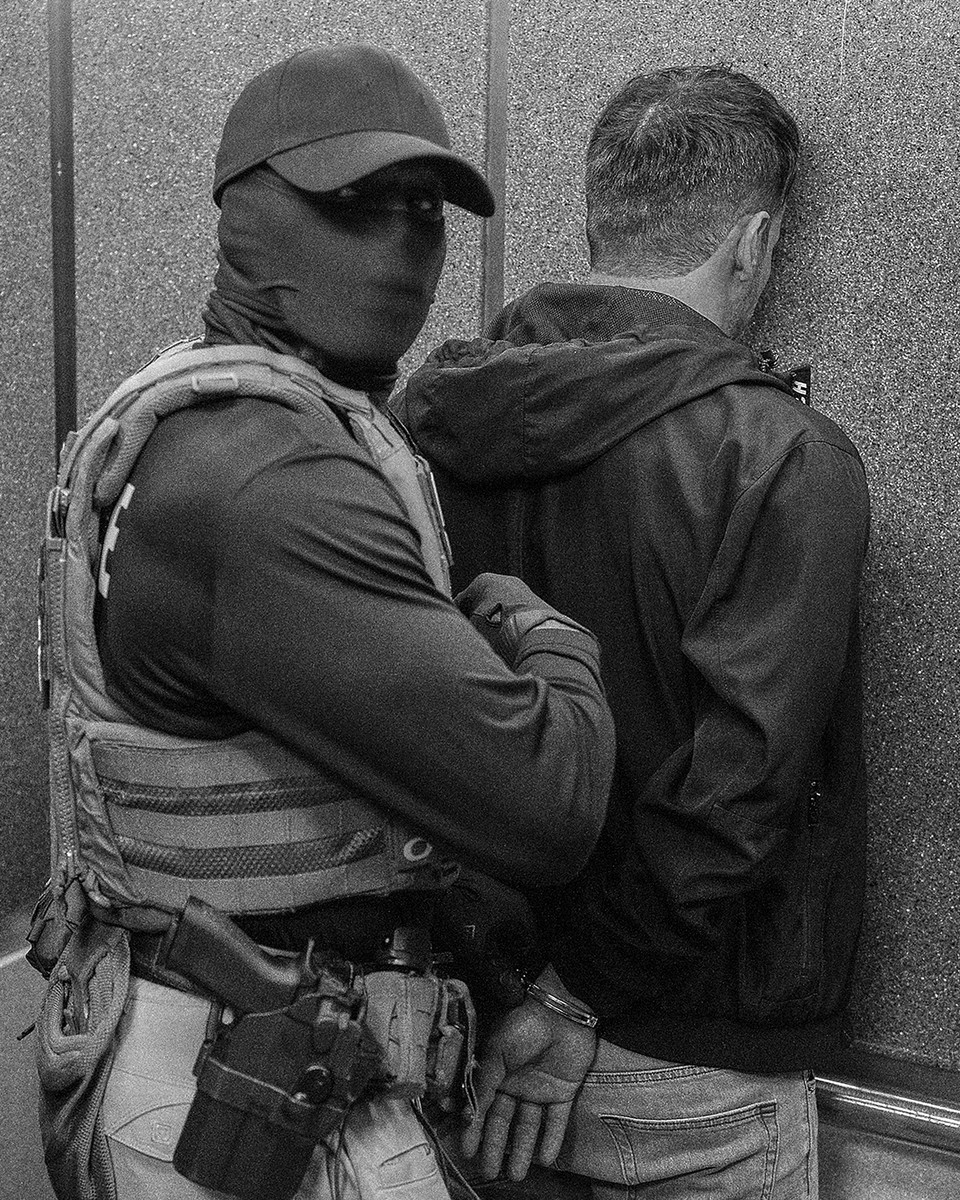
ICE Agents: Take Off the Masks
From 2011 to 2013, I commanded the New York City Police Department’s 6th Precinct, which covers Greenwich Village. We had a team of plainclothes officers who went out looking for serious crimes in progress. Sometimes they worked out of a dilapidated unmarked van that looked like the one driven by the villain in The Silence of the Lambs. When things were slow, the team would arrest people who had slunk off from Bleecker Street to smoke weed on Minetta Lane. The sergeant who led these officers had come down from the Bronx, and he thought there was a certain justice in holding the Village’s nightlife crowd to the same standard we held Black teenagers in Kingsbridge Heights.
One evening in 2012, the team noticed a woman smoking in the shadows and decided to make an arrest. The officers placed her in handcuffs, led her to the van, and opened its back doors. At the other end of the cargo bay, a burly man sat on a milk crate in the dark, waiting. The woman went weak in the knees, her eyes filled with panic, and she groaned. At that point the sergeant realized that the prisoner had no idea who these officers were. She was helpless and she was terrified.
Something like this scene has been playing out across America lately. Under orders from Donald Trump’s White House, Immigration and Customs Enforcement is aiming to deport 1 million immigrants a year, and to make 3,000 arrests a day. Agents have detained farmhands and meat processors; garment and construction workers; graduate students; the mayor of Newark, New Jersey; and people who turn out to be completely innocent. But if immigration enforcement is more aggressive and visible than in the past, it is also more anonymous: ICE allows its agents to conduct operations in plain clothes and to cover their faces. Social media is flooded with images of masked men forcing people into unmarked cars.
This approach looks scary. It is scary. And it’s a grave mistake. In keeping with the values of the local police, the federal government should prohibit the wearing of masks by its officers and require them to properly identify themselves. These are the minimal requirements of policing a free state—regardless of how you feel about the administration’s stance on immigration. You can support ambitious deportation targets without sanctioning anonymous policing.
The main reason federal agents give for wearing masks is their fear of doxxing: the practice of sharing a person’s identity and contact information with the malicious intent of targeting them for harassment, threats, and possibly violence. Federal agents and their families deserve privacy and safety, but the government already has a means of protecting them: It can enforce the laws against harassment and threats, online or in person. Or Congress could pass an existing bill that explicitly makes doxxing federal law-enforcement agents illegal.
At any rate, everyone in government today is vulnerable to doxxing, including countless public servants who have no option to hide their identity as they work. Should a pool of judges issue anonymous verdicts? Should legislators pass bills by secret ballot? The answers are obvious. Wearing a badge is thought to require, and should require, more bravery than serving on a state assembly.
Perhaps most important, wearing masks could expose federal agents, local police, and the public to physical dangers that make the risks of doxxing seem minor in comparison. Armed, masked men appear sinister, even predatory. Beyond obscuring the facial expressions we use for cues about whether a person is a threat, masks are a marker of criminals looking to intimidate their prey while avoiding identification. This is why the ski mask is a cultural trope of the armed robber or terrorist. It is also why masked protesters undermine their own causes; the masks arouse deep suspicion, as bystanders may assume the protesters are just waiting for an opportune moment to break the law. Nor is that a baseless assumption: In my experience, masked protesters sometimes are opportunistic lawbreakers.
As ICE agents rack up arrests on the road to 1 million deportations, someone will inevitably, instinctively fight back against the masked men forcing them into a car, not because they want to escape law enforcement but because they don’t know whom they are trying to escape from in the first place, and they legitimately fear for their safety. As a former police officer, I can tell you that my first reaction to unidentified men in masks converging on me or someone nearby would be to take cover and prepare to fight.
Another possible hazard is that masked, unidentified ICE agents could be mistaken by local police for armed felons committing a robbery or an abduction. Misidentified police officers taking enforcement action in plain clothes or off duty have been killed by fellow officers with a tragic regularity. Perhaps most dangerous of all, as ICE normalizes mask wearing, it creates the conditions for violent criminals to pass as police while escaping identification. In fact, criminals have already started to impersonate ICE agents.
Many people on the left, perennially skeptical of how our nation is policed, think masking by federal agents is wrong. But so does the right-libertarian CATO Institute, which recently published an argument critical of mask wearing. It asked, “At what point will we as a nation find ourselves with a secret police?” A former FBI agent and a former Department of Homeland Security attorney have also spoken up against masking.
[T]he NYPD has never permitted officers to obscure their face. In the same vein, except during undercover operations, all NYPD officers are required to “courteously and clearly” provide their name, rank, and shield number to anyone who requests it, either verbally or via a preprinted card with the information.
The driving principle here is obvious: In a free society, people should know who is policing them. To codify this sentiment in the law, New York legislators have proposed a ban on mask wearing by ICE agents, and California legislators have put forward a bill that would ban federal, state, and local police from wearing masks when interacting with the public.
Hiding your face from the public as a federal agent undermines the legitimacy of our nation’s police, and can be mistaken for cowardice. Although the risks of showing your face as you police America’s streets are not negligible, they’re worth taking, because the consequences of concealment are more dire.
Descending on a person in public, laying hands on them, and taking them to a distant prison is a naked expression of state power. For it to be tolerated in a democracy committed to an inalienable right to liberty, it must be just that: naked. It cannot be done by shadowy, masked agents.

Monday, July 07, 2025

Key Roles Were Vacant at Weather Service Offices in Texas

Crucial positions at the local offices of the National Weather Service were unfilled as severe rainfall inundated parts of Central Texas on Friday morning, prompting some experts to question whether staffing shortages made it harder for the forecasting agency to coordinate with local emergency managers as floodwaters rose.
Texas officials appeared to blame the Weather Service for issuing forecasts on Wednesday that underestimated how much rain was coming. But former Weather Service officials said the forecasts were as good as could be expected, given the enormous levels of rainfall and the storm’s unusually abrupt escalation.
The staffing shortages suggested a separate problem, those former officials said — the loss of experienced people who would typically have helped communicate with local authorities in the hours after flash flood warnings were issued overnight.
The shortages are among the factors likely to be scrutinized as the death toll climbs from the floods. Separate questions have emerged about the preparedness of local communities, including Kerr County’s apparent lack of a local flood warning system.
In an interview, Rob Kelly, the Kerr County judge and its most senior elected official, said the county did not have a warning system because such systems are expensive, and local residents are resistant to new spending. “Taxpayers won’t pay for it,” Mr. Kelly said. Asked if people might reconsider in light of the catastrophe, he said, “I don’t know.”
The National Weather Service’s San Angelo office, which is responsible for some of the areas hit hardest by Friday’s flooding, was missing a senior hydrologist, staff forecaster and meteorologist in charge, according to Tom Fahy, the legislative director for the National Weather Service Employees Organization, the union that represents Weather Service workers.
The Weather Service’s nearby San Antonio office, which covers other areas hit by the floods, also had significant vacancies, including a warning coordination meteorologist and science officer, Mr. Fahy said. Staff members in those positions are meant to work with local emergency managers to plan for floods, including when and how to warn local residents and help them evacuate. That office’s warning coordination meteorologist left on April 30, after taking the early retirement package the Trump administration used to reduce the number of federal employees . . . at both offices, the vacancy rate is roughly double what it was when Mr. Trump returned to the White House in January, according to Mr. Fahy.
Nim Kidd, chief of the Texas Division of Emergency Management, appeared to fault the Weather Service, noting that forecasters on Wednesday had predicted as much as six to eight inches of rain in the region. “The amount of rain that fell in this specific location was never in any of those forecasts,” he said at a news conference with Gov. Greg Abbott.
But what makes flash floods so hazardous is their ability to strike quickly, with limited warning. Around midnight on Thursday, the San Angelo and San Antonio weather offices put out their first flash flood warnings, urging people to “move immediately to higher ground.” The office sent out additional flash flood warnings through the night, expanding the area of danger.
It is not clear what steps local officials took to act on those warnings. A spokesman for the Kerr County emergency management department did not immediately respond to requests for comment.
“You have to have a response mechanism that involves local officials,” Dr. Uccellini said. “It involves a relationship with the emergency management community, at every level.”
But that requires having staff members in those positions, he said.
Under the Trump administration, the Weather Service, like other federal agencies, has been pushed to reduce its number of employees. By this spring, through layoffs and retirements, the Weather Service had lost nearly 600 people from a work force that until recently was as large as 4,000.
Last month, despite a government hiring freeze, the Weather Service announced a plan to hire 126 people in positions around the country, in what Ms. Cei, the agency’s spokeswoman, described as an effort to “stabilize” the department. As of this week, those jobs had not been posted in the federal government’s hiring portal.
Mr. Sokich said that the local Weather Service offices appeared to have sent out the correct warnings. He said the challenge was getting people to receive those warnings, and then take action.
But the Trump administration’s pursuit of fewer staff members means remaining employees have less time to spend coordinating with local officials, he said.
The Trump administration has also put strict limits on new hires at the Weather Service, Mr. Sokich said. So unlike during previous administrations, when these vacancies could have quickly been filled, the agency now has fewer options.
Sunday, July 06, 2025


Evangelicals Have Turned Their Backs on Africa and PEPFAR

During his presidency, George W. Bush committed numerous enormous foreign policy blunders, the Iraq War being perhaps the worse disaster. But in one area, Bush made a wise and humanitarian decision: he initiated President’s Emergency Plan for AIDS Relief ("PEPFAR") which sought to aid the HIV/AIDS epidemic in Africa where literally millions were become infected and dying. The Program is credited with saving 26 million lives and enabling almost 8 million babies to be born without HIV. This tremendous humanitarian work has been destroyed by the Felon and DOGE. Combined with the termination of USAID - both programs combined were a tiny portion of the federal budget - millions of lives in Africa in particular are at risk and many, many people will die. The Felon, being an extreme racist in my view that of others, could care less about black Africans dying. The slashing of Medicaid and domestic nutrition programs under the Felon's "big beautiful bill" will cause may deaths and much suffering here in the USA which I suspect in the Felon's mind and that of his cheering MAGA base, including white evangelicals who falsely call themselves "Christian," will target racial minorities (in reality, many working class whites will suffer and die). A very long piece in The Atlantic looks at how white evangelicals who seemingly care little about Christ's message about aiding others have turned their backs on the destruction of PEPFAR. I find it hard to believe that racism and homophobia are not a substantial reason for this betrayal of such a successful humanitarian cause. Here are article highlights:
In 2006, Ambassador Mark Dybul, then the United States global AIDS coordinator, visited an orphanage run by the Daughters of Charity in Ethiopia. It was a sanctuary for more than 400 HIV-positive babies and young children found in garbage heaps, abandoned on the roadside, or left at the orphanage door. As Dybul and Michael Gerson, then a senior policy adviser to President George W. Bush, walked through the massive campus, they came to the dining hall, where they saw a mural of Jesus surrounded by a group of children. The sisters told them that the mural featured portraits of children who had died of HIV at the orphanage, and that the children came there to talk to and play with their friends on the wall.
The epidemic was hardly confined to Ethiopia. It was ravaging sub-Saharan Africa. Two-thirds of the 40 million people in the world infected with HIV lived in that region. More than 12 million children had been orphaned by AIDS.
In parts of Botswana, 75 percent of pregnant women had HIV. Most diseases kill the very old and the very young, “but this disease was killing the most productive and reproductive parts of society,” Dybul recalled in 2018. “So not only were many households run by orphans, but entire villages were run by orphans, because everyone else was dead.”
Then came PEPFAR.
The President’s Emergency Plan for AIDS Relief, first authorized by Bush in 2003, was the largest commitment made by any nation to address a single disease. It was, the president said, “a work of mercy beyond all current international efforts to help the people of Africa.” PEPFAR, which received strong bipartisan support, is credited with saving 26 million lives and enabling almost 8 million babies to be born without HIV. It transformed the landscape of the HIV epidemic and helped stabilize the African continent. Not only is PEPFAR the single most successful policy to date in U.S.-Africa relations; it is “also one of the most successful foreign policy programs in U.S. history,” as Belinda Archibong, a fellow at the Brookings Institution, wrote last year.
“The dying stopped after PEPFAR,” Margrethe Juncker, a Danish doctor who cared for urban slum dwellers living with HIV/AIDS in Uganda and who treated Engole, told Nakkazi. She called the program a “miracle.”
Then came Donald Trump.
On the first day of his second term, Trump issued Executive Order 14169, calling for a 90-day pause on all foreign-development and assistance programs pending further review. A subsequent stop-work order froze payments and work already under way, hobbling programs worldwide. The administration dissolved USAID, the main U.S. organization that provides humanitarian aid and the primary implementing agency for PEPFAR.
The stop-work order initially froze all PEPFAR programming and services, halting work in the field, including the provision of antiretroviral therapy. And although PEPFAR—which accounts for 0.08 percent of the federal budget and has been consistently judged to be a highly effective and accountable program—received a limited waiver in February allowing it to continue “life-saving HIV services,” the actual implementation of that waiver has been delayed, fragmented, and chaotic. Supply chains have been disrupted; so have diagnostic and treatment services. There have been mass layoffs of staff. Clinics have been shut down. “The result was unprecedented operational chaos, funding lapses, the collapse of implementation partnerships, and, in many cases, clinic closures,” according to the Center for Strategic and International Studies. Those on the ground report widespread disruption of HIV services and devastating consequences for PEPFAR beneficiaries; the infrastructure that took years to build has been decimated. That will remain true even if the Trump administration were to reactivate PEPFAR tomorrow.
More than 75,000 adults and children are now estimated to have died because of the effective shutdown of PEPFAR that began less than six months ago. Another adult life is being lost every three minutes; a child dies every 31 minutes. Ending PEPFAR could result in as many as 11 million additional new HIV infections and nearly 3 million additional AIDS-related deaths by the end of the decade.
Once PEPFAR was announced, a number of evangelical groups and individuals played an important role in supporting it. They understood their faith to call them to care for the sick and the poor, to advocate for the oppressed, and to demonstrate their commitment to the sanctity of life. But as this human catastrophe unfolds, few American evangelical pastors, churches, denominations, or para-church organizations have spoken out against the destruction of PEPFAR. Nor, from what I can tell, do they seem inclined to do so.
Why have so many evangelicals remained silent? . . . . Chris Davis, of Groveton Baptist Church in Alexandria, Virginia, and a strong supporter of PEPFAR, told me that for many, the issue seems distant. “Very few evangelicals have walked down Coffin Row in Malawi or know anyone who has,” he said. . . . Scott Dudley, of Bellevue Presbyterian Church in Bellevue, Washington, believes the destruction of PEPFAR is a tragedy, but his church is preoccupied with other unfolding changes. “The main reason we haven’t addressed PEPFAR,” he told me, “is because we are more involved with issues around refugees, asylum seekers, and immigration. Our partners in this are Christian nonprofits who lost huge amounts of money in the cuts to USAID.”
Some ministers, instead, cited an aversion to becoming involved in politics, especially politics that might roil a congregation. Many Christians believe that church is meant for worship, not for guidance on policy, even on pressing humanitarian issues.
A principled aversion to politicizing the pulpit was sometimes difficult to distinguish from a very human fear of speaking out on issues that might trigger an angry response from Trump supporters in the pews. Even pastors whose moral conscience might make them inclined to speak out against the decimation of PEPFAR think twice about doing so, because they don’t want to become the target of attacks by members of their own congregation.
He’s hardly alone. “Any pastor who has ever ventured to speak out on a controversial ‘political’ issue, whether it’s a moral issue or not, knows that he will get tremendous, angry feedback from some of his people,” a man who had pastored an influential evangelical church in Northern Virginia told me.
“There is a general suspicion of government programs and an assumption that anything run by the government is characterized by inefficiencies and graft,” he told me. “So the slashing of governmental programs rarely causes an outcry among evangelicals.”
A person who was once involved in ministry described the mindset this way: “The government shouldn’t be doing this. Even if PEPFAR is a great program and saves millions of lives, it’s not the role of the U.S. government to spend the money obtained from the forcible confiscation of citizens’ property for the benefit of non-Americans.
A minister in a church in Memphis told me it’s important to “recall that most evangelicals also originally viewed the HIV/AIDS issue as a result of sexual promiscuity, and gay promiscuity especially. So I suspect too many of them regard the HIV/AIDS crisis as a self-inflicted contagion. I can imagine the moralists saying, ‘They brought this on themselves. It’s God’s judgment on them for their sexual sin. And they shouldn’t expect me to pay for their meds.’”
“The judgment that it was either a gay disease or the result of extramarital promiscuity fed evangelicals’ resistance and disinterest,” Dearborn told me. Despite its efforts to focus evangelicals on saving millions in Africa from dying of AIDS, World Vision had difficulty making inroads. “It’s never been a priority, even though women and children are often innocent victims who suffer and die from the disease,” he said.
But it’s still hard to ignore this fact: White evangelicals voted in overwhelming numbers to put into office a president who has, for now, decimated a program that qualifies as among the greatest health interventions in the history of medicine and one of the most humanitarian acts in the history of America. Millions may die as a result. And a religious movement that proudly advertises itself as pro-life, and which over the years has taken public stands on issues including abortion, same-sex marriage, pornography, critical race theory, the role of women in combat, school curriculum, and sports betting and gambling in all forms, has, with rare exceptions, said nothing about it.
A pastor of a conservative evangelical church told me he’s grieved by this. “I got exhausted by the sympathetic inaction,” he told me. “If a Democratic administration were doing this—callously, illegally, and completely unnecessarily destroying a cause prayed for, advocated for, designed by, and in many cases carried out by evangelical believers—I struggle to believe that the response would be any less immediate and strident than if they were to mandate states to permit abortion.” He added, “The gleeful destruction of USAID and careless discarding of lives, and the associated lies, are such obvious crossings of red lines, such blatant violations of a basic Christian posture in the world, that acting as though they are politics as usual actively deceives and disempowers our people, and we will have to deal with the cost of inaction as the projections become historical fact.”
“White churches and congregations seem tone-deaf to the raw pain and suffering so many are experiencing,” he told me. “When the social location of our gospel allows us to not see, to not hear, or to not care for vulnerable people, we fail the way of Jesus.” What gospel, he asked, are we prepared to live?
The award-winning Christian singer-songwriter Amy Grant performed last month along with fellow evangelical musicians at a church in Brentwood, Tennessee, to raise awareness of and support for PEPFAR. “I look at the conservative faith community and the word pro-life is said many times, and I go, ‘Whoa, there’s not much more of a pro-life effort than combatting HIV/AIDS worldwide,’” Grant said.
Davis is grieved by the sheer cruelty of abandoning PEPFAR. “It does almost nothing to address our national debt, it does nothing to transfer these lifesaving programs to other funding sources, and costs a potential of millions of lives per year,” he said. “To what end? For what great cause? This is the exact disregard for human life that animates our anger against abortion. So why are we not furious at this catastrophic loss of life?”
People who have become “culture warriors” in the name of Jesus often validate their cultural politics by proof-texting the Bible. But proof-texting the Bible can lead to some very bad places, as we’ve seen throughout Christian history, when verses from the Bible were used to justify everything from genocide to wars, from anti-Semitism to slavery and segregation, from geo-centrism to attacks on evolution. In Luke 4, we’re told that Satan used the Bible—Psalm 91—to tempt Jesus, in what is surely the most prominent of the great proof-texting wars.

Subscribe to:
Posts (Atom)