
Saturday, June 07, 2025


Friday, June 06, 2025

Elon Musk Goes Nuclear

From the moment Elon Musk bounded onstage, midriff bared, to campaign for Donald Trump, cynics predicted that the two men’s egos were too large to allow for a lasting alliance. Improbably, however, the bond persisted, despite the rocky rollout of the U.S. DOGE Service, disagreements over legislation, and even covers of The New Yorker and Time that seemed designed to troll Trump and drive a wedge between the men.
Now it seems the cynics weren’t wrong—just premature in their predictions. A feud that simmered all week broke into outright hostility this afternoon, with Trump appearing to threaten to cancel all of the contracts and tax subsidies Musk’s companies have with the government, and Musk alleging that Trump hasn’t released files related to Jeffrey Epstein because he’s implicated in them. The falling-out feels both inevitable and still shocking.
It was only Friday that Trump and Musk held an amiable press conference in the Oval Office to mark the end of Musk’s time as a “special government employee,” as he returns to his somewhat battered companies. Trump presented Musk with a key to the White House . . . . He’s apparently having second thoughts now. “I’m very disappointed in Elon,” Trump said . . .
The rift opened over the past few days, as Musk began campaigning against the One Big Beautiful Bill Act, the sprawling legislation that Republicans are trying to move through both houses of Congress to extend Trump’s first-term tax cuts, slash entitlements, and achieve whatever else of the president’s agenda they can cram in or sneak past members and the Senate parliamentarian.
“This massive, outrageous, pork-filled Congressional spending bill is a disgusting abomination,” Musk posted on X on Tuesday. “Shame on those who voted for it: you know you did wrong. You know it.” In another post, he wrote, “Bankrupting America is NOT ok! KILL the BILL.” In yet another: “The Big Ugly Bill will INCREASE the deficit to $2.5 trillion!” And a fourth: “This bill was never shown to me even once and was passed in the dead of night so fast that almost no one in Congress could even read it!”
What Musk wants is not entirely clear. His understanding of government spending has always been muddled, which is one reason DOGE was doomed to miss its cost-cutting targets. His sudden emergence as a strict deficit hawk is difficult to believe, though if he’s really concerned, he could call for higher taxes. . . . . One hint about the true source of his fury is that he keeps bringing up reductions in subsidies for electric vehicles, something that could directly affect his bottom line.
At first, in an unusual display of circumspection and restraint, the White House tried to avoid directly responding to Musk. Then officials began pushing back, mostly in policy terms. . . . But then Trump’s patience ran out, producing today’s sound bite. The [Felon]
presidentalso said he’d rather Musk criticize him personally than the bill, which sounds false.The situation puts Trump in an ironic position: He likes to be the guy on the outside, attacking government officials for failing to accomplish some impossible task. Now Musk is doing that to him, while Trump has to defend the imperfect process of legislation.
A clash between Musk and Trump will be a test of what happens when two of the greatest promoters in mass-media history square off. Both are adept at driving a news cycle; both are the owners of social-media platforms; and although X is much larger than Truth Social, Trump also has the advantage of being, you know, the president of the United States. Which of them can control the news more?
But the most interesting clash is the one between two guys who thought they had bought each other off. For a time, they both must have thought they had a great deal. Trump got at least a quarter of a billion dollars in campaign support from Musk, and he got the joy of having the world’s richest man as his sidekick. Maybe Trump even believed that DOGE would be able to make huge budget cuts via improvements in efficiency.
Musk, meanwhile, was able to wield unprecedented power as an unelected, unconfirmed bureaucrat. In 2023, during an onstage discussion, Israeli Prime Minister Benjamin Netanyahu asked the South African–born Musk, “You can’t be president of the U.S. last time I checked, right?” Musk replied with a smirk, “Not officially.” For a moment, he seemed to achieve that unofficial reign.
Now, as they drift apart, both men are feeling burned. “I’ve helped Elon a lot,” Trump groused today. Later, he unloaded on Musk on Truth Social. “Elon was ‘wearing thin,’ I asked him to leave, I took away his EV Mandate that forced everyone to buy Electric Cars that nobody else wanted . . . . “The easiest way to save money in our Budget, Billions and Billions of Dollars, is to terminate Elon’s Governmental Subsidies and Contracts. I was always surprised that Biden didn’t do it!”
Musk’s anger, though just as hot, was tinged with imperious presumption. “Without me, Trump would have lost the election, Dems would control the House and the Republicans would be 51-49 in the Senate,” Musk wrote on X this afternoon. “Such ingratitude,” he added. You can kind of see his point . . . . he’s making it crystal clear what he thought he bought. Trump and Musk are both learning the limitations on their purchases—and the public is getting an illustration of the danger of someone like Musk having so much personal influence on the government.

Thursday, June 05, 2025

Evangelical Christianity Is Showing Its Ugly Face

When Christianity goes wrong, it goes wrong in a familiar way. Last Friday, at a town hall meeting in Butler County, Iowa, Senator Joni Ernst delivered a grim message to her constituents. In the midst of an exchange over Medicaid cuts in President Trump’s “big, beautiful bill,” someone in the crowd shouted at Ernst, “People are going to die!”
Ernst’s immediate response was bizarre. “Well, we all are going to die,” she said.
True enough, but that’s irrelevant to the question at hand. Yes, we’re all going to die, but it matters a great deal when, how and why. There’s a tremendous difference between dying after living a long and full life that’s enabled at least in part by access to decent health care, and dying a premature and perhaps needlessly painful death because you can’t afford the care you need.
By the standards of 2025, Ernst’s comment would have been little more than a micro-scandal, gone by the end of the day. And if we lived even in the relatively recent past, demonstrating humility could have worked to her benefit. It can be inspiring to watch a person genuinely apologize.
But we’re in a new normal now.
That means no apologies. That means doubling down. And that can also mean tying your cruelty to the Christian cross.
And so, the next day Ernst posted an apology video — filmed, incredibly enough, in what appears to be a cemetery. It began well. “I would like to take this opportunity,” she said, “to sincerely apologize for a statement I made yesterday at my town hall.” But her statement devolved from there. . . . . “I’m really, really glad that I did not have to bring up the subject of the tooth fairy as well. But for those that would like to see eternal and everlasting life, I’d encourage you to embrace my lord and savior, Jesus Christ.”
Remember, this was not a snarky, impulsive rejoinder. It was a considered response. She decided to film the statement and release it. There is no ambiguity — the video delivered exactly the message she wanted to send.
The fact that a sitting United States senator was that callous — and then tried to twist her cruelty into a bizarro version of the Christian gospel — is worth highlighting on its own as another instance of the pervasive “own the libs” ethos of the Republican Party. But Ernst’s fake apology was something different — and worse — than simple trolling. It exemplified the contortions of American Christianity in the Trump era.
Americans are now quite familiar with the “no apologies” ethos of the Trumpist right. . . . . Trumpists think it’s good to be bad. But why bring Jesus into it?
America has always been a country with lots of Christian citizens, but it has not always behaved like a Christian country, and for reasons that resonate again today. An old error is new. Too many Christians are transforming Christianity into a vertical faith, one that focuses on your personal relationship with God at the expense of the horizontal relationship you have with your neighbors.
To understand what I mean, let’s turn to a much darker time in American history, when Christianity and slavery existed side-by-side in the American South. . . . The master hardened his heart to the plight of the slave by fundamentally rejecting the idea that his vertical faith in God carried with it a series of horizontal earthly obligations to love your neighbor as yourself, to do justice to the oppressed and to care for the vulnerable. . . . . So long as the vertical relationship between God and man was secure, the horizontal relationship between men was of secondary importance, to the extent that it mattered at all.
Thankfully, we don’t live in such extreme times. We’re far from the dreadful days of slavery, and we’ve left Jim Crow behind, but I’m noticing a morphing of American evangelicalism back to the vertical, away from the horizontal, and that change is turning our gaze inward, to our own well-being above all, sometimes even to the exclusion of caring about the fate of others.
In April, I wrote about Paula White, one of Trump’s principal faith advisers, and her Easter offer of “seven supernatural blessings” in exchange for a suggested offering of $1,000. My piece was focused on the cohort of pastors and their Christian followers who behave more like Trump than like Jesus.
But I could have just as easily focused on the sheer selfishness of her message as well. Look again at the gifts White offered to her flock: “God will assign an angel to you, he’ll be an enemy to your enemies, he’ll give you prosperity, he’ll take sickness away from you, he will give you long life, he’ll bring increase in inheritance, and he’ll bring a special year of blessing.”
The emphasis is clear — look at what God will do for you. It’s all vertical. Honor God (by giving White a pile of cash), and he’ll make you healthy, wealthy and strong.
Consider also the evangelical turn against empathy. There are now Christian writers and theologians who are mounting a frontal attack against the very value that allows us to understand our neighbors, that places us in their shoes and asks what we would want and need if we were in their place.
But Christianity is a cross-shaped faith. The vertical relationship creates horizontal obligations. . . . when the sick and lame approached Jesus, he did not say, “Depart from me, for thou shalt die anyway.” He healed the sick and fed the hungry and told his followers to do the same. . . . these passages do not dictate any particular policy, but they do tell us that we must try to meet the physical needs of the poor — here, on this earth — even if our souls are far more durable than our bodies.
Trump’s rise has revealed the extent to which the will to power has always lurked in Christian hearts. When faced with a conflict between their stated principles and their access to power, millions of Republican Christians chose power over principle — and they are continuing to do so every day.
At the same time, some things have changed. An evangelical community that once celebrated, for example, George W. Bush’s PEPFAR program — the AIDS initiative that has saved an estimated 26 million lives — has now either applauded or stood by passively as Trump has decimated American foreign aid and damaged the a program that was one of America’s greatest humanitarian accomplishments.
But politicians are weather vanes (as we’re all tempted to be), and there’s a foul wind blowing out of parts of American Christianity. Ernst’s first quip was a gaffe. Her apology video was no such thing. It was a premeditated effort to say exactly what she thinks Republicans want to hear.

Wednesday, June 04, 2025

Citizens Could Be on Their Own this Hurricane Season
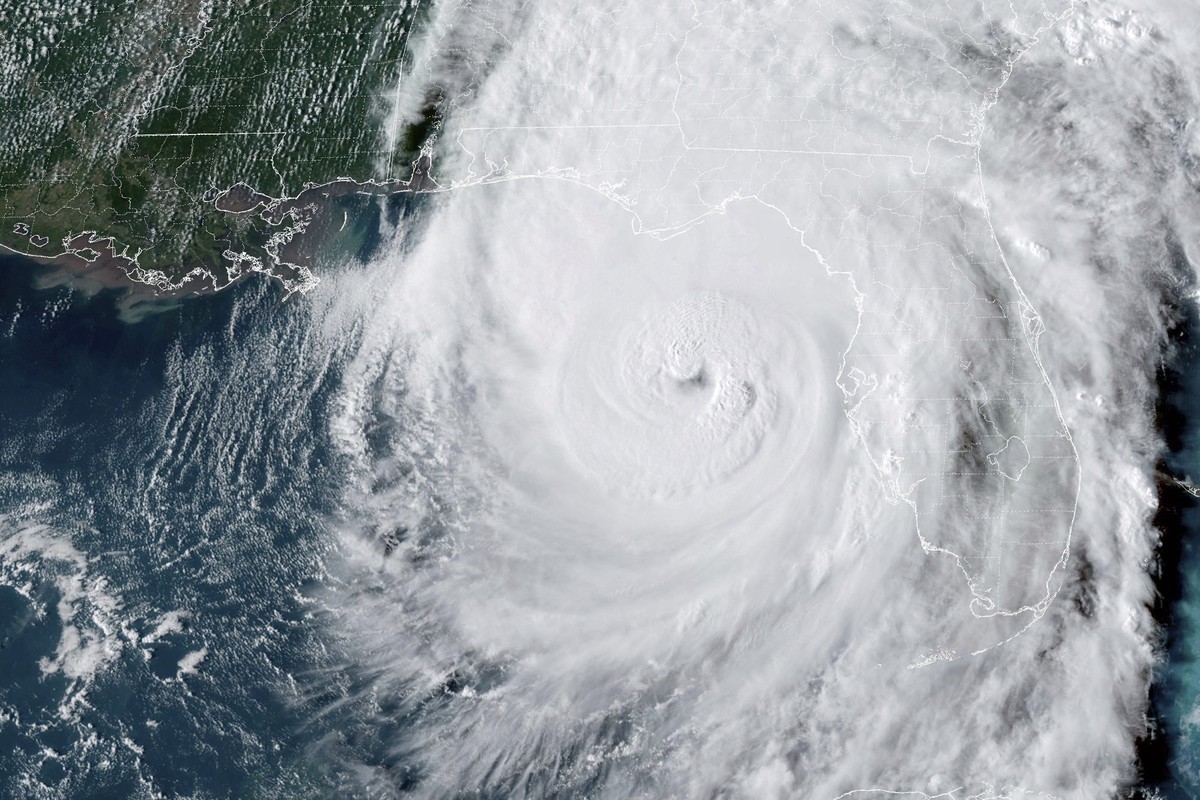
Who manages the disaster if the disaster managers are the disaster? That’s a question that the people of the United States may have to answer soon. As hurricane season begins in the U.S., the Federal Emergency Management Agency is in disarray.
Reuters reported yesterday that acting FEMA head David Richardson suggested during a meeting with employees that he was unaware of the very existence of a hurricane season. A spokesperson for the Department of Homeland Security dismissed the report: . . . “FEMA is shifting from bloated, DC-centric dead weight to a lean, deployable disaster force that empowers state actors to provide relief for their citizens.”
FEMA employees, and Americans at large, might be forgiven for having doubts. Richardson has only been on the job since early May, when his predecessor was abruptly fired after telling Congress he did not believe that FEMA should be eliminated, as
PresidentDonald Trump has contemplated. Richardson is a Marine veteran who had been leading the DHS office that seeks to prevent attacks on the U.S. involving weapons of mass destruction, but he has no experience with disaster management. . . . . (The last time FEMA was led by an administrator whose profession was not emergency management was the mid-2000s, under Michael Brown. If you don’t know how that turned out, I recommend my colleague Vann R. Newkirk II’s award-winning podcast on Hurricane Katrina, Floodlines.)In mid-May, CNN obtained an internal document warning that FEMA was badly behind schedule. “As FEMA transforms to a smaller footprint, the intent for this hurricane season is not well understood, thus FEMA is not ready,” it read. . . . . To calm worries at the agency, Richardson held a conference call. “I would say we’re about 80 or 85 percent there,” he told staff, according to ABC News. “The next week, we will close that gap and get to probably 97 to 98 percent of a plan. We’ll never have 100 percent of a plan.”
That was not the most reassuring answer, and it looks worse now. The Journal reports that in the same meeting yesterday where Richardson suggested unfamiliarity with hurricane season, he also said the agency would return to its 2024 hurricane-preparedness strategy. How that will work is anyone’s guess, given that FEMA has already slashed programs and staff since last year’s hurricane season.
FEMA is not a large part of the federal government by budget or staff, but it is an important one because it directly affects the lives of ordinary Americans in their worst moments. Washington can seem distant and abstract, but disasters are not, and as Hurricane Helene last year demonstrated, even people living in supposed “climate havens” are susceptible to extreme weather.
As a candidate, he [the Felon] was quick to say that the Biden administration should do more, but since becoming president again, he has taken steps to ensure that FEMA can and will do less.
FEMA is also making recovery harder for the victims of past disasters. In April, the agency declined to declare a major disaster in Washington State, which would free up funding for recovery from a bomb cyclone in November 2024; the state’s entire congressional delegation pleaded with him to reconsider. DHS also denied North Carolina more funding for cleanup after Helene, which Governor Josh Stein estimated would cost state taxpayers hundreds of millions of dollars.
In the post-FEMA future that Trump has floated, states would be responsible for all disaster recovery. Some conservatives have long argued that states need to shoulder more responsibility for smaller disasters, but most states (and territories such as Puerto Rico) simply don’t have the resources to respond to large-scale disasters like Helene. This is, after all, one reason the 13 colonies united in the first place: for mutual aid and protection. The federal government has much greater resources and, unlike most states, is not required to balance its budget annually.
[I]n his first term, Trump himself reportedly withheld or delayed disaster funds in multiple cases based on partisanship. His reversal on assistance for Arkansas residents raises the specter of a future in which only states whose governors are close to Trump can hope to obtain relief.
And yet if FEMA isn’t prepared for hurricane season, doesn’t have sufficient staff, and is laboring under a president who would like to see it gone, the problem may not be that only the president’s allies can get help from the federal government—but rather that no one can.
The irony, of course is that the states most likely to suffer hurricane damage are red states whose citizens voted for the Felon and may yet suffer very real consequences.

Tuesday, June 03, 2025

Ukraine's Stunning Attack on Russia: A Message to Other Militaries
Relying on its own resources, Ukraine has just carried out what might be the most complex, elaborately planned, and cost-effective military operation of its current war with Russia. Yesterday, the Ukrainians used drones to attack, almost simultaneously, at least four Russian airfields separated by thousands of miles. Among them were two airfields just inside Russia, but the targets also included Olenya air base, above the Arctic Circle, and, remarkably, Belaya air base, in Siberia, which lies just over the border from Mongolia.
The attack showed how much audacity, ingenuity, and effectiveness the Ukrainians can bring to their own defense when Western leaders aren’t pressuring them to hold back. It also revealed the vulnerability of the large, expensive planes and other hardware treasured by major powers around the world.
Images circulating immediately after the attacks appeared to show that Russian aircraft had been hit with remarkable accuracy at some of their most vulnerable points. The Ukrainians seem to have placed relatively small drone swarms in cavities built into the top of trailer trucks. Then, when the trucks were close to the targets, the trailer roofs opened up, and the swarms of drones flew out, surprising and overwhelming Russian defenses. Even how the drones themselves were operated represents something notable. In many cases, they seem to have been flying courses preprogrammed via the open-source software ArduPilot, which has proved effective in navigating unmanned aerial vehicles for hundreds of miles and precisely reaching targets.
Although details remain limited, the operation testifies to how rapidly drone technology is evolving. . . . . Ukrainian officials have said that some of the drones were basically AI-trained to recognize the most vulnerable parts of Russian aircraft and automatically home in on those areas.
Kyiv boasted of destroying more than a third of Russia’s large Tu-95 bombers, which have been a primary launch system for the large volleys of missiles that regularly strike Ukrainian cities. The Tu-95s are literally irreplaceable: Russia has no production facilities making more of these aircraft, and it has not yet designed a successor to the model. Yesterday’s attack also appears to have damaged a large number of Tu-22 M3 bombers and probably one A-50 command aircraft, the Russian equivalent of a U.S.-made airborne warning and control aircraft. The total cost of Russian losses likely runs into several billion dollars.
In contrast, the cost of one of the Ukrainian drones used in yesterday’s attack has been estimated at about $1,200—so that even if the airfields were attacked with 100 drones each (a seemingly high estimate), the total cost of the drones used would have been less than $1 million.
In one sense, the Ukrainian attack represents a culmination of what we have seen happen since Russia launched its full-scale invasion in 2022: Seemingly outmatched by Russia’s much larger military, Ukraine has used drones and other improvised equipment to destroy tanks, large warships, bombers, and other large legacy systems. Military planners and many outside commentators have been too slow to acknowledge the significance of Ukraine’s defensive tactics, but the most recent attacks plainly show the need for major changes in how all militaries are constructed and trained.
For the United States and other major Western militaries, Ukraine’s use of trucks parked outside secure areas near military sites will pose uncomfortable questions. How closely do they—or can they—monitor all the truck traffic that streams past their bases? Do they know what happens in every nearby property from which an adversary could hide drone swarms and then launch them with no warning? For many years now, for instance, Chinese interests have been buying large amounts of farmland right next to important U.S. military bases. They could be growing soybeans, but they could also be staging grounds for drone swarms that would make the Ukrainian attacks look minuscule.
The Ukrainians are showing U.S. and European militaries that better security against drone flights is long overdue.
For Ukraine’s doubters, these attacks should lead to a period of quiet reflection. President Donald Trump has insisted that Ukraine has “no cards.” The New York Times editorial board recently implied that Ukraine is unlikely to produce a military breakthrough that can change the basic course of the war. But pessimism about Ukraine’s capabilities is ahistorical and wrongheaded.
For three years, the Biden administration simultaneously supported Ukraine and discouraged major attacks on Russian soil, for fear of provoking Vladimir Putin too much. That constraint no longer exists, now that Trump has written off Ukraine and appears eager to end the war on Putin’s terms.
Until now, Ukraine has had only a limited ability to launch attacks as ambitious as the one it just executed. If Ukraine’s remaining allies help arm it properly to undertake similar operations at scale, it can still win the war.

Monday, June 02, 2025

Sunday, June 01, 2025

Trump Is Sparking Europe’s "New Enlightenment"

Donald Trump’s war on some of America’s most iconic colleges is a major opportunity for European academia and research. Now the EU is under pressure to seize it.
University professors and research center directors across the continent see silver linings in the U.S. president’s crackdown on American higher education, which includes targeting professors and students as well as heralded Ivy League institutions like Harvard and Columbia while freezing billions of dollars in federal funding.
European universities and top politicians have mobilized in response to Trump’s domestic measures, creating new initiatives aimed at attracting top foreign talent to Europe by offering generous grants and greater academic freedom.
Earlier this month, European Commission President Ursula von der Leyen and French President Emmanuel Macron unveiled a €500 million plan named “Choose Europe for Science” aiming to lure foreign researchers to the EU.
“We are doubling the potential amount that researchers who relocate to Europe from anywhere in the world can request as relocation funds,” said Maria Leptin, president of the European Research Council (ERC), the bloc’s public body for scientific and technological enquiry which is partnering with the Commission on the initiative. “We need to step up our efforts. And not because of what is happening in the U.S., we need to do it anyway.”
The Commission last month announced plans to accelerate visa procedures to attract U.S. researchers and EU research ministers met in Brussels on May 23 to discuss how to increase Europe’s competitiveness in science and innovation.
By massively boosting its research and academic development, the EU stands to strengthen its economic competitiveness and innovation, while putting itself in a better position to tackle critical challenges such as climate change and health care.
“Research is the foundation of the companies of tomorrow. By investing in research, we’re investing in Europe’s competitiveness and in the jobs of tomorrow,” said French Research Minister Philippe Baptiste.
“What top-level researchers need are good infrastructure, good support from their research institutions. Young people need good career prospects, they need good long-term funding,” she added, noting that it’s mainly up to EU member countries to “step up their efforts and make research attractive.”
Since Trump’s crackdown began, the Netherlands, France, Spain, Belgium and Norway have launched targeted initiatives to attract foreign researchers by offering funding, institutional support and long-term career opportunities in fields like health, climate and AI.
Similarly, European universities such as Belgium’s Vrije Universiteit Brussel (VUB) and France’s Aix-Marseille University (AMU) have allocated funds to recruit postdoctoral scholars who are “victims of political and ideological interference” in the United States.
Top European academics observe that their counterparts in the U.S. have become increasingly cautious and fearful amid Trump’s repressive policies, which are often based on the pretext of rooting out alleged antisemitism and so-called woke ideologies on college campuses.
Jan Danckaert, rector of VUB, said U.S. researchers have started using anonymous email accounts and encrypted messaging platforms to communicate with international partners.
“This shows they are very much concerned about the way they contact institutions outside the U.S.,” he said, noting fears that even minor collaborations on projects that fall foul of the Trump administration could be used as a basis for further funding cuts.
Glöckner added that some U.S. researchers were now unable to join video conferences without top-level managerial approval. “This is the first time that we ever heard about something like that … and it changed from one day to another,” he said.
Self-censorship is also a growing problem among U.S. researchers, the European academics observe. “They don’t want their names published in official media, in scientific reviews, or whatever,” Glöckner said. . . . “They are much more cautious about the contacts they have and the way they communicate. They are always looking behind.”
After KU Leuven’s Verbeke publicly criticized Trump in the European press, he said several colleagues at Harvard privately thanked him for voicing opinions they themselves were unable to express.
“I am truly a transatlantic at heart, and I never imagined that we would one day reach a point where the very hotspot of academic freedom would be called into question,” German Minister for Research, Technology and Space Dorothee Bär said. “That is why we must now be a safe country, a safe harbor, a safe continent.
Americans' life expectancy has already fallen compared to Europe and with cuts to research and the slashing of Medicaid coverage, the existing gap in life expectancy will likely only widen further. The irony is that many of those hardest hit will be the working class members of the MAGA cult.
.jpg)
Subscribe to:
Posts (Atom)