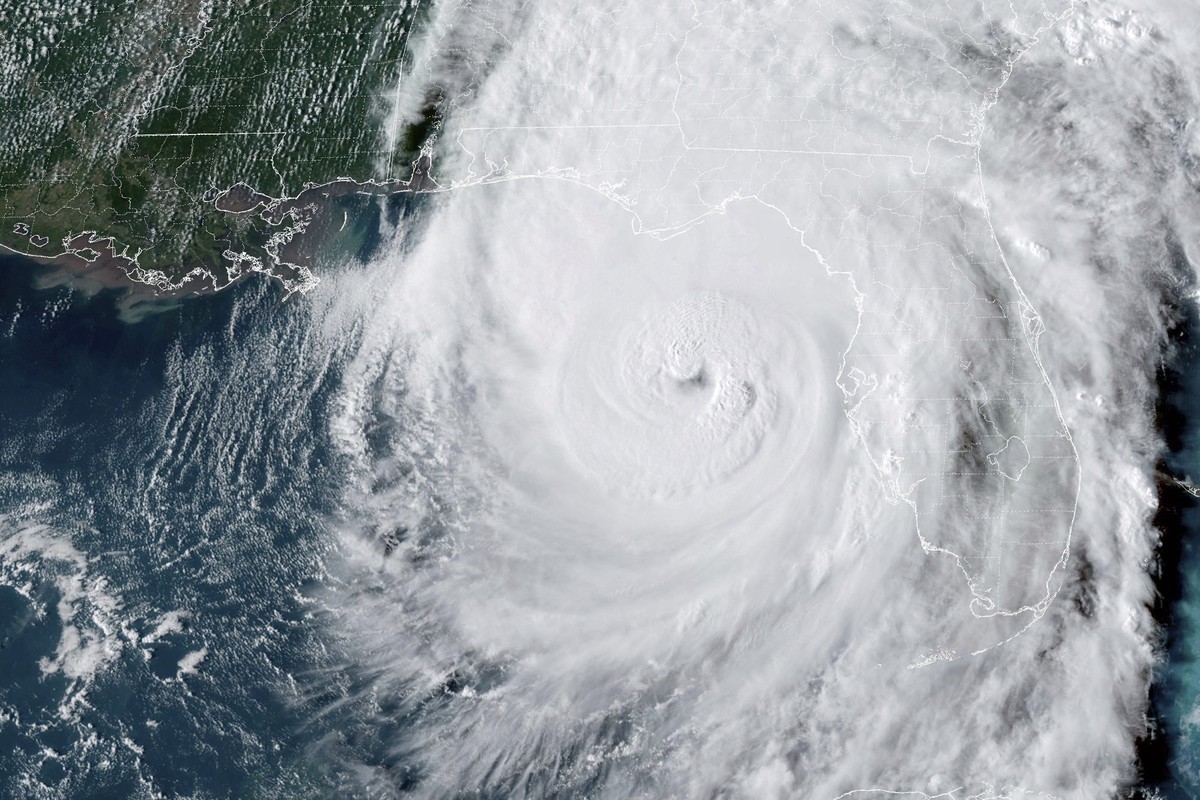
Who manages the disaster if the disaster managers are the disaster? That’s a question that the people of the United States may have to answer soon. As hurricane season begins in the U.S., the Federal Emergency Management Agency is in disarray.
Reuters reported yesterday that acting FEMA head David Richardson suggested during a meeting with employees that he was unaware of the very existence of a hurricane season. A spokesperson for the Department of Homeland Security dismissed the report: . . . “FEMA is shifting from bloated, DC-centric dead weight to a lean, deployable disaster force that empowers state actors to provide relief for their citizens.”
FEMA employees, and Americans at large, might be forgiven for having doubts. Richardson has only been on the job since early May, when his predecessor was abruptly fired after telling Congress he did not believe that FEMA should be eliminated, as
PresidentDonald Trump has contemplated. Richardson is a Marine veteran who had been leading the DHS office that seeks to prevent attacks on the U.S. involving weapons of mass destruction, but he has no experience with disaster management. . . . . (The last time FEMA was led by an administrator whose profession was not emergency management was the mid-2000s, under Michael Brown. If you don’t know how that turned out, I recommend my colleague Vann R. Newkirk II’s award-winning podcast on Hurricane Katrina, Floodlines.)In mid-May, CNN obtained an internal document warning that FEMA was badly behind schedule. “As FEMA transforms to a smaller footprint, the intent for this hurricane season is not well understood, thus FEMA is not ready,” it read. . . . . To calm worries at the agency, Richardson held a conference call. “I would say we’re about 80 or 85 percent there,” he told staff, according to ABC News. “The next week, we will close that gap and get to probably 97 to 98 percent of a plan. We’ll never have 100 percent of a plan.”
That was not the most reassuring answer, and it looks worse now. The Journal reports that in the same meeting yesterday where Richardson suggested unfamiliarity with hurricane season, he also said the agency would return to its 2024 hurricane-preparedness strategy. How that will work is anyone’s guess, given that FEMA has already slashed programs and staff since last year’s hurricane season.
FEMA is not a large part of the federal government by budget or staff, but it is an important one because it directly affects the lives of ordinary Americans in their worst moments. Washington can seem distant and abstract, but disasters are not, and as Hurricane Helene last year demonstrated, even people living in supposed “climate havens” are susceptible to extreme weather.
As a candidate, he [the Felon] was quick to say that the Biden administration should do more, but since becoming president again, he has taken steps to ensure that FEMA can and will do less.
FEMA is also making recovery harder for the victims of past disasters. In April, the agency declined to declare a major disaster in Washington State, which would free up funding for recovery from a bomb cyclone in November 2024; the state’s entire congressional delegation pleaded with him to reconsider. DHS also denied North Carolina more funding for cleanup after Helene, which Governor Josh Stein estimated would cost state taxpayers hundreds of millions of dollars.
In the post-FEMA future that Trump has floated, states would be responsible for all disaster recovery. Some conservatives have long argued that states need to shoulder more responsibility for smaller disasters, but most states (and territories such as Puerto Rico) simply don’t have the resources to respond to large-scale disasters like Helene. This is, after all, one reason the 13 colonies united in the first place: for mutual aid and protection. The federal government has much greater resources and, unlike most states, is not required to balance its budget annually.
[I]n his first term, Trump himself reportedly withheld or delayed disaster funds in multiple cases based on partisanship. His reversal on assistance for Arkansas residents raises the specter of a future in which only states whose governors are close to Trump can hope to obtain relief.
And yet if FEMA isn’t prepared for hurricane season, doesn’t have sufficient staff, and is laboring under a president who would like to see it gone, the problem may not be that only the president’s allies can get help from the federal government—but rather that no one can.
The irony, of course is that the states most likely to suffer hurricane damage are red states whose citizens voted for the Felon and may yet suffer very real consequences.


No comments:
Post a Comment