
Saturday, September 13, 2025


One of Utah's and MAGA's Own

Before the [Felon]
president of the United Statesannounced on this morning’s broadcast of Fox & Friends that the man who’d assassinated Charlie Kirk was finally in custody—“I think, with a high degree of certainty, we have him”—he had already told the American people who was to blame.Within hours of Kirk’s killing, when law enforcement had not released so much as a photograph of the suspected shooter, Donald Trump addressed the nation, accusing the “radical left.” His assertion fanned breathless speculation on social media that the shooter was some kind of operative, an agent of organized political violence, or maybe even a point man in an elaborate conspiracy involving antifa, Israeli intelligence, or operatives working for Kirk’s rivals in the MAGA sphere. . . . . inaccurate press reporting, attributed to federal law-enforcement officials, suggested that the shooter had carved messages espousing “transgender” ideology onto a bullet casing.
Not many of the people speculating the loudest online predicted that the killer was a young man from a deeply pro-Trump corner of Utah, raised by registered Republicans. But that’s the picture of 22-year-old Tyler Robinson that began to emerge today, when Utah Governor Spencer Cox announced that Robinson was in custody and would be charged.
“I was praying that, if this had to happen here, that it wouldn’t be one of us,” Cox said of his fellow Utahns. The governor, who has made it his political mission to lower the rhetorical temperature in his state and the country, seemed at times to be talking directly to the president and to those of Kirk’s supporters who have portrayed his assassination as the first shot in a war with the left.
Robinson’s arrest prompted Trump’s opponents to excoriate the president and others for rushing to judgment. Former Republican Representative Adam Kinzinger, an ardent Never Trumper, asked his followers on X to send him any instances of politicians or other leaders “blaming the left, or declaring some war, or anything before we knew who the shooter was.” Political point-scoring is inevitable and, for some, deeply satisfying. But the truth is, much remains unknown and unclear about why Robinson, a young man with no history of criminal activity, allegedly sought out Kirk and killed him on Wednesday with a long-range-rifle shot to the neck.
Even in reliably red Utah, support for Trump and his allies is hardly universal. The state’s Republican voters tend to prefer the gentler political stylings of their former senator Mitt Romney or the current governor, whose quixotic effort to find political common ground has often put him on a collision course with the president. Washington County, where Robinson and his family live, is a fast-growing area where unreserved support for Trump is expressed in MAGA flags that fly alongside the Stars and Stripes.
Authorities haven’t said what they think compelled Robinson to pick up a rifle and drive more than 250 miles to Kirk’s event. Robinson’s parents may eventually provide more answers. . . . . Federal investigators will surely scour Robinson’s communications and online presence looking for explanations. Investigators spoke with Robinson’s roommate, who showed them messages Robinson had allegedly sent about retrieving a rifle from a “drop point” and “leaving the rifle in a bush,” Cox said. Investigators later found a rifle in the woods near the crime scene wrapped in a towel, as Robinson had said it would be in his messages to his roommate.
Robinson also mentioned in his messages that he had engraved bullet casings, Cox said. One was scrawled with the words Hey fascist! Catch! Another was marked with a series of arrows—one pointing up, another to the right, and then three pointing down, an image that some have taken to refer to a gaming maneuver that summons a powerful weapon in the hugely popular Helldivers 2, an online shooter game.
Robinson’s political views will probably become clearer with time. But in the hours after he was first identified, in the absence of evidence that he was quite the exemplar of the radical left that Trump had predicted, the [Felon]
presidentseemed more interested in changing the subject.On the White House lawn this afternoon, reporters asked the president how he was holding up after the death of his close friend. “I think very good,” he said. “And by the way, right there, you see all the trucks? They just started construction of the new ballroom for the White House.” He took no further questions.

Friday, September 12, 2025

Trump’s Dangerous Response to the Kirk Assassination

It is possible that, in the history of America’s radicalization spiral, the horrifying, cold-blooded assassination of the right-wing activist Charlie Kirk will be recorded as only the second-most-dangerous event of September 10, 2025. If so, the more significant development will instead have been the speech that evening by President Donald Trump.
If you did not listen to Trump’s remarks, which have received only light attention from the media, you might have missed the chilling message they contained. Trump may have sounded like he was deploring violence and calling for unity. In reality, he did the opposite.
The speech began and ended with encomiums to Kirk’s character and family, which is wholly appropriate. The important and dangerous passage came in a sequence of four sentences in the middle:
For years, those on the radical left have compared wonderful Americans like Charlie to Nazis and the world’s worst mass murderers and criminals. This kind of rhetoric is directly responsible for the terrorism that we’re seeing in our country today, and it must stop right now.
My administration will find each and every one of those who contributed to this atrocity and to other political violence, including the organizations that fund it and support it, as well as those who go after our judges, law-enforcement officials, and everyone else who brings order to our country.
Trump was reading from a script, so unlike many of his more clumsy statements, this bears the mark of deliberate thought.
Trump’s rhetoric assumes that a left-wing activist murdered Kirk. That may well be borne out. . . . . But when the president made this claim, there was literally no evidence of this at all—not even a suspect identified by law enforcement, let alone proof of motive.
The most important move Trump made in his remarks was to define political violence as an exclusively left-wing tactic. He listed a series of events carefully selected to implicate his enemies and exonerate his allies. Trump’s list goes back to the 2017 shooting of Steve Scalise, but omits the shootings of two Democratic legislators at their homes earlier this summer. It does not mention the 2020 attempted kidnapping of Michigan Governor Gretchen Whitmer, or the brutal attack on former House Speaker Nancy Pelosi’s husband in 2022 (which Trump has used as a punch line to mock the victim).
Notably, Trump’s list ignores the shooting just one month ago at CDC headquarters, in which a man protesting COVID-19 vaccines fired more than 180 shots at the building and killed a police officer, but includes “attacks on ICE agents,” which have not involved gunfire. Trump of course handed out pardons to supporters who brutalized police officers on January 6, 2021. This week, his allies in the Senate defended his bestowal of military honors upon Ashli Babbitt, who was shot trying to smash her way through the Capitol in the insurrection attempt.
Every political movement in history, including the most bloodthirsty, has condemned political violence by its opponents. The only real test is whether you also oppose political violence by your allies. This is a test Trump has repeatedly failed.
[T]o the extent that Trump is implying the left bears exclusive or even disproportionate responsibility for violence, he is wrong. A 2022 study by the Anti-Defamation League (which is not a left-wing group) found that, over the previous decade, more than three-quarters of political murders in the United States resulted from right-wing motives.
Having implicitly redefined political violence to exclude the political right, Trump proceeded to expand its definition far beyond violence or even incitement. He blamed Kirk’s murder on those who “compared wonderful Americans like Charlie to Nazis and the world’s worst mass murderers and criminals.”
The argument is that to compare an American political figure to a totalitarian is to justify acts of violence against them—that if you say somebody is a member of an authoritarian political movement, you must also be saying that any methods may be used to stop them.
It would be perverse to create a rule that prevents Americans from frankly calling out authoritarian politicians and movements for fear that such a complaint would justify violence. Anti-authoritarian movements generally grasp that only peaceful action can preserve democratic norms and institutions, and that violence merely feeds into the cycle of escalation that erodes them.
Even if one did subscribe to this strange prohibition on describing political opponents as authoritarian, however, Trump himself violates it routinely and flagrantly, likening his opponents to Communists and Nazis as a matter of course. . . . He is proposing a rule that binds his opponents but does not protect them, and protects him and his allies but does not bind them.
The breadth of Trump’s targets was notable. He called “the radical left”—a term he routinely uses to describe the entire Democratic Party—“directly responsible” for the murder, and promised that his administration would go after it, including its funding sources.
Both Trump’s intentions and his capacity to follow through on his threats are unclear. Yet here is the straightforward reading of his rhetoric: The president of the United States is treating the political opposition as accessories to murder and threatening to use the full power of the government to attack it.

Thursday, September 11, 2025

MAGA Farmers Are Reaping What They Sowed

Over the years, this blog has often looked at voters who vote against their own economic interest as they embrace the bait of "god, guns, and gays" and calls to normalize racism broadcast by Republican candidates and office holders. Here in Virginia rural voters overwhelmingly support Republicans even as the "big beautiful bill" is set to deprive many of access to health care, force rural hospitals to close and cut social programs so that billionaires can have large tax cuts. On a national level another group that has fallen for Republican bait are farmers a good percentage of which face potential bankruptcy as the Felon's tariffs drive away gain and soybean purchasers, particularly China. Throughout the 2024 campaign the Felon touted his coming tariffs and trade war, particularly with China, and talked about slashing government programs, yet rural farmers flocked to the Felon's banner, motivated I suspect by things other than the Felon's economic plan, even though many refuse to admit this. Now, they are paying the price with some suggestions that one-third of farmers are facing potential bankruptcy due to lost export markets. A piece in Politico looks at what the Felon's tariffs and trade wars have done to the agriculture industry:
Farmers across the country are looking at record yields during their fall harvest. They may have nowhere to sell them.
As a result of President Donald Trump’s trade war with China, crop farmers have lost a significant export market, driving down the price of top U.S. crops like soybeans and corn, even as Trump’s tariffs drive up the cost of farm equipment and fertilizer.
Now, as they approach the end of growing season, those farmers, farm groups and Republican lawmakers from agriculture-heavy states are warning of a looming crisis: crops piling up with nowhere to put them and farmers ending the year deep in the red.
They’re still not ready to blame Trump and his trade policies, however, a sign of just how much grace the agriculture community continues to grant Trump, even as his ambitious efforts to restructure the global trade economy clash directly with their economic interests. This fall could prove the stiffest loyalty test yet, as the administration struggles to make progress in trade negotiations it’s promised will finally bring the ag industry some relief.
“When our members are in the fields harvesting, they will be staring at a visual representation of this economy and this looming farm crisis. They will be looking at literal piles of corn and other row crops,” said Lesly Weber McNitt, vice president of public policy at the National Corn Growers Association. “They don’t know where it’s going.
“I think the farmers realize, particularly crop producers, this is not going to be a good year by any stretch of the imagination,” said Michael Langemeier, the director of Purdue’s Center for Commercial Agriculture. “But when you ask things about the long-term policy environment, they’re always positive related to those questions.”
That faith in the Trump administration’s long-term policy objectives hinges, in large part, on the administration’s promises to ink new trade agreements with other countries that could pave the way for more sales of U.S. agricultural goods abroad.
Rep. Mark Alford (R-Mo.), who represents a mix of suburban and rural areas between Kansas City and Jefferson City, . . . . . has continued to defend Trump’s trade policies as a way to pressure other countries to open up their markets — particularly China, the largest foreign purchaser of U.S. soybeans over the past decade and a major buyer of other American ag products, as well.
“China is the linchpin in all of this,” Alford said. “And I’m trusting that President Trump is going to strike a deal that is going to equalize our trade with China and also restore some of the imports they’ve had for our grains, our beans and our meat.”
Other farm state Republicans are toeing a similar line.
Trump’s trade negotiations, however, aren’t poised to offer any immediate breakthroughs to ease farmers’ pain. The talks with China have proceeded particularly slowly, with the president last month granting another extension for negotiations — to Nov. 12. The U.S. legal battle over Trump’s tariffs, which is likely to be decided by the Supreme Court in the coming months, gives the Chinese government even more incentive to slow-walk the talks.
As it stands now, Washington and Beijing are frozen in a low-grade trade war, with double-digit tariffs on each other’s exports. While not as high as the 100-plus percent duties the two sides briefly imposed in May, the tariffs, coming on top of levies imposed during Trump’s first term, have forced both countries to look for other sources of key goods.
In 2024, for example, China purchased $12.64 billion in soybeans. But China has not yet made any orders for soybeans since May, according to the American Soybean Association, as it shifts more purchases to Brazil and other countries.
Even as the Trump administration has promised to rejuvenate agriculture exports to China, it’s pointing to preliminary trade agreements with other partners it says will open up alternative ag markets. . . . . They still haven’t come close to making up for the loss of the massive Chinese market.
Combined, Japan and the European Union purchased $3.4 billion worth of soybeans in 2024 — a quarter of the $12 billion China purchased. And while both trading partners purchased more corn than China in 2024, the combined amount was still smaller than what China was able to purchase in its 2022 peak.
Hopes that the administration would be able to open major new markets, like India, have also failed to come to fruition. Instead, the administration slapped a 50 percent tariff on the world’s fourth-largest economy last month, souring the relationship and pushing New Delhi closer to China.
Republicans also cut into Supplemental Nutrition Assistance Program funding in order to give farmers a $60 billion boost in the One Big Beautiful Bill Act, but that won’t take effect until the next crop year.
“I’ve not seen any evidence that there’s any proposal coming from the administration for direct financial aid,” Moran said. “Farmers have always told me, and I think they believe it, that they want markets, not payments. And we need markets.”
That need is about to become a lot more tangible, as farmers start to harvest their crops and top out their grain storage.

Wednesday, September 10, 2025

Trump: America’s Juan Perón
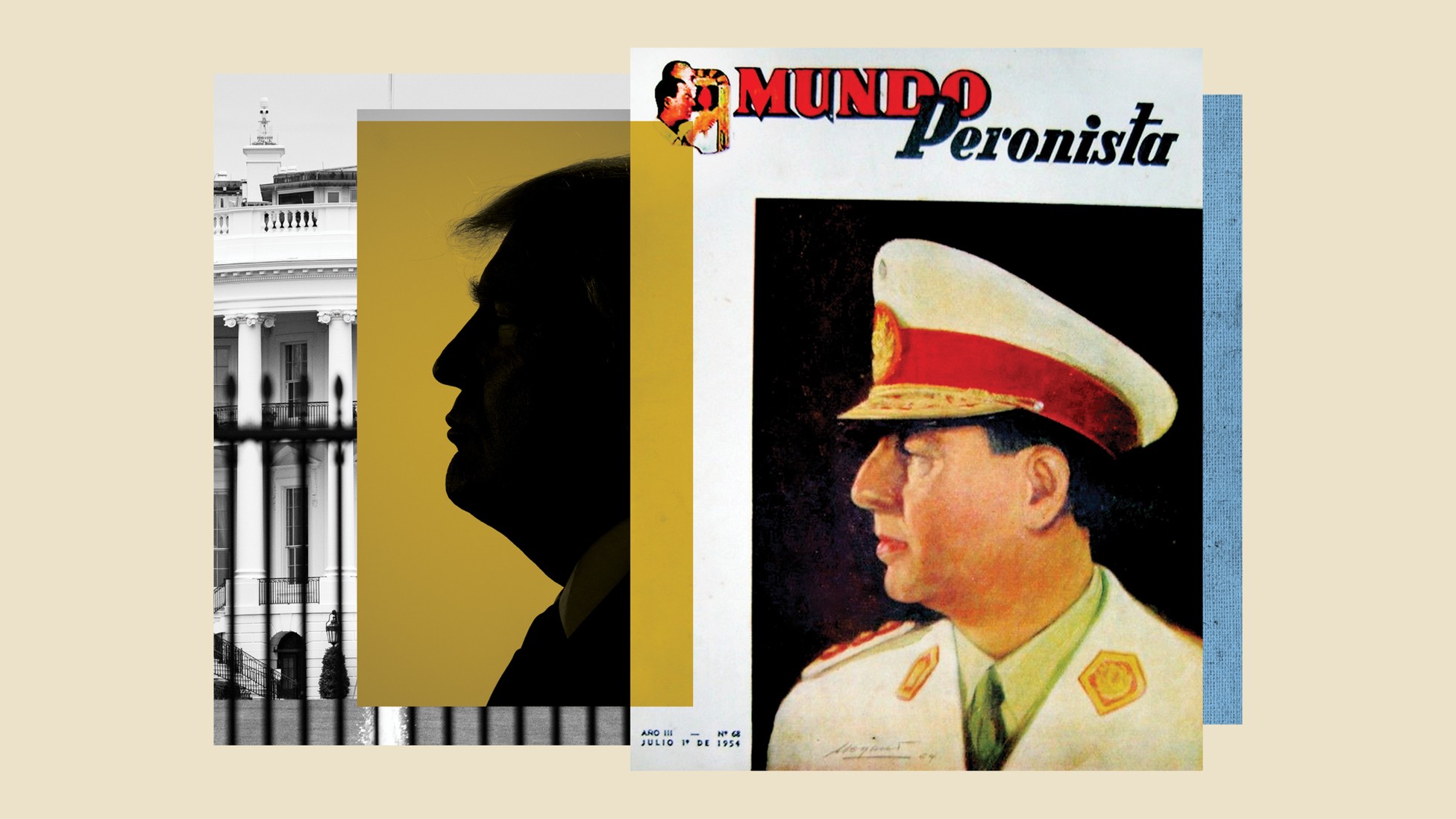
When the populist strongman Juan Perón ran Argentina’s economy from his presidential palace in the mid-20th century—personally deciding which companies received favors, which industries got nationalized or protected, and which businessmen profited from state largesse—economists warned that the experiment would end badly. They were right. Over decades of rule by Perón and his successors, a country that had once been among the world’s wealthiest nations devolved into a global laughingstock, with uncontrollable inflation, routine fiscal crises, rampant corruption, and crippling poverty. Peronism became a cautionary tale of how not to manage an economy.
President Donald Trump[The Felon] seems to have misunderstood the lesson. His second term has begun to follow the Peronist playbook of import substitution, emergency declarations, personal dealmaking, fiscal and monetary recklessness, and unprecedented government control over private enterprise. And, as with Argentina’s Peronism, much of U.S. economic policy making runs directly through the president himself.Trump’s tendency toward Peronist policy is strongest on trade. Central to Perón’s economic vision was an “import substitution industrialization” strategy, or ISI, that used tariffs, quotas, subsidies, localization mandates, and similar policies to push Argentines to produce domestically what they’d previously imported more cheaply from abroad. The approach was intended to fuel domestic growth, but it instead created insular and uncompetitive manufacturing industries saddled with high production costs, bloated finances, and rampant cronyism. Perversely, it also crushed Argentina’s globally competitive agricultural sector by diverting resources away from it and toward protected industries. Argentinian consumers suffered from higher prices, unavailable products, and lower overall living standards.
One of the most notorious examples of ISI’s failure was when the government of the Peronist President Cristina Kirchner attempted to incubate a local electronics industry through steep restrictions on imported televisions and smartphones. The result was disastrous: Modest increases in low-value domestic-assembly operations were more than offset by a market that featured substandard products priced at double what consumers were paying in neighboring Chile.
Trump’s second term is following the ISI playbook in several respects, in some cases even more so than Argentina did. According to the World Bank, for example, Argentina’s average tariff rate has hovered between 10 and 16 percent since 1992, while the Yale Budget Lab estimates that the United States’ now exceeds 18 percent and could go higher in the months ahead. “National security” tariffs for Trump’s preferred industries—including steel, aluminum, copper, and automotive goods—top out at 50 percent, well above the 35 percent duty that Argentina once applied to smartphones.
Trump’s Peronist tactics extend well beyond import substitution. Perón, for example, nationalized entire industries—railways, airlines, telecommunications, utilities—creating chronically loss-making state enterprises that endured for decades. Trump hasn’t gone nearly that far, but is exerting an astonishing degree of government control over private companies’ commercial operations. The Trump administration forced Japan’s Nippon Steel to give the U.S. president a “golden share” in U.S. Steel in order to acquire it, and required the U.S. semiconductor firms AMD and Nvidia to give the government a 15 percent cut of their China sales in exchange for export approvals. The administration also took a 15 percent stake in the rare-earth miner MP Materials and a 10 percent stake in Intel, in each case making Uncle Sam the company’s largest shareholder.
These aren’t temporary crisis measures, such as the U.S. bank and auto bailouts or wartime acquisitions of decades past. They’re permanent arrangements that give the state substantial influence over private transactions and decisions. And various administration officials, as well as Trump himself, have promised more of these deals in tech, defense, and other industries.
Trump has also flirted with Peronism in fiscal and monetary policy. Perón took control of Argentina’s central bank and used expansionary monetary policy to finance massive government spending and deficits, which led to chronic inflation. Trump, for his part, has already added trillions of dollars in new U.S. debt via the One Big Beautiful Bill Act, while also seeking to smash the independence of the Federal Reserve in order to adopt expansionary U.S. monetary policy in the face of still-warm inflation.
Perhaps the president’s most Peronist trait is the way in which he enacts his policies. Peronists, for example, acquired and then routinely deployed broad “emergency” powers to implement their statist economic policies quickly and unilaterally. Trump has similarly declared multiple national emergencies to justify his rapid imposition of global tariffs, as well as extra penalties for China, India, and Brazil, under the International Emergency Economic Powers Act. Should the Supreme Court decide that those “emergency” moves are lawful, Trump will have effectively unlimited power over tariffs and trade—a startling expansion of executive authority and a departure from our Constitution’s separation of powers.
Perón didn’t just set broad economic policy—he personally decided which companies succeeded or failed, which sectors received government support, who got access to foreign currency, and more. Trump’s second term features a similar approach, with Trump’s own preferences, interests, and personal connections driving U.S. policy making.
Trump’s first term featured a trade regime that was at least open and transparent. This time around, deals are being made behind closed doors, and special treatment is being earned from political connections and power. Those without the president’s ear don’t stand a chance. The centralization of economic decision making is decidedly Peronist: rewarding friends and punishing enemies through state power.
Trumpism isn’t full-blown Peronism yet. . . . . But each emergency declaration, Oval Office favor, and presidential intervention into private enterprise moves us closer to the Argentine model, and will make reversing course more difficult.
Peronism created vested interests—companies, cronies, unions, government officials, and more—that became dependent on the state and successfully resisted systemic reforms for decades. Trump is creating a similar dynamic today.
When a nation’s economic policy depends on personal whims and relationships rather than consistent rules applied equally to everyone, it has abandoned market capitalism. Argentina took almost 80 years to begin moving back. Let’s hope the United States moves sooner.

Tuesday, September 09, 2025

The Epstein Letter Is Real, and It’s Bad


The Felon's default position on seemingly everything is to lie and/or claim unwanted facts and news are "fake." Every time a lie or untruth is uttered from the Felon's mouth, the reflexive reaction of his cultist base and self-prostituting Republicans is to embrace the lie and attack the individuals and/or news outlets that have released inconvenient, if not damning, information. Such is the case with the now released "Epstein birthday card" signed by the Felon. The defenses made to support the Felon are often outright ridiculous, such as Speaker Mike Johnson's now multiple times retracted claim that the Felon was "an FBI informant." Meanwhile, the Felon's press secretary, Karoline Leavitt - who seems set on breaking Sarah Sander's record of lying - is still claiming that the Epstein birthday card is "fake news." The problem is that by all appearances, including the fact that the "birthday card" was released by the Epstein estate under subpoena, the Felon's card to Epstein is real and the signature on it matches that of the Felon on other writings. Where this will leave MAGA cultists is hard to say since their ability to believe lies and tightly close their eyes to facts and reality is off the charts. If nothing else, the powers that be at the Wall Street Journal must be laughing at the Felon's defamation lawsuit. A piece in The Atlantic looks at where we find ourselves:
When The Wall Street Journal reported two months ago that Donald Trump had written a suggestive letter to Jeffrey Epstein in celebration of the notorious child abuser’s 50th birthday, in 2003, the administration had a choice of available responses. The strategy it [the Felon] went with was indignant denial.
“Democrats and Fake News media desperately tried to coordinate a despicable hoax,” said the White House spokesperson Liz Huston. “Forgive my language but this story is complete and utter bullshit,” Vice President J. D. Vance wrote on X. “The WSJ should be ashamed for publishing it. Where is this letter? Would you be shocked to learn they never showed it to us before publishing it? Does anyone honestly believe this sounds like Donald Trump?” Trump sued the Journal’s parent company and its owner, Rupert Murdoch, for defamation, seeking $10 billion in damages. In the legal complaint, Trump’s lawyers accused the paper of “malicious, deliberate, and despicable actions,” including publishing “a series of quotes from the nonexistent letter.”
Now that Democrats on the House Oversight Committee have obtained and shared the letter, which is very much existent, that approach appears to have been shortsighted.
Buying Trump’s denial always required accepting some shaky premises. First, that the Journal, a highly regarded newspaper, would report an incriminating story, without evidence, about a famously litigious man with essentially infinite resources. Second, that a newspaper owned by Murdoch, a famous conservative, is in fact a partisan Democratic rag that would say anything to hurt a member of the opposing party without ascertaining its truth. (This is an extension of a long-standing conservative belief that the mainstream media follow the same journalistic principles, or lack thereof, as partisan conservative media). And, third, that the suggestion that Trump might engage in sexual gratification of a morally dubious nature is completely out of line.
Even so, on much of the political right, the truth of these premises appeared incontrovertible. Indeed, many conservatives claimed to consider the fakeness of the Journal story so obvious that they expected its publication to only help Trump.
At the time of publication, the Epstein story had opened a small but notable fissure between the president and his cult following. Now, however, thanks to the Journal, Trump was once again the victim.
This was not merely the observation of cynical politics reporters. Conservatives were loudly declaring that the story had caused them to reflexively defend the president’s moral character. “Thank God for Dems and media overreach on this,” an anonymous Trump ally told Politico.
The most puzzling aspect of the total-denial approach is that it robbed Trump’s supporters of any fallback defense. The Epstein letter is eyebrow-raising—“We have certain things in common,” Trump writes, closing with the wish, “May every day be another wonderful secret”—but it is not an explicit confession.
Trump could have admitted to being its author while arguing that the commonalities and secrets alluded to mundane, or at least legal, activities. Instead, he [the Felon] described the letter as “false, malicious, and defamatory”—conceding that, if it were real, it would be pretty bad.
Guess what? It’s real. And it’s bad.
When the Journal story first broke, Vance demanded, “Will the people who have bought into every hoax against President Trump show an ounce of skepticism before buying into this bizarre story?”
The episode certainly does tell us something about Trump and the need for appropriate levels of skepticism. Don’t count on the president’s cultists to draw the right conclusion.

Monday, September 08, 2025

Sunday, September 07, 2025

Without Allies America Can’t Match China
For the first time in its modern history, the United States faces a rival — China — that has greater scale in most of the critical dimensions of power, and American national capacity alone may not be enough to rise to the challenge.
We are entering an era where the true measure of American primacy will be whether Washington can build what we call allied scale: the power to compete globally in tandem with other countries across economic, technological and military domains.
President Trump appears to be moving in the opposite direction. His go-it-alone, tariff-centric diplomacy has alienated allies and left openings for Beijing to build its own coalitions. Mr. Trump’s recent imposition of high tariffs on India are just one example. The United States spent three decades courting India as a geopolitical counterweight to China. But after the tariffs were applied on India, Prime Minister Narendra Modi last week visited China for the first time in seven years, where he and President Xi Jinping agreed to move past a recent history of tense relations and work as partners, not rivals.
Mr. Trump is playing with fire.
Throughout the 20th century, America outproduced and out-innovated Germany, Japan and the Soviet Union. But China is different. On the metrics that matter most in strategic competition, it has already surpassed the United States.
Its economy, while slowing, is still nearly 30 percent larger than America’s when one accounts for purchasing power. China has twice the manufacturing capacity, producing vastly more cars, ships, steel and solar panels than the United States and more than 70 percent of the world’s batteries, electric vehicles and critical minerals. In science and technology, China produces more active patents and top-cited publications than the United States. And militarily, it has the world’s largest naval fleet, a shipbuilding capacity estimated to be more than 230 times as great as America’s and is fast establishing itself as a leader in hypersonic weapons, drones and quantum communications.
China has its problems, such as a shrinking and aging population, excess industrial capacity, rickety state finances and high debt. But any serious U.S. strategy toward China must reckon with the Cold War aphorism “Quantity has a quality all its own.”
The rise and fall of great powers has often turned on scale — the size, resources and capacity that make a nation formidable. Once countries reach similar levels of economic productivity, those with larger populations and continental size eventually surge ahead. Britain’s first-mover advantage in the Industrial Revolution gave way once larger countries like the United States and Russia caught up. In the 20th century, America awed its enemies: Hitler called it a “giant state with unimaginable productive capacities,” and Adm. Isoroku Yamamoto, architect of the attack on Pearl Harbor, admitted he could run wild in the Pacific Ocean for only so long before American industry overwhelmed Japan.
Today, that sense of daunting scale describes China. America’s best hope for matching that lies in maximizing its own strength through alliances. That means no longer treating U.S. allies as dependents under our protection, but as partners in building power jointly by pooling markets, technology, military capability and industrial capacity. Investments in American renewal are necessary, but insufficient by themselves.
Alone, the United States will be smaller compared with China by many important metrics. But together with economies such as Europe, Japan, South Korea, Australia, India, Canada, Mexico, Taiwan and others, there is no competition. This coalition would be more than twice China’s G.D.P. when adjusted for purchasing power, more than double its military spending, the top trading partner of most countries in the world, and would represent half of global manufacturing to China’s one-third. It would possess deeper talent pools, create more patents and top-cited research, and wield a degree of market power that could deter Chinese coercion. Allied scale would win the future.
The aim is not to contain China — an impossible goal — but to balance it. Only through partnerships can we protect our shared industrial bases, technological edge and the ability to deter China.
The Biden administration favored persuasion in winning over other countries. It helped create the Trade and Technology Council with Europe; elevated the so-called Quad grouping that combines the United States, India, Japan and Australia to balance China’s growing influence; reached a nuclear submarine deal with Australia and Britain; and struck new export control and trade arrangements.
Mr. Trump’s hardball tactics target the very economies that the United States should be pulling closer. Even his handshake trade deals with Japan, South Korea and Europe focus narrowly on reducing bilateral trade deficits, raising tariff revenue and securing vague investment pledges rather than balancing China. U.S. allies have publicly likened his approach to a “landlord seeking rent.” America’s global popularity has plummeted, even falling behind China’s in many countries.
[H]e is squandering America’s precious leverage on the wrong objectives. Instead of settling for vague pledges from trade partners, he should push them for significant and specific long-term investment in sectors that will spark American reindustrialization. Instead of focusing on trivial disputes — like trying to sell more American rice to Japan — he should press them to commit to building a multilateral tariff and regulatory wall that protects the industrial bases of the countries behind it from being hollowed out by China’s mercantilism.
It’s not too late for Washington to build allied scale, even through Mr. Trump’s coercive style. But unless the president redirects his leverage toward the goal of balancing China’s overwhelming capacity, he will leave America smaller and more isolated.
The next century, then, will be China’s to lose.

Subscribe to:
Posts (Atom)