Showing posts with label failed leadership. Show all posts

Monday, July 27, 2020

America’s Global Standing is at a Low Point


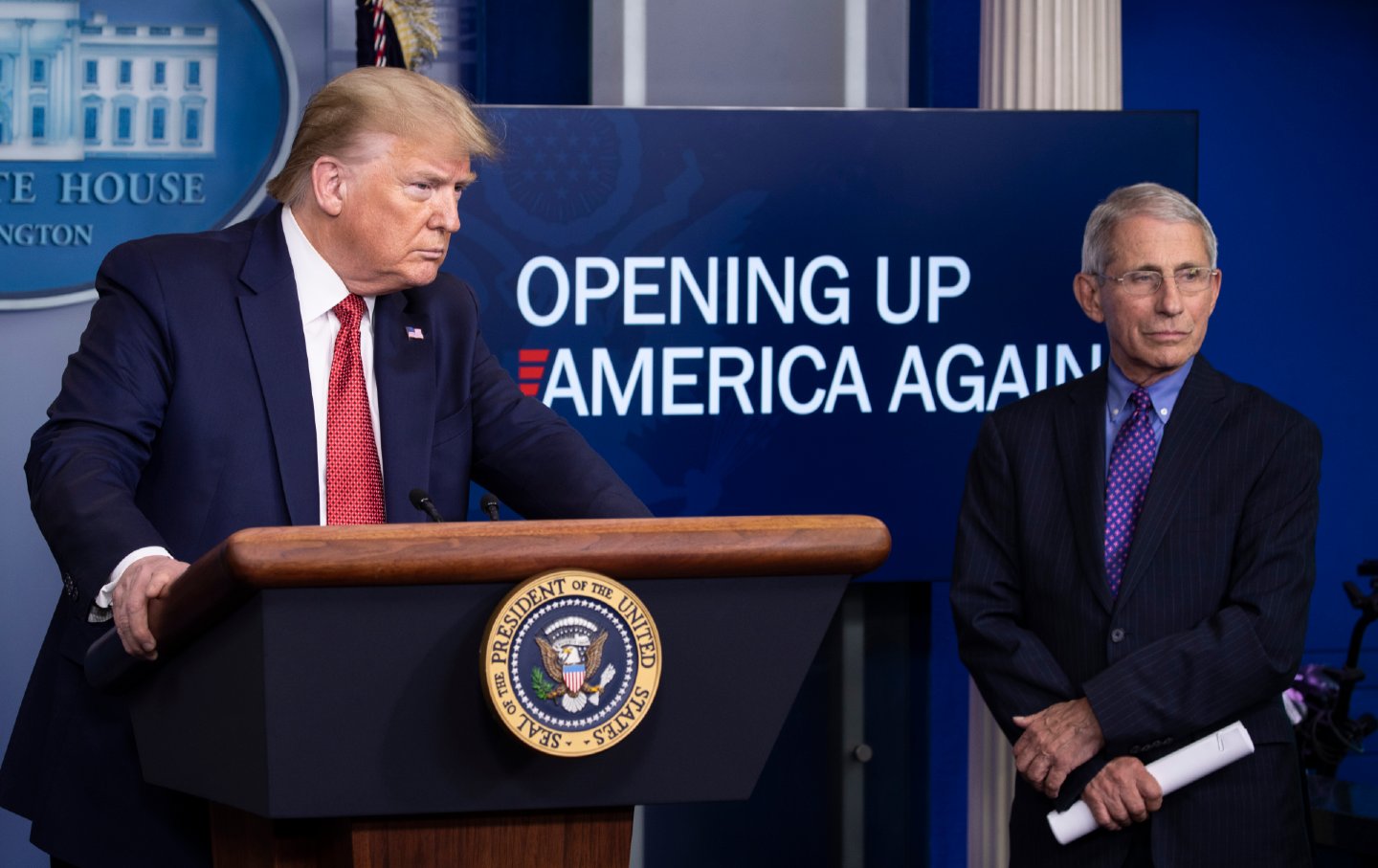
It's ironic that while Donald Trump's campaign theme was to "make America great again,"the reality of his term in office so far is that America's standing in the global community of nations is at a low point even as China's military continues to build, Russia gains ground in the Middle East, and our long-time allies see us as unreliable. Add in America's failed response to the Covid-19 pandemic, about which we are either laughed at or pitied, and America's image is in tatters.  A second irony is that but for Trump's racist, religiously extreme/ignorance embracing base, who think America is the greatest, everyone else can see that its not and that it's decline has been precipitous because of their cult leader.  We cannot take much more of Trump's "winning." An very long article in the Washington Post looks at America's failed stature, most of which tracks to the malignant narcissist in the White House, on the global scene.   Here are excerpts: 

America’s standing in the world is at a low ebb. Once described as the indispensable nation, the United States is now seen as withdrawn and inward-looking, a reluctant and unreliable partner at a dangerous moment for the world. The coronavirus pandemic has only made things worse.
President Trump shattered a 70-year consensus among U.S. presidents of both political parties that was grounded in the principle of robust American leadership in the world through alliances and multilateral institutions. For decades, this approach was seen at home and abroad as good for the world and good for the United States.
In its place, Trump has substituted his America First doctrine and what his critics say is a zero-sum-game sensibility about international relationships. America First has been described variously as nationalistic, populistic, isolationist and unilateralist. [Trump] The president has demeaned allies and emboldened adversaries such as China and Russia.
At home, Trump’s handling of the pandemic has created division and confusion rather than an effective national strategy. The rest of the world sees the United States not as a leader in dealing with the coronavirus but as the country with the highest number of coronavirus infections and covid-19 deaths, and with the disease far from under control. European nations have responded with the unprecedented step of blocking Americans from entering their countries.
Before the pandemic, [Trump] the president took a number of steps that signaled a retreat from collective involvement abroad, pulling out of the Paris climate agreement, the Iran nuclear deal and the Trans-Pacific Partnership trade pact. He raised doubts about the U.S. commitment to NATO. After a long-running quarrel with German Chancellor Angela Merkel, he has called for the withdrawal of more than a quarter of the 34,500 U.S. troops stationed in Germany.
When many world leaders participated in a World Health Organization assembly on the pandemic, the president was absent. Trump’s anger with China over the virus ultimately prompted him to withdraw the United States from the WHO.
“People are stunned about the effect of incapable leadership, or of polarizing leadership, of not being able to unify and get the forces aligned so you can address the problem [of the coronavirus],” said Thomas Kleine-Brockhoff, a vice president of the German Marshall Fund and director of its Berlin office. “And that, of course, results in a nosedive in how you view [the United States]. What you’re seeing is a collapse of soft power of America.”
“I think the U.S. is seen from my perspective as being involved in its own internal reckoning — like the rest of the world doesn’t really exist,”
“It hurts our brand. It hurts the status of our institutions. It’s going to weaken our economy and our economic power and soft power as a consequence,” said Stephen J. Hadley, who was a national security adviser to President George W. Bush. “It’s potentially a real setback.”
This is not the first time the world has held America in low esteem. The U.S. invasion of Iraq cost the country dearly, in lives and in prestige. George W. Bush left office highly unpopular, especially in Europe.
Still, by the numbers, Trump had an immediate and negative impact. A Gallup survey of impressions of world leadership after the first year of Trump’s presidency saw the rating of U.S. leadership plummet by 20 points — lower than Bush’s worst rating.
The following year, approval of U.S. leadership remained similarly low, and disapproval was higher than for the leadership in Germany, China and Russia. “In this climate, China’s leadership has gained a larger advantage in the ‘great power competition,’ and the other player, Russia, is now on a more even level with the U.S.,” the Gallup report said.
The Pew Research Center issued a report in January on international attitudes toward the United States and found 64 percent of people across 32 countries saying they had no confidence in Trump as the U.S. leader, though impressions of the U.S. as a whole remained positive.
“President Trump is acting as no administration acted since the 1920s,” said Nicholas Burns, a career Foreign Service officer and former U.S. ambassador to NATO now teaching at Harvard’s Kennedy School. “Those presidents were engaged in the world. President Trump isn’t. He’s almost at war with the world.”
Ivo Daalder, president of the Chicago Council on Global Affairs and U.S. ambassador to NATO during the administration of President Barack Obama, said of Trump, “He doesn’t believe in alliances, open markets, promotion of freedom and human rights — the three pillars of [American] foreign policy. On the essential concept of the United States as the global leader of the international order, Donald Trump has thrown that all out the window.”
“By almost every measure, America’s standing and influence in the world has been damaged over the last three-and-a-half years. . . . You see it during a crisis. This is the first global crisis probably since World War II where the United States has not been in the lead. It’s kind of a stunning thing to see a transnational challenge like this without U.S. leadership.”
“I think this is the most dangerous moment the United States has faced in decades,” said the former Obama adviser Donilon. “We obviously are in the midst of multiple crises. Economic. Health. A serious societal upheaval. We have an election system that is vulnerable to outside interference. . . . We have the lowest point in our relationships with Russia and China in decades. I think democracy is under the most pressure in the world since the ’30s.”
Burns, a foreign policy adviser to the Biden campaign, said he thinks the former vice president, as president, would “quickly return the United States to a position of leadership” and that other governments would respond positively to that. “But I worry that it will take longer with the publics of these countries,” he added. “The memory of Donald Trump will not fade easily.”
[T]he last time this country’s standing was in decline, it was because of fears that the United States would exercise its vast powers excessively and unilaterally. That is not the issue today. Instead, it is a worry that the United States is no longer prepared or willing to use the powers it still has for the good of the world.

Friday, July 24, 2020

Why America Failed to Beat Covid-19 in One Word: Trump

The myth of American exceptionalism drives me to distraction.  Almost every nation sees itself as exceptional in some ways and history is littered with former empires and so-called great powers that disappeared or seen their glory days fade away.  Now, in the age of a worldwide pandemic, America has shown itself to be exceptional in the worse way possible: the pandemic is out of control in many states and Americans are banned from traveling to most parts of the world. Europe, Canada, Mexico, most of the Caribbean region, including the Bahamas, will not allow Americans to visit.  America finds itself somewhere between a laughing stock and an object of pity.  How did this happen?  One word - actually, one name - explains it all: Trump.  A column in the New York Times compares the US response to that of Italy, a country often viewed by many as dysfunctional, especially its bureaucracy, and the comparison is damning.   Of course, besides Trump, America has another huge negative working against it: the fake news outlets of the far right and "conservatives" who reject science and knowledge and blindly support the con-artist in the White House.  Here are column highlights:

A few days ago The Times published a long, damning article about how the Trump administration managed to fail so completely in responding to the coronavirus. Much of the content confirmed what anyone following the debacle suspected. One thing I didn’t see coming, however, was the apparently central role played by Italy’s experience.
Italy, you see, was the first Western nation to experience a major wave of infections. Hospitals were overwhelmed; partly as a result, the initial death toll was terrible. Yet cases peaked after a few weeks and began a steep decline. And White House officials were seemingly confident that America would follow a similar track.
We didn’t. U.S. cases plateaued for a couple of months, then began rising rapidly. Death rates followed with a lag. At this point we can only look longingly at Italy’s success in containing the coronavirus: Restaurants and cafes are open, albeit with restrictions, much of normal life has resumed, yet Italy’s current death rate is less than a 10th of America’s.
Donald Trump keeps boasting that we’ve had the best coronavirus response in the world, and some credulous supporters may actually believe him, my guess is that many people are aware that our handling of the virus has fallen tragically short compared with, say, that of Germany. It may not seem surprising, however, that German discipline and competence have paid off (although we used to think that we were better prepared than anyone else to deal with a pandemic). But how can America be doing so much worse than Italy?
For all its problems, Italy is a serious and sophisticated country, not a comic-opera stage set. Still, Italy entered this pandemic with major disadvantages compared with the United States.
Unfavorable demography and economic troubles are also major Italian disadvantages. The ratio of seniors to working-age adults is the highest in the Western world. Italy’s growth record is deeply disappointing: Per capita G.D.P. has stagnated for two decades.
When it came to dealing with Covid-19, however, all these Italian disadvantages were outweighed by one huge advantage: Italy wasn’t burdened with America’s disastrous leadership.
Italy quickly moved to do what was necessary to deal with the coronavirus. It instituted a very severe lockdown, and kept to it. Government aid helped sustain workers and businesses through the lockdown. The safety net had holes in it, but top officials tried to make it work; in a supreme case of non-Trumpism, the prime minister even apologized for delays in aid.
And, crucially, Italy crushed the curve: It kept the lockdown in place until cases were relatively few, and it was cautious about reopening.
America could have followed the same path. . . . But the Trump administration and its allies pushed for rapid reopening, ignoring warnings from epidemiologists. Because we didn’t do what Italy did, we didn’t crush the curve; quite the opposite. Matters were made worse by pathological opposition to things like wearing masks, the way even obvious precautions became battlegrounds in the culture wars.
So cases and then deaths surged. Even the promised economic payoff from rapid, what-me-worry reopening was a mirage
Incredibly, Trump and his allies seem to have given no thought at all about what to do if the overwhelming view of experts was right, and their gamble on ignoring the coronavirus didn’t pan out. A miraculous boom was Plan A; there was no Plan B.
[T]ens of millions of workers are about to lose crucial unemployment benefits, and Republicans haven’t even settled on a bad response. On Wednesday Senate Republicans floated the idea of reducing supplemental benefits from $600 a week to just $100, which would spell disaster for many families.
For someone like Trump, all this must be humiliating — or would be if anyone dared tell him about it. After three and a half years of Making America Great Again, we’ve become a pathetic figure on the world stage, a cautionary tale about pride going before a fall.
These days Americans can only envy Italy’s success in weathering the coronavirus, its rapid return to a kind of normalcy that is a distant dream in a nation that used to congratulate itself for its can-do culture. Italy is often referred to as “the sick man of Europe”; what does that make us?

Monday, July 13, 2020

Can the GOP Save Its U.S. Senate Majority?

If one looks ate the legislation that has passed the U.S. Senate over the last year, the bills enacted are paltry in number.  Meanwhile, hundreds of bill passed by the House of Representatives have piled up on Mitch McConnell's desk and have been denied debate much less a vote.  Instead of doing its job, the Republican majority has done little and served basically as an enabler for Donald Trump's misrule with Republican senators most focused on licking Trump's feet and ducking any action that might enrage the knuckle dragging, racist, religiously extreme party base. A piece in The Hill by a Republican argues what needs to be done if the GOP is to avoid a increasingly likely loss of the majority in the Senate.  Don't expect any of these suggestions to be implemented by today's worthless Republican Senators.  Here are excerpts:
There is the old, rather worn, but still applicable adage of “when you are in a hole, stop digging." This could definitely be applied to the Republican Senate.
The Republicans in the Senate have been supplicants to President Trump.
They have marched behind him as he has marginalized himself more and more with his weak and divisive leadership on almost all issues of significance, from the coronavirus crisis to the more general goal of giving the nation a purposeful direction.
It is well past time for Senate Republicans to stand up for themselves. At least seven and maybe more Republican Senate members who are running for reelection may not be returning if the president, who seems to be oblivious to his stylistic and substantive disconnect with the majority of Americans, meets a defeat in November of Barry Goldwater proportions.
Trump has yet to give any meaningful reason why he should be reelected other then his dislike of the mainstream media (which is well-founded) and his own narcissistic self-importance.
Neither of these idiosyncrasies helps build an agenda that attracts more then a minority of electoral support.
There is no there, there with this president. There is only a “me” there.
Republican senators, like most elected officials, are a risk-averse group. They have chosen to be background to the Trump presidency. This is no longer a viable path for those up for reelection in competitive states. This, in turn, imperils the party’s hopes of retaining the Senate majority.
[I]t is difficult to see how Republican members can hold onto the Senate if they keep inextricably tying themselves to the misanthropic style of Trump.
Rather then being the “very stable genius” that the president has proclaimed himself, he appears more often to be an unguided political missile who might well lead those who follow him to a defeat of historic proportions.
It is late, maybe later than they think, but the Republican Senate, as the last rational group standing in the Republican Party now milling around Washington, should present its own largely positive argument for why it should continue to run the Senate.
It needs a name and set of goals that make sense.
Set out a course to protect us not only from this pandemic but from the next one that may come, by setting up a systematic, massive commitment to develop vaccines and prevention.
Relatedly, stop the trial bar from using this pandemic as a piggy bank with lawsuits that disable small businesses’ ability to recover.
Address the pressing issue of healthcare reform with policies that promote the marketplace of ideas for better care and individual choice.
Address immigration reform not as a threat, but rather a way to make our nation stronger — as immigrants always have — and more competitive in this global economy.
Return to a course that rebuilds our strategic alliances. NATO especially has been essential in protecting both our security and freedom across the world.
Senate Republican need to define themselves and their reasons for being there.
It is time to step out of the narrowing shadow of the president and to speak for all the people in this country who are wondering what has happened in Washington.

Sunday, July 12, 2020

Texas and Other States Report Record Covid-19 Infections

Moving into mid-July it is clear that America's response to the Covid-19 pandemic on the national front has been an unmitigated disaster.  There was never a coordinated national response and states are all over the map in their handling of the pandemic. Not surprisingly, leading the nation in the current catastrophe are Florida and Texas whose Republican governors rushed to reopen economic activity at the urging of the foul occupant of the White House who cares nothing about how many will dies, only his reelection chances. Adding to the catastrophe too are those who refuse to wear masks - claiming it infringes on their personal liberty - and care nothing about infecting others. Meanwhile, Americans are not welcomed in Europe, and the USA's neighboring countries.  A piece in the New York Times looks at the latest numbers:
New coronavirus cases reached record highs in states across the country Saturday, even as weekly testing plateaued nationwide, offering more stark evidence that the United States was failing to control new waves of infection and death.
Nine states in nearly every major region of the country reported record new single-day caseloads on Saturday: South Carolina, Texas, Alaska, Arkansas, North Carolina, Idaho, Wisconsin, Oregon and Hawaii. Six of those states, along with 10 others, registered new seven-day average case highs, . . .
Saturday also marked the first time since the beginning of the pandemic that multiple states reported more than 10,000 cases in a day, with Texas tallying a record 10,351 and Florida reporting 10,360.
In total, there were 62,715 new infections on Saturday, an increase of 11,564 from the same day last week. The single-day death toll was 724, compared with 289 a week ago.
Seven-day averages for new coronavirus-related deaths reached record levels in Arizona, California, Florida, South Carolina, Tennessee and Texas, according to The Post’s analysis. And average daily deaths were up more at least 40 percent in more than a third of U.S. states.
Testing, meanwhile, has tapered off nationwide, a sign that the surge in infections was the result of the virus’s accelerating spread in many places.


Friday, June 26, 2020

Republicans Have Thwarted America's Response to Covid-19

Americans find themselves about to be banned from traveling to Europe as that continent begins to reopen for tourism.  Meanwhile a number of red states - notably Florida and Texas - are seeing surging cases of Covid-19 with no end in sight. Republican governors who failed to impose mandatory face mask rules (Virginia has had a face mask requirement for weeks now) and continued social distancing are belatedly listening to the appeals of mayors whose cities are seeing soaring rates of infection.  The rates are soaring not because of more testing but rather because the number of infections are in fact soaring.  How did America find itself in this mess?  Like so many other problems facing America, the thanks - or more aptly, the condemnation - belongs to the GOP and Der Trumpenführer who put trying to revive the economy and Trump's reelection chances ahead of public safety.  With Trump's approval rate plummeting, it seems many voters, including GOP leaning seniors are waking up to the disaster Trump and the GOP have wrought.  A column in the New York Times looks at the fiasco.  Here are excerpts:

Earlier this year much of America went through hell as the nation struggled to deal with Covid-19. More than 120,000 Americans have now died; more than 20 million have lost their jobs.
But it’s looking as if all those sacrifices were in vain. We never really got the coronavirus under control, and now infections, while they have fallen to a quite low level in the New York area, the pandemic’s original epicenter, are surging in much of the rest of the country.
And the bad news isn’t just a result of more testing. In new hot spots like Arizona — where testing capacity is being overwhelmed — and Houston the fraction of tests coming up positive is soaring, which shows that the disease is spreading rapidly.
It didn’t have to be this way. The European Union, a hugely diverse area with a larger population than the U.S., has been far more successful at limiting the spread of Covid-19 than we have. What went wrong?
The immediate answer is that many U.S. states ignored warnings from health experts and rushed to reopen their economies, and far too many people failed to follow basic precautions like wearing face masks and avoiding large groups. But why was there so much foolishness?
Well, I keep seeing statements to the effect that Americans were too impatient to stay the course, too unwilling to act responsibly. But this is deeply misleading, because it avoids confronting the essence of the problem. Americans didn’t fail the Covid-19 test; Republicans did.
After all, the Northeast, with its largely Democratic governors, has been appropriately cautious about reopening, and its numbers look like Europe’s. California and Washington are blue states that are seeing a rise in cases, but it’s from a relatively low base, and their Democratic governors are taking actions like requiring the use of face masks and seem ready to reverse their reopening.
So the really bad news is coming from Republican-controlled states, especially Arizona, Florida and Texas, which rushed to reopen and, while some are now pausing, haven’t reversed course. If the Northeast looks like Europe, the South is starting to look like Brazil.
Nor is it just Republican governors and state legislatures. According to the new New York Times/Siena poll, voters over all strongly favor giving control of the pandemic priority over reopening the economy — but Republican voters, presumably taking their cue from the White House and Fox News, take the opposite position.
And it’s not just about policy decisions. Partisanship seems to be driving individual behavior, too, with self-identified Democrats significantly more likely to wear face masks and engage in social distancing than self-identified Republicans.
The question, then, isn’t why “America” has failed to deal effectively with the pandemic. It’s why the G.O.P. has in effect allied itself with the coronavirus.
Part of the answer is short-term politics. At the beginning of this year Donald Trump’s re-election message was all about economic triumphalism. . . . He and his officials wasted crucial weeks refusing to acknowledge the viral threat because they didn’t want to hear any bad news.
And they pushed for premature reopening because they wanted things to return to what they seemed to be back in February. Indeed, just a few days ago the same Trump officials who initially assured us that Covid-19 was no big deal were out there dismissing the risks of a second wave.
I’d suggest, however, that the G.O.P.’s coronavirus denial also has roots that go beyond Trump and his electoral prospects. The key point, I’d argue, is that Covid-19 is like climate change: It isn’t the kind of menace the party wants to acknowledge.

It’s not that the right is averse to fearmongering. But it doesn’t want you to fear impersonal threats that require an effective policy response, not to mention inconveniences like wearing face masks; it wants you to be afraid of people you can hate —people of a different race or supercilious liberals. . . . It’s “kung flu,” foisted on us by villainous Chinese. Or it’s a hoax perpetrated by the “medical deep state,” which is just looking for a way to hurt Trump.
The good news is that the politics of virus denial don’t seem to be working. Partly that’s because racism doesn’t play the way it used to: The Black Lives Matter protesters have received broad public support, despite the usual suspects’ efforts to portray them as rampaging hordes. Partly it’s because the surge in infections is becoming too obvious to deny; even Republican governors are admitting that there’s a problem, although they still don’t seem willing to act.
The bad news is that partisanship has crippled our Covid-19 response. The virus is winning, and all indications are that the next few months will be a terrifying nightmare of rampant disease and economic disruption.

Friday, May 15, 2020

Why America Resists Learning From Other Countries


One of the aspects of the United States that I find most annoying and arrogant and at times down right dangerous is the myth of American exceptionalism and a refusal to learn from the experiences of other countries, many of which have existed for centuries longer than America (e.g., the Romanov family ruled Russia for 60 years longer than America has existed; the Byzantine Empire lasted over 1000 years).  Sadly, both political parties cite this myth, but it is most popular on the right where Europe - which now has more upward social mobility than in America - is derided and the mindset is that American do everything better and has nothing to learn from others.  Time and time again, factual reality proves this myth wrong and now, in the midst of the Covid-19 pandemic, if anything, America is showing that it is exceptional in its bungling of its response to the pandemic.  A piece in The Atlantic looks at America's continued refusal to learn from other countries, often to its own detriment.  Here are article highlights:
Americans have long considered their nation a shining “city upon a hill,” with the “eyes of all people … upon us,” as the Puritan lawyer John Winthrop put it almost 400 years ago. Now those eyes are riveted on the United States for all the wrong reasons. The country is consumed by the worst COVID-19 outbreak on the planet, and the beacons of light are popping up elsewhere in the world.
R. Daniel Kelemen, a political scientist at Rutgers University who has studied what the United States could learn from European public policies, told me that those who subscribe to the ideology of American exceptionalism, or as he described it, “the notion that the United States is fundamentally different from and superior to other nations,” have traditionally resisted seeking out lessons from other countries’ experiences. At the very least, “this view leads many to think that the U.S. is simply so different that policies that might work in other countries could simply never work here,” he wrote in an email.
American exceptionalism has been pronounced dead numerous times, from the Vietnam War through the global War on Terror, and nevertheless managed to stick around through those difficult periods. But the coronavirus crisis may pose the greatest threat yet to the belief that America has little to learn from the rest of the world.
American politicians typically resist engaging with ideas from abroad. Most U.S. public-policy debates, on matters including education reform and social mobility, occur in a bizarre vacuum, as if the encounters (good and bad) of the large majority of humankind with these same challenges yield no useful insights for the United States. On the rare occasions that politicians do invoke the policies of other governments, they often wield them as political props during highly polarized debates over issues such as health care and gun control.
And many American politicians, especially those on the right, have in recent years paradoxically doubled down on American exceptionalism (we have a president who ran on an “America first” platform, after all) even as American power has declined relative to other countries’.
This kind of insularity might have been “relatively harmless when America bestrode the world like a colossus, but it’s dangerous when the country faces a raft of global challenges from China, to climate, to COVID-19,” Dominic Tierney, a political-science professor at Swarthmore College (and a former contributing editor at The Atlantic), told me by email.
Today, in the case of COVID-19, “all states face the same essential threat, and each government’s response is a kind of laboratory experiment,” Tierney said.
“The United States had the advantage of being struck relatively late by the virus, and this gave [us] a priceless chance to copy best practices and avoid the mistakes of others,” he noted.
Instead, the United States squandered that advantage on many fronts. The Obama administration had developed a playbook for pandemic response that drew in part on lessons from other countries’ experiences, but the Trump administration disregarded it. When China began confining millions of people to their homes in January, the U.S. government should have gotten the message that the Chinese were grappling with a grave threat to the wider world, the Yale sociologist and physician Nicholas Christakis told me in March. “We lost six weeks” in the United States to prepare—“to build ventilators, get protective equipment, organize our ICUs, get tests ready, prepare the public for what was going to happen so that our economy didn’t tank as badly. None of this was done adequately by our leaders.” By one estimate, from the epidemiologists Britta L. Jewell and Nicholas P. Jewell, if social-distancing policies had been implemented just two weeks earlier in March, 90 percent of the cumulative coronavirus deaths in the United States during the first wave of the pandemic might have been prevented.
Even now, as a number of countries have swum feverishly toward safer ground, the United States has spent the past couple of months of near-nationwide lockdown merely treading water. It has yet to roll out robust testing across the country, despite Donald Trump’s assertions since March that anybody who wants a test can get one. It has also failed to develop proper contact-tracing systems, as other nations have, and to meaningfully flatten the curve outside New York.
Amid all this, Trump has exhibited more hubris than humility. . . . . He has stated, referring to America’s coronavirus response, that German Chancellor Angela Merkel, Japanese Prime Minister Shinzo Abe, and “so many” other world leaders, “almost all of them—I would say all of them; not everybody would want to admit it—but they all view us as the world leader, and they're following us.” Even after he has asked the South Korean government to send tests and medical equipment to the United States to help combat the coronavirus, Trump is insisting that the country cough up much more money for the privilege of stationing U.S. troops there. It’s a measure of traditional American hard power that seems obsolete these days, relative to South Korea’s newfound clout as a world leader in addressing COVID-19. My colleague Anne Applebaum has argued that Trump’s proposal in April that people inject themselves with disinfectant, to the horror of scientists and laughter of people at home and abroad, marked an “acceleration point” for a “post-American, post-coronavirus world … in which American opinions will count less.”
A number of countries that have had more success against the coronavirus have demonstrated greater open-mindedness about learning from their peers. Taiwanese officials are watching Iceland’s mass-testing efforts, while the German government is explicitly modeling its response after South Korea’s “trace, test, and treat” campaign.
In the United States too, even before the virus hit, attitudes toward learning from other countries were beginning to change. During the 2016 presidential campaign, Hillary Clinton critiqued Bernie Sanders’s proclivity to look to other countries for policy insights and innovations (“We are not Denmark. I love Denmark. We are the United States of America,” Clinton said), but many of Sanders’s fellow candidates during the 2020 Democratic primary echoed his admiration for other countries’ achievements. “The No. 1 place to live out the American Dream right now is Denmark,” Pete Buttigieg stated during one debate.
The United States, of course, still has tremendous capacity to teach. But it also may need to emerge from this crisis recognizing that it has equal capacity to learn. To learn is to admit room for improvement, and thus to improve, especially in dealing with modern-day threats such as pandemics, which America doesn’t have much experience contending with as a superpower. The United States could, for example, easily seize on the momentum among many of its allies to pool lessons learned and coordinate policies to combat the virus and reopen economies.
I will not hold my breath waiting for Americans - especially those who support the GOP and its growing embrace of ignorance and white nationalism to learn from others anytime soon.  Meanwhile, people will literally dies because of the belief in American exceptionalism. 


Thursday, May 07, 2020

Unemployment Set to Rise: The Trump Economy Faces Long-Term Disaster

More horrific unemployment numbers are expected today and tomorrow even as some states begin - perhaps prematurely - to reopen their economies.  Indeed, some expect the unemployment numbers to be the worse since the Great Depression of the 1930's.   Donald Trump, who claimed credit for the robust economy he inherited from Barrack Obama is now faced with owning an economic disaster that may continue for some time as numerous businesses fail to reopen and large corporations refrain from re-hiring all of their employees.  Meanwhile, some major retailers are facing bankruptcy and possible closure.  A piece in CNN looks at the likely chilling unemployment numbers and the impact on Trump's chances on retaining the White House.  Here are excerpts:

The staggering economic pain -- perhaps the worst since the 1930s -- of the American economy in the time of coronavirus will be graphically underscored in two new rounds of unemployment data that are due on Thursday and Friday.
The figures will show Americans who have and will lose their livelihoods as common victims of the most cruel public health crisis in 100 years, along with the sick and the more than 73,000 people who have so far died.
The prospect of a prolonged economic slump will have important implications in politics. It is already threatening to dampen memories of the roaring economy that President Donald Trump was banking on to carry him to a second term. It may also provide an opening to presumptive Democratic nominee Joe Biden who helped bring the country back from the last economic crisis in the Obama administration.
Every day brings signs that what first looked like temporary job cuts could turn into permanent layoffs. GE, Airbnb and United Airlines this week for instance announced cuts in thousands of positions as business dries up. Discouraging news on the wider penetration of the virus raises the possibility of new spikes in infection that could further complicate the path to a full recovery.
 The emerging reality that the "rocket" like rebound the President predicted is unlikely may be behind Trump's increasingly frantic statements on a emergency he has also claimed will soon be over. . . . For weeks early this year, Trump was in denial and painted the threat from the virus as tiny. The worsening economic news will introduce a new dimension into the November presidential election clash between the President and his Democratic challenger, former Vice President Biden.
Trump is already under heavy pressure over his erratic management of the coronavirus pandemic and his initial assurances that a disease that has now infected more than a million people in this country didn't pose a threat. [P]ersuadable voters will now have two new questions to answer in the election: Is Trump the best candidate to lead the country out of both a prolonged duel with Covid-19 and to put the economy that has been shattered by the pandemic back together? The economic damage is almost inconceivable already and it will be laid bare in two sets of what are likely to be awful jobs numbers on Thursday and Friday.
First up is weekly jobs data on initial unemployment claims -- the measure that has recorded the terrible toll of weekly layoffs that have now topped 30 million people as the economy has gone into suspended animation.
To end the week, the Trump administration is braced for what could be the most disastrous unemployment numbers since the Great Depression. Economists polled by Refinitiv are expecting an unemployment rate at 16%. It's possible that 10 years of jobs gains will have been wiped out in just a couple months.
One of [Trump's] the President's top economic advisers, Kevin Hassett, has been preparing the country for an unemployment rate of up to 20%. That's more than 15 percentage points higher than the 50-year lows in the jobless rate that Trump was celebrating just weeks ago. Trump is now openly campaigning for the country to open up, despite studies that show tens of thousands of people could die in new outbreaks of the disease. . . . But despite widespread demonstrations by conservative groups against governors who are keeping their states shut down, polls suggest that many Americans are wary of resuming normal life.
Nearly two-thirds of those asked in the Monmouth poll were concerned that states will begin lifting restrictions too quickly. And only 33% share Trump's implied view that stopping the economy from going into a deep, lengthy downturn is more important than stopping people getting sick.
The initial economic trauma of the shutdowns is likely to be exacerbated by sobering facts on the state of the pandemic. While cases are dipping in worst-hit regions such as New York and New Jersey, they are actually rising in many states yet to peak.
If new infections do emerge on a wider footprint than the previously worst affected areas on the coasts and in the city, the consequences for the economy could be even more serious.
Service jobs in restaurant, leisure, and travel sectors are unlikely to recover when the public is wary about going out.
And rising infections could take another swipe at the health sector which helped drive recent jobs gains but has been hammered in recent months, with elective surgeries and routine appointments canceled.

Tuesday, May 05, 2020

Trump's Damage Is Done and He May Not Be Able to Save Himself

A mass grave on New York’s Hart Island.
Earlier this evening I shared a great Lincoln Project anti-Trump ad - aptly entitled "Mourning in America" - on Facebook and now I am ready an op-ed in the Washington Post by a former Republican and former GOP apologist columnist.  Both the ad and the column take aim at Donald Trump, a/k/a Der Trumpenführer, but by extension the Republican Party as represented by nasty trolls like Mitch McConnell and self-prostituting  individuals like Lindsey Graham who have demonstrated that there ids no limit to the self-degradation they will engage in rather than draw the ire of Trump's knuckle dragging, white supremacist/Christian extremist base. One can only hope that the column's premise that Trump's goose is already cooked proves true. Here are column highlights:
In the latest Monmouth poll on Trump’s handling of the pandemic, “42% say he has done a good job and 51% say he has done a bad job. His prior ratings on handling the outbreak were 46% good job to 49% bad job in April and a positive 50% good job to 45% bad job rating in March.” The pollsters found that “the overall trendline suggests that the public is growing less satisfied with Trump’s response to the pandemic.” Not unexpectedly, as the deaths increase and Trump’s lies and crackpot conspiracy theories contradict Americans’ nightmarish experience, they are less and less enamored of him.
The voters are at odds with Trump on the most fundamental question, namely whether to prioritize health or the economy. Among voters, 63 percent are concerned about opening up business too soon (consistent with other recent polls) and 54 percent think the federal government is not doing enough.
To the extent the election becomes a referendum on Trump’s handling of the pandemic, he will find it hard slogging, even in red states. Some stunning polls suggest the race is competitive in places where Trump should be winning easily. . . . . In Texas, the last two polls show Trump and Biden in a statistical dead heat. (Trump won by nine points in 2016.) And in North Carolina, which Trump won by almost four points, one poll shows Biden leading by seven points, and others show a dead heat.
Several points deserve emphasis.
First, if the draft government memo obtained by The Post forecasting 200,000 new coronavirus cases per day by June 1 is accurate, Trump’s numbers certainly will not improve.
Second, as the coronavirus invades rural America and red states, the definition of a “safe” seat may change. The New York Times reports: “Rural towns that one month ago were unscathed are suddenly hot spots for the virus. It is rampaging through nursing homes, meatpacking plants and prisons, killing the medically vulnerable and the poor, and new outbreaks keep emerging in grocery stores, Walmarts or factories, an ominous harbinger of what a full reopening of the economy will bring.” And it’s not just big cities in red states.
Third, Trump’s increasingly negative tone toward “blue-state bailouts” means not only plenty of negative ads for Biden in places such as Michigan and Pennsylvania, but also a federal government failure of epic proportions. New York Gov. Andrew M. Cuomo (D) took this head-on during a news conference Tuesday. “First of all, this is not a blue-state issue. Every state has coronavirus cases.” He warned, “You need a bipartisan bill to pass. You go down this path of partisanship and politics, you will never pass a bill. If you never pass legislation, you’ll never get this economy back on its feet. So you go down this path of division, you will defeat all of us, because we’re all in the same boat.”
He might have added: If Trump keeps going down this path, he will face a brutal defeat in November. Then again, the damage is already done, and whatever Trump does may not save him or the Republicans who have lashed themselves to his mast.

Monday, April 27, 2020

Why Trump Failed America

If one is honest, looks at the facts, all of Trump's lies, and considers all the ways that the Trump/Pence regime weakened America's ability to meet the Covid-19 crisis  - e.g, disbanding the National Security Council pandemic directorate, slashing funding for the CDC, and rescinding Obama era regulations for nursing homes that might has slowed the spread of the virus among the  nursing home residents - the only conclusion is that Trump has spectacularly failed America. But even beyond all of this, there is an added reason for Trump's failure: he is a malignant narcissist who lies incessantly and cares only about himself and satiating his unquenchable ego.  All the warning signs were on open display ranging from his boasts about "grabbing p*ssy" without consequence to being able to shoot someone on 5th Avenue without consequence.  Sadly, Trump's calls to racism and religious extremism were followed by many who should have known better even as Democrats in a funk stayed home and by default voted for Trump.  A column at CNN looks at all of this and Trump's very nature that guaranteed his huge failure to safeguard America.  Americans should never again put someone with Trump's mental and psychological illness in the Oval Office - or any high office.  Here are column excerpts:
Watching President Donald Trump wrestle with this epic crisis reminds me of the old fable about the Scorpion and the Frog.
You'll remember that the scorpion asks the frog for a ride across a river, only to sting the frog when they are midway across. When the startled frog asks why the scorpion would repay his kindness so cruelly and kill them both, the scorpion shrugs. "It's my nature." Trump could have made this unparalleled and agonizing trial for our country an occasion for personal triumph — if he were only able to take the personal out of it. But that is not his nature.
This moment of extraordinary pain and crisis calls for steadiness and sobriety; empathy for the widespread pain and suffering of others; absolute transparency; a willingness to listen and learn; and rigorous, disciplined attention to detail. None of these qualities are within his nature.
Many governors across America have enhanced their popularity simply by doing their jobs during this deadly outbreak of the coronavirus. Even in a polarized nation, it might have been the same for Trump if, from the start, he had leveled with the country about the nature of the threat, followed expert advice and made the case for the painful and decisive steps required to save lives.   But that's not his nature. Instead, the [Trump] President spent six weeks dismissing the threat and offering false assurances as public health experts frantically warned what was to come.
 Trump ostensibly feared that an acknowledgment of the severity of the virus and the draconian steps required to protect Americans would tank the stock market and the economy, which he had hoped to make the springboard to his re-election. So he insisted on an alternative storyline. US cases would not surpass 15, he said in February, even as some public health experts warned of a potential pandemic. "Miraculously," he suggested with a flourish, the virus could just fade away with a change in the weather.
 As Covid-19 had begun its deadly march across the nation, Trump was accusing Democrats and the media of politicizing the disease in what amounted to a Coronavirus "hoax" to damage him.
While some governors were mobilizing against the threat, [Trump] the President sent the nation and federal bureaucracy the opposite signal, delaying the necessary steps, which cost the nation valuable time to gird for the battle and deepened the crisis.
 Since the day he finally recalibrated, appearing at the podium in the White House briefing room in March to declare war on Covid-19, [Trump] the President has spent most of his briefing time spinning his administration's uneven and tardy response (which he rated a 10 out of 10) rather than giving the American people the sober and accurate assessment they need. Truth and accountability are not his nature. Americans of all stripes are bound together by a common calamity, hungry for a unifying leader who will rise above partisanship. But that is not Trump's nature. He has suggested that governors, desperately asking the federal government for more testing supplies, were acting out of political motivation.
 Trump is who Trump has been from the beginning of his long career in the public eye: a super narcissist and shameless self-promoter, unwilling to accept responsibility or the truth and unable to think about anyone but himself. If he had been more in this historic moment, it would have done so much to strengthen his brand and his prospects of reelection -- not to mention comfort his wounded country. But it is no surprise that he could not. It's just not his nature.

Saturday, April 25, 2020

Hopefully Trump Is Self-Destructing Before Our Eyes

The lies and insanity coming from Donald Trump's daily coronavirus briefings is so overwhelming that a number of Republican elected officials are whispering that the briefings need to stop.  Daily, Trump provides Joe Biden and other Democrats with material for future political ads that underscore his utter incompetence.  Trump's latest off the charts batshitery was to suggest that injecting humans with disinfectants would be a cure for Covid-19.  Yes, it would be a cure alright, the patient would be dead and the virus thus defeated. As the New York Times reports, both manufacturers of disinfectants and health officials have rushed to urge people to NOT follow Trump's suggestions: 

[Maryland's] Emergency Management Agency had to issue a warning that “under no circumstances” should any disinfectant be taken to treat the coronavirus. In Washington State, officials urged people not to consume laundry detergent capsules. Across the country on Friday, health professionals sounded the alarm.
Injecting bleach or highly concentrated rubbing alcohol “causes massive organ damage and the blood cells in the body to basically burst,” Dr. Diane P. Calello, the medical director of the New Jersey Poison Information and Education System, said in an interview. “It can definitely be a fatal event.”
Even the makers of Clorox and Lysol pleaded with Americans not to inject or ingest their products.
The frantic reaction was prompted by President Trump’s suggestion on Thursday at a White House briefing that an “injection inside” the human body with a disinfectant like bleach or isopropyl alcohol could help combat the virus.
One has to wonder when my Republican friends will finally admit that the elected a lunatic to the Oval Office.  Not a day goes by without numerous lies and falsehoods being disseminated by Trump.  It's so bad that CNN now has a daily piece that reviews the prior evening's falsehoods.  A column also in the Times speculates that Trump is self-destructing before our eyes (although probably not in the eyes of his knuckle dragging, racist base, some of whom may try Trump's suggested "cure").  Here are column highlights:


Tens of thousands of Americans die; what does the president do? Spreads bad information. Seeds false hope. Reinvents history, reimagines science, prattles on about his supposed heroism, bellyaches about his self-proclaimed martyrdom and savages anyone who questions his infallibility. In lieu of leadership, grandstanding. In place of empathy, a snit. And he’s going to get re-elected.
With that refrain we perform a spiritual prophylaxis. We prepare for despair. . . . We began to treat a verbal tic as inevitable truth.
It isn’t. While Trump may indeed be careening toward four more years, it’s at least as possible that he’s self-destructing before our eyes.
Maybe a toasty beam of sunlight is all that we need to wipe out the coronavirus? What if we just injected disinfectant into our veins? He floated both of those fantasies on Thursday, when he might as well have stepped up to the lectern in a tin foil hat. They’re the ramblings of a dejected, disoriented and increasingly desperate man.
As Katie Rogers and Annie Karni reported in The Times, [Trump] the president feels isolated and embattled and is panicked that he’ll lose to Joe Biden in November. That state of mind, they wrote, prompted his executive order to halt the issuing of green cards, which is precisely the kind of base-coddling measure that he resorts to “when things feel out of control.”
He can read the polls as well as the rest of us can, and they show that while he stands there nightly in the White House briefing room and blows kisses at himself, Americans aren’t blowing kisses back. A month ago there was much ado about a slight uptick in Trump’s job-approval numbers. But the real story was the slightness: Past presidents had experienced greater bumps during crises, when Americans tend to rally around their leader. For Trump there was no such rallying — just a grudging, incremental benefit of the doubt. A fleeting one, too. His uptick quickly took a downturn, reuniting him with his anemic norm. According to the polling average at FiveThirtyEight as of late Friday afternoon, 52.5 percent of Americans disapprove of his job performance. Only 43.4 percent approve. Other numbers tell an even scarier story for Trump. In all three of the battleground states that enabled his Electoral College victory three and a half years ago, he’s currently behind Biden — by 6.7 percentage points in Pennsylvania, 5.5 in Michigan and 2.7 in Wisconsin, according to the averaging of recent polls by RealClearPolitics. That website also puts him behind by 3.2 points in Florida, a state he won in 2016 and must win again. According to monthly polling by Gallup, the percentage of Americans who indicated satisfaction with the way things were going in the country plummeted to 30 percent in mid-April from 42 percent in mid-March. Only twice before in the past two decades has there been a one-month decline that precipitous.
Maybe this drop was less a referendum on Trump’s stewardship than a recognition of the coronavirus’s devastation. But maybe not: Surveys reveal that a significant majority of Americans believe that he acted too late to stem the virus’s spread. He’s also out of step with most Americans’ appraisal of what will and won’t be safe in the immediate future.
In a Washington Post-University of Maryland poll, 65 percent of Americans said it could take until June or later for gatherings of 10 people or more to be safe. And in a Yahoo News/YouGov poll, only 22 percent of Americans supported the protesters who have been demanding an end to their states’ restrictions, while 60 percent opposed them. President Trump has egged those protesters on.
Is he following some gut instinct or just flailing? I vote for the latter. Lately he has contradicted himself at a whole new pace and to a whole new degree, and he has undercut his own party’s talking points.
Republicans have developed a strategy to evade any responsibility for Trump’s response to the pandemic by blaming and demonizing China. “But there is a potential impediment to the G.O.P. plan — the leader of the party himself,” Martin and Haberman wrote, noting that Trump has “muddied Republican efforts to fault China” by continuing to curry favor with President Xi Jinping. Also, Trump’s most optimistic pronouncements about imminent deliverance from the current misery represent a bigger gamble than the many others he has taken. If he’s wrong, there’s not going to be any hiding it. If he’s reckless, the toll is Americans’ very lives. There’s incessant talk of how fervent his base is, but the many Americans appalled by him have a commensurate zeal. For every Sean Hannity, there’s a Rachel Maddow. For every Kellyanne Conway, a George Conway. She and her ilk may be wily in their defense of the president. He and his tribe are even better in their evisceration of him.
And what of the diaspora of refugees from the Trump administration: people like Rick Bright, the government scientist who says he was just stripped of his leading role in the search for a coronavirus vaccine because he wouldn’t parrot Trump’s cockamamie talking points? I predict that as November nears, more and more exiles will speak out, sharing alarming accounts of life inside the president’s hall of mirrors. Trump in turn will mutter about the “deep state,” but the phrase won’t fly when he’s left with such a shallow pool of charlatans around him — and when he’s making such a repellent fool of himself.
Don’t tell me that his nightly briefings are just a new version of the old stadium rallies; their backdrop of profound suffering makes them exponentially harder to stomach. Americans who take any comfort from them were Trump-drunk long ago. The unbesotted see and hear the president for what he is: a tone-deaf showman who regards everything, even a mountain of corpses, as a stage.


I sincerely hope the author is correct.