Showing posts with label economic collapse. Show all posts

Friday, July 24, 2020

Why America Failed to Beat Covid-19 in One Word: Trump

The myth of American exceptionalism drives me to distraction.  Almost every nation sees itself as exceptional in some ways and history is littered with former empires and so-called great powers that disappeared or seen their glory days fade away.  Now, in the age of a worldwide pandemic, America has shown itself to be exceptional in the worse way possible: the pandemic is out of control in many states and Americans are banned from traveling to most parts of the world. Europe, Canada, Mexico, most of the Caribbean region, including the Bahamas, will not allow Americans to visit.  America finds itself somewhere between a laughing stock and an object of pity.  How did this happen?  One word - actually, one name - explains it all: Trump.  A column in the New York Times compares the US response to that of Italy, a country often viewed by many as dysfunctional, especially its bureaucracy, and the comparison is damning.   Of course, besides Trump, America has another huge negative working against it: the fake news outlets of the far right and "conservatives" who reject science and knowledge and blindly support the con-artist in the White House.  Here are column highlights:

A few days ago The Times published a long, damning article about how the Trump administration managed to fail so completely in responding to the coronavirus. Much of the content confirmed what anyone following the debacle suspected. One thing I didn’t see coming, however, was the apparently central role played by Italy’s experience.
Italy, you see, was the first Western nation to experience a major wave of infections. Hospitals were overwhelmed; partly as a result, the initial death toll was terrible. Yet cases peaked after a few weeks and began a steep decline. And White House officials were seemingly confident that America would follow a similar track.
We didn’t. U.S. cases plateaued for a couple of months, then began rising rapidly. Death rates followed with a lag. At this point we can only look longingly at Italy’s success in containing the coronavirus: Restaurants and cafes are open, albeit with restrictions, much of normal life has resumed, yet Italy’s current death rate is less than a 10th of America’s.
Donald Trump keeps boasting that we’ve had the best coronavirus response in the world, and some credulous supporters may actually believe him, my guess is that many people are aware that our handling of the virus has fallen tragically short compared with, say, that of Germany. It may not seem surprising, however, that German discipline and competence have paid off (although we used to think that we were better prepared than anyone else to deal with a pandemic). But how can America be doing so much worse than Italy?
For all its problems, Italy is a serious and sophisticated country, not a comic-opera stage set. Still, Italy entered this pandemic with major disadvantages compared with the United States.
Unfavorable demography and economic troubles are also major Italian disadvantages. The ratio of seniors to working-age adults is the highest in the Western world. Italy’s growth record is deeply disappointing: Per capita G.D.P. has stagnated for two decades.
When it came to dealing with Covid-19, however, all these Italian disadvantages were outweighed by one huge advantage: Italy wasn’t burdened with America’s disastrous leadership.
Italy quickly moved to do what was necessary to deal with the coronavirus. It instituted a very severe lockdown, and kept to it. Government aid helped sustain workers and businesses through the lockdown. The safety net had holes in it, but top officials tried to make it work; in a supreme case of non-Trumpism, the prime minister even apologized for delays in aid.
And, crucially, Italy crushed the curve: It kept the lockdown in place until cases were relatively few, and it was cautious about reopening.
America could have followed the same path. . . . But the Trump administration and its allies pushed for rapid reopening, ignoring warnings from epidemiologists. Because we didn’t do what Italy did, we didn’t crush the curve; quite the opposite. Matters were made worse by pathological opposition to things like wearing masks, the way even obvious precautions became battlegrounds in the culture wars.
So cases and then deaths surged. Even the promised economic payoff from rapid, what-me-worry reopening was a mirage
Incredibly, Trump and his allies seem to have given no thought at all about what to do if the overwhelming view of experts was right, and their gamble on ignoring the coronavirus didn’t pan out. A miraculous boom was Plan A; there was no Plan B.
[T]ens of millions of workers are about to lose crucial unemployment benefits, and Republicans haven’t even settled on a bad response. On Wednesday Senate Republicans floated the idea of reducing supplemental benefits from $600 a week to just $100, which would spell disaster for many families.
For someone like Trump, all this must be humiliating — or would be if anyone dared tell him about it. After three and a half years of Making America Great Again, we’ve become a pathetic figure on the world stage, a cautionary tale about pride going before a fall.
These days Americans can only envy Italy’s success in weathering the coronavirus, its rapid return to a kind of normalcy that is a distant dream in a nation that used to congratulate itself for its can-do culture. Italy is often referred to as “the sick man of Europe”; what does that make us?

Tuesday, June 23, 2020

The Troubling Economic Outlook

States are reopening - some with surging cases of Covid-19 - and the American economy appears to have passed its nadir, but the economic future remains troubling. Some industries for now are doing remarkably well - real estate being one of them, at least for those who still have jobs and/or stashed savings that allow them to take advantage of historically low interest rates (I closed a refinance last week where a 15 year mortgage bore an interest rate of 2.25%).   Other sectors of the economy, however, remain bleak as restaurants and retail outlets struggle and the unemployment rate remains in double digits. Disturbingly, the federal government has no plan on how to cure the main factors threatening economic recovery and the Trump/Pence regime appears to want to pretend problems do not exist.  A long piece in The Atlantic looks at the situation and ponders whether America can rise to the challenges it faces or, if instead a long period of economic depression lies ahead.  Here are article highlights:

At least four major factors are terrifying economists and weighing on the recovery: the household fiscal cliff, the great business die-off, the state and local budget shortfall, and the lingering health crisis. Three months ago, the pandemic and ensuing shelter-in-place orders caused mass job loss unlike anything in recent American history. A virtual blizzard settled on top of the country and froze everyone in place. Nearly 40 percent of low-wage workers lost their jobs in March. More than 40 million people lost their jobs in March, April, or May.
Faced with this historic catastrophe, the United States marshaled a historic response: Republicans in the White House and Congress, generally hostile to the notion of economic stimulus for low-income households, came together with Democrats to achieve a $2 trillion rescue package, including a $1,200 onetime payment for most adults and $500 for many children, a radical expansion of the unemployment-insurance system to include gig workers, and a $600-a-week bump to unemployment-insurance payouts. It also created a sweeping small-business rescue plan, covering payroll for companies that kept their employees on the books.
The good: This money kept families afloat—at least for the first, intense months of shelter-in-place. New estimates suggest that the Congressional rescue plan prevented poverty rates from rising, with many jobless workers seeing their incomes increase during lockdown due to the expanded unemployment-insurance payouts. The bad: It left out roughly 15 million people in immigrant families, many of whom were working essential jobs stocking grocery shelves, delivering takeout, and drawing blood in hospitals. And the ugly: The big helicopter drop was a onetime thing, and the unemployment-insurance expansion was time-limited. Congress designed Uncle Sam’s help to dry up this summer, with the unemployment rate still in the double digits. Democrats and Republicans are negotiating another stimulus bill, but concerns about surging budget deficits are complicating the talks.
That means households are headed for a cliff. But not everyone will be affected by it equally. Rich workers, the ones with do-anywhere office jobs, have remained relatively untouched by job and earnings losses thus far. Wealthy families have seen their stock portfolios rebound to close to where they were in the winter. But poor workers—disproportionately black and Latino workers, as well as younger workers—have borne the heaviest employment and earnings losses. They entered this recession with no wealth cushion, many saddled with heavy rents and heavy debts. Income and job losses for them translate into a loss of demand economy-wide, absent federal intervention.
If and when that federal intervention dries up, millions of families just keeping their head above water will sink, as lost jobs and canceled hours force them to stop paying their rent and go into arrears on their debt payments. Hunger, homelessness, forgotten plans to attend community college, babies growing up in stressed households: These are the stakes. The CBO forecasts that every quarter through the end of 2021, American consumers will buy $300 billion to $370 billion less than they would have if the pandemic had never happened.
This steep decline in consumer spending will hasten mass business failure, the second factor weighing on the economy. The Paycheck Protection Program and other federal initiatives shoved an oxygen mask on many companies. But the PPP was scaled to help businesses through a short, intense disruption, though the economy is expected to remain sluggish for months and months. Moreover, the PPP did not include much aid for businesses with significant nonpayroll overhead costs, such as restaurants in high-cost cities. This means that many businesses will fail, if customers fail to return. Already, an estimated 100,000 small companies have shut permanently.
On top of that, numerous businesses—airlines, restaurants, live-events businesses, hotels, private schools, oil and gas companies—face severe and stubborn slumps. Students are not willing to pay as much for online learning as in-person instruction. Companies are not financing travel to conferences and sales meetings. Concerts and festivals are not expected to restart until scientists develop a coronavirus vaccine. Economists expect that 42 percent of people recently let go will not return to their former employers.
A third factor behind a possible second Great Depression is the budget crisis facing states and cities. The federal government does not have to balance its ledger year to year, and perpetually spends more than it takes in. Yet every state but Vermont and most cities and towns are required to remain in the black. Right now, sales taxes, real-estate-transfer taxes, income taxes, fines and fees—they are all collapsing, leaving local governments with a budget gap expected to total $1 trillion next year. Without help from Washington, this will necessarily mean massive service cuts and job losses: namely, an estimated 5.3 million job losses.
The shrinking of the government at the state and local level has already started, as Congress dithers on providing fiscal aid. Michigan is facing a $3 billion budget gap this year and a $4 billion one next year: It has instituted a work-share plan, asking two in three state employees to accept a partial furlough. In New Jersey, the government has asked 100,000 public workers to move to abbreviated schedules. Schools have already let go more workers than they did during the Great Recession, with nearly 500,000 positions lost.
A fiscal cliff for families. Rolling business failures. A budget crisis for state and local governments. Each is bad enough. Each might be a big-enough headwind to tip the economy into recession alone. But the last element is the true alpha and omega of our worst-case scenario: the catastrophe of the American government’s management of the novel-coronavirus pandemic.
Like many of its peer nations, the United States imposed shelter-in-place and social-distancing measures to curtail the spread of the virus. But it did so late, leading to the unnecessary deaths of tens of thousands of people. And it wasted the time these extreme measures bought, because the government failed to set up a strong test-and-trace regime. Countries including South Korea and New Zealand crushed the coronavirus. The United States merely patted it down. The country is reopening with the disease still spreading and maiming and killing, as several states experience a dramatic surge in caseloads.
The botched response means millions of parents will need to continue watching their young children instead of committing to work. It means thousands of offices will remain on work-from-home orders, hurting the commercial operations built to support them. It means Americans will avoid doctors’ offices, bars, and sporting events, staying at home and starving local businesses of revenue. It means localities might end up having to return to extreme social-distancing measures over the summer and fall. And it means fear and mistrust: depressed consumer confidence, ruined faith in government, and concerns about the economy’s ability to recover.
The Trump administration has repeatedly argued that there is a trade-off between the country’s economic health and its public health. But economists and physicians have repeatedly argued that that is untrue: Ending the pandemic would have been the single best thing the federal government could have done to preserve the country’s wealth, health, and economic functioning. The Trump administration, in its hubris, obstinacy, and incompetence, failed to do it.
All four of these factors, and the many others hurting families and killing Americans, are amenable to policy solutions. Congress could extend unemployment insurance, offer new help to flailing businesses, send monthly cash grants to poor families, offer fiscal relief to the states, and implement a nationwide test-and-trace program. The collapse is over. The rebound is under way. But a terrifying future awaits us, one that does not have to come to pass.

Monday, May 18, 2020

Resort Towns Ask: Will There Be Summer?

Outer Banks beach.
Locally, the cities of Williamsburg and Virginia Beach rely heavily on tourism for a large part of their economy.  To the south in North Carolina's Outer Banks, dependence on tourism is even more significant.  With Memorial Weekend the weekend after next, the big issue facing businesses within the tourism industry is whether or not there will be a summer tourist season and, if there is, what will it look like. With over three weeks of paid vacation left of the year, the husband I find ourselves with no travel plans for the first time in years - our October cruise was cancelled - and left without two months of income from the husband's salon which just reopened under a whole new mode of operation: open more days, stylists working staggered schedules to keep the numbers of people in the place at any one time reduced to less than 10 people, constant sanitizing, and many client in-salon perks eliminated, with no one knowing how long this "new normal" will last. Will we travel this summer?  I honestly do not know.  In Virginia Beach hoteliers are facing an even more daunting scenario as they wonder who will visit the area given the economic stress so many unemployed people face and fears of exposure to the covid-19 virus.  A piece in the New York Times looks at the questions facing the tourism industry around the country.  Here are highlights: 
In summer resort towns across the United States, livelihoods for the year are built in the 15 weeks between Memorial Day and Labor Day. It is during those 15 weeks that tourists from around the country and the world arrive to bask on the beach and gather for festivals and weddings. And it is during those three months that tour operators, hoteliers, innkeepers, restaurant employees and others earn the bulk of their income.
But this year, with Memorial Day — the kickoff for summer — approaching, there will be fewer guests to welcome and likely no sizable weddings or festivals to host. Business owners in resort areas, from Cape Cod, Mass., to Lake Chelan, Wash., say that as the start of summer approaches, they are having to face the difficult reality that little money will be made this year.
Between canceled trips and uncertainty about how willing and financially able people will be to travel once shelter-in-place rules are lifted, business owners say that even if summer travel starts late, it won’t make up for losses that have already been incurred.
Traffic to resort towns will likely consist of local visitors from nearby cities and towns for day or weekend trips, rather than for longer stays, business owners speculated. Many also said they expect to see few, if any, international visitors.
Public health is essential and should be prioritized, Ms. Rishel and other business owners said, but business survival is also important. And so resort towns are grappling with the cost-benefit analysis of reopening and potentially having the virus spread versus remaining closed and potentially shuttering doors.
In North Carolina’s Outer Banks, tourists will be allowed to return and stay in hotels beginning on May 16, but life will be different. Social-distancing rules will have to be followed; businesses will limit the number of people to 50 percent of their usual capacity; sanitizing stations will be at every turn; and staff at hotels will wear masks.
“Even if we can’t do 100 percent of our normal business, we are just excited to be back in business and have a chance at survival,” said John Harris, a co-founder of Kitty Hawk Kites, which offers adventure tours and sells and rents equipment for various outdoor activities. “Staying closed isn’t an option for a community that’s 90 percent dependent on tourism.” Mr. Harris said about 80 percent of his revenue is made between Memorial Day and the end of September.
In New Jersey, where beaches will be open for Memorial Day, with restrictions, and hotels will reopen on June 1, the mood among some innkeepers and hoteliers is also cautiously optimistic. . . . . Who will come and how many of them will come is the unknown at this point, but we’re getting calls for reservations and people are reaching out on Facebook, so it looks like we will have our summer.”
“I’m excited to see people, but I’m also being terrified because it’s too soon to reopen,” she said. “I don’t think the state has met all the standards they said we’d need to meet before we open. We are still seeing new cases, and the rules about how to operate just aren’t clear.”
Ms. Gutlon, as well as other innkeepers and owners in North Carolina, New Jersey, Massachusetts and Washington state, said that they are trying to figure out the rules for guest numbers, social distancing and serving food on their properties. For example, she said, no more than 10 people can gather, but the inn typically has about 16 guests in its eight rooms, in addition to staff — so would filling rooms be breaking the rules?
In Massachusetts, where short-term rentals (including hotels) have been banned since March, the lack of direction from authorities led 26 Martha’s Vineyard innkeepers and hotel operators to write a letter to Gov. Charlie Baker’s advisory task force earlier this month, asking for guidance about reopening.
Hospitality businesses are also thinking about how the industry has been fundamentally changed by the coronavirus. When tourists return, there will be no hugging and no touching; smiles will be hidden behind masks; turndown service likely won’t exist; and many travelers will be afraid of staying in hotels where they don’t control cleaning procedures or know who stayed there before they did.
“Will people want to pay hundreds of dollars to take their own sheets off their bed or to sit in their room and eat all their meals there?” asked Ms. Gutlon of the White Doe Inn in the Outer Banks. She and others said that those questions will also affect people’s willingness to travel from afar. Guests who usually book for more than just a few days have all canceled their trips this year, she said.
Carol Watson, one of the owners of the Captain Farris House, an inn on Cape Cod, said she is already feeling the loss of international visitors.
Memorial Day, Ms. Watson said, is the real kickoff for the summer season, and she would normally be preparing for a revolving door. Instead, she is spending her time on conference calls with other business owners and a marketing company, trying to stay on top of what’s going on and updating policies and cleaning and sanitizing procedures.
“Everybody is frustrated with where we’re at and we’re all worried about this summer, but we don’t want to see people sick,” she said. “We don’t want to see people dying.”


Tuesday, May 12, 2020

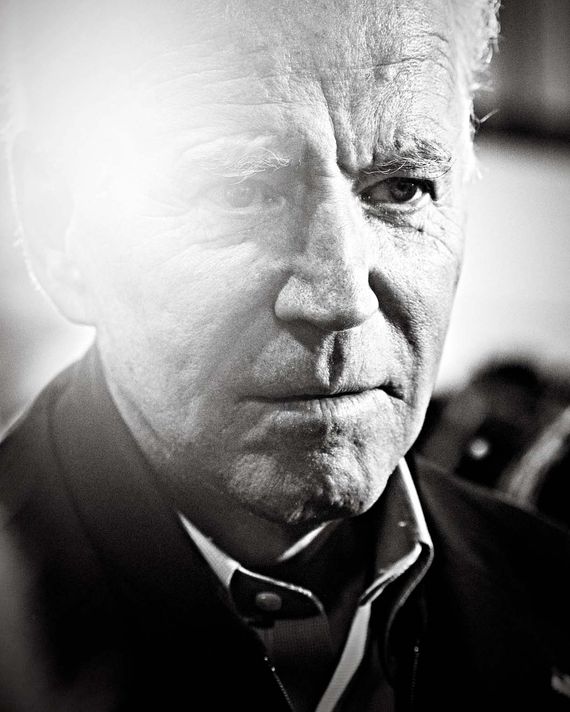
Biden Is Planning an FDR-Size Presidency

Photo: Mark Peterson/Redux.
Driving from work this evening I heard part of an interview with  the director of a manufacturing association who discussed the harsh assessment of manufacturing CEO's who saw little demand - and therefore, hiring increases - through the end of 2020.  The other possible dead weight on the economy is that many pre-pandemic jobs may not come back or, if they do, will come back very slowly.  One of the things these CEO's thought would boost demand and employment was a major infrastructure initiative by the federal government, something Trump has bloviated about but which the Congressional Republicans have done nothing.  Now, with America's economy upended and the political game plan for November, 2020, similarly turned upside down, presumptive Democrat nominee, Joe Biden, has radically altered what he believes his presidency must do if he defeats Der Trumpenführer,  Rather than status quo ante, back to normal, restore the soul of the nation, administration, Biden - correctly, in my view - believes that a FDR style presidency and policies and programs are needed to put America back on a solid economic footing. A very long piece in New York Magazine looks at Biden's evolution on what will need to be done.  Here are highlights:
[S]ometimes looking at the small lake abutting his backyard that bulges out from Little Mill Creek, {Joe Biden} the self-conscious man in the Democratic middle — mocked by the activist left throughout the primary campaign as hopelessly retrograde — considers the present calamity and plots a presidency that, by awful necessity, he believes must be more ambitious than FDR’s.
 The former vice-president carried the Democratic primary by relying on perceptions that he was an older, whiter, less world-historical (and less inspiring) Barack Obama — a steady hand who seemed more electable against a monstrous president than any of his competitors did. The heart of his pitch, when he delivered it clearly, was status quo ante, back to normal, restore the soul of the nation.
 But in the space of just a few months, COVID-19 and the disastrous White House response appeared to have dramatically widened Biden’s pathway to the presidency,
making the matter of moderation and electability seem, at least for the time being, almost moot. They also changed his perception of what the country would need from a president in January 2021 — after not just four years of Trump but almost a full year of death and suffering. The pandemic is breaking the country much more deeply than the Great Recession did, Biden believes, and will require a much bigger response. No miraculous rebound is coming in the next six months.  Long before the pandemic, he described a range of actions he’d take on day one, from rejoining the Paris climate agreement to signing executive orders on ethics, and he cited other matters, like passing the Equality Act for LGBTQ protections, as top priorities. Already his recovery ambitions have grown to include plans that would flex the muscles of big government harder than any program in recent history. To date, the federal government has spent more than $2 trillion on the coronavirus stimulus — nearly three times what it approved in 2009. Biden wants more spending. “A hell of a lot bigger,” he’s said, “whatever it takes.” He has argued that, even if you’re inclined to worry about the deficit, massive public investment is the only thing capable of growing the economy enough “so the deficit doesn’t eat you alive.” He has talked about funding immense green enterprises and larger backstop proposals from cities and states and sending more relief checks to families. He has urged immediate increases in virus and serology testing, proposing the implementation of a Pandemic Testing Board in the style of FDR’s War Production Board and has called for investments in an “Apollo-like moonshot” for a vaccine and treatment. This is all only what he believes should be done now before he even ascends to the presidency; by then, he thinks, the country could be in a much darker hole than it is today, presumably requiring even more federal investment and intervention. David Kessler, who led the Food and Drug Administration under both George H.W. Bush and Bill Clinton and has been speaking with Biden regularly about the crisis, recently told me the former vice-president “understands that until we have a vaccine or a therapeutic entity that can be used as a preventative, the virus is still going to be with us and that we’re going to constantly be putting out mini-epidemics.” [W]hile 2009 shows that spending unprecedented amounts of money alone doesn’t necessarily make a presidency transformational, the pandemic and the economic collapse it has produced have expanded Biden’s sense of not just how much relief will be required but what will be possible to accomplish as part of that recovery. Trump accomplished one big-ticket priority: tax cuts. Obama managed two: the stimulus, with a filibusterproof 60-vote Senate majority, and, barely, Obama-care. While it’s impossible to tell where the country is headed, Biden’s camp is in the disorienting position of scaling up its laundry list of proposals to match the ambition, and the political appetite, he thinks the American people — desperate for relief — will have in January. Biden’s long platform has grown in recent months as the crisis has deepened. . . . Once he began talking about a coronavirus recovery, he also started signaling more immediate ambitions on climate, including in his multiple conversations with Washington governor Jay Inslee. “He’s totally understood the centrality of a clean-energy plan,” said Inslee. [O]ne morning in late April. . . . he said into the phone, it was time they expanded their thinking. Sure, massive gobs of federal financial help have already been approved — unlike in 2008, he pointed out — but that still won’t be enough. Not while the magnitude of this crisis dwarfs the last one. His advisers agreed: If they were going to talk about lessons from history, their future calls might as well dive into the Great Depression and World War II. Biden is also a lifelong Democrat who likes the view from the center of the party, enough to move rapidly to accommodate when it shifts, as it is doing now very quickly. He may look like a milquetoast moderate to the activist left and maybe even to you, but the party — and world — has changed so fast that even his primary platform puts him well to the left of Obama in 2008 and, in many ways, left of Hillary Clinton in 2016. Those close to him say he sees in the crisis an obvious window for action. “There is no denying that the challenges a President Biden would face in 2021 are different than anyone could have imagined six months ago given the economic and health consequences of the coronavirus,” Feldman, who has worked with Biden for nearly a decade, told me. “What I’ve heard the vice-president say over and over again is this crisis is shining a bright, bright light on so many systemic problems in our country, and so many inequities. It is exacerbating and shining a light on environmental-justice issues, racial inequalities, so many other problems. Publicly, Biden has made no secret of his displeasure with Trump’s handling of the disaster, from his personal conduct — Biden has said the delay in distributing relief checks in order to print Trump’s name on them “bothered me the most” — to the administration’s failure to ensure small businesses access to relief funds while state unemployment systems were overwhelmed. The crisis, Biden believes, has expanded “the state of what is possible, now that the American people have seen both the role of government and the role of frontline workers,” said Sullivan. “He believes he has a more compelling case to make that this is the agenda that needs to get passed.” Outwardly, at least, Biden appears sensitive to the concerns of progressives. “He has said this is the second time in 12 years that the American taxpayers have bailed out American business,” Sullivan told me. The implication is that Biden has run out of patience. “That’s fine, we should do it and protect our economy — but he believes we have to ask our private sector to take on greater responsibility and accountability.”
Biden has talked openly, and seriously, about the notion of rolling out certain Cabinet picks before he is elected as a way of giving voters a sense of what to expect and to hit the ground running when he takes office. And he has already begun early-stage thoughts about not just top appointments but sub-Cabinet posts and the broader shape of his government. [H]e’s spent plenty of his time out of the spotlight weighing his vice-presidential options, conscious that he may effectively be picking his replacement and therefore sending an important signal about his wishes for Democrats’ future. His list of top contenders has long been thought to include Harris, Klobuchar, Whitmer, and Warren, as well as Nevada senator Catherine Cortez Masto and former Georgia gubernatorial candidate Stacey Abrams. As the lockdown has dragged on, Biden has insisted his pick be ideologically “simpatico” (once thought to be a point against Warren, though less so amid this crisis), and he has hardened his belief that she must be prepared to take over from their first day in office. That point — which Obama has echoed in their conversations — is read by some in Biden’s circles as a potential knock against Abrams, who has never held statewide elected office, and some members of Congress who’ve been floated.


With the pandemic likely lingering through the end of the year, the prospect of four more years of Trump's mismanagement and the GOP effort to restore the Gilded Age ought to terrify most Americans - or at least those not totally blinded by racism and religious extremism. 

Thursday, May 07, 2020

Unemployment Set to Rise: The Trump Economy Faces Long-Term Disaster

More horrific unemployment numbers are expected today and tomorrow even as some states begin - perhaps prematurely - to reopen their economies.  Indeed, some expect the unemployment numbers to be the worse since the Great Depression of the 1930's.   Donald Trump, who claimed credit for the robust economy he inherited from Barrack Obama is now faced with owning an economic disaster that may continue for some time as numerous businesses fail to reopen and large corporations refrain from re-hiring all of their employees.  Meanwhile, some major retailers are facing bankruptcy and possible closure.  A piece in CNN looks at the likely chilling unemployment numbers and the impact on Trump's chances on retaining the White House.  Here are excerpts:

The staggering economic pain -- perhaps the worst since the 1930s -- of the American economy in the time of coronavirus will be graphically underscored in two new rounds of unemployment data that are due on Thursday and Friday.
The figures will show Americans who have and will lose their livelihoods as common victims of the most cruel public health crisis in 100 years, along with the sick and the more than 73,000 people who have so far died.
The prospect of a prolonged economic slump will have important implications in politics. It is already threatening to dampen memories of the roaring economy that President Donald Trump was banking on to carry him to a second term. It may also provide an opening to presumptive Democratic nominee Joe Biden who helped bring the country back from the last economic crisis in the Obama administration.
Every day brings signs that what first looked like temporary job cuts could turn into permanent layoffs. GE, Airbnb and United Airlines this week for instance announced cuts in thousands of positions as business dries up. Discouraging news on the wider penetration of the virus raises the possibility of new spikes in infection that could further complicate the path to a full recovery.
 The emerging reality that the "rocket" like rebound the President predicted is unlikely may be behind Trump's increasingly frantic statements on a emergency he has also claimed will soon be over. . . . For weeks early this year, Trump was in denial and painted the threat from the virus as tiny. The worsening economic news will introduce a new dimension into the November presidential election clash between the President and his Democratic challenger, former Vice President Biden.
Trump is already under heavy pressure over his erratic management of the coronavirus pandemic and his initial assurances that a disease that has now infected more than a million people in this country didn't pose a threat. [P]ersuadable voters will now have two new questions to answer in the election: Is Trump the best candidate to lead the country out of both a prolonged duel with Covid-19 and to put the economy that has been shattered by the pandemic back together? The economic damage is almost inconceivable already and it will be laid bare in two sets of what are likely to be awful jobs numbers on Thursday and Friday.
First up is weekly jobs data on initial unemployment claims -- the measure that has recorded the terrible toll of weekly layoffs that have now topped 30 million people as the economy has gone into suspended animation.
To end the week, the Trump administration is braced for what could be the most disastrous unemployment numbers since the Great Depression. Economists polled by Refinitiv are expecting an unemployment rate at 16%. It's possible that 10 years of jobs gains will have been wiped out in just a couple months.
One of [Trump's] the President's top economic advisers, Kevin Hassett, has been preparing the country for an unemployment rate of up to 20%. That's more than 15 percentage points higher than the 50-year lows in the jobless rate that Trump was celebrating just weeks ago. Trump is now openly campaigning for the country to open up, despite studies that show tens of thousands of people could die in new outbreaks of the disease. . . . But despite widespread demonstrations by conservative groups against governors who are keeping their states shut down, polls suggest that many Americans are wary of resuming normal life.
Nearly two-thirds of those asked in the Monmouth poll were concerned that states will begin lifting restrictions too quickly. And only 33% share Trump's implied view that stopping the economy from going into a deep, lengthy downturn is more important than stopping people getting sick.
The initial economic trauma of the shutdowns is likely to be exacerbated by sobering facts on the state of the pandemic. While cases are dipping in worst-hit regions such as New York and New Jersey, they are actually rising in many states yet to peak.
If new infections do emerge on a wider footprint than the previously worst affected areas on the coasts and in the city, the consequences for the economy could be even more serious.
Service jobs in restaurant, leisure, and travel sectors are unlikely to recover when the public is wary about going out.
And rising infections could take another swipe at the health sector which helped drive recent jobs gains but has been hammered in recent months, with elective surgeries and routine appointments canceled.

Sunday, March 22, 2020

The Nightmare in the White House

While the nation goes into lock down and the economy heads towards a collapse, the malignant narcissist in the White House does what he always does: lies nonstop and throws out boasts to inflate his insatiable ego.  When not lying outright, Trump attacks those in the media trying to get out the truth and accurate information and throws governors - including Republican governors who have previously prostituted themselves to Trump - to their own devices in protecting their citizens. Frank Rich has a column in New York Magazine looks at the ongoing lack of honesty and glaring failed leadership in the White House even as Trump sycophants try to change the subject from the failure of the Trump regime to prepare for the pandemic. Here are column excerpts:

As the coronavirus-related layoffs and medical needs pile up, experts are concluding that a strong federal response is needed. Is the Trump administration capable of rising to the occasion?
The president who is leading this country into battle cares about no one but himself, continues to lie to Americans daily about the most basic imperatives of a public-health catastrophe, and presides over an administration staffed with incompetent, third-tier bootlickers and grifters. And I am not just talking about Mike Pence, Jared Kushner, and Wilbur Ross. There are now three college seniors serving in White House positions, thanks to a new purge of ostensibly disloyal staffers being conducted by Trump’s former body man, the 29-year-old John McEntee, recently installed as director of the Presidential Personnel Office. Trump calls himself a “wartime president,” but his only previous wartime experience was partying during Vietnam, when he was spared military service because of “bone spurs.” Those bone spurs long ago migrated to his brain. If America rises to the occasion, it will be despite him, not because of him. We’re at the point where even if Trump were to start telling the truth, no one except the most mad-dog MAGA-ites would believe him.
Right now the country is waiting for a bomb to drop: that much-predicted turning point when the metastasis of illness and mass death in the U.S. could match the curve we’ve seen in Italy. Trump’s nonstop lies — and those of toadies like Pence — are not just intended to cover up the many failures to prepare for the looming apocalypse (“I felt it was a pandemic long before it was called a pandemic”), or to blame those failures on China and Obama, or to luxuriate in unearned self-congratulation (“I’d rate it a 10”). What the lies are doing now is throwing gasoline on the gathering fire.
Why does a president cite the Defense Protection Act, which allows him to commandeer industry to produce emergency supplies, while simultaneously telling the states to find much-needed ventilators on their own?
Trump’s answer to that last question was that the federal government is “not a shipping clerk.” He seemed not to understand that it’s ventilators that the nation’s hospitals urgently need, not the postal service. Such is his minimal comprehension of the urgent tasks at hand that Trump’s level of competence doesn’t rise to that of the skipper of the Titanic. The Titanic’s captain may have hit an iceberg, but at least he recognized the scientific reality that icebergs exist.
Up until now Trump’s motives for lying have been to (1) cover up what may prove the most catastrophic failure in the history of the American presidency; (2) to distract the country from the continuing failure in the effort to keep his reelection campaign afloat; (3) to boost the stock market. But another motive is emerging that’s entirely in keeping with the history to date of Trump’s kleptocratic White House: rewarding his family and cronies financially.
Based on his [Jared Kushner] and his father-in-law’s past behavior, we have every reason to believe that entrepreneurs in the Mar-a-Lago circuit, assuming they are not killed off by the virus, will benefit from any bailouts crafted by the White House and Republicans in Congress, starting perhaps with casino entrepreneurs like Sheldon Adelson and Steve Wynn.
This is in keeping with a president who remains passive as athletes and celebrities mysteriously cut the long line to be tested for the coronavirus. It is in keeping with a Vichy Republican Party where the senators Richard Burr and Kelly Loeffler were dumping stocks pre-crash, seemingly exploiting inside information about the coming fiasco for huge personal profit while keeping their own voters in the dark about it. Today Tucker Carlson is receiving some applause for being a rare truth-teller on Fox News because last night he called out Burr in no uncertain terms: “There is no greater moral crime than betraying your country in a time of crisis.”
By now, a number of promises Donald Trump has made directly to the press — universal access to testing, a nationwide medical-screening website, the deployment of hospital ships — have failed to pan out after initially receiving breathless headlines. Should the press change the way it covers Trump’s promises?
The challenge to the press remains what it’s been from the start: How do you challenge a lying president on the facts in real time when he is lying as fast as he can speak? The difference now is that more than ever lives are dependent on Americans getting the truth.
Change is needed, and it will require collaboration of the best brains in the news business to reinvent practices and formats. Even hours after Trump had floated bogus miracle drugs before the public yesterday, at least one network evening news broadcast was teasing the story with a hopeful headline before disemboweling it.

Friday, March 20, 2020

Fox News and Trump: No Empathy, Only Lies and Anger

It is hard to calculate how much damage Fox News and its lies, pro-Trump propaganda have done to America. Hopefully, future historians will quantify the damage and some of the "stars" of Fox News will be reviled by future generations.   None of this absolves Trump for his sins, but Fox News and spineless Republicans fearful of a primary challenge from the bizarre and insane far right of the GOP  have enabled him and allowed the poison he spreads to flourish.  The irony now is that their lies and misinformation campaign has left Fox News devotees perhaps the most vulnerable to the COVID-19 pandemic since they least believe that the danger is real and are least likely to modify their behavior - perhaps Darwin's theory will play out with the GOP base.  A column in The Atlantic by David Frum, a former Republican, looks at Fox News' role in Trump's bungling of America's response to the virus threat and how it is now engaged in Trump's effort to shift blame for the Trump/Pence regimes incompetence and malfeasance.  Here are column highlights: 

On the evening of June 21, 1941, American Communists went to bed subject to one party line. At the sun set, Britain was fighting an imperialist war against Germany, about which the United States must remain neutral.
American Communists awoke on June 22, 1941, to discover the party line abruptly changed. Hitler had invaded the Soviet Union. Now the war was a struggle between democracy and fascism, one the United States must immediately join.
The personalities on Fox News executed a similarly abrupt and total pivot on March 13, 2020. The Washington Post produced a stark before/after anthology of the same hosts saying precisely opposite things a few days apart.
Yet the many weeks of denial have had their effect. An Economist poll released March 18 found that only 38 percent of Fox News viewers took the virus seriously, half as many as among MSNBC and CNN viewers. For Trump’s sake, Fox risked the lives of its own audience.
Like the old Moscow-line Communists, the upholders of the Trump party line now need an excuse for their long history of denial and deception. They insisted it was not Trump’s fault that he, and they, squandered precious weeks and that his administration is suddenly dithering and failing. . . . They accused anyone who recalled the truth of repeating Chinese propaganda.
The Trump party line swaps new lies for old. Whereas once the ideological enforcers called concern over the virus a hoax, now they say that it’s a hoax to remember they said it was a hoax.
The Atlantic has been pulled into the crosshairs of the new lies that replaced the old lies in a retweet by the president himself. In response to an article that documented how China’s official lying had aggravated the crisis in that country, and lamented that Trump’s official lying had done the same here, the president’s Twitter feed repeated a slur that The Atlantic “spews communist China’s propaganda.”
Trump wants Americans to call the novel coronavirus “the Chinese virus.” Trump’s new slogan aims at two goals. The first goal is to shift blame away from Trump’s failures and onto China’s. This goal is very unlikely to succeed. We all saw Trump’s catastrophic misjudgments inflict their toll in real time. . . . No, Trump won’t succeed in shifting blame.
It’s the second goal that could succeed. By revving up hate among their supporters against China, Trump and Fox can redirect those supporters’ rage from the dangerous target it might otherwise find: the trusted political and media figures who lied and lied and lied to them, exposing those supporters to disease and death for their own crass ends. Hate China, not me!
A president who sincerely mistrusted China would not have to resort to name-calling after the fact. He would have acted decisively, in good time. Instead, Trump relied on China to do his job for him.
It was Trump and Fox, not the independent media, who repeated Chinese propaganda and put Americans at risk.
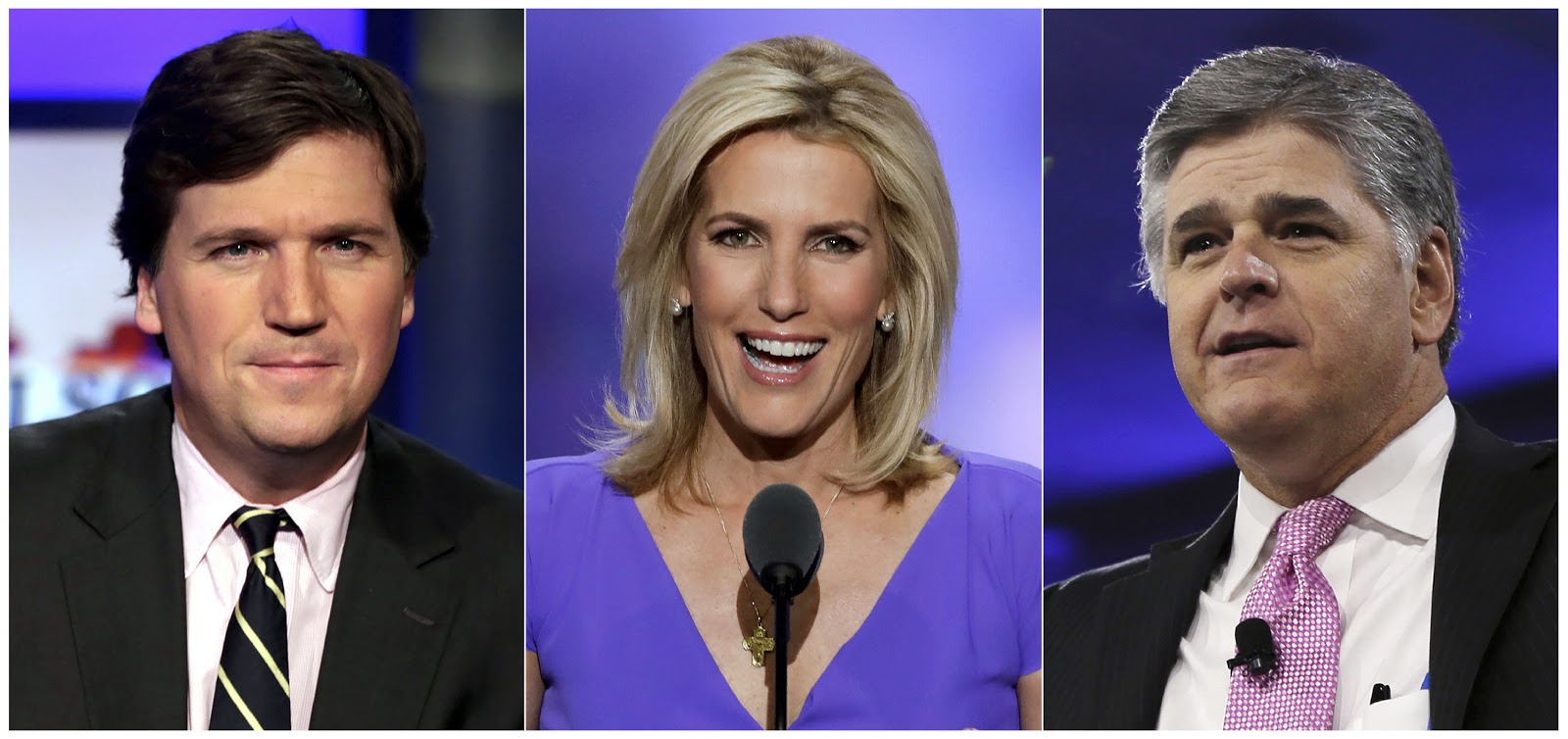
A personal note: I was a target of one of Trump’s key media allies on Fox on Tuesday night, Tucker Carlson. Carlson has played an interestingly complex role on the Fox network. On the one hand, he was the first Fox host to speak some measure of truth about the virus. . . . On the other hand, Carlson is the most explicit of Fox’s race-baiters, the Fox personality furthest from traditional conservatism and nearest to the new alt-right. Carlson is the main voice on Fox for Russian state propaganda, . . .
While Trump, Fox, and Carlson try to redirect the anger of the people they betrayed, it’s worth noticing something strikingly absent from the speeches and writings of this administration and its Trump-line network: a word of sympathy or compassion for the thousands of Americans getting sick and dying on this president’s watch, as a result of this president’s neglect of his duties. They’re not capable of such language. They gain power by targeting outsiders. After the 9/11 attacks, President George W. Bush made an early visit to a Washington mosque. He spoke feelingly against bigotry, and helped curb the rash of hate crimes that erupted in the fall of 2001.
Trump and his party-line media do not do that. They cannot do that. That would take empathy—and empathy might dangerously remind Americans of the tragic cost of Trump’s mismanagement and absent leadership. . . . . The government and the government-line television network are, for the time being, in the charge of broken souls. Those broken souls are breaking a nation.

Wednesday, March 18, 2020

Trump and the Biggest Blunder in Presidential History

We will probably never know with certainty who finally got Donald Trump, a/k/a Der Trumpenführer, that America is facing a crisis like none before.  Whoever that individual is or individuals are, we owe them a debt of gratitude.  That said, as a column in the Washington Post lays out, the reality that Trump squandered weeks during which America could have worked to get ahead of the curve on suppressing the spread of the coronavirus which is paralyzing the nation and much of the globe.  Sadly, Trump only acts out of self-interest - his supporters who think he cares a rats' ass about them are simply delusional. Only now during the last three days has Trump admitted the virus is an titanic threat and only after many governors took action to fill the void at the federal level.  Imagine if this level of concern had been focused on the virus threat a month or more ago  instead of Trump and his Fox News sycophants calling it a hoax.  Here are highlights from the Post column:
President Trump, as he often does when he has made a mistake or revealed his ignorance, changed course to claim that he knew all along that we were facing a pandemic.
As a preliminary matter, this is a lie, as this video shows: . . . .Trump didn't cause the pandemic. What he did was squander America's only advantage—a lag time during which to prepare for the crisis—thus encouraging the spread of the disease when it might have been contained. He has, in real and material ways, made this crisis worse.”
[Trump] the president has consistently downplayed, denied and misled the public about the seriousness of the threat. Moreover, since the first cases appeared in China in late December, he took few steps to prepare the country for the pandemic before it inevitably reached our shores. We are to believe that he knew there was a pandemic but willfully allowed the crisis to get worse.
There are two possibilities here. The first is that he was ignorant, buying into the Fox News disinformation loop. (Disclaimer: I am an MSNBC contributor.) The second is that he was thinking of his election — which he thinks is tied to the economy — so he refused to take action that would have spooked stock markets. (It’s not logical because the pandemic would eventually hit, but it would be emblematic of Trump’s short-term thinking.)
[W]hat is inescapable is that had the president not frittered away valuable time that could have been spent deploying tests (which could have been obtained from the World Health Organization), building up medical equipment and facilities and preparing for a series of escalating steps to promote social distancing, he might have reduced the strain on our health-care system and saved lives.
This is the biggest blunder in presidential history. Former Department of Homeland Security official Juliette Kayyem writes for the Atlantic: “With little guidance from the federal government, governors — along with mayors, CEOs, university presidents, and leaders in the sports and entertainment businesses — have taken it upon themselves to try to slow the spread of the virus before it overwhelms the medical system’s capacity to respond.” . . . . In essence, Trump’s delinquency has turned the governors into rivals for scarce resources.
Trump did not show any real recognition of the magnitude of the problem until his administration got hold of a study from Britain. “The Imperial College London group reported that if nothing was done by governments and individuals and the pandemic remained uncontrolled, 510,000 would die in Britain and 2.2 million in the United States over the course of the outbreak,”
We have lost the window of opportunity that Singapore had, for example, to enact severe measures to test and quarantine infected persons. . . . It is not clear whether we were capable of undertaking the swift measures Singapore, Taiwan and Hong Kong took; but had we begun any efforts at suppressing the virus, the task of now mitigating its damage likely would have been made more manageable.
Trump shares the blame for failing to develop an infrastructure to fight pandemics (and removing structures put in place by the Obama administration). But, to borrow a phrase, “he alone” made the crisis infinitely worse by doing nothing for so long when leaders around the world were responding forcefully.


The Job Layoffs Are Just Starting - A Scary Forecast

The husband and I left Key West the day that bars and restaurants were ordered closed or allowed to open with only severely reduced capacity.  Our last day at our guest house showed 12 empty rooms in contrast to the 100% occupancy on previous trips.  Obviously, the restaurant and tourism workers will be hit hard - as will so many businesses (the husband's salon is closing for two weeks except for selected customers who make pre-arrangements).  My law firm will continue to operate and hopefully can do more through online recordings and title searches. The question obviously becomes one of how will those furloughed or outright fired survive financially, especially if they cannot qualify for unemployment benefits.  A piece in the New York Times looks at the frightening economic forecast that goes far beyond drops in the stock market.  Here are article highlights:
However events unfold, one thing is becoming clear: As the effects of the coronavirus pandemic hit the U.S. job market, the damage looks likely to be much deeper and longer lasting than seemed possible even a week ago.
Marriott International, the hotel operator, said Tuesday that it would begin furloughing tens of thousands of employees worldwide. Restaurants, coffee shops, gyms and other small businesses have begun laying off workers outright. On Monday, a flood of inquiries from newly jobless New Yorkers crashed the website for the state’s unemployment insurance system.
With striking speed, Democrats and Republicans in Washington have embraced proposals for cash payments to Americans to help offset the economic damage.
Relatively few companies outside the hospitality industry have announced significant job cuts, with many saying they will continue to pay employees even while they are closed, though often for fewer hours of work than normal.
But that cushion seems unsustainable. Most small businesses do not have the financial buffer to pay workers for long if revenue dries up. And while larger public companies may have access to cash, they also have shareholders who want executives to watch the bottom line.
The scope of layoffs will help determine how badly the outbreak will damage the broader economy. If companies largely retain workers, the downturn could be relatively shallow and the rebound relatively swift. But if people lose their jobs, and their spending power, the damage could mount.
“The question is, do we get trapped in that vicious cycle?” Mr. Challenger said. “Do we get stuck where workers who don’t have wages stop going out to buy things?”
The answer could depend in part on what happens to the retail industry, the country’s biggest private-sector employer and one that was already struggling amid the shift to online shopping.
Grocery stores and big-box chains have seen sales surge as shoppers rush to secure toilet paper, disinfectant wipes and food. And in an indication of how the outbreak has accelerated the shift to online retail, Amazon announced Monday that it would hire 100,000 workers to handle the surge in demand caused by the crisis.
For brick-and-mortar sellers of “nonessential” items, however, the spread of the virus has spelled trouble. A wave of retailers announced temporary store closings over the weekend, . . .
Meanwhile, there is this at Huffington Post:
U.S. Treasury Secretary Steven Mnuchin warned Republican senators on Tuesday that the country’s unemployment rate could hit 20% if they failed to act on a proposed coronavirus rescue package and there was lasting economic damage, a person familiar with the closed-door meeting said.
Mnuchin met with senators to persuade them to pass a $1 trillion stimulus package that would send cash to Americans within two weeks and backstop airlines and other companies.
A Treasury official said Mnuchin was not providing a forecast but trying to illustrate the potential risks of inaction.