Showing posts with label unemployment increase. Show all posts

Friday, July 17, 2020

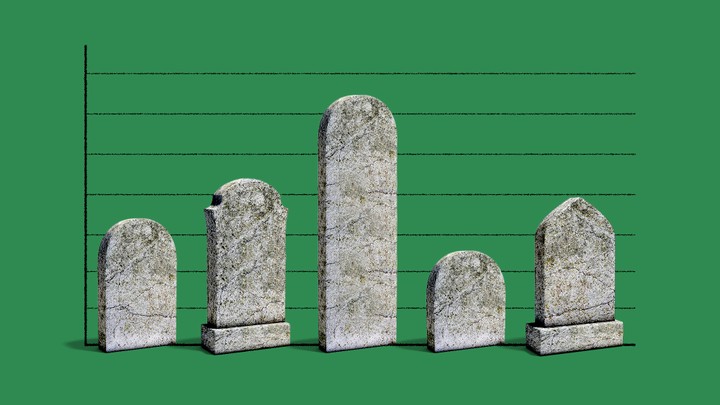
The Terrifying Next Phase of the Coronavirus Recession

In relative terms, Virginia continues to do well in fighting the Covid-19 pandemic, although numbers of cases have risen in the Hampton Roads area, likely due to people ignoring mask wearing and social distancing mandates over the 4th of July weekend.  I say relative terms, since Virginia's new cases are a small fraction of what is happening in other states, especially Florida and Texas.  Yet compared to western European countries Virginia's numbers are terrible. Why?  Several causes, the most significant being the lack of any rational, science based federal response to the pandemic. The Trump/Pence regime first punted and left the heavy lifting to individual states and now is undermining medical experts  Further exacerbating the situation,  a number of GOP lead states rushed to reopen prematurely.  Then there are those who refuse to abide by mask requirements and eschew social distancing, caring nothing about those they may be infecting and putting their self-centered  sense of "liberty" over the lives of others.  The current result?  An economy that may be facing a second shutdown, especially in sunbelt states - the governor of Georgia incredibly ban cities and localities from implementing mask mandates.  A piece in The Atlantic looks at America's failure and what may be in store economically if the failed response to the pandemic continues.  Here are highlights:

Failed businesses and lost loved ones, empty theme parks and socially distanced funerals, a struggling economy and an unmitigated public-health disaster: This is the worst-of-both-worlds equilibrium the United States finds itself in.
Since the beginning of the coronavirus pandemic, President Donald Trump has railed against shutdowns and shelter-in-place orders, tweeting in all caps that “we cannot let the cure be worse than the problem itself” and pushing for employees to get back to work and businesses to get back to business. But the country has failed to get the virus under control, through masks, contact tracing, mass testing, or any of the other strategies other countries have tried and found successful. That has kneecapped the nascent recovery, and raised the possibility that the unemployment rate, which eased in May and June after nearly reaching 15 percent in April, could spike again later this year.
The economy seized in unprecedented terms this spring as states and cities mandated lockdowns. Hundreds of thousands of businesses closed, and millions of workers were furloughed or laid off. But instead of setting up a national viral-control strategy during this time, as other rich countries did, the United States did close to nothing. . . .  The Trump administration punted responsibility for public-health management to the states, each tipping into a budgetary crisis. After a springtime peak, caseloads declined only modestly. Outbreaks seeded across the country. States reopened, and counts exploded again.
Now the economy is traveling sideways, as business failures mount and the virus continues to maim and kill. New applications for unemployment insurance, for instance, are leveling off at more than 1 million a week—more than double the highest rate reached during the Great Recession, a sign that more job losses are becoming permanent.
The next, terrifying phase of the coronavirus recession is here: a damaged economy, a virus spreading faster than it was in March. The disease itself continues to take a bloody, direct toll on workers, with more than 60,000 Americans testing positive a day and tens of thousands suffering from extended illness. The statistical value of American lives already lost to the disease is something like $675 billion. The current phase of the pandemic is also taking an enormous secondary toll. States with unmitigated outbreaks have been forced to go back into lockdown, or to pause their reopening, killing weakened businesses and roiling the labor market. Where the virus spreads, the economy stops.
That is not just due to government edicts, either. Some consumers have rushed back to bars and restaurants, and resumed shopping and traveling. Young people, who tend to get less sick from the coronavirus than the elderly, appear to be driving today’s pandemic. But millions more are making it clear that they will not risk their life or the life of others in their community to go out. Avoidance of the virus, more so than shutdown orders, seems to be affecting consumer behavior. Places without official lockdowns have seen similar financial collapses to those with them, and a study by University of Chicago economists showed that decreases in economic activity are closely tied to “fears of infection” and are “highly influenced by the number of COVID deaths reported” in a given county.  
The perception of public transit as unsafe, for example, makes it expensive and tough for commuters to get to their jobs. Schools and day-care centers are struggling to figure out how to reopen safely, meaning millions of parents are facing a fall juggling work and child care. This is a disaster. “The lingering uncertainty about whether in-person education will resume isn’t the result of malfeasance, but utter nonfeasance,” the former Department of Homeland Security official Juliette Kayyem has argued in The Atlantic.
International comparisons are enlightening. Countries that successfully countered the virus seem to have enjoyed better financial recoveries; countries that did not shut down saw major hits to their economy anyway. In Sweden, authorities declined to enact strict public-health measures as the virus took hold. It has seen significantly higher case counts and more deaths than its neighbors, such as Norway, and its economy tanked. Or consider South Korea. With aggressive contact tracing and mass testing, it kept many of its commercial and educational facilities open as it quashed the pandemic. (The country has tallied just 288 deaths from COVID-19, compared with roughly 135,000 in the United States.) The unemployment rate there is 4.2 percent. . . .
In France, one of the hardest-hit countries in Europe, families are back to going on vacation, eating in cafés, and visiting loved ones in hospitals. In the United States, outbreaks are shutting everything down yet again.
The country can still flatten the curve and lower the death toll. Simple, low-cost measures like requiring masks in public would preserve as much as 5 percent of GDP, economists have estimated, as well as preventing thousands from getting sick. The supposed trade-off between public health and the economy doesn’t exist. And right now, the country is choosing not to save either.

Saturday, May 30, 2020

America: A Country in Free Fall

Back in December, 2019, many Americans had a false sense of security and stability even through the Trump/Pence regime and the Republican Party were hard at work to create a new Gilded Age with more and more of the nation's wealth concentrating in the 1% - or even 0.1% - of the population,  Unemployment was at a 50 year low yet real wages for the middle class when adjusted for inflation had risen little since 1970. Adding to the mix was Trump's never ending signaling to white supremacists and extreme right Christians (the two groups sadly overlap to a very large degree) the false message that they were being persecuted and needed to "take back America."  Those truly being persecuted were those hated by these angry whites and modern day Pharisees. And sadly, police across the nation continued to kill unarmed blacks even as ridiculous marijuana laws were disproportionately used to criminalize young black males (Virginia belatedly decriminalized possession for personal use just this year).   One could say that America was like the Titanic at 11:30 pm on April 14, 1912 - ten minutes before the iceberg strike - and now the Covid-19 has proved itself to be America's iceberg that is laying bare all of the problems that have simmered for years and which are exploding under the economic stress and racial injustice highlighted again by the police killing of George Floyd in Minneapolis.  A column in the New York Times looks at America as its underlying problems explode to the surface.   Frighteningly, we have an occupant of the White House and a U.S. Senate majority that will only make matters worse.  Here are column highlights:

The last two and a half months in America have felt like the opening montage in a dystopian film about a nation come undone. First the pandemic hit and hospitals in New York City were overwhelmed. The national economy froze and unemployment soared; one in four American workers has applied for unemployment benefits since March. Lines of cars stretched for miles at food banks. Heavily armed lockdown protesters demonstrated across the country; in Michigan, they forced the Capitol to close and legislators to cancel their session. Nationwide, at least 100,000 people died of a disease almost no one had heard of last year.
Then, this week, a Minneapolis police officer was filmed kneeling on the neck of a black man named George Floyd. As the life went out of him, Floyd pleaded that he couldn’t breathe, echoing the last words of Eric Garner, whose 2014 death at the hands of New York policemen helped catalyze the Black Lives Matter movement. Floyd’s death came only days after three Georgia men were arrested on charges of pursuing and killing a young black man, Ahmaud Arbery, whom they saw out running. A prosecutor had initially declined to charge the men on the grounds that their actions were legal under the state’s self-defense laws.
In Minneapolis protesters poured into the streets, where they met a far harsher police response than anything faced by the country’s gun-toting anti-lockdown activists. On Wednesday night, peaceful demonstrations turned into riots, and on Thursday Minnesota’s governor called in the National Guard.
For a moment, it seemed as if the blithe brutality of Floyd’s death might check the worst impulses of the president and his Blue Lives Matter supporters. The authorities were forced to act: All four of the policemen involved were fired, police chiefs across the country condemned them and William Barr’s Justice Department promised a federal investigation that would be a “top priority.”
But on Thursday night, after a county prosecutor said his office was still determining if the four policemen had committed a crime, the uprising in Minneapolis was reignited, and furious people burned a police precinct. (One of the officers was arrested and charged with third-degree murder on Friday.) On Twitter, an addled Trump threatened military violence against those he called “THUGS,” . . . . [Trump] The president later tried to tamp down outrage by saying he was just warning of danger — the Trump campaign has hoped, after all, to peel off some black voters from the Democrats — but his meaning was obvious enough. This is the same president who on Thursday tweeted out a video of a supporter saying, “The only good Democrat is a dead Democrat.”
The Trump presidency has been marked by shocking spasms of right-wing violence: the white nationalist riot in Charlottesville, Va., the massacre at the Tree of Life synagogue in Pittsburgh, the mass shooting targeting Latinos in El Paso. But even as the country has simmered and seethed, there hasn’t been widespread disorder. Now, though, we might be at the start of a long, hot summer of civil unrest.
So many things make America combustible right now: mass unemployment, a pandemic that’s laid bare murderous health and economic inequalities, teenagers with little to do, police violence, right-wingers itching for a second civil war and a president eager to pour gasoline on every fire. “I think we’re indeed in a moment where things are going to get a lot more tense before they get more peaceful,” said the University of Michigan historian Heather Ann Thompson, . . . .
These demonstrations were sparked by specific instances of police violence, but they also take place in a context of widespread health and economic devastation that’s been disproportionately borne by people of color, especially those who are poor. “Sociologists have studied collective behavior, urban unrest for decades, and I think it’s safe to say that the consensus view is that it’s never just about a precipitating incident that resulted in the unrest,” Darnell Hunt, dean of social sciences at U.C.L.A., told me. “It’s always a collection of factors that make the situation ripe for collective behavior, unrest and mobilization.”
[F]rustration is likely to build, because the economic ruin from the pandemic is just beginning. In some states, moratoriums on evictions have ended or will soon. The expanded unemployment benefits passed by Congress as part of the CARES Act run out at the end of July. State budgets have been ravaged, and Republicans in Washington have so far refused to come to states’ aid, meaning we’ll likely soon see painful cutbacks in public jobs and services.
But if America feels like a tinderbox at the moment, it’s not just because of pressure coming from the dispossessed. On Wednesday, the journalists Robert Evans and Jason Wilson published a fascinating and disturbing look at the “boogaloo” movement — “an extremely online update of the militia movement” — on the investigative website Bellingcat. “The ‘boogaloo Bois’ expect, even hope, that the warmer weather will bring armed confrontations with law enforcement, and will build momentum towards a new civil war in the United States,” Evans and Wilson write. They add, “In a divided, destabilized post-coronavirus landscape, they could well contribute to widespread violence in the streets of American cities.” . . . . People associated with the subculture had a significant presence at the lockdown protests, but some, motivated by hatred of the police and a love of bedlam, took part in the Minneapolis demonstrations as well.
Most American presidents, faced with such domestic instability, would seek de-escalation. This is one reason civil unrest, for all the damage it can cause to communities where it breaks out, has often led to reform. Change has come, said Thompson, when activists have “created a situation where the people in power actually had to act in order to bring back some meaningful public peace.”
Now, however, we have a president who doesn’t much care about warding off chaos. “In every other time when protest has reached a fever pitch because injustices very much needed to be remedied, the country ultimately tried to find a new equilibrium, tried to address it enough to reach some sort of peace,” said Thompson. “We now have a leadership that’s been crystal clear that it’s perfectly OK if we descend into utter civil war.”
Some of the tropes are familiar, but we haven’t seen this movie before. No one knows how dark things could get, only that, in the Trump era, scenes that seem nightmarish one day come to look almost normal the next.


Be very afraid.

Monday, May 18, 2020

Resort Towns Ask: Will There Be Summer?

Outer Banks beach.
Locally, the cities of Williamsburg and Virginia Beach rely heavily on tourism for a large part of their economy.  To the south in North Carolina's Outer Banks, dependence on tourism is even more significant.  With Memorial Weekend the weekend after next, the big issue facing businesses within the tourism industry is whether or not there will be a summer tourist season and, if there is, what will it look like. With over three weeks of paid vacation left of the year, the husband I find ourselves with no travel plans for the first time in years - our October cruise was cancelled - and left without two months of income from the husband's salon which just reopened under a whole new mode of operation: open more days, stylists working staggered schedules to keep the numbers of people in the place at any one time reduced to less than 10 people, constant sanitizing, and many client in-salon perks eliminated, with no one knowing how long this "new normal" will last. Will we travel this summer?  I honestly do not know.  In Virginia Beach hoteliers are facing an even more daunting scenario as they wonder who will visit the area given the economic stress so many unemployed people face and fears of exposure to the covid-19 virus.  A piece in the New York Times looks at the questions facing the tourism industry around the country.  Here are highlights: 
In summer resort towns across the United States, livelihoods for the year are built in the 15 weeks between Memorial Day and Labor Day. It is during those 15 weeks that tourists from around the country and the world arrive to bask on the beach and gather for festivals and weddings. And it is during those three months that tour operators, hoteliers, innkeepers, restaurant employees and others earn the bulk of their income.
But this year, with Memorial Day — the kickoff for summer — approaching, there will be fewer guests to welcome and likely no sizable weddings or festivals to host. Business owners in resort areas, from Cape Cod, Mass., to Lake Chelan, Wash., say that as the start of summer approaches, they are having to face the difficult reality that little money will be made this year.
Between canceled trips and uncertainty about how willing and financially able people will be to travel once shelter-in-place rules are lifted, business owners say that even if summer travel starts late, it won’t make up for losses that have already been incurred.
Traffic to resort towns will likely consist of local visitors from nearby cities and towns for day or weekend trips, rather than for longer stays, business owners speculated. Many also said they expect to see few, if any, international visitors.
Public health is essential and should be prioritized, Ms. Rishel and other business owners said, but business survival is also important. And so resort towns are grappling with the cost-benefit analysis of reopening and potentially having the virus spread versus remaining closed and potentially shuttering doors.
In North Carolina’s Outer Banks, tourists will be allowed to return and stay in hotels beginning on May 16, but life will be different. Social-distancing rules will have to be followed; businesses will limit the number of people to 50 percent of their usual capacity; sanitizing stations will be at every turn; and staff at hotels will wear masks.
“Even if we can’t do 100 percent of our normal business, we are just excited to be back in business and have a chance at survival,” said John Harris, a co-founder of Kitty Hawk Kites, which offers adventure tours and sells and rents equipment for various outdoor activities. “Staying closed isn’t an option for a community that’s 90 percent dependent on tourism.” Mr. Harris said about 80 percent of his revenue is made between Memorial Day and the end of September.
In New Jersey, where beaches will be open for Memorial Day, with restrictions, and hotels will reopen on June 1, the mood among some innkeepers and hoteliers is also cautiously optimistic. . . . . Who will come and how many of them will come is the unknown at this point, but we’re getting calls for reservations and people are reaching out on Facebook, so it looks like we will have our summer.”
“I’m excited to see people, but I’m also being terrified because it’s too soon to reopen,” she said. “I don’t think the state has met all the standards they said we’d need to meet before we open. We are still seeing new cases, and the rules about how to operate just aren’t clear.”
Ms. Gutlon, as well as other innkeepers and owners in North Carolina, New Jersey, Massachusetts and Washington state, said that they are trying to figure out the rules for guest numbers, social distancing and serving food on their properties. For example, she said, no more than 10 people can gather, but the inn typically has about 16 guests in its eight rooms, in addition to staff — so would filling rooms be breaking the rules?
In Massachusetts, where short-term rentals (including hotels) have been banned since March, the lack of direction from authorities led 26 Martha’s Vineyard innkeepers and hotel operators to write a letter to Gov. Charlie Baker’s advisory task force earlier this month, asking for guidance about reopening.
Hospitality businesses are also thinking about how the industry has been fundamentally changed by the coronavirus. When tourists return, there will be no hugging and no touching; smiles will be hidden behind masks; turndown service likely won’t exist; and many travelers will be afraid of staying in hotels where they don’t control cleaning procedures or know who stayed there before they did.
“Will people want to pay hundreds of dollars to take their own sheets off their bed or to sit in their room and eat all their meals there?” asked Ms. Gutlon of the White Doe Inn in the Outer Banks. She and others said that those questions will also affect people’s willingness to travel from afar. Guests who usually book for more than just a few days have all canceled their trips this year, she said.
Carol Watson, one of the owners of the Captain Farris House, an inn on Cape Cod, said she is already feeling the loss of international visitors.
Memorial Day, Ms. Watson said, is the real kickoff for the summer season, and she would normally be preparing for a revolving door. Instead, she is spending her time on conference calls with other business owners and a marketing company, trying to stay on top of what’s going on and updating policies and cleaning and sanitizing procedures.
“Everybody is frustrated with where we’re at and we’re all worried about this summer, but we don’t want to see people sick,” she said. “We don’t want to see people dying.”


Thursday, May 07, 2020

Unemployment Set to Rise: The Trump Economy Faces Long-Term Disaster

More horrific unemployment numbers are expected today and tomorrow even as some states begin - perhaps prematurely - to reopen their economies.  Indeed, some expect the unemployment numbers to be the worse since the Great Depression of the 1930's.   Donald Trump, who claimed credit for the robust economy he inherited from Barrack Obama is now faced with owning an economic disaster that may continue for some time as numerous businesses fail to reopen and large corporations refrain from re-hiring all of their employees.  Meanwhile, some major retailers are facing bankruptcy and possible closure.  A piece in CNN looks at the likely chilling unemployment numbers and the impact on Trump's chances on retaining the White House.  Here are excerpts:

The staggering economic pain -- perhaps the worst since the 1930s -- of the American economy in the time of coronavirus will be graphically underscored in two new rounds of unemployment data that are due on Thursday and Friday.
The figures will show Americans who have and will lose their livelihoods as common victims of the most cruel public health crisis in 100 years, along with the sick and the more than 73,000 people who have so far died.
The prospect of a prolonged economic slump will have important implications in politics. It is already threatening to dampen memories of the roaring economy that President Donald Trump was banking on to carry him to a second term. It may also provide an opening to presumptive Democratic nominee Joe Biden who helped bring the country back from the last economic crisis in the Obama administration.
Every day brings signs that what first looked like temporary job cuts could turn into permanent layoffs. GE, Airbnb and United Airlines this week for instance announced cuts in thousands of positions as business dries up. Discouraging news on the wider penetration of the virus raises the possibility of new spikes in infection that could further complicate the path to a full recovery.
 The emerging reality that the "rocket" like rebound the President predicted is unlikely may be behind Trump's increasingly frantic statements on a emergency he has also claimed will soon be over. . . . For weeks early this year, Trump was in denial and painted the threat from the virus as tiny. The worsening economic news will introduce a new dimension into the November presidential election clash between the President and his Democratic challenger, former Vice President Biden.
Trump is already under heavy pressure over his erratic management of the coronavirus pandemic and his initial assurances that a disease that has now infected more than a million people in this country didn't pose a threat. [P]ersuadable voters will now have two new questions to answer in the election: Is Trump the best candidate to lead the country out of both a prolonged duel with Covid-19 and to put the economy that has been shattered by the pandemic back together? The economic damage is almost inconceivable already and it will be laid bare in two sets of what are likely to be awful jobs numbers on Thursday and Friday.
First up is weekly jobs data on initial unemployment claims -- the measure that has recorded the terrible toll of weekly layoffs that have now topped 30 million people as the economy has gone into suspended animation.
To end the week, the Trump administration is braced for what could be the most disastrous unemployment numbers since the Great Depression. Economists polled by Refinitiv are expecting an unemployment rate at 16%. It's possible that 10 years of jobs gains will have been wiped out in just a couple months.
One of [Trump's] the President's top economic advisers, Kevin Hassett, has been preparing the country for an unemployment rate of up to 20%. That's more than 15 percentage points higher than the 50-year lows in the jobless rate that Trump was celebrating just weeks ago. Trump is now openly campaigning for the country to open up, despite studies that show tens of thousands of people could die in new outbreaks of the disease. . . . But despite widespread demonstrations by conservative groups against governors who are keeping their states shut down, polls suggest that many Americans are wary of resuming normal life.
Nearly two-thirds of those asked in the Monmouth poll were concerned that states will begin lifting restrictions too quickly. And only 33% share Trump's implied view that stopping the economy from going into a deep, lengthy downturn is more important than stopping people getting sick.
The initial economic trauma of the shutdowns is likely to be exacerbated by sobering facts on the state of the pandemic. While cases are dipping in worst-hit regions such as New York and New Jersey, they are actually rising in many states yet to peak.
If new infections do emerge on a wider footprint than the previously worst affected areas on the coasts and in the city, the consequences for the economy could be even more serious.
Service jobs in restaurant, leisure, and travel sectors are unlikely to recover when the public is wary about going out.
And rising infections could take another swipe at the health sector which helped drive recent jobs gains but has been hammered in recent months, with elective surgeries and routine appointments canceled.

Wednesday, May 06, 2020

Trump Is About to Go Full Coronavirus Death Denier

Photo: Doug Mills/POOL/EPA-EFE/Shutterstock.
With unemployment soaring, the economy crumbling and consumer confidence in the toilet, Donald Trump is desperate to convince Americans - or at a minimum, his knuckle dragging, Fox News viewing base - that reopening the economy is the correct thing to do since his entire re-election campaign plain had been to boast about the strong economy and stock market.  The Covid-19 pandemic has shredded that plan and Trump seemingly knows he is toast if the economy remains depressed.  To get the economy reopened Trump needs to down play the reliability of the Covid-19 death numbers for two reasons: (i) to downplay  the danger Americans face if they venture out and spend money, and (ii) to be in a position to claim that any resurgence of the virus due to premature reopening is fake news. Yes, it's a mindset and agenda that is totally callous toward those who may become infected and die and which shows that Trump only cares about himself.  The truth and lives of Americans simply do not matter to Trump. . A piece in New York Magazine looks at the growing efforts yo deny the number of Covid-19 deaths.  Here are highlights:
During the initial stages of the coronavirus outbreak, the Trump administration believed the media was exaggerating the virus in order to scare people and hurt Trump’s polling. “The reason they are paying so much attention to it today is that they think this is going to bring down the president,” said then–chief of staff Mick Mulvaney. Later, they insisted the media was exaggerating the economic contraction. Trump has repeatedly floated predictions for the number of deaths from the pandemic that were quickly exceeded by reality.
The next step, reports Axios, will be to begin publicly questioning the listed totals of coronavirus deaths. “Trump has vented that the numbers seem inflated,” it reports, as have several people around him who believe the same.
This is not just a matter of public spin, like Trump’s campaign to pressure the news media into reporting that his tiny inauguration crowd was larger than it was. The news source he trusts, Fox News, has been running hours of programming questioning the death totals.
All of these theories are pure crankery. Indeed, the official recorded death count is lower, not higher, than the actual coronavirus death toll. People who die at home from the virus without receiving medical attention have not been included in the official totals. But the fact that Trump and his allies have developed so many different pseudo-statistical objections shows how desperate they are to cast doubt on the official numbers.
The propaganda campaign has worked. The percentage of frequent Fox News watchers who believe that the official coronavirus death counts are exaggerated has risen from 45 percent last month to 61 percent this month. What’s more, he believes everybody is as dishonest as he is. The deep state would like to defeat Trump, and embarrassing Trump by publishing death tolls higher than Trump predicted would occur will make Trump look bad, so of course they’re cooking the books. Inventing fake statistics to support his goal is exactly what Trump would do, so naturally he believes it is being done against him.

Sunday, May 03, 2020

Is A New Great Depression And A Political Transformation Coming?

The GOP approach to the poor and unemployed.
Many red states are rushing to "reopen" after shutdowns for the coronavirus in part to try to jump start their economies but perhaps also to avoid citizens from realizing that failed GOP policies starting at the White House and spreading downward made America so unprepared for the pandemic and left so many Americans vulnerable to a financial disaster as soon as they missed their first paycheck.  The GOP's reverse Robin Hood agenda that has sought to establish a new Gilded Age even as the social safety net was eroded could result in not only a depression but also calls for dramatic change in America's economies/social system that throws too many to the gutter while the wealthy hoard an ever growing portion of the nation's total wealth. The pandemic has also put on display the problem with America's private health insurance system that relies far too heavily on employer based insurance.  With 30 million Americans now unemployed, the ranks of the uninsured have skyrocketed with employees with no ability to extend coverage under COBRA for the simple reason that they have no income.  A column in the New York Times looks at the ongoing financial catastrophe for so many and speculates on what the political repercussions might be.  Here are excerpts:
After more than a month of coronavirus lockdowns, [Andrew] Yang’s prediction [of America's need for a universal basic income] looks quaintly optimistic. “That obviously happened not in four years, it happened in four weeks,” he told me. “And it wasn’t 30 percent, it was virtually 100 percent.”
Many of those stores will come back — some have already — but analysts predict that thousands won’t. Jobs lost to automation during this time — in warehouses and supermarkets, among other places — are especially unlikely to return. Americans, increasingly desperate in lockdown, are going to emerge from this period into a transformed and blighted world.
Yang used to believe that we were five or 10 years away from seeing some version of his signature policy enacted. “Now I believe this is very immediate and could happen this year,” he said. Representative Justin Amash, who’s exploring running for president as a libertarian, is calling for a U.B.I. for the next three months. The House speaker, Nancy Pelosi, recently said a guaranteed minimum income is “perhaps” worthy of attention. Last month Pope Francis spoke warmly of the idea.
Several candidates campaigned for the Democratic presidential nomination on what Senator Elizabeth Warren called “big structural change,” and lost. Yet in a hideous historical irony, the end of the primaries has coincided with a calamity that necessitates an enormous federal response.
Covid-19 has killed more Americans than died in the Vietnam War and led to unemployment numbers that are likely worse than those during the Great Depression. Implicit in Joe Biden’s campaign was a promise of a return to normalcy. That may have always been illusory, but now it’s been revealed as an impossibility.
As we approach this year’s election, we’re looking at an abyss. The question is what will fill it. Societal disaster can have horrific political consequences: Around the world, despots are using the pandemic as an excuse to grab ever more power. But the need to rebuild the country comes with opportunities.
At this point, even many Republicans acknowledge that the era of small government is over. (“Big-Government Conservatives Mount Takeover of G.O.P.,” said a recent Politico headline.) In such an environment, ambitious progressive ideas that once seemed implausible, at least in the short term, start to become more imaginable.
“I do think there’s an F.D.R. moment,” said Senator Edward Markey, Democrat of Massachusetts and co-author of the Green New Deal resolution, which calls for a huge new public works program to build environmentally sustainable infrastructure. “Like 1933 — which would be 2021 — we can see that it is now time to discuss universal child care, universal sick leave and a guaranteed income for everyone in our society.”
Unsurprisingly, mass unemployment — a particular catastrophe in a system in which most people’s health insurance is tied to their jobs — seems to have made Americans more supportive of New Deal-like policies. Figures from the left-leaning polling firm Data for Progress show that support for a Green New Deal has risen from 48 percent last May to 59 percent this spring. Backing for “Medicare for all” went from 47 percent in November to 53 percent in March, when coronavirus layoffs were just starting.
“People who were doing well at small businesses who have either lost their jobs or faced extraordinary hardship, and suddenly they are now having to confront the difficulties of being uninsured. They’re having to confront the challenges of the private health system.” Khanna sees a much broader awareness “of how uncertain economic life can be,” he said, which creates a bigger coalition for progressive ideas to improve the social safety net.
[Elizabeth] Warren and Khanna recently released a proposal for what they’re calling an “Essential Workers Bill of Rights,” which folds many longtime progressive labor priorities into a plan to address our current emergency. The proposal includes a mandate for free adequate personal protective equipment, hazard pay, universal paid sick leave and paid family leave, a crackdown on employers that misclassify full-time employees as independent contractors, and protections for union organizing.
That last part is important, because Warren believes we’re on the cusp of a new wave of labor mobilization. There have already been strikes, walkouts and other demonstrations across the country by workers forced to expose themselves to potential infection, including bus drivers, Amazon warehouse workers and employees at fast-food restaurants.
If so, it will echo what happened during the Great Depression. “This is what shocked everyone,” Warren said. “All of the economists thought the Great Depression in the 1930s would be the end of unions because so many people were unemployed and there was such a large labor supply, and unionization was going down during the 1920s. But that’s not what happened. In a time of great stress, more workers decided their only chance of survival was to come together and exercise their power through a union.”
Mass unemployment also makes some version of a Green New Deal seem like more of a near-term possibility, at least if Biden wins the presidency. During the primaries, Biden’s environmental proposals were generally more modest than his rivals’, but with the pandemic ravaging the economy he’s called for a trillion-dollar infrastructure program focused on green jobs.
The economy was always more fragile than the top-line numbers suggested; in some surveys a majority of Americans said they were living paycheck to paycheck before the coronavirus hit. But now the economy’s weakness is no longer a matter of debate.
Now, with so many of our assumptions about the way our country works collapsing around us, it’s progressives stepping forward with a set of answers they’ve been refining for years.
“We are going to be faced with a national rebuilding project at a scale that has never existed in our lifetimes,” said Yang. The biggest battle in politics now is over who will control that project, and whom it will prioritize.


If Republicans retain control of the U.S. Senate, it's a safe bet they will prioritize the wealthy as they have for the last quarter century.  If Democrats can win the White House and the Senate while holding the House of Representatives, then there is a chance that America;s broken economic system may see much needed improvements.

Thursday, April 09, 2020

Why the Wealthy Fear Pandemics

There have been numerous stories of the very wealthy retreating from cities to flee to the country estates and - better yet if one owns one on one - remote islands - to escape the COVID-19 pandemic and crowded cities such as New York.  They seek to avoid the masses and potential infection.  But, as a piece by a historian in the New York Times lays out, the wealthy have another reason to fear a pandemic and the upheaval that it can bring: the masses demand a more equal playing field and a bigger piece of the economic pie - something Republican "reverse Robin Hood policies" strive to prevent.  At present, the verdict is out on whether or not the COVID-19 pandemic will cause a demand for economic change in America.  Rapidly rising unemployment (another 6 million workers are likely to file unemployment this week) may work against Republican regimes which have long sought to kick the unemployed to the curb or limit unemployment assistance to levels that do not allow for survival.  One can hope that the majority will say "enough" to the 1% sucking up more and more of the nation's wealth and that progressive changes will come.  Meanwhile, here are article highlights on the world's past experiences:  
In the fall of 1347, rat fleas carrying bubonic plague entered Italy on a few ships from the Black Sea. Over the next four years, a pandemic tore through Europe and the Middle East. Panic spread, as the lymph nodes in victims’ armpits and groins swelled into buboes, black blisters covered their bodies, fevers soared and organs failed. Perhaps a third of Europe’s people perished.
The plague returned a mere decade later and periodic flare-ups continued for a century and a half, thinning out several generations in a row. Because of this “destructive plague which devastated nations and caused populations to vanish,” the Arab historian Ibn Khaldun wrote, “the entire inhabited world changed.”
The wealthy found some of these changes alarming. In the words of an anonymous English chronicler, “Such a shortage of laborers ensued that the humble turned up their noses at employment, and could scarcely be persuaded to serve the eminent for triple wages.” Influential employers, such as large landowners, lobbied the English crown to pass the Ordinance of Laborers, which informed workers that they were “obliged to accept the employment offered” for the same measly wages as before.
As a result of this shift in the balance between labor and capital, we now know, thanks to painstaking research by economic historians, that real incomes of unskilled workers doubled across much of Europe within a few decades. According to tax records that have survived in the archives of many Italian towns, wealth inequality in most of these places plummeted. In England, workers ate and drank better than they did before the plague and even wore fancy furs that used to be reserved for their betters.
At the same time, higher wages and lower rents squeezed landlords, many of whom failed to hold on to their inherited privilege. Before long, there were fewer lords and knights, endowed with smaller fortunes, than there had been when the plague first struck.
But these outcomes were not a given. . . . . The policy choices that result determine whether inequality rises or falls in response to such calamities. And history teaches us that these choices can change societies in very different ways.
Looking at the historical record across Europe during the late Middle Ages, we see that elites did not readily cede ground, even under extreme pressure after a pandemic. During the Great Rising of England’s peasants in 1381, workers demanded, among other things, the right to freely negotiate labor contracts. Nobles and their armed levies put down the revolt by force, in an attempt to coerce people to defer to the old order. But the last vestiges of feudal obligations soon faded. Workers could hold out for better wages, and landlords and employers broke ranks with each other to compete for scarce labor.
Elsewhere, however, repression carried the day. In late medieval Eastern Europe, from Prussia and Poland to Russia, nobles colluded to impose serfdom on their peasantries to lock down a depleted labor force. This altered the long-term economic outcomes for the entire region: Free labor and thriving cities drove modernization in western Europe, but in the eastern periphery, development fell behind. But more often than not, repression failed. The first known plague pandemic in Europe and the Middle East, which started in 541, provides the earliest example. Anticipating the English Ordinance of Laborers by 800 years, the Byzantine emperor Justinian railed against scarce workers . . . . The doubling or tripling of real incomes reported on papyrus documents from the Byzantine province of Egypt leaves no doubt that his decree fell on deaf ears. None of these stories had a happy ending for the masses. . . . . In most European societies, disparities in income and wealth rose for four centuries all the way up to the eve of World War I. It was only then that a new great wave of catastrophic upheavals undermined the established order, and economic inequality dropped to lows not witnessed since the Black Death, if not the fall of the Roman Empire. In looking for illumination from the past on our current pandemic, we must be wary of superficial analogies. Even in the worst-case scenario, Covid-19 will kill a far smaller share of the world’s population than any of these earlier disasters did, and it will touch the active work force and the next generation even more lightly. Labor won’t become scarce enough to drive up wages, nor will the value of real estate plummet. And our economies no longer rely on farmland and manual labor.
Yet the most important lesson of history endures. The impact of any pandemic goes well beyond lives lost and commerce curtailed. Today, America faces a fundamental choice between defending the status quo and embracing progressive change. The current crisis could prompt redistributive reforms akin to those triggered by the Great Depression and World War II, unless entrenched interests prove too powerful to overcome.

Thursday, April 02, 2020

Jobless Claims May Hit 5 Million This Week

Mitch McConnell has told Nancy Pelosi to forget about drafting a second stimulus bill demonstrating either how out of touch he is with reality or how little he cares about average Americans finding themselves suddenly unemployed (either one you pick is an indictment) with state unemployment offices unable to keep up with new claims being filed. Today, the past weeks new unemployment number swill be released and it looks like it will be horrific. One can hope it will force McConnell to get his head out of his ass, but don't hold your breath.  This is a man who thinks giving huge tax breaks to the very wealthy is fine, but who begrudges increasing meager unemployment payments.  A piece in the New York Times looks at projections of what today's numbers may look like.  Here are excerpts:

The Department of Labor reported last week that more than three million people filed for unemployment from March 15 to March 21, the largest single-week increase in American history.
But this Thursday’s number, which reflects claims filed last week, could rise to 5.6 million, according to an analysis of Google search data by the economists Paul Goldsmith-Pinkham of Yale and Aaron Sojourner of the University of Minnesota.
Morgan Stanley estimates that claims will rise to 4.5 million in tomorrow’s report; Goldman Sachs’s estimate is 5.5 million.
If these forecasts are accurate, there will be as many claims in two weeks as in the first six months of the Great Recession.
A few weeks ago, state agencies were releasing their own counts of jobless claims ahead of the federal government, but as those numbers reached record levels, the Trump administration asked them to withhold their counts before the official national release. (Some states, like Pennsylvania, are ignoring that request.) State resources have been severely strained with astronomical levels of interest from recently laid-off workers, leading to long wait times, nonworking websites and jammed phone lines. This suggests the true numbers are higher than what the Department of Labor will report Thursday. Mr. Goldsmith-Pinkham and Mr. Sojourner expect the previous numbers to be revised upward with the release of the new numbers Thursday. In normal times and even during typical recessions, so many people are being hired and fired daily that it’s hard to predict how many people will end up filing for unemployment.
The difference this time is that there is very little hiring to replace the losses, and the researchers thought their forecasts could be more accurate. So far, Mr. Goldsmith-Pinkham and Mr. Sojourner have found the relationship between searches and claims to be relatively stable.

Saturday, March 21, 2020

Economic Decline Will be Sharper Than in 2008


Unless the COVID-19 pandemic can be contained quickly, the economic toll on America - and the world - will be catastrophic as businesses close and many Americans find themselves jobless and with no income.  What is stunning is the speed of the economic reversal which economists say will make the 2008 financial crisis pale in comparison.  We are in truly uncharted waters yet some are criticizing the current stimulus plan in Congress as too generous while others are saying it needs to be larger and more targeted to those who have lost or at risk of losing their jobs.  A piece in the Washington Post looks at the current troubling situation. Here are article highlights:
The U.S. economy is deteriorating more quickly than was expected just days ago as extraordinary measures designed to curb the coronavirus keep 84 million Americans penned in their homes and cause the near-total shutdown of most businesses.
In a single 24-hour period, governors of three of the largest states — California, New York and Illinois — ordered residents to stay home except to buy food and medicine, while the governor of Pennsylvania ordered the closure of nonessential businesses.
The resulting economic meltdown, which is sending several million workers streaming into the unemployment line, is outpacing the federal government’s efforts to respond. As the Senate on Friday raced to complete work on a financial rescue package, the White House and key lawmakers were dramatically expanding its scope, pushing the legislation far beyond the original $1 trillion price tag.
With each day, an unprecedented stoppage gathers force as restaurants, movie theaters, sports arenas and offices close to shield themselves from the disease. Already, it is clear that the initial economic decline will be sharper and more painful than during the 2008 financial crisis.
Next week, the Labor Department will likely report that roughly 3 million Americans have filed first-time claims for unemployment assistance, more than four times the record high set in the depths of the 1982 recession, according to Bank of America Merrill Lynch. That is just the start of a surge that could send the jobless rate spiking to 20 percent from today’s 3.5 percent, a JPMorgan Chase economist told clients on a conference call Friday.
“We are looking at something quite grave,” said economist Janet L. Yellen, the former Federal Reserve chair. “If businesses suffer such serious losses and are forced to fire workers and have their firms go into bankruptcy, it may not be easy to pull out of that.” Most economists expect the economy to begin climbing out of its deep hole in the second half of this year. But those forecasts depend upon the pandemic being brought under control and the United States and other governments enacting policies that prevent lasting harm to factories and financial arteries. Even if all that happens, the economy will be smaller at the end of this year than it was at the beginning, according to Bridgewater, Goldman and JPMorgan. Individual workers and their families — many only recently recovered from the economic cataclysm of 2008 and 2009 — are already feeling the effects. The unexpected economic shock has put millions of Americans living on the precipice of ruin. In a Fed survey last year, 39 percent of Americans said they would be unable to handle an unexpected $400 expense. The sudden turnabout in U.S. economic fortunes is without historic parallel. As 2020 began, the U.S. economy had been expanding without interruption since the middle of 2009. The jobless rate was near a half-century low, and the stock market was headed toward a record high.
Now, the economy is screeching to a halt and the stock market is in free fall. On Thursday, the Big Three automakers said they would close their factories through March 30. Real estate agents have canceled open houses. Marriott, the largest hotel company in the world, is closing its hotels and furloughing thousands of workers. . . . . On average, hotel revenue is down 75 percent, which requires draconian retrenchment.
“A stunning reversal of fortune for the best economy in history to the worst economy in history in not even two months. The fastest recession in history. With no one spending a dime, it will stay that way a long, long time.”
For small-business owners, there is palpable fear of bankruptcy.
Let's hope two weeks of social distancing reins in the virus' spread and that normalcy can be restored. 

Thursday, January 10, 2019

Shutdown’s Economic Damage: $1 Billion a Week

The current federal government shutdown derives from one thing only: Donald Trump's desperate desire to have a "win" to keep his racist, religiously extreme, white supremacist base loyal.  Nothing else really matters in Trump world - including the damage being done to federal workers and their families or the larger U.S. economy.  A majority f Americans recognize this reality and the question becomes one of when Mitch McConnell ceases his political fellatio of Trump and yields to demands of the American public and Republicans who are coming under growing pressure from angry constituents.  A piece in Politico looks at the growing economic cost of Trump's temper tantrum.  Here are excerpts:
As federal workers face the prospect of missed paychecks during the partial government shutdown, their financial reality is rippling into the broader economy.
The roughly 800,000 government employees who are either furloughed or working without pay will be forced to start slashing their consumer spending when paychecks don’t appear this week. Private-sector contractors and other workers tied to the government are already seeing damage from lost business.
And a hit to the nation’s financial standing is on the horizon with a warning from Fitch Ratings on Wednesday about downgrading the government’s credit rating if the shutdown persists.
Estimates from President Donald Trump’s chief economist peg the cost to the overall U.S. economy at about $1.2 billion for each week the shutdown persists.
The shutdown — now in its 19th day — could also cost the U.S. government more than a billion dollars in lost productivity for 350,000 workers who are forced to stay home.
The government will likely give back pay to furloughed workers in addition to those forced to perform their duties without pay during the partial shutdown. The Obama administration estimated that the payroll cost alone for the 16-day government shutdown in October 2013 cost $2.5 billion, not counting lost revenue from government entities like national parks that were unable to collect fees.
The shutdown comes at a time when the U.S. economic outlook was already highly uncertain.
Global growth is slowing, trade tensions are simmering, the effects of the Fed’s steady interest rate hikes are starting to take hold, and the manufacturing and housing sectors are showing some signs of weakness.
All those factors were already leading economists to predict slower growth in 2019 than last year, which still might fall short of Trump’s 3 percent goal.
The jobs number could be a lot weaker in January if the shutdown continues through next week, when the department conducts its payroll survey; most of the furloughed workers would be counted as unemployed.
Additionally, jobless claims of private contractors have probably already increased by as much as 15,000, according to Michael Feroli, chief U.S. economist at JPMorgan.
That all means monthly jobs could decline in January for the first time since 2010.