Showing posts with label failed GOP leadership. Show all posts

Friday, July 17, 2020

The Terrifying Next Phase of the Coronavirus Recession

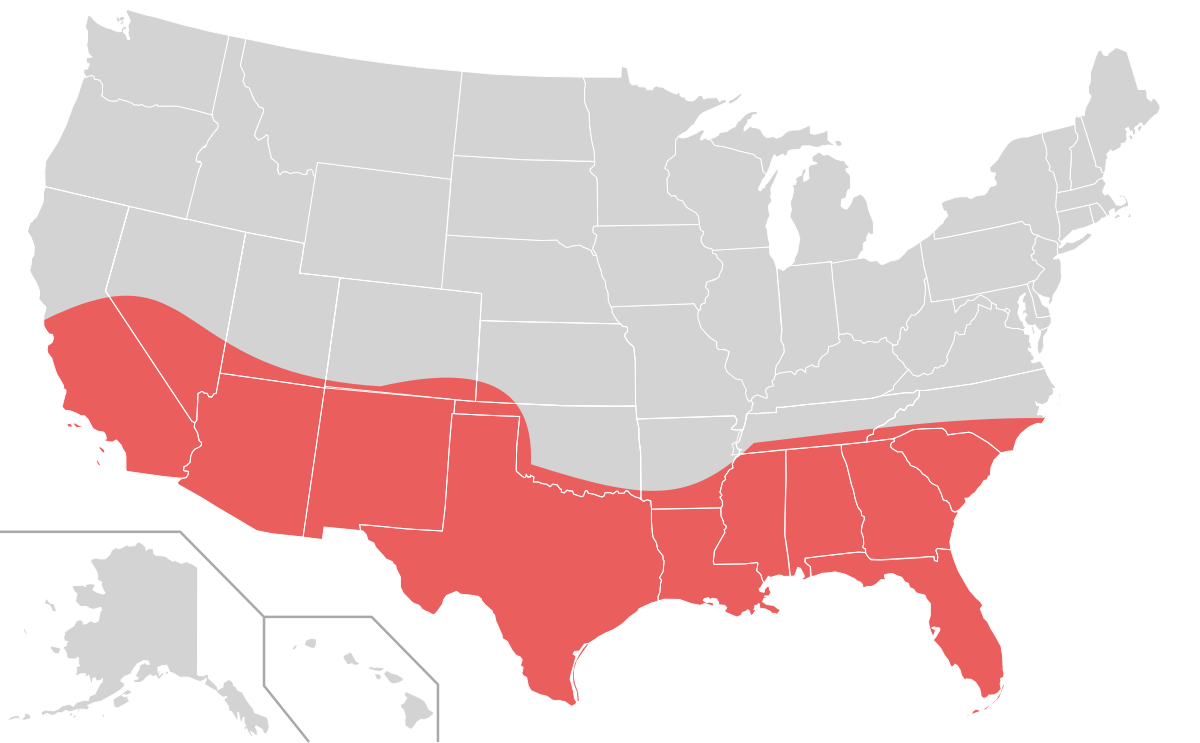
In relative terms, Virginia continues to do well in fighting the Covid-19 pandemic, although numbers of cases have risen in the Hampton Roads area, likely due to people ignoring mask wearing and social distancing mandates over the 4th of July weekend.  I say relative terms, since Virginia's new cases are a small fraction of what is happening in other states, especially Florida and Texas.  Yet compared to western European countries Virginia's numbers are terrible. Why?  Several causes, the most significant being the lack of any rational, science based federal response to the pandemic. The Trump/Pence regime first punted and left the heavy lifting to individual states and now is undermining medical experts  Further exacerbating the situation,  a number of GOP lead states rushed to reopen prematurely.  Then there are those who refuse to abide by mask requirements and eschew social distancing, caring nothing about those they may be infecting and putting their self-centered  sense of "liberty" over the lives of others.  The current result?  An economy that may be facing a second shutdown, especially in sunbelt states - the governor of Georgia incredibly ban cities and localities from implementing mask mandates.  A piece in The Atlantic looks at America's failure and what may be in store economically if the failed response to the pandemic continues.  Here are highlights:

Failed businesses and lost loved ones, empty theme parks and socially distanced funerals, a struggling economy and an unmitigated public-health disaster: This is the worst-of-both-worlds equilibrium the United States finds itself in.
Since the beginning of the coronavirus pandemic, President Donald Trump has railed against shutdowns and shelter-in-place orders, tweeting in all caps that “we cannot let the cure be worse than the problem itself” and pushing for employees to get back to work and businesses to get back to business. But the country has failed to get the virus under control, through masks, contact tracing, mass testing, or any of the other strategies other countries have tried and found successful. That has kneecapped the nascent recovery, and raised the possibility that the unemployment rate, which eased in May and June after nearly reaching 15 percent in April, could spike again later this year.
The economy seized in unprecedented terms this spring as states and cities mandated lockdowns. Hundreds of thousands of businesses closed, and millions of workers were furloughed or laid off. But instead of setting up a national viral-control strategy during this time, as other rich countries did, the United States did close to nothing. . . .  The Trump administration punted responsibility for public-health management to the states, each tipping into a budgetary crisis. After a springtime peak, caseloads declined only modestly. Outbreaks seeded across the country. States reopened, and counts exploded again.
Now the economy is traveling sideways, as business failures mount and the virus continues to maim and kill. New applications for unemployment insurance, for instance, are leveling off at more than 1 million a week—more than double the highest rate reached during the Great Recession, a sign that more job losses are becoming permanent.
The next, terrifying phase of the coronavirus recession is here: a damaged economy, a virus spreading faster than it was in March. The disease itself continues to take a bloody, direct toll on workers, with more than 60,000 Americans testing positive a day and tens of thousands suffering from extended illness. The statistical value of American lives already lost to the disease is something like $675 billion. The current phase of the pandemic is also taking an enormous secondary toll. States with unmitigated outbreaks have been forced to go back into lockdown, or to pause their reopening, killing weakened businesses and roiling the labor market. Where the virus spreads, the economy stops.
That is not just due to government edicts, either. Some consumers have rushed back to bars and restaurants, and resumed shopping and traveling. Young people, who tend to get less sick from the coronavirus than the elderly, appear to be driving today’s pandemic. But millions more are making it clear that they will not risk their life or the life of others in their community to go out. Avoidance of the virus, more so than shutdown orders, seems to be affecting consumer behavior. Places without official lockdowns have seen similar financial collapses to those with them, and a study by University of Chicago economists showed that decreases in economic activity are closely tied to “fears of infection” and are “highly influenced by the number of COVID deaths reported” in a given county.  
The perception of public transit as unsafe, for example, makes it expensive and tough for commuters to get to their jobs. Schools and day-care centers are struggling to figure out how to reopen safely, meaning millions of parents are facing a fall juggling work and child care. This is a disaster. “The lingering uncertainty about whether in-person education will resume isn’t the result of malfeasance, but utter nonfeasance,” the former Department of Homeland Security official Juliette Kayyem has argued in The Atlantic.
International comparisons are enlightening. Countries that successfully countered the virus seem to have enjoyed better financial recoveries; countries that did not shut down saw major hits to their economy anyway. In Sweden, authorities declined to enact strict public-health measures as the virus took hold. It has seen significantly higher case counts and more deaths than its neighbors, such as Norway, and its economy tanked. Or consider South Korea. With aggressive contact tracing and mass testing, it kept many of its commercial and educational facilities open as it quashed the pandemic. (The country has tallied just 288 deaths from COVID-19, compared with roughly 135,000 in the United States.) The unemployment rate there is 4.2 percent. . . .
In France, one of the hardest-hit countries in Europe, families are back to going on vacation, eating in cafés, and visiting loved ones in hospitals. In the United States, outbreaks are shutting everything down yet again.
The country can still flatten the curve and lower the death toll. Simple, low-cost measures like requiring masks in public would preserve as much as 5 percent of GDP, economists have estimated, as well as preventing thousands from getting sick. The supposed trade-off between public health and the economy doesn’t exist. And right now, the country is choosing not to save either.

Monday, July 06, 2020

Trump and Republican Governors: How America Lost the War on Covid-19

Much of America is facing a growing crisis as the Covid-19 pandemic worsens in many states, but particularly states with Republican governors such as Florida, South Carolina, Texas and Arizona.  The a piece in the Washington Post notes the situation as follows:
The pandemic map of the United States burned bright red Monday, with the number of new coronavirus infections during the first six days of July nearing 300,000 as more states and cities moved to reimpose shutdown orders. . . . . The United States is “still knee deep in the first wave” of the pandemic, Anthony S. Fauci, the director of the National Institute of Allergy and Infectious Diseases, said Monday. Fauci noted that while Europe managed to drive infections down — and now is dealing with little blips as it reopens — U.S. communities “never came down to baseline and now are surging back up, . . . .

The obvious question is how did Europe - and even a number of what Americans view as third world countries - get its pandemic under control while much of the United States is an unmitigated disaster?  A column in the New York Times lays blame where it belongs, namely on the failed leadership in the White House and in GOP held governors' mansions across the nation.  Ironically, the column references Donald Trump attacking Virginia and its physician governor and tweeting "liberate Virginia."   Here in Virginia, the infection curve has flattened and the number of cases remains stable or falling, thus suggesting that had other states heeded science and medical experts, America's situation might have been very different.  One can only hope that older voters realize that Trump and the GOP governors gambled with their lives for economic improvement which now will not materialize as states shut down again. They need to punish these failed leaders at the polls in November.  Here are column excerpts:

When did America start losing its war against the coronavirus? How did we find ourselves international pariahs, not even allowed to travel to Europe?
I’d suggest that the turning point was way back on April 17, the day that Donald Trump tweeted “LIBERATE MINNESOTA,” followed by “LIBERATE MICHIGAN” and “LIBERATE VIRGINIA.” In so doing, he effectively declared White House support for protesters demanding an end to the lockdowns governors had instituted to bring Covid-19 under control.
As it happens, the Democratic governors Trump was targeting in those tweets stood firm. But Republican governors in Arizona, Florida, Texas and elsewhere soon lifted stay-at-home orders and ended many restrictions on business operations. They also, following Trump’s lead, refused to require that people wear masks, and Texas and Arizona denied local governments the right to impose such requirements. They waved away warnings from health experts that premature and careless reopening could lead to a new wave of infections.
And the virus came.
But neither Republican politicians nor the Trump administration was willing to heed that lesson [form New York City].  By the second week of June new Covid-19 cases were surging in Arizona and clearly on the rise in Texas. Yet the governors of both states dismissed calls for a pause in reopening, insisting that things were under control.
And on June 16, of course, The Wall Street Journal published an opinion article by Vice President Mike Pence declaring that there wasn’t and wouldn’t be a coronavirus second wave. Given the Trump administration’s track record, this virtually guaranteed that the wave was about to hit. And so it was.
Over the past three weeks things have quickly gotten very grim. Hospitals in Arizona and Texas are in crisis. And, yes, it was premature reopening that did it, both directly and by sending a signal to individuals that the risk was past.
But why did America bungle Covid-19 so badly?
There has been a fair bit of commentary to the effect that our failed pandemic response was deeply rooted in American culture. We are, the argument goes, too libertarian, too distrustful of government, too unwilling to accept even slight inconveniences to protect others.
I don’t think any other advanced country (but are we still an advanced country?) has a comparable number of people who respond with rage when asked to wear a mask in a supermarket. There definitely isn’t any other advanced country where demonstrators against public health measures would wave guns around and invade state capitols. And the Republican Party is more or less unique among major Western political parties in its hostility to science in general.
But what strikes me, when looking at America’s extraordinary pandemic failure, is how top-down it all was.
Those anti-lockdown demonstrations weren’t spontaneous, grass-roots affairs. Many were organized and coordinated by conservative political activists, some with close ties to the Trump campaign, and financed in part by right-wing billionaires.
And the rush to reopen in Sunbelt states was less a response to popular demand than a case of Republican governors following Trump’s lead.
The main driving force behind reopening, as far as I can tell, was the administration’s desire to have big job gains leading into November, so that it could do what it knew how to do — boast about economic success. Actually dealing with the pandemic just wasn’t Trump’s kind of thing.
Trump’s vanity — his belief that wearing a mask would make him look silly, or mess up his makeup, or something — has surely played a role. But it’s also true that masks remind people that we haven’t controlled the coronavirus — and Trump wants people to forget that awkward fact.
The irony is that Trump’s willingness to trade deaths for jobs and political gain has backfired. . . . Trump’s job approval and electoral prospects just kept sliding.
And even in purely economic terms the rush to reopen is probably failing. The last official employment number was a snapshot from the second week of June; a variety of short-term indicators suggest that growth slowed or even went into reverse soon afterward, especially in states where Covid-19 cases are spiking.
In any case, the point is that America’s defeat at the hands of the coronavirus didn’t happen because victory was impossible. Nor was it because we as a nation were incapable of responding. No, we lost because Trump and those around him decided that it was in their political interests to let the virus run wild.

Monday, June 29, 2020

Will Revulsion Toward Trump Create a Political Realignment?

The election of Barack Obama  in 2008 was hailed as proof that a political realignment was taking place.  The prediction proved premature as the existence of a black president cause the forces of hate and bigotry on the right to rally, first in the form of the Tea Party and then in the form of Donald Trump base of support made up of racists and Christian extremist. Nearly four years later revulsion towards Trump - and most of what his base stands for - may be the fuse needed to make the missed realignment of 2008 become a reality.  Several factors are at play: (i) the shrinking of the pool of older white voters, (ii) the much enlarged pool of younger voters, (iii)the revulsion of moral conservatives - this does not include evangelicals - and (iv) growing numbers of older voters waking to the reality that Trump's/the GOP's response to the Covid-19 pandemic represents a threat to their very lives.  A column in the Washington Post looks at the dynamic.  Here are highlights:

You might fairly conclude that political analysts predicting realignments are not much different from stock market touts whose absolute — and mistaken — certainties about coming bull or bear markets lose a lot of people a lot of money. Since the rise of Ronald Reagan in 1980, many more realignments have been forecast than actually materialized.
But there is another way to look at those 2008 predictions: They were not wrong, they were just premature. As a result, a 77-year-old Democratic presidential nominee may be the unlikely instrument of a new generational alignment.
Why now and not in 2008? The most important reason is the obvious one: The backlash against Trump is the driving factor in this election so far — and there could be no better representative of the politics of the past than the current occupant in the White House. He is stubbornly out of touch with the country’s attitudes on many questions, and especially so on racial justice.
Far from adjusting to different times, Trump is betting — as he did in 2016 and as the tea party did in the Obama years — that the leftover right-wing slogans from the 1960s (see: “LAW AND ORDER!”) and a defense of Confederate “heritage” will win him the overwhelming majorities among older white voters that he needs to carry battleground states.
But this isn’t working, and not only because former vice president Joe Biden is an older white guy who is rather hard to tar as an agent of the revolutionary left. It’s also failing because many older voters are petrified of what Trump’s astonishingly inept handling of the coronavirus pandemic means for their health and their very lives.
But more importantly for the long run, the 2020 electorate is not the electorate of the tea party wave, or even of 2016. The new generations that Obama realignment enthusiasts acclaimed 12 years ago are, at long last, the dominant groups in the electorate.
As a Pew Research Center study showed, members of Gen Z (born after 1996) couldn’t even vote in 2012 and made up just 4 percent of the 2016 potential electorate. But they will account for 1 in 10 eligible voters this year. Millennials (born between 1981 and 1996) will constitute 27 percent of this year’s eligible voters. In combination with Gen Xers (born 1965 to 1980), more than 6 in 10 of this year’s electorate will be younger than 55.
Three things are true: (1.) The post-boomer generations are more diverse than the rest of the electorate. (2.) Younger whites are more liberal than their elders on matters of racial justice — as a Washington Post-Schar School poll showed this month — and on social issues. (3.) The share of millennials who vote will be higher than in Obama’s elections simply because they are older than they were in 2008 or 2012.
The 14-point lead Biden enjoyed over Trump in the New York Times-Siena College poll released last week reflects all these factors. Biden is splitting voters over 50 roughly evenly with Trump and then overwhelming the president among registered voters under 35 (59 to 25 percent) and those 35 to 49 (53 to 30 percent).
Nor did Biden’s margins depend solely on the diversity of the younger cohorts. Among whites under 45, Biden led Trump 52 to 30 percent.
Thus could a president who rose to power by exploiting the fears and anxieties of the aging part of the country find himself brought down by the rising generations who have had enough of the past. The United States of Trump’s imagination may simply no longer exist.

Saturday, June 27, 2020

Will Covid-19 Accelerate the GOP's Slow Suicide

I "came out" almost nineteen years ago and finally broke all ties to the Republican Party shortly thereafter given the Party's take over by Christofascists and the Party's aggressive anti-gay agenda which included support for sodomy laws and bans on even civil unions for same sex couples.  Here in Virginia at that time the Virginia GOP made the conscious decision to double down on its efforts to pander to rural voters and Christian extremists to the exclusion of moderate to liberal suburban voters. Subsequently, open white supremacists were welcomed into the Virginia GOP base.  Nationally, the GOP made a similar conscious decision to reject growing population areas in favor of shrinking rural areas. In Virginia, the result has been that the Virginia GOP has not won a statewide race in eleven years and the state is increasingly viewed as a blue state - all the result of what I warned Republican friends was a form of slow political suicide.   Now, that same slow suicide may be accelerating on a national level with the Covid-19 pandemic perhaps being the spark needed to see a sea change in 2020.  A lengthy piece in The Atlantic looks at the GOP's potential losses in states like Arizona, Texas, North Carolina and Florida all thanks to Trump and the GOP's suicidal focus on an aging and shrinking rural base.  Here are article highlights:

The wildfire of coronavirus cases burning through the Sun Belt’s largest cities and suburbs could accelerate their movement away from President Donald Trump and the GOP—a dynamic with the potential to tip the balance in national elections not only in 2020, but for years to come.
Until the 2016 election, Republicans had maintained a consistent advantage in the region’s big metros—including Atlanta, Houston, Dallas, and Phoenix—even as Democrats took hold of comparable urban centers in other parts of the country. But under Trump, the GOP has lost ground in these diverse and economically thriving communities. And now, a ferocious upsurge of COVID-19 across the Sun Belt’s population hubs—including major cities in Florida and North Carolina where Democrats are already more competitive—is adding a new threat to the traditional Republican hold on these places.
In 2016, Trump won all five of the large Sun Belt states that could be battlegrounds in November. But the improving Democratic performance in the big metros provides Joe Biden a beachhead to contest each of them. Polls consistently give the former vice president a lead in Arizona and Florida, show him and Trump locked closely in North Carolina, and provide the president only a small edge (at best) in Texas and Georgia. New York Times/Siena College polls released today give Biden solid leads in Arizona, Florida, and North Carolina, and commanding advantages in the major population centers of each state, including Phoenix, Miami, Charlotte, and Raleigh. Fox News polls also released today show Biden leading Trump narrowly in North Carolina, Georgia, and (even) Texas, while opening up a comfortable 9-point advantage in Florida.
Even the Republicans relatively confident that Trump’s grip on rural voters will allow him to hold most, if not all, of these states recognize the implications of a trend that has them losing ground in the communities that are preponderantly driving economic and population growth.
“The trends of 2016, ’17, ’18 are continuing apace, with continuing weakness of the Republican brand in suburban areas that had traditionally voted Republican, coupled with strengthening of the Republican brand in rural areas that had traditionally voted Democrat,” Whit Ayres, a Republican pollster who has long specialized in southern suburbs, told me. “The problem, of course, is that the Republicans are trading larger, faster-growing areas for smaller, slower-growing areas, and the math does not work out in the long run with that sort of trade.”
The new twist in this ongoing reconfiguration is the coronavirus. . . . . . the number of new cases in and around Sun Belt cities is exploding. “If we stay on this current trajectory, then we will overwhelm our hospitals” in July, Steve Adler, the mayor of Austin, Texas, told me yesterday, echoing the public alarms of many mayors across the region.
The trend lines are daunting. From May 23 through Tuesday, the total number of confirmed cases more than doubled in the counties centered on Austin (Travis), Houston (Harris), and Dallas; nearly doubled in Fort Worth (Tarrant); and roughly tripled in San Antonio (Bexar). In Maricopa County, Arizona, which comprises Phoenix and its sprawling suburbs, the total number of cases more than quadrupled
Public-health experts expect the numbers to continue rising for weeks. In Arizona, “we are experiencing a second surge after an early-May plateau,” Joe Gerald, a professor at the University of Arizona College of Public Health, told me. “This surge is much larger than the first one and basically our foot is still on the accelerator. It is going to get worse before it gets better.”
Across almost all of the Sun Belt states, the spikes are exacerbating tensions between Republican governors who rely mostly on suburban and rural areas for their votes, and Democratic local officials in the most populous cities and counties. Taking cues from Trump, Republican Governors Ron DeSantis in Florida, Brian Kemp in Georgia, Greg Abbott in Texas, and Doug Ducey in Arizona have all moved aggressively to reopen their state economies; refused to deviate from that course as the caseloads have increased; and blocked municipal officials from reversing or even slowing the pace of the reopening.
The one concession from DeSantis, Abbott, and Ducey has been to allow local governments to require some degree of mask wearing. But experts say that requirement alone, especially given the uncertainties of compliance and enforcement, cannot stop the rapidly rising caseload in these states. “I don’t think [masks] are going to be sufficient to slow the spread or prevent us from exceeding our hospital capacity,” Gerard told me.
For Trump and the GOP, an urban/suburban backlash against these Republican governors—combined with a broader negative verdict on the federal pandemic response—risks accelerating the trends reshaping metropolitan politics across the Sun Belt.
Democrats are now finally seeing the same trends fortify their position in the Sun Belt population centers.  Take Gwinnett and Cobb counties, outside Atlanta. In 2014, Republican Senator David Perdue, who’s up for reelection in November, won comfortable margins of about 55 percent in each. In 2016, though, Hillary Clinton won both by relatively narrow margins against Trump, and in 2018, the Democratic gubernatorial nominee, Stacey Abrams, carried them more resoundingly. Abramowitz expects them to continue moving toward the Democrats in 2020, with margins sufficient enough to give Biden and Perdue’s Democratic opponent, Jon Ossoff, a competitive shot at the state, and also to flip an open U.S. House seat in Gwinnett.
In Texas, the arc looks similar. The University of Houston political scientist Richard Murray has charted a clear blue bend in voters’ political preferences in the 27 counties that comprise the state’s four huge metro areas—Houston, Dallas, San Antonio, and Austin—which together account for about 70 percent of the state’s votes and jobs.
Murray said he expects Biden to capture as much as 58 percent in November. With the higher presidential-year turnout, he predicts, that could produce an advantage of more than 1 million votes for Biden in and around those four cities. Murray said there is no guarantee Trump can squeeze out enough rural votes to hold Texas. But even if he does, the GOP faces some brutal arithmetic: As Ayres and Murray both noted, it’s relying more and more on the places that are shrinking or stagnant in population while retreating in the growing places. This problem is especially acute in Texas, Murray said, because the metropolitan areas are among the nation’s fastest growing, and they are becoming much more racially diverse as they expand.
[F]or November, Arizona is the state where these dynamics may matter most. Many Democrats see Arizona, which Democrats have carried only once since 1948, as Biden’s best chance to reach 270 Electoral College votes if he can’t dislodge Trump’s hold on either Wisconsin or Florida.
Maricopa County is the key to those hopes. It was the biggest county in America that Trump won in 2016, when he carried it by almost 45,000 votes. But in 2018, it propelled the Democratic Senator Kyrsten Sinema to her victory when she took it by about 60,000 votes. Noble’s recent polls have consistently found both Biden and Democratic Senate candidate Mark Kelly leading their respective Republican opponents by roughly double digits in the sprawling county . . . . no matter how much Republicans run up the score, as Trump is likely to do, in the state’s rural regions. “They are still in trouble in Maricopa County,” he said.
Republicans are leaking support from two groups in Maricopa: college-educated white voters (especially women) and seniors. Both populations are among those who have expressed the most concern about the coronavirus, even before the fearsome surge now buffeting the area.
Trump’s response? When he stopped in Maricopa for a rally in north Phoenix on Tuesday, he did not wear a mask or require one for those attending the event, despite public pleas to do so from Mayor Kate Gallego. He barely mentioned the outbreak in his 90-minute speech. In other words, even while visiting metropolitan Phoenix, Trump’s focus seemed to be on his preponderantly white base in the exurban and rural communities beyond it.
Across the Sun Belt, November will test whether Trump’s base-first strategy can overcome the resistance that’s coalescing against him in the population centers now confronting the full force of the coronavirus outbreak.