Showing posts with label slow suicide. Show all posts

Saturday, June 27, 2020

Will Covid-19 Accelerate the GOP's Slow Suicide

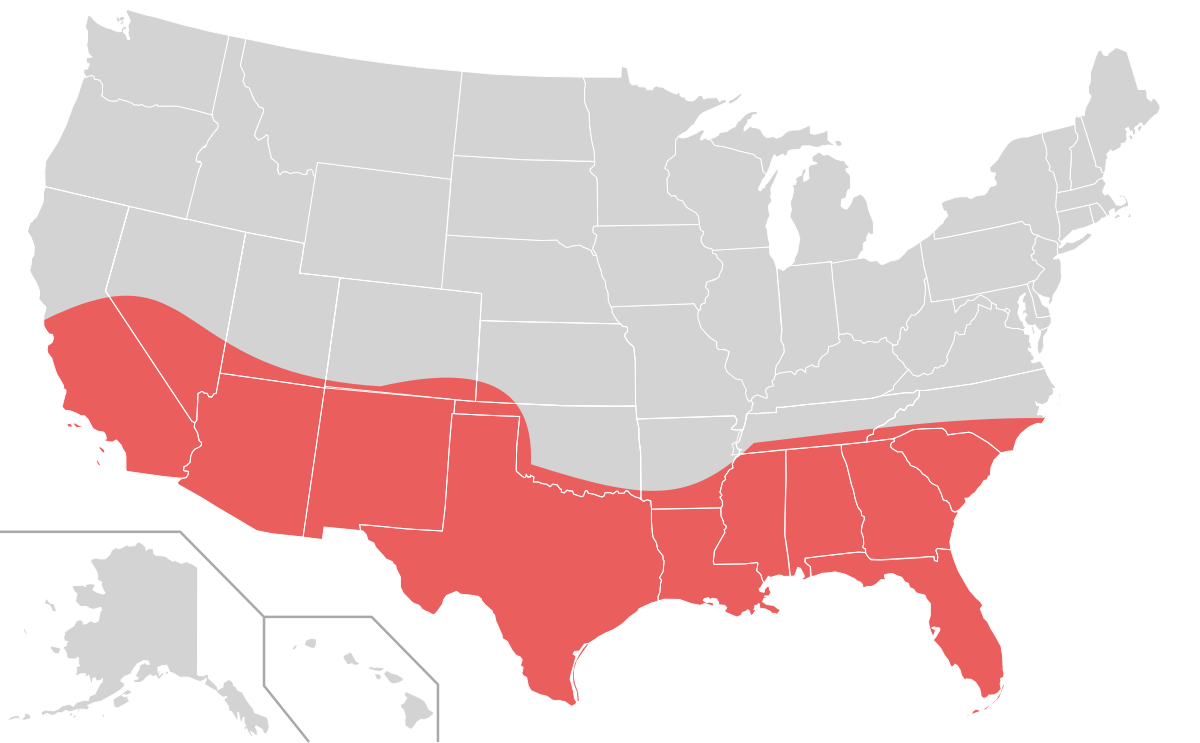
I "came out" almost nineteen years ago and finally broke all ties to the Republican Party shortly thereafter given the Party's take over by Christofascists and the Party's aggressive anti-gay agenda which included support for sodomy laws and bans on even civil unions for same sex couples.  Here in Virginia at that time the Virginia GOP made the conscious decision to double down on its efforts to pander to rural voters and Christian extremists to the exclusion of moderate to liberal suburban voters. Subsequently, open white supremacists were welcomed into the Virginia GOP base.  Nationally, the GOP made a similar conscious decision to reject growing population areas in favor of shrinking rural areas. In Virginia, the result has been that the Virginia GOP has not won a statewide race in eleven years and the state is increasingly viewed as a blue state - all the result of what I warned Republican friends was a form of slow political suicide.   Now, that same slow suicide may be accelerating on a national level with the Covid-19 pandemic perhaps being the spark needed to see a sea change in 2020.  A lengthy piece in The Atlantic looks at the GOP's potential losses in states like Arizona, Texas, North Carolina and Florida all thanks to Trump and the GOP's suicidal focus on an aging and shrinking rural base.  Here are article highlights:

The wildfire of coronavirus cases burning through the Sun Belt’s largest cities and suburbs could accelerate their movement away from President Donald Trump and the GOP—a dynamic with the potential to tip the balance in national elections not only in 2020, but for years to come.
Until the 2016 election, Republicans had maintained a consistent advantage in the region’s big metros—including Atlanta, Houston, Dallas, and Phoenix—even as Democrats took hold of comparable urban centers in other parts of the country. But under Trump, the GOP has lost ground in these diverse and economically thriving communities. And now, a ferocious upsurge of COVID-19 across the Sun Belt’s population hubs—including major cities in Florida and North Carolina where Democrats are already more competitive—is adding a new threat to the traditional Republican hold on these places.
In 2016, Trump won all five of the large Sun Belt states that could be battlegrounds in November. But the improving Democratic performance in the big metros provides Joe Biden a beachhead to contest each of them. Polls consistently give the former vice president a lead in Arizona and Florida, show him and Trump locked closely in North Carolina, and provide the president only a small edge (at best) in Texas and Georgia. New York Times/Siena College polls released today give Biden solid leads in Arizona, Florida, and North Carolina, and commanding advantages in the major population centers of each state, including Phoenix, Miami, Charlotte, and Raleigh. Fox News polls also released today show Biden leading Trump narrowly in North Carolina, Georgia, and (even) Texas, while opening up a comfortable 9-point advantage in Florida.
Even the Republicans relatively confident that Trump’s grip on rural voters will allow him to hold most, if not all, of these states recognize the implications of a trend that has them losing ground in the communities that are preponderantly driving economic and population growth.
“The trends of 2016, ’17, ’18 are continuing apace, with continuing weakness of the Republican brand in suburban areas that had traditionally voted Republican, coupled with strengthening of the Republican brand in rural areas that had traditionally voted Democrat,” Whit Ayres, a Republican pollster who has long specialized in southern suburbs, told me. “The problem, of course, is that the Republicans are trading larger, faster-growing areas for smaller, slower-growing areas, and the math does not work out in the long run with that sort of trade.”
The new twist in this ongoing reconfiguration is the coronavirus. . . . . . the number of new cases in and around Sun Belt cities is exploding. “If we stay on this current trajectory, then we will overwhelm our hospitals” in July, Steve Adler, the mayor of Austin, Texas, told me yesterday, echoing the public alarms of many mayors across the region.
The trend lines are daunting. From May 23 through Tuesday, the total number of confirmed cases more than doubled in the counties centered on Austin (Travis), Houston (Harris), and Dallas; nearly doubled in Fort Worth (Tarrant); and roughly tripled in San Antonio (Bexar). In Maricopa County, Arizona, which comprises Phoenix and its sprawling suburbs, the total number of cases more than quadrupled
Public-health experts expect the numbers to continue rising for weeks. In Arizona, “we are experiencing a second surge after an early-May plateau,” Joe Gerald, a professor at the University of Arizona College of Public Health, told me. “This surge is much larger than the first one and basically our foot is still on the accelerator. It is going to get worse before it gets better.”
Across almost all of the Sun Belt states, the spikes are exacerbating tensions between Republican governors who rely mostly on suburban and rural areas for their votes, and Democratic local officials in the most populous cities and counties. Taking cues from Trump, Republican Governors Ron DeSantis in Florida, Brian Kemp in Georgia, Greg Abbott in Texas, and Doug Ducey in Arizona have all moved aggressively to reopen their state economies; refused to deviate from that course as the caseloads have increased; and blocked municipal officials from reversing or even slowing the pace of the reopening.
The one concession from DeSantis, Abbott, and Ducey has been to allow local governments to require some degree of mask wearing. But experts say that requirement alone, especially given the uncertainties of compliance and enforcement, cannot stop the rapidly rising caseload in these states. “I don’t think [masks] are going to be sufficient to slow the spread or prevent us from exceeding our hospital capacity,” Gerard told me.
For Trump and the GOP, an urban/suburban backlash against these Republican governors—combined with a broader negative verdict on the federal pandemic response—risks accelerating the trends reshaping metropolitan politics across the Sun Belt.
Democrats are now finally seeing the same trends fortify their position in the Sun Belt population centers.  Take Gwinnett and Cobb counties, outside Atlanta. In 2014, Republican Senator David Perdue, who’s up for reelection in November, won comfortable margins of about 55 percent in each. In 2016, though, Hillary Clinton won both by relatively narrow margins against Trump, and in 2018, the Democratic gubernatorial nominee, Stacey Abrams, carried them more resoundingly. Abramowitz expects them to continue moving toward the Democrats in 2020, with margins sufficient enough to give Biden and Perdue’s Democratic opponent, Jon Ossoff, a competitive shot at the state, and also to flip an open U.S. House seat in Gwinnett.
In Texas, the arc looks similar. The University of Houston political scientist Richard Murray has charted a clear blue bend in voters’ political preferences in the 27 counties that comprise the state’s four huge metro areas—Houston, Dallas, San Antonio, and Austin—which together account for about 70 percent of the state’s votes and jobs.
Murray said he expects Biden to capture as much as 58 percent in November. With the higher presidential-year turnout, he predicts, that could produce an advantage of more than 1 million votes for Biden in and around those four cities. Murray said there is no guarantee Trump can squeeze out enough rural votes to hold Texas. But even if he does, the GOP faces some brutal arithmetic: As Ayres and Murray both noted, it’s relying more and more on the places that are shrinking or stagnant in population while retreating in the growing places. This problem is especially acute in Texas, Murray said, because the metropolitan areas are among the nation’s fastest growing, and they are becoming much more racially diverse as they expand.
[F]or November, Arizona is the state where these dynamics may matter most. Many Democrats see Arizona, which Democrats have carried only once since 1948, as Biden’s best chance to reach 270 Electoral College votes if he can’t dislodge Trump’s hold on either Wisconsin or Florida.
Maricopa County is the key to those hopes. It was the biggest county in America that Trump won in 2016, when he carried it by almost 45,000 votes. But in 2018, it propelled the Democratic Senator Kyrsten Sinema to her victory when she took it by about 60,000 votes. Noble’s recent polls have consistently found both Biden and Democratic Senate candidate Mark Kelly leading their respective Republican opponents by roughly double digits in the sprawling county . . . . no matter how much Republicans run up the score, as Trump is likely to do, in the state’s rural regions. “They are still in trouble in Maricopa County,” he said.
Republicans are leaking support from two groups in Maricopa: college-educated white voters (especially women) and seniors. Both populations are among those who have expressed the most concern about the coronavirus, even before the fearsome surge now buffeting the area.
Trump’s response? When he stopped in Maricopa for a rally in north Phoenix on Tuesday, he did not wear a mask or require one for those attending the event, despite public pleas to do so from Mayor Kate Gallego. He barely mentioned the outbreak in his 90-minute speech. In other words, even while visiting metropolitan Phoenix, Trump’s focus seemed to be on his preponderantly white base in the exurban and rural communities beyond it.
Across the Sun Belt, November will test whether Trump’s base-first strategy can overcome the resistance that’s coalescing against him in the population centers now confronting the full force of the coronavirus outbreak.

Thursday, July 30, 2015

US Catholic Bishops Are Ignoring Pope Francis' Message


The Republican Party is not the only group that is denying reality and changing attitudes towards LGBT individuals.  In lock step you will find U.S. Catholic bishops continuing to double down on anti-gay bigotry - as well as discrimination against divorced Catholics in the case of the despicable Bishop of the Diocese of Richmond, Virginia.  This despite the message that Pope Francis has seemingly tried to send that business as usual is not going to cut it, especially as the Catholic Church suffers membership loses across the globe except in backward, uneducated regions of Africa (ignorance and lack of education being a prerequisite to embracing the Christian narrative).   A piece in the National Catholic Reporter looks at the U.S. Bishops' subversion of Pope Francis' message.  Here are excerpts:
There have been a number of recent firings of gay or lesbian employees within the Catholic church in the United States. Principals, teachers and a variety of parish ministers are among those who have been fired. Gay priests and women religious have been dismissed from significant positions of influence. Fr. Warren Hall, a gay priest and chaplain at Seton Hall University, was removed from his position by the archbishop of Newark, N.J.

Hall has written a letter to Pope Francis requesting a meeting with the LGBT community within the church when Pope Francis visits the United States in September. In his letter, Hall writes, "Good teachers are being fired, pastoral and compassionate priests and religious women are being silenced ... and good, faith-filled people are leaving the Church as they witness all of this happening."

It is clear that bishops have the power to make these decisions and to hire and fire for any reason or for no reason. Having the power to do something, however, is not the same thing as it being the right thing to do. It is interesting to note that the bishop, not the school, made the decision regarding Hall.
Schools, hospitals, universities, etc. have often been pleased or satisfied with their own employees, yet bishops have seen fit to intervene. There is also the issue of firing people who are doing a good job, as Hall himself notes.

[T]he bishops appear to be ignoring the words of Pope Francis. Pope Francis has made no attempt to change any church doctrine, and there is no indication he has any plans to. Conservatives should be happy about this. However, Pope Francis has also made clear that there does need to be a dramatic change in the way the church does business. Gone are the days of wholesale condemnation. Instead, we need to live in the world and embrace God's creatures and creation as good. A new openness is needed . . .

Why are the bishops not hearing or responding to this message? Do they simply not get it? Do they just not agree with the pope and are choosing to defy or ignore the Francis message? Do they believe that Francis won't be around that long and they will just wait it out until a pope more to their liking comes along?

What they need to understand is that this is not just about Francis. This is about coming to grips with the world around them. Bishops need to recognize that today's culture has moved to a different place on a number of issues. They can choose to stand on the sidelines and become more and more irrelevant. In doing so, they will find that fewer and fewer members even of the faithful will bother to listen to what they have to say.

The alternative is to be more welcoming to the world around them. Bishops need to stop the knee-jerk reaction of forcefully condemning every statement that they don't understand or disagree with. . . . How refreshing it would be if the bishops were to choose to be a part of the world rather than isolating themselves and ensuring that their utterances are not seen as constructive or helpful to the wider world around them. Ultimately, the bishops need to shed their attachment to power and learn to serve as did the Lord Jesus.
Will the bishops get the message?  Probably not.  The majority are likely self-loathing closet cases who cannot stand the fact that some gays have come to terms with their sexuality.  They are bitter, nasty men who have no concept of the real world and who surround themselves with sycophants  and pandering ass kissers. It is they, along with other Christofascists who are slowly but surely killing Christianity.

Friday, November 21, 2014

The 2014 Midterm Elections: The Bigger Story that the GOP Is Ignoring

Click image to enlarge
As noted before some in the Republican Party - mostly the reality challenged Christofascists/Tea Party Crowd - are delusional and seeing the 2014 midterm election results as a blanket mandate to pursue their extremist agenda.  Meanwhile, changing demographics and beliefs indicate that the GOP victory could prove to be short term.  As one involved in politics for over 20 years, it drives me to distraction that the GOP seems to have no long term plan whatsoever.  A GOP activist has a column in the Houston Chronicle that hits on my frustrations with the GOP and its apparent long term death wish.  Even though the death of the GOP as presently comprised would be a definite positive for the nation, long term, two sane and functioning political parties is essential.  Here are highlights from the Chronicle:
Few things are as dangerous to a long term strategy as a short-term victory. Republicans this week scored the kind of win that sets one up for spectacular, catastrophic failure and no one is talking about it.

What emerges from the numbers is the continuation of a trend that has been in place for almost two decades. Once again, Republicans are disappearing from the competitive landscape at the national level across the most heavily populated sections of the country while intensifying their hold on a declining electoral bloc of aging, white, rural voters. The 2014 election not only continued that doomed pattern, it doubled down on it. As a result, it became apparent from the numbers last week that no Republican candidate has a credible shot at the White House in 2016, and the chance of the GOP holding the Senate for longer than two years is precisely zero.

For Republicans looking for ways that the party can once again take the lead in building a nationally relevant governing agenda, the 2014 election is a prelude to a disaster. Understanding this trend begins with a stark graphic.

Behold the Blue Wall (See above):

The Blue Wall is block of states that no Republican Presidential candidate can realistically hope to win. Tuesday that block finally extended to New Hampshire, meaning that at the outset of any Presidential campaign, a minimally effective Democratic candidate can expect to win 257 electoral votes without even trying. That’s 257 out of the 270 needed to win.

Arguably Virginia now sits behind that wall as well. Democrats won the Senate seat there without campaigning in a year when hardly anyone but Republicans showed up to vote and the GOP enjoyed its largest wave in modern history. Virginia would take that tally to 270. Again, that’s 270 out of 270.

This means that the next Presidential election, and all subsequent ones until a future party realignment, will be decided in the Democratic primary. Only by sweeping all nine of the states that remain in contention AND also flipping one impossibly Democratic state can a Republican candidate win the White House.

By contrast, Republicans control a far more modest Red Fortress, which currently amounts to 149  electoral votes. What happened to that fortress amid the glory of the 2014 “victory?” It shrunk yet again. 

The biggest Republican victory in decades did not move the map. The Republican party’s geographic and demographic isolation from the rest of American actually got worse.

A few other items of interest from the 2014 election results:
- Republican Senate candidates lost every single race behind the Blue Wall. Every one.

- Behind the Blue Wall there were some new Republican Governors, but their success was very specific and did not translate down the ballot.

- Democrats have consolidated their power behind the sections of the country that generate the overwhelming bulk of America’s wealth outside the energy industry. That’s only ironic if you buy into far-right propaganda, but it’s interesting none the less.

- Vote suppression is working remarkably well, but that won’t last.

- Every personhood amendment failed.

- Almost half of the Republican Congressional delegation now comes from the former Confederacy. Total coincidence, just pointing that out.

- Republican support grew deeper in 2014, not broader. For example, new Texas Governor Greg Abbott won a whopping victory in the Republic of Baptistan. That’s great, but that’s a race no one ever thought would be competitive and hardly anyone showed up to vote in. Texas not only had the lowest voter turnout in the country (less than 30%), a position it has consistently held across decades, but that electorate is more militantly out of step with every national trend then any other major Republican bloc. Texas now holds a tenth of the GOP majority in the House.


- Keep an eye on oil prices. Texas, which is at the core of GOP dysfunction, is a petro-state with an economy roughly as diverse and modern as Nigeria, Iran or Venezuela. . . . Watch what happens if the decline in oil prices lasts more than a year.

- McConnell’s conciliatory statements are encouraging, but he’s about to discover that he cannot persuade Republican Senators and Congressmen to cooperate on anything constructive. We’re about to get two years of intense, horrifying stupidity.  

Republicans, with their traditional leadership on commercial issues should be at the leading edge of planning to capitalize on this emerging environment. What are we getting from Republicans? Climate denial, theocracy, thinly veiled racism, paranoia, and Benghazi hearings. Lots and lots of hearings on Benghazi.

It is almost too late for Republicans to participate in shaping the next wave of our economic and political transformation. The opportunities we inherited coming out of the Reagan Era are blinking out of existence one by one while we chase so-called “issues” so stupid, so blindingly disconnected from our emerging needs that our grandchildren will look back on our performance in much the same way that we see the failures of the generation that fought desegregation.

Something, some force, some gathering of sane, rational, authentically concerned human beings generally at peace with reality must emerge in the next four to six years from the right, or our opportunity will be lost for a long generation. Needless to say, Greg Abbott and Jodi Ernst are not that force.

“Winning” this election did not help that force emerge. This was a dark week for Republicans, and for everyone who wants to see America remain the world’s most vibrant, most powerful nation.
GOPLifer and I are on the same page.  I just wonder at what point GOPLifer will realize that the GOP is beyond saving and flee the GOP as my extended family and I did some years back.