Showing posts with label Arizona. Show all posts

Saturday, June 27, 2020

Will Covid-19 Accelerate the GOP's Slow Suicide

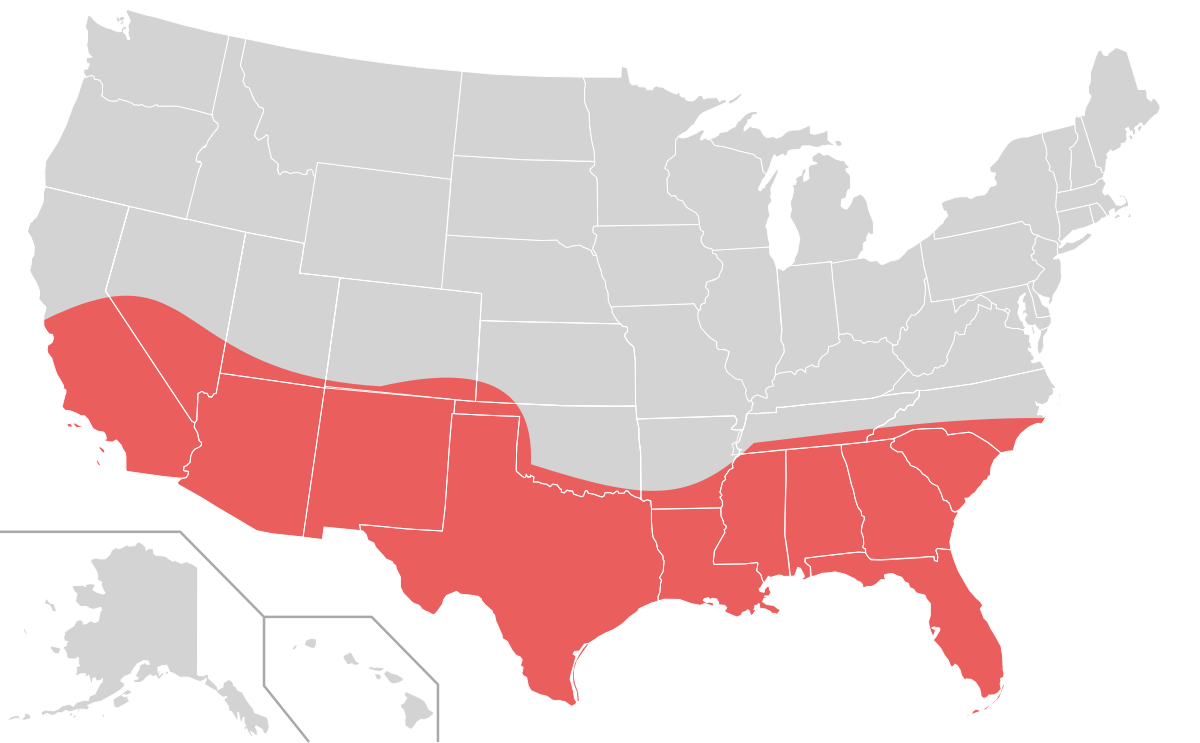
I "came out" almost nineteen years ago and finally broke all ties to the Republican Party shortly thereafter given the Party's take over by Christofascists and the Party's aggressive anti-gay agenda which included support for sodomy laws and bans on even civil unions for same sex couples.  Here in Virginia at that time the Virginia GOP made the conscious decision to double down on its efforts to pander to rural voters and Christian extremists to the exclusion of moderate to liberal suburban voters. Subsequently, open white supremacists were welcomed into the Virginia GOP base.  Nationally, the GOP made a similar conscious decision to reject growing population areas in favor of shrinking rural areas. In Virginia, the result has been that the Virginia GOP has not won a statewide race in eleven years and the state is increasingly viewed as a blue state - all the result of what I warned Republican friends was a form of slow political suicide.   Now, that same slow suicide may be accelerating on a national level with the Covid-19 pandemic perhaps being the spark needed to see a sea change in 2020.  A lengthy piece in The Atlantic looks at the GOP's potential losses in states like Arizona, Texas, North Carolina and Florida all thanks to Trump and the GOP's suicidal focus on an aging and shrinking rural base.  Here are article highlights:

The wildfire of coronavirus cases burning through the Sun Belt’s largest cities and suburbs could accelerate their movement away from President Donald Trump and the GOP—a dynamic with the potential to tip the balance in national elections not only in 2020, but for years to come.
Until the 2016 election, Republicans had maintained a consistent advantage in the region’s big metros—including Atlanta, Houston, Dallas, and Phoenix—even as Democrats took hold of comparable urban centers in other parts of the country. But under Trump, the GOP has lost ground in these diverse and economically thriving communities. And now, a ferocious upsurge of COVID-19 across the Sun Belt’s population hubs—including major cities in Florida and North Carolina where Democrats are already more competitive—is adding a new threat to the traditional Republican hold on these places.
In 2016, Trump won all five of the large Sun Belt states that could be battlegrounds in November. But the improving Democratic performance in the big metros provides Joe Biden a beachhead to contest each of them. Polls consistently give the former vice president a lead in Arizona and Florida, show him and Trump locked closely in North Carolina, and provide the president only a small edge (at best) in Texas and Georgia. New York Times/Siena College polls released today give Biden solid leads in Arizona, Florida, and North Carolina, and commanding advantages in the major population centers of each state, including Phoenix, Miami, Charlotte, and Raleigh. Fox News polls also released today show Biden leading Trump narrowly in North Carolina, Georgia, and (even) Texas, while opening up a comfortable 9-point advantage in Florida.
Even the Republicans relatively confident that Trump’s grip on rural voters will allow him to hold most, if not all, of these states recognize the implications of a trend that has them losing ground in the communities that are preponderantly driving economic and population growth.
“The trends of 2016, ’17, ’18 are continuing apace, with continuing weakness of the Republican brand in suburban areas that had traditionally voted Republican, coupled with strengthening of the Republican brand in rural areas that had traditionally voted Democrat,” Whit Ayres, a Republican pollster who has long specialized in southern suburbs, told me. “The problem, of course, is that the Republicans are trading larger, faster-growing areas for smaller, slower-growing areas, and the math does not work out in the long run with that sort of trade.”
The new twist in this ongoing reconfiguration is the coronavirus. . . . . . the number of new cases in and around Sun Belt cities is exploding. “If we stay on this current trajectory, then we will overwhelm our hospitals” in July, Steve Adler, the mayor of Austin, Texas, told me yesterday, echoing the public alarms of many mayors across the region.
The trend lines are daunting. From May 23 through Tuesday, the total number of confirmed cases more than doubled in the counties centered on Austin (Travis), Houston (Harris), and Dallas; nearly doubled in Fort Worth (Tarrant); and roughly tripled in San Antonio (Bexar). In Maricopa County, Arizona, which comprises Phoenix and its sprawling suburbs, the total number of cases more than quadrupled
Public-health experts expect the numbers to continue rising for weeks. In Arizona, “we are experiencing a second surge after an early-May plateau,” Joe Gerald, a professor at the University of Arizona College of Public Health, told me. “This surge is much larger than the first one and basically our foot is still on the accelerator. It is going to get worse before it gets better.”
Across almost all of the Sun Belt states, the spikes are exacerbating tensions between Republican governors who rely mostly on suburban and rural areas for their votes, and Democratic local officials in the most populous cities and counties. Taking cues from Trump, Republican Governors Ron DeSantis in Florida, Brian Kemp in Georgia, Greg Abbott in Texas, and Doug Ducey in Arizona have all moved aggressively to reopen their state economies; refused to deviate from that course as the caseloads have increased; and blocked municipal officials from reversing or even slowing the pace of the reopening.
The one concession from DeSantis, Abbott, and Ducey has been to allow local governments to require some degree of mask wearing. But experts say that requirement alone, especially given the uncertainties of compliance and enforcement, cannot stop the rapidly rising caseload in these states. “I don’t think [masks] are going to be sufficient to slow the spread or prevent us from exceeding our hospital capacity,” Gerard told me.
For Trump and the GOP, an urban/suburban backlash against these Republican governors—combined with a broader negative verdict on the federal pandemic response—risks accelerating the trends reshaping metropolitan politics across the Sun Belt.
Democrats are now finally seeing the same trends fortify their position in the Sun Belt population centers.  Take Gwinnett and Cobb counties, outside Atlanta. In 2014, Republican Senator David Perdue, who’s up for reelection in November, won comfortable margins of about 55 percent in each. In 2016, though, Hillary Clinton won both by relatively narrow margins against Trump, and in 2018, the Democratic gubernatorial nominee, Stacey Abrams, carried them more resoundingly. Abramowitz expects them to continue moving toward the Democrats in 2020, with margins sufficient enough to give Biden and Perdue’s Democratic opponent, Jon Ossoff, a competitive shot at the state, and also to flip an open U.S. House seat in Gwinnett.
In Texas, the arc looks similar. The University of Houston political scientist Richard Murray has charted a clear blue bend in voters’ political preferences in the 27 counties that comprise the state’s four huge metro areas—Houston, Dallas, San Antonio, and Austin—which together account for about 70 percent of the state’s votes and jobs.
Murray said he expects Biden to capture as much as 58 percent in November. With the higher presidential-year turnout, he predicts, that could produce an advantage of more than 1 million votes for Biden in and around those four cities. Murray said there is no guarantee Trump can squeeze out enough rural votes to hold Texas. But even if he does, the GOP faces some brutal arithmetic: As Ayres and Murray both noted, it’s relying more and more on the places that are shrinking or stagnant in population while retreating in the growing places. This problem is especially acute in Texas, Murray said, because the metropolitan areas are among the nation’s fastest growing, and they are becoming much more racially diverse as they expand.
[F]or November, Arizona is the state where these dynamics may matter most. Many Democrats see Arizona, which Democrats have carried only once since 1948, as Biden’s best chance to reach 270 Electoral College votes if he can’t dislodge Trump’s hold on either Wisconsin or Florida.
Maricopa County is the key to those hopes. It was the biggest county in America that Trump won in 2016, when he carried it by almost 45,000 votes. But in 2018, it propelled the Democratic Senator Kyrsten Sinema to her victory when she took it by about 60,000 votes. Noble’s recent polls have consistently found both Biden and Democratic Senate candidate Mark Kelly leading their respective Republican opponents by roughly double digits in the sprawling county . . . . no matter how much Republicans run up the score, as Trump is likely to do, in the state’s rural regions. “They are still in trouble in Maricopa County,” he said.
Republicans are leaking support from two groups in Maricopa: college-educated white voters (especially women) and seniors. Both populations are among those who have expressed the most concern about the coronavirus, even before the fearsome surge now buffeting the area.
Trump’s response? When he stopped in Maricopa for a rally in north Phoenix on Tuesday, he did not wear a mask or require one for those attending the event, despite public pleas to do so from Mayor Kate Gallego. He barely mentioned the outbreak in his 90-minute speech. In other words, even while visiting metropolitan Phoenix, Trump’s focus seemed to be on his preponderantly white base in the exurban and rural communities beyond it.
Across the Sun Belt, November will test whether Trump’s base-first strategy can overcome the resistance that’s coalescing against him in the population centers now confronting the full force of the coronavirus outbreak.

Thursday, May 21, 2020

Is Arizona About to Go Blue?

Trump with his sycophant Martha NcSally.
Virginia was once a reliable "red state" but as the suburban population grew and demographic changes steadily took place, it swung from red state to purple and now appears firmly in the "blue state" column with Donald Trump being widely detested. There are signs that Arizona may be headed for a shift and Republican advisers are warning Der Trumpenführer that both he and Republican Sen. Martha McSally are in trouble in Arizona.  Like Virginia, much of the GOP concern is focused on the suburbs where Trump and the GOP are increasingly viewed with misgivings if not revulsion. A piece in Politico looks at Arizona and the increased GOP angst over the warning signs in advance of November.  Personally, I wish Trump and the Republican Party nothing but misfortune and defeat in November.  Here are article highlights: 
Senior political advisers to President Donald Trump warned Senate Majority Leader Mitch McConnell Thursday that Republican Sen. Martha McSally is falling dangerously behind in the critical swing state of Arizona.
Trump’s campaign team was meeting with the president at the White House to discuss the state of play in a handful of battleground states. Toward the end of the meeting, Trump pulled McConnell, who was at the White House to meet with him on another matter, into the Roosevelt Room. The discussion turned to Arizona, where recent polling has shown Trump and McSally trailing.
Trump himself said he was concerned about McSally, according to three people familiar with the discussion. His political advisers told McConnell about recent survey numbers in Arizona and stressed she was losing to Democrat and former astronaut Mark Kelly.
Trump's own standing in the state was also a subject of the conversation.
The discussion comes amid increasing Republican worries about Arizona. An array of recent polls have shown Trump losing to Joe Biden in the state, which Democrats have not won in a presidential election since 1996. Democrats have signaled they intend to make an aggressive play in Arizona.
The Senate race is a particular trouble spot. As Senate Republicans try to protect their majority, McSally has emerged as one of the party’s most vulnerable incumbents. One survey released this week showed McSally trailing Kelly by 13 points.
McSally is also heading into the final six months of the campaign at a substantial fundraising disadvantage. Through the end of March, Kelly had outraised McSally $31 million to $18 million. Kelly, who is the husband of ex-Rep. Gabrielle Giffords, is the most well-funded Senate candidate in the country.
The race is center to Democratic hopes of winning control of the Senate. Along with Colorado, Democrats see Arizona as their best opportunity to flip a GOP-held seat.
Republicans have made protecting McSally, a former congresswoman and ex-Air Force fighter pilot, a top priority. . . . . “It’s a fact that Arizona is a battleground state for both the presidential and U.S. Senate campaigns,” said McSally campaign manager Dylan Lefler. "We are confident that the Republican Party is fully invested in keeping Arizona red in November because control of the White House and the Senate depends on it."
Republicans in the state say the president will need to take it seriously this year. They note the state has grown more liberal in recent years, with four statewide offices flipping to Democrats in 2018. That year, McSally lost to Democrat Kyrsten Sinema. She was later appointed to the seat of the late John McCain.
Republicans are concerned. Biden, they say, will be a tougher opponent than Hillary Clinton was in 2016. They also worry that Trump's troubles in suburban areas could prove costly.
"Trump is his own worst enemy with swing constituencies," said Chuck Couglin, who served as a top adviser to former Republican Arizona Gov. Jan Brewer. "His best shot with those voters is to make his opponent less attractive than he is. He will have a harder time doing that with Biden. He will try though."
Arizona is one of two traditionally conservative states Democrats are trying to put in play. They are also planning to compete in Georgia, which Democrats haven't won in a presidential election since 1992. Trump won the state by 5 percentage points in 2016, though recent surveys have shown a tight race.
Democrats say competing in red states will open up multiple avenues for Biden to reach the 270 electoral vote threshold. The party has been mostly focused on three Rust Belt states — Michigan, Wisconsin, and Pennsylvania — that Trump won by narrow margins in 2016.
A survey released earlier this month showed Biden leading Arizona by 7 percentage points, though Trump advisers insist his numbers in the state are more favorable.
One can hope that Trump remains in denial and ignores his advisers.

Monday, May 18, 2020

Republicans Warn Trump's Re-Election is on Shaky Ground

It is still over five months to the November, 2020, elections, but two news stories point to good news for decent, moral Americans - a group that excludes the majority of evangelicals - who are sickened by the Trump/Pence regime.  One in Politico reports on the danger signs in swing states that suggest that Trump is losing to Joe Biden.  The other is at FiveThirtyEight which suggests that older Americans, especially those over 65 are beginning to abandon Trump.  It goes without saying that Trump will shriek and whine about "fake news" even though internal Republican polling confirms the news reports.  One can only hope that the trend continues and that, as Republicans fear, Trump is irrevocably attached to his bungling of the response to the Covid-19 pandemic.  First these highlights from Politico:
Donald Trump has made clear he will attack Joe Biden unmercifully in order to ensure the election is a choice between him and Joe Biden — rather than an up-or-down vote on [Trump's] the president’s handling of the coronavirus.
Scott Walker has a different view, at least when it comes to Trump's chances in the all-important battleground of Wisconsin.
“I think it still boils down to a referendum on [Trump] the president. They’ll beat up on Biden and they’ll raise some concerns,” said the former two-term Republican governor of Wisconsin, who lost his seat in 2018. But in the end, if people felt good about their health and the state of the economy, Trump will probably carry Wisconsin. If not, Walker said, “it’s much more difficult” for [Trump] the president.
Walker is not alone among swing-state Republicans in his assessment of [Trump's] the president’s political prospects. Interviews with nearly a dozen former governors, members of Congress, and other current and former party leaders revealed widespread apprehension about Trump’s standing six months out from the election.
Many fret that Trump’s hopes are now hitched to the pandemic; others point to demographic changes in once-reliably red states and to the challenge of running against a hard-to-define Democratic opponent who appeals to a wide swath of voters. The concerns give voice to an assortment of recent battleground state polling showing Trump struggling against Biden.
[T]hroughout 2016, many Republicans thought he wouldn't win.  But that hasn’t quelled GOP fears, even in some traditionally friendly states.
Georgia hasn’t gone for a Democratic presidential nominee since 1992. But last week, Republicans released two internal surveys showing a neck-and-neck race, one of which had Biden narrowly ahead. “Georgia is absolutely at risk for Republicans in 2020 — up and down the ballot, everything is in play. . . . said Republican State Leadership Committee President Austin Chambers, who has deep experience in Georgia politics and recently released a memo warning the party to take the state seriously.
It's a similar story in Arizona. Public polling over the course of the spring has consistently shown Biden ahead, and a recent private GOP survey had the former vice president with a small lead. Though Democrats haven’t won Arizona in a presidential election since Bill Clinton in 1996, the party flipped four statewide offices in 2018.
Most of the GOP’s attention is focused on a trifecta of Rust Belt states that catapulted Trump to the presidency, but where he now trails.
Republicans, including Trump’s own advisers, are most concerned about Michigan. A Fox News survey taken last month showed Biden leading by 8 percentage points; two recent internal Republican surveys similarly had Trump trailing, but by smaller margins.Democrats are unlikely to repeat their mistake of 2016, when they failed to turn out voters in liberal Wayne County, an area that encompasses the heavily black Detroit metro area.
Recent surveys have also shown Trump behind in Pennsylvania, where Republicans suffered across-the-board losses in 2018. . . . . Former Pennsylvania Rep. Phil English said the state’s Democratic governor would face backlash for his management of the coronavirus but that voters would likely focus any frustrations toward national Republicans in power.
“I think there is too much blame-mongering going on, but that is predictable and I think that is going to complicate the political landscape for Republicans in Pennsylvania because they’re the party with the White House, so all negatives are going to first be set at their direction,” said English.
Former North Carolina Gov. Pat McCrory said he was confident Trump would win the state, which he carried by less than 4 percentage points in 2016. But with multiple competitive statewide races on the ballot, the former governor was less certain that Trump's popularity would carry over to other Republicans.
Though Florida has drifted toward Republicans in recent statewide elections — Trump carried it in 2016, and the party won races for governor and Senate in 2018 — recent surveys have shown [Trump] the president trailing in his newly adopted home state.
Five ThirtyEight has equally encouraging news about the possible mass defection of older voters from Trump whose policies - as well as the GOP controlled Senate - ought to be setting off alarm bells among the over 65 voters.  Here are story excerpts:
There are different “gaps” in American politics, but one that has consistently shown up in recent presidential elections is the age gap. That is, younger voters tend to vote more Democratic and older voters tend to vote more Republican.
In 2016, for instance, President Trump performed best among voters 65 years and older. . . . . However, recent public polls — and [Trump's] the president’s own private polling — suggest that Trump may be doing worse among older voters against former Vice President Joe Biden, the presumptive Democratic nominee.
In national head-to-head polls conducted since April 1, Trump is barely breaking even with most older Americans — and in some age groups, he’s even trailing Biden by as much as 1.4 points (see 45- to 64-year-olds).
The most startling shift, though, is among voters age 65 and older. Four years ago, Trump bested Hillary Clinton by 13 points, 55 percent to 42 percent, . . . . But now Biden narrowly leads Trump 48 percent to 47 percent, based on an average of 48 national polls that included that age group.1 If those figures hold until November, they would represent a seismic shift in the voting behavior of America’s oldest voters.
But it’s not just among voters 65 and older where Trump is slipping. He’s also fallen almost as far among voters 55 and older. Trump is essentially tied with Biden among that age group, even after winning these voters by 10 points in 2016, 53 percent to 43 percent, according to the CCES. Trump’s numbers have also fallen with 45- to 64-year-olds, as well as 50- to 64-year-olds . . . .
We don’t have as much state-level polling to work with, but there’s evidence that Biden is also doing better with older voters in some key swing states. Take two recent surveys from Florida, a state with one of the oldest populations in the country. A Fox News poll from mid-April found Biden with a slim 3-point lead over Trump and running even among voters 45 and older, while a Quinnipiac University survey from the same period found Biden up 4 points overall in Florida and leading Trump 52 percent to 42 percent among voters 65 and older.
Yes, things can change over five months, but the message to decent, moral Americans is that they need to do all they can to convince friends and family members to jettison Trump and ideally vote a straight Democrat ticket - especially if they live in Kentucky or South Carolina.  Moscow Mitch McConnell needs to be sent into retirement as does Lindsey Graham, the Palmetto Queen.

Friday, April 03, 2020

Will Red States Residence Bear the Cost of GOP Idiocy?

Alabama governor, Kay Ivey.
The last number I heard was that 12 states still have no "stay at home" or mandatory "social distancing" orders.  All 12 are states with right wing Republican governors who seemingly see Covid-19 as purely a blue state problem.  Florida likely belatedly adopted such a measure but even then exempted church gathers from the social distancing requirements and the ban on large gatherings.  As one friend stated, if these Christofascists would only infect themselves and die, it might be a positive thing socially, but unfortunately, they will infect others and put medical personnel at risk,  Sadly, from 25 years following right wing "Christian" groups, the last thing they think about is others, it's always all about them.  The governor of Alabama - a state where George Wallace would not be able to be elected today because he'd be too liberal - exemplifies the idiocy that courses through GOP controlled governors' mansions.  A piece in the Washington Post looks at the phenomenon and what may come home to roost in this sates.  Here are article excerpts (Hobby Lobby mentioned in the article is privately owned by Christofascists):
Kay Ivey, the Republican governor of Alabama, put down a marker last week in affirming that it was “not the time to order people to shelter in place.”
“Y’all, we are not Louisiana, we are not New York state, we are not California,” she said, suggesting that the fate of hard-hit parts of the country would not be shared by Alabama.
In Missouri, Republican Gov. Mike Parson said he was not inclined to “make a blanket policy,” adding, “It’s going to come down to individual responsibilities.”
And in Florida, where Gov. Ron DeSantis issued a statewide stay-at-home order this week under growing pressure as his state’s death toll mounted, a Tampa-area megachurch pastor who was arrested for holding services in violation of a local order announced Thursday he was considering reopening the church in time for Easter and is “praying and seeking the Lord for wisdom.”
[G]overnment and private-sector leaders across a large swath of the country remain defiant that the devastation unfolding in New York and other seemingly faraway cities should not curtail life in their own communities.
In some cases, skeptics have been slow to acknowledge the science behind the spread of the novel coronavirus. In others, such as Florida, politicians took heed of demands from the business community, which lobbied DeSantis as recently as during a Monday webinar to balance medical imperatives with economic needs. Elsewhere, adamance about local autonomy was pronounced. Some, meanwhile, maintained that it was religious authority that mattered.
Experts are now warning that a group of governors in the South and the Great Plains — largely Republican-led states — risk acting too late.
Alabama, for example, has more than 1,100 cases, with just five counties untouched by the virus. New infections have risen as sharply as in California.
In some cases, the resistance has led to rising political tensions, with often Democratic mayors imposing orders of their own that they acknowledge have limited effect when surrounding jurisdictions do not act. “As a city, we need to operate as if we could be anyone else,” said Mayor Randall Woodfin of Birmingham, Ala. “I think we’re in the middle of a storm.”
Lyda Krewson, the mayor of St. Louis, said her city’s stay-at-home order was undermined by the absence of a blanket policy, warning, “We have a fluid society, frankly.”
The pleas have not been from politicians alone. Joining Krew­son and others in appealing to the Missouri governor was the state’s medical association, which sent a letter to Parson saying a statewide order was the “only way to curb the exponential spread of covid-19 in Missouri.” In Texas, the state’s hospital and nurses associations sent a joint letter to the Republican governor, Greg Abbott, telling him, “The time has come for Texas to issue a statewide stay-at-home order.” Abbott announced a new statewide directive Tuesday but refused to call it a stay-at-home order.
“Part of the problem is just reluctance to wrap your head around the fact that the numbers could get that bad that fast,” said W. Craig Fugate, a former FEMA administrator.
He singled out the South, saying, “It’s almost a different approach, waiting to know it’s bad. I’m afraid that by the time they have reports of cases, it’s already too late.”
Effective planning has been thwarted by the multiple models available to state officials, who choose to rely on certain numbers and not others, the official said, based on a “political decision that is out of the hands of the responders.”
Interviews with mayors, business leaders and health officials in states where stay-at-home orders were recently imposed illustrated how decisive Tuesday’s White House briefing was to their thinking, as Trump struck a newly solemn tone and his advisers unveiled grim projections even with best-case mitigation efforts.
DeSantis acknowledged as much in remarks Wednesday, saying of his statewide order, “I did speak with the president about it.”
The industries exempted from his order, including landscaping and boating in addition to food service and others, resembled the catalogue of essential services requested by the Florida Chamber of Commerce, which sent a letter to DeSantis outlining its view of an appropriate government response on March 22., . . . . “we must be mindful that the policies intended to protect human health and curb the pandemic do not also cause an even worse effect on the economy and jobs.”
After initially barring local jurisdictions from ordering residents to stay at home, Arizona’s governor, Republican Doug Ducey, this week reversed himself and issued a statewide order.
But Will Humble, a former director of the state’s health department, said it was unenforceable. “It says it’s a stay-at-home order, but try to find something that’s not exempted that wasn’t already closed,” he said.
Within states that have issued sweeping directives, there has also been defiance from businesses, as well as religious leaders and vacationers.
The decision by Hobby Lobby to reopen stores in multiple states that had ordered nonessential businesses closed prompted state law enforcement officials to send cease-and-desist letters to the company, which is based in Oklahoma City. . . . . Hobby Lobby’s corporate office did not respond to a request for comment.


Saturday, February 15, 2020

California Exiles' Revenge on Trump

Virginia has moved into the blue state category due to two principal factors: (i) it has an increasingly college educated population, and (ii) it has seen a large influx of residents from liberal states.  These phenomenon are especially evident in Northern Virginia and the rest of Virginia's urban crescent that stretches south through Richmond and then south east to Hampton Roads. As a piece in the New York Times notes, similar things are happening in other states that are trending blue, often driven by exiles from California who take their more liberal views and support for the environment with them to their new home states. Donald Trump constantly trashes California and its progressive policies, yet that states' former residents are transforming the political landscape in Nevada. Colorado and Arizona - and, in time, perhaps even Texas.  Here are column highlights:
President Trump clearly hates the most populous state in the country he governs. While trashing California with his gutter mouth, the president has used his office to physically trash the home to nearly one in eight Americans — seeking to make its air more polluted, its water less clean, its forests more vulnerable to catastrophic fires.
But now the Golden State is poised to strike back. By moving its presidential primary from June to March 3, California will finally exert a political influence commensurate to its size. Almost 500 delegates, a fourth of the number needed to win the Democratic nomination, are at stake.
Perhaps more consequential — or at least overlooked — is what’s happening among the vast diaspora of more than 7.3 million people who have left California since 2007. They appear to be changing the political makeup of the states they’ve moved to, perhaps enough to alter the Electoral College map in favor of Democrats.
With nearly 40 million people, California is still gaining population — barely. But stratospheric home prices and unbearable rental costs have created a reverse “Grapes of Wrath,” forcing those who are not rich to flee to states with much lower costs of living.
The question is: Are they bringing California values — fierce defense of the environment, tolerance of immigrants and a multiracial society, insistence on universal health care — with them? It could be just demographic churn. But if you look at the changing politics of Nevada, Colorado and Arizona, all fast-growing states packed with new arrivals from California, the answer is yes. Texas may not be far behind.
In Nevada, to which 500,000 Californians moved between 2008 and 2018, Democrats won the governor’s mansion and a second U.S. Senate seat in 2018. There used to be more Republicans, by registration. But Democrats now have a 70,000-voter advantage, and they prevailed there in the last three presidential races.
Colorado, another favorite landing spot for those who can no longer afford California, is now reliably blue. Democrats won majorities there by more than 100,000 votes in the last two presidential elections. The state is likely to flip a Senate seat, bouncing the inept Republican Cory Gardner for a popular former governor, John Hickenlooper.
Arizona could be the next to fall to Democrats. The state known for retirees and tax-averse whites is becoming more diverse and younger and is full of ex-Californians. Between 2001 and 2014, Arizona added about a quarter-million people from its neighboring state to the west.
[I]f the Dems were to win Arizona’s 11 Electoral College votes, as polls show they could, and lose Wisconsin’s 10, while getting back Pennsylvania and Michigan, that would be enough to remove the vile and corrupt man occupying the White House.
Texas, the top state for California exiles, will probably come up short for Democrats this year, though it’s in play. Democrats have a growing advantage in Dallas, Houston, Austin and San Antonio, all seeing heavy U-Haul traffic from California.
Polls in Texas show Trump failing to get above 48 percent in matchups with Democrats. And 45 percent of voters wanted to impeach and remove him from office.
Trump treats these fellow citizens as aliens. He’s going out of his way to gut the state’s clean air standards, to turn the Eden of its public lands over to industrial pillagers and to cast its immigrant strivers as criminals. He has done nothing — rebuffing the state’s plea for additional housing vouchers for the poor — to mitigate the homeless crisis. He’d prefer a dystopia on the Pacific, largely because he lost the Golden State by more than four million votes.
And yet Californians, those who still proudly call it home and those who left their hearts there, could be the force that sends him packing.

Tuesday, May 29, 2018

Will Arizona Swing Blue in 2018?

Trump and anti-immigrant extremist Arpaio.
One of the big questions for 2018 is whether or not Hispanics and Millennials will turn out in force at the polls come November.  If they do, the 2018 midterms and other elections could be brutal for Republicans. Hopefully, Democrats across the country are replicating the ground game and get out the vote effort Virginia Democrats under Ralph Northam mounted in 2017.  One state that many pundits and party operatives are watching is Arizona, which among other things, has an open U.S.Senate seat.  Two of the would be GOP nominees are trying to out-Trump Der Trumpenführer when it comes to Hispanic bashing.  The other is swinging to the hard right to court the racist GOP base.  With luck, this primary will motivate Hispanics and Millennials to seek revenge in the November general election.  A piece in The Guardian looks at the dynamics in play in Arizona.  Here are excerpts:

With its growing population of young Hispanic voters, Arizona has long seemed a tempting prize for Democrats. Year after year, electoral success has eluded them. As the 2018 midterms approach, with Arizona one of the biggest political battlegrounds, Democrats are indefatigably optimistic.
Issues that animate liberals across the country – immigration, healthcare, education – are raging in Arizona. Last month, public school teachers walked out of their classrooms – and won salary increases and more funding for schools. The state is also at the center of the roiling debate over illegal immigration and border enforcement. It is home to Hispanics, 31% of the population, and suburban white voters who strongly disagree with Trump’s hardline politics.
Republicans outnumber Democrats in the state and have nearly twice as many precinct committee officials. But Democrats say their numbers have jumped since 2016 and the combined total of unaffiliated and third-party voters is greater than those for either party. Accordingly, the state Democratic party has launched a 15-county strategy to reach new voters across the states and especially independents.
Democrats say they are optimistic they can pick up at least one, possibly two congressional seats. They are also excited about the possibility of winning control of the state senate and insist they have a chance of unseating the Republican governor, Doug Ducey. The biggest prize of all is an open Senate seat that could determine control of the chamber. Republicans, of course, push back.
 Chuck Coughlin, a veteran Republican strategist, was less emphatic. Though he said too many Democrats were running as progressives in a state that is still conservative and waved off the chance of a defeat for Ducey, who negotiated the pay rise for teachers, he said the Senate seat, held by a conservative Republican since 1995, “clearly leans blue”.
 Immigration has already emerged as a defining issue of the battle for Arizona’s seat. The three Republican candidates have largely embraced Trump’s agenda – policies several party strategists quietly worry are too far right for the general election.
The Republican primary is a three-way contest between US congresswoman Martha McSally, a decorated air force veteran and party favorite; Kelli Ward, a former state senator and far-right conservative; and Arpaio, whom Trump pardoned after he was convicted of contempt of court for refusing to stop racially profiling Hispanics.
Democrats hope a nasty Republican primary will open the door to a first Democratic senator in a generation. US congresswoman Kyrsten Sinema, a “Blue Dog” centrist and the presumptive nominee, has positioned herself as an “independent voice” and consensus builder, willing to work across the aisle. While the Republicans vie to be seen as the most conservative, Coughlin said, Sinema is honing a positive, general-election message, in English and Spanish.
 McCain, the six-term Arizona senator who is fighting brain cancer at his ranch in Sedona, warns that Republicans are “on the wrong side” of the immigration debate and risk losing Latino voters for a generation.
“Most Arizona high school seniors are Hispanic,” McCain writes. “Do you think most of them would consider voting for the party that pulled their friends out of school, took them away from their teams and clubs and neighborhoods and put them on buses to Mexico?”
Joseph Garcia, director of the Morrison Institute Latino Public Policy Center at Arizona State University, said Latinos made up more than a fifth of the Arizona electorate in 2016 election but their influence was limited by low voter turnout.
 A study he worked on, however, found that by 2030 Arizona could become a “blue, progressive state”, in large part because of the Latino vote.
“The die is cast as far as changing demographics [go],” Garcia said. “It’s not hard to predict the future when you have the numbers.”

Saturday, April 28, 2018

The Teacher Revolt Spreads to Arizona

Photo credit: Ross D. Franklin/Associated Press.
Slashing funding for public education has long been a favored tactic of Republican politicians who realize that their wealthy supporters could care less about public schools as their place their little darlings in private - and often  segregated - schools.  The other pillar of the Republican base, the Christofascists and evangelicals in turn hold hatred for public schools since they teach inconvenient things like science, especially the theory of evolution, and  fact based sex education.  Hence all the GOP efforts to provide vouchers and/or charter schools to the cheers of Christian extremist groups.   
For most Americans, however, public schools are an essential part of what the government is supposed to provide.  Good public schools maintain property values, make an area attractive for business investment, and provide their students with a path for upward social mobility.   Belatedly, more and more of the public and school teachers are waking to the damage that GOP attacks on funding for public schools is causing.  Soccer moms may be brain dead politically on most issues, but trash their child's school and even they can grasp the fact that things need to change.  As a column in the New York Times notes, the revolt against GOP efforts to defund public education has spread to Arizona.  Here are excerpts:

On Thursday, a historic walkout by teachers and the support staff closed more than 1,000 public schools in Arizona. The state became the latest and the largest to be swept by a labor insurgency among underpaid educators that started in February in West Virginia, then spread to Oklahoma, Kentucky and, also on Thursday, Colorado.
The wildfire spread of the teachers’ movement — in parts of the country that are singularly hostile to organized labor — is one of the more surprising and exciting developments of this otherwise bleak political moment. Conservatives are right to worry: We’re seeing a citizens’ revolt against their policies.
There are several interrelated factors behind the teachers’ movement’s explosive growth. Most significant, of course, is that teachers in some red states feel backed into a corner after a decade or more of disinvestment by Republican governments. Because of a series of tax cuts, particularly over the last 10 years, Arizona teachers are among the worst paid in the nation, and they have some of the country’s largest class sizes — up to 40 students to a single teacher, according to Joe Thomas, president of the Arizona Education Association teachers’ union.
This week, I visited a K-8 school in the scrublands of South Phoenix, a flat, dusty, wide-open area that’s only a 15-minute drive from downtown but feels much farther. (The principal asked me not to identify it, or him, for fear that his school would suffer administrative reprisals for letting a journalist in.) The science teacher told me her classes have 30 to 36 students each. Aside from desks, she’d either bought most of what was in her classroom, or had it donated — not just books, but also chairs and even a water dispenser, which the class needed during the seven months when the school’s drinking fountains were broken. The teachers’ strike in West Virginia made Arizona educators think that something could happen. Teachers told me they were also inspired by other bursts of activism nationwide, from the Women’s March to the Never Again movement for gun control. In Phoenix this week, I went to an organizing meeting in the suburban backyard of an elementary school teacher named Lisa Wyatt, where teachers and parents made plans to knock on their neighbors’ doors to build support for the walkout. “To see these kids organizing marches across the country, it’s like, ‘Wait a minute, we can do that!’” she told me. The impetus for the walkout in Arizona, like those in other states, . . . began with a Facebook group, Arizona Educators United, and a hashtag, #RedforEd, which an elementary school music teacher, Noah Karvelis, had created to encourage school employees to wear red in solidarity with their brethren in West Virginia.
It’s not a coincidence that the teacher walkouts have happened in states where unions are weak. . . . . because of its abysmal salaries, Arizona has such an acute teacher shortage that many schools are already hiring teachers without formal education training, some with only high school diplomas. Small-government conservatives have pushed teachers to the point where many feel they have nothing to lose.
Still, it’s not clear how long the educators can hold out. This month, Arizona’s governor, Doug Ducey, scored a public relations victory by offering teachers a 20 percent raise. Many educators didn’t trust him to deliver, saying that his plan had no dedicated revenue source. Nor did it address the teachers’ demand to restore education funding to 2008 levels.
But as we’ve seen all over the country since Donald Trump’s election, protest is contagious, and builds on itself. Ducey, meanwhile, is up for re-election this year in a state that’s trending blue. “Maybe I’m foolishly confident, but we have a ton of power,” Karvelis told me. “We have the truth on our side. We have the people on our side. And we have people who are not afraid to take a risk.”
Kudos to these teachers.  Let's hope the revolt expands further.

Tuesday, April 24, 2018

Could a Democrat Score an Upset in Arizona?

Democrat challenger Hiral Tipirneni, MD
If nothing else, Donald Trump's election has ignited a fire in many women, especially college educated women, who are horrified by both Trump's election and the reverse Robin Hood and misogynistic agenda of today's  Republican Party. Women have been throwing their hats into the political ring in record numbers and now a Democrat is within potential striking range of scoring an upset in a reliably Republican district in Arizona.  Combined with the ongoing teacher strike in Arizona - Arizona has among the lowest teacher pay in America - Democrat Hiral Tipirneni strong campaign suggests that Arizona may be on its way to joining Virginia in as a purple or even blue state in the near future.  A column in the New York Times looks at the changing scene in Arizona.  Here are column excerpts:
On Tuesday, there’s a special election in Arizona’s Eighth Congressional District, which Donald Trump won by 21 percentage points. It’s to replace Trent Franks, the abortion opponent who resigned amid reports that he tried to create his own personal version of “The Handmaid’s Tale” by pressuring female employees to serve as gestational surrogates.
In the past two elections, Democrats didn’t contest the district, which encompasses suburbs northwest of Phoenix. This time, a Democrat named Hiral Tipirneni, a former emergency room physician and first-time political candidate, is running against a Republican state senator, Debbie Lesko. Though Lesko is expected to win, some polls show the race in a dead heat, and Republicans have spent more than $1 million on the campaign.
On Thursday, public school teachers in Arizona, among the lowest paid in the country, are planning to walk out, following the lead of teachers in West Virginia, Oklahoma and Kentucky. For 15 years, “we’ve continued to get cut and cut and cut,” Theresa Ratti, who teaches high school in Mesa, told me. “My A.P. government textbook that I teach from, the new president is George W. Bush.” These two events — an unexpectedly competitive Eighth District election and a rare labor action by teachers — are connected. Partly this is because Lesko is a villain to many local champions of public education. . . . . Lesko has been an advocate of vouchers and privatization and pretty much anything she can do to destroy the public school system.” But there’s a deeper link. Both the walkout and the surprising viability of Tipirneni’s campaign are manifestations of the explosive activist energy, particularly among women, set off by the catastrophe of Trump’s election. Since Hillary Clinton’s defeat, “college-educated women have ramped up their political participation en masse,” . . . . women who were once politically disengaged felt demeaned by Trump’s victory. Overcome by a need to do something in response, they’d turned to local politics, which had gradually come to consume their lives.
Save Our Schools, a prominent grass-roots organization supporting the walkout, is an outgrowth of an Arizona group called Stronger Together, which itself is a spinoff of the pro-Hillary Clinton Facebook group Pantsuit Nation. . . . .  before the election, Republicans had more than 3,000 precinct committeemen in the county, and Democrats only 600. Since 2016, he said, the Democrats’ total has grown to 1,700.
Even with this new infrastructure, local activists realize that winning on Tuesday is a long shot. Unlike the pro-Trump district that the Democrat Conor Lamb won in Pennsylvania, Arizona’s Eighth has no Democratic roots. It’s both very white and, because of a high concentration of retirees, very old.
But whatever happens this week, politics in Arizona, which Trump won by a mere 3.5 percentage points and which is key to the Democratic dream of retaking the Senate, is changing fast. Though our national politics remains a horror show, here, among so many indefatigable women, it’s easy to be hopeful.
Even if she [Tipirneni] comes up short, the work she’s done to build up the Democratic Party in her district will have a lasting impact, she said: “It’s going to be incredible to see what Arizona looks like after November.”
I will keep my fingers crossed and hope for a Democrat upset. 

Friday, April 06, 2018

Teacher Strikes: Exposing the GOP’s Achilles Heel

Oklahoma Gov. Fallin trashes teachers.
For many years now the Republican Party has pushed an agenda of huge tax cuts for the wealthy and large corporations best illustrated by the $1.5 trillion give away last December under the GOP/Trump tax bill.  Typically, Republican voters are induced to support this agenda by falling for the GOP's appeals to racism and/or right wing Christian religious extremism.  But constant tax cuts can go on for only so long before the larger public wakes up to the reality that this tax cut agenda is wreaking havoc on public education, state infrastructures, and other social services that average Americans want and support.  Paul Ryan may blame the federal budget debt on "entitlement spending" but even the dumbest soccer mom can grasp the reality that it was the GOP tax cuts that are the real root of the problem.  Now, teacher strikes in red states are helping to expose the GOP's Achilles heel: voters do not want public schools and necessary government programs gutted. The big question is whether Democrats can play on this growing realization that the GOP agenda does nothing for average voters.  A piece in New York Magazine looks at the situation.  Here are highlights:
On the surface, the wave of teacher strikes that has rippled through red America over the past month looks like a labor story; an object lesson in the power of solidarity, and the hazards of underpaying workers and then leaving them no source of leverage save walking off the job. And it certainly is that kind of story — but it is also a political one. After all, public workers can only gain leverage through a strike if a significant portion of the public rallies behind their picket line. It took the fortitude of West Virginia teachers to get this strike wave started — but it required the political weakness of the GOP’s prevailing ideology to keep it rolling.
Teachers scored improbable victories in West Virginia and Oklahoma by exploiting the biggest open secret in American politics today: The Republican Party and its voters have radically different political views.
The former has made cutting taxes on the wealthy and corporations its top economic priority on both the state and federal levels; the latter oppose such tax cuts by overwhelming margins. GOP office-holders have worked tirelessly (if unsuccessfully) to reduce federal spending on health care; most GOP voters would like to see such spending increased. Nearly all House Republicans have repeatedly affirmed their support for financing ever-lower taxes on the rich with draconian cuts to public investment in virtually everything but the military, including Medicare benefits; when pollsters referenced this reality to right-leaning voters in a 2012 focus group, the respondents found Paul Ryan’s agenda so absurdly offensive, they “simply refused to believe any politician would do such a thing.
The GOP has not made support for tax cuts (no matter the economic conditions, geopolitical circumstances, or resulting consequences for social spending) the first principle of its domestic agenda because that is a popular and rational governing ideal — but because it is an excellent value proposition to offer to well-heeled reactionaries in search of a medium-risk, high-return investment opportunity.
To this point, the GOP has paid no great electoral price for the fact that there is no significant constituency for its economic agenda; over the past decade, Republicans have managed to grow more fanatically committed to fiscal policies that their voters find abhorrent — and more politically powerful. A variety of factors have abetted this odd achievement, not least the fact that most voters pay far less attention to the details of policy than to identity-based appeals. Through “culture war” rhetoric and legislation, the GOP has established itself as the party of rural Americans, cultural traditionalists, gun enthusiasts, and the (proudly) white and native-born. The broad appeal of this reactionary brand of identity politics (combined with copious Koch network cash, the right’s vast propaganda apparatus, and a touch of voter suppression) has allowed the Republican Party to have its fringe fiscal agenda, and its electoral majorities, too.
Donald Trump tried to pay for his supply-side tax cuts by decimating Obamacare — but once doing the latter proved untenable, he and his allies were content to put the former on the nation’s credit card, just as George W. Bush had done with his tax cuts, years earlier.
But Oklahoma can’t print its own currency. On the state level, budgets have to balance. Congressional Republicans can obscure (and/or defer) the trade-offs inherent to “starving the beast” — GOP governors have no such luxury. And eight years after the tea party wave lifted far-right Republicans to unprecedented power in states all across the country, those trade-offs have become unmistakeable — especially to anyone with an investment in a (typical) red state’s public-school system.
The idea that the government has a responsibility to provide a quality K–12 education to all of its young people is among the least controversial in our politics. And yet, it is a notion that is nearly impossible to reconcile with the contemporary GOP’s theological commitment to ever-lower taxes. Talented educators must be wooed with competitive pay and benefits; textbooks must be regularly updated; curricula, revised. The disparity between the actual fiscal cost of guaranteeing universal access to a public education — and what conservative Republicans are prepared to spend on schools — is currently fueling a constitutional crisis in Kansas: The Sunflower State’s founding document requires its legislature to make “suitable provision for finance of the educational interests of the state” — a requirement that Republican legislators have routinely failed to meet, in the estimation of the Kansas Supreme Court.
Between 2008 and 2015, per-student education spending in Kentucky fell by 11.4 percent; in Oklahoma, by 15.6; and in Arizona, by 17.5. In all of these states, Republican legislators paired such disinvestment from education with tax cuts for high-earners and business interests. Even in these “conservative” states, it is highly doubtful that voters would have ever directly endorsed supply-side tax cuts financed by reductions in school spending, were such a matter put to the ballot. But now that the former have failed to produce the miraculous growth that Republicans promised — while the latter have yielded decaying textbooks, four-day school weeks, and teacher shortages — support for a change in fiscal priorities is overwhelming in deep-red Oklahoma.
The fact that the unpopular consequences of right-wing governance are becoming increasingly visible in red states does not guarantee the conservative movement’s imminent collapse; but it does create an opportunity for opponents of conservatism to launch a few wrecking balls in its direction.
This is the lesson that the striking educators are teaching us. When a well-organized movement — with genuine roots in “conservative” communities (and no plausible ties to George Soros or Nancy Pelosi) forces the GOP’s fiscal agenda to the center of public debate, the political terrain shifts — and conservatives struggle to stand their ground. Suddenly, Oklahoma Republicans can vote to take money from oil companies and give it to teachers; and those teachers can meet their offer with protests instead of gratitude.


Saturday, March 31, 2018

The Spreading Unrest of Red State Teachers


Red states have two main pillars of Republican Party governance: (i) slash taxes and governmental funding and (ii) prostitute yourself and the civil law to right wing Christian extremists. One area where these agendas merged was in slashing public school funding which satisfied the Christofascist party base's hatred of public education because - the horror! - it might educate students to the point where they might walk away from the brain dead, anti-knowledge worldview of the charlatans preaching from pulpits and/or television scamvagelists.  With the revolt that began in West Virginia - a state that is always the butt of jokes told by Virginians - seemingly now taking hold in other states, Republicans may find that they have awakened what may become a nightmare.  Just in time for the 2018 midterms and all of the state and local elections that piggy back with them.  The reality is that, if you value quality public schools - which are a key to maintaining property values and attracting new business and industry - you simply do not vote Republican. A piece in New York Magazine looks at the growing teacher unrest.  Here are highlights:
Eight Kentucky school districts — including those in Louisville and Lexington — are closed today as teachers stay home to protest the GOP legislature’s destructive “reforms” of their pension system. Oklahoma teachers are planning to strike on Monday despite winning a $6,100 pay raise. And Arizona teachers rallied at the state capital on Wednesday and are threatening to strike if their demands for major pay raises and restoration of education funding cuts are not met.
As this wave of unrest among teachers spreads nationally, it’s clear it has been inspired by the nine-day strike that won West Virginia teachers (and other state employees) a pay raise earlier this month. But there’s something more fundamental going on than copycat protests. We’re seeing a teacher-led backlash against years, and even decades, of Republican efforts at the state level to cut taxes and starve public investments. This is very clear in Oklahoma, where a quick pay raise the legislature passed this week is deemed by teachers to have missed the larger point: this investment alone will not undo a decade of neglect. There is still work to do to get this legislature to invest more in our classrooms. And that work will continue Monday, when educators descend on the capitol,” Alicia Priest, president of the Oklahoma Education Association, said in a Facebook video
The pay-raise bill signed by Governor Mary Fallin yesterday brought in $447 million in new revenues from higher taxes on cigarettes and oil-production facilities. But the teachers are demanding $3.3 billion “to restore millions of dollars in school funding that have been cut in the past decade. . . .
Similarly, in Arizona the teacher protests are not just about teacher pay, though they are among the lowest paid in the country. Their demands are much broader . . . . Teachers, who organized a grassroots campaign on social media, are demanding a 20 percent raise and restoration of school funding to 2008 levels, before the Great Recession struck, according to the Arizona Republic. They are also asking state lawmakers to stop cutting taxes until Arizona’s per-student spending reaches the national average.
[T]his collision is a reminder that GOP claims that tax cuts at the state as well as the federal level would pay for themselves by generating sustained economic growth have once again proved faulty, with public education being the primary victim of chronic budget shortfalls.
While Republican pols in Arizona and Oklahoma, like their counterparts in West Virginia, are backpedaling furiously and trying to prevent or resolve strikes, the conflict may go too deep for an easy resolution.
In Kentucky, teacher grievances are mostly focused on the pursuit by Republican governor Matt Bevin and the GOP legislature of another big conservative cause: public pension “reform,” which in this case meant serious reductions in benefits and a complete revocation of teacher pension security. That the “reform” was whipped through the legislature suddenly after being attached to a sewer regulation bill did not improve its aroma.
Perhaps the current wave of teacher protests and strikes will subside as the school year ends. But more likely, it will spill over into the election season this fall, when 36 governorships and most of the national state legislatures are up for grabs.
Come November, vote a straight Democrat ticket at every governmental level and send the GOP a strong message.