Showing posts with label Virginia GOP. Show all posts

Tuesday, July 28, 2020

What Might a Post-Trump GOP Look Like?

The future of the Republican Party will remain up in the air for some time whether Donald Trump wins in November - a nightmarish thought - or goes down in ignominious defeat - a much more pleasing thought.  The bigger Trump's loss, the better the chances that the party will regain some semblance of a moral compass.  Any true change will require the exiling of Trump's principal base of support: white supremacists and evangelical Christians. Whether or not there will be much of a party left once those boils on the party are excised will remain to be seen given that so many former Republicans may be unwilling to re-associate with a party that has so strongly revealed its moral bankruptcy.  Some hope a stunning Trump loss will bring the remnants of the GOP back to its senses, yet the example here in Virginia suggests that such may well not be the case. After not winning a statewide race in eleven years, the Virginia GOP continues to nominate extremists and recently even replaced a more viable congressional incumbent with and extremist with ties to Liberty University.  A column in the New York Times looks at the possibilities.  Here are highlights:
[I]f Trump loses? Then the future of the party will be up for grabs. It’s time to start thinking about who can grab it, who should, and who will.
Much depends on the margin of defeat. If it’s razor thin and comes down to a vote-count dispute in a single state, as it did in Florida in 2000, Trump will almost surely allege fraud, claim victory and set off a constitutional crisis. As Ohio State law professor Edward Foley noted last year in a must-read law review article, a state like Pennsylvania could send competing certificates of electoral votes to Congress. Interpretive ambiguities in the 12th Amendment and the Electoral Count Act of 1887 could deadlock the House and the Senate. We could have two self-declared presidents on the eve of next year’s inauguration.
But let’s assume Trump loses narrowly but indisputably. In that case, the Trump family will do what it can to retain control of the G.O.P.
Tommy Hicks Jr., the current Republican National Committee co-chairman, is one possible candidate to move up to become chairman, and run the R.N.C., but the likelier choice is Hicks’s good friend Donald Trump Jr. The Trumpers will make the argument that NeverTrumpers cost them the election and are thus responsible for everything bad that might happen in a Biden administration, from crime on the streets to liberal Supreme Court picks to some future Benghazi-type episode.
Something unpleasant might come of this. It tends to happen whenever a large mass of conformists convince themselves that they’ve been betrayed by a nonconforming minority in their midst.
Then there’s the third scenario: An overwhelming and humiliating Trump defeat, on the order of George H.W. Bush’s 168 to 370 electoral vote loss to Bill Clinton in 1992.
The infighting will begin the moment Florida, North Carolina or any other must-win state for Trump is called for Joe Biden. It will pit two main camps against each other. On the right, it will be the What Were We Thinking? side of the party. On the further right, the Trump Didn’t Go Far Enough side. Think of it as a cage match between Marco Rubio and Tucker Carlson for the soul of the G.O.P.
Both sides will recognize that Trump was a uniquely incompetent executive who — as in his business dealings — always proved his own worst enemy, always squandered his luck, never learned from his mistakes, never grew in office. Both sides will want to wash their hands of the soon-to-be-former president, his obnoxious relatives, their intellectual vacuity and their self-dealing ways.
That’s where agreement ends. The What Were We Thinking? Republicans will want to hurry the party back to some version of what it was when Paul Ryan was its star. They’ll want to pretend that Trump never happened. They will organize a task force composed of former party worthies to write an election post-mortem, akin to what then-G.O.P. chair Reince Priebus did after 2012, emphasizing the need to repair relations with minorities, women and younger voters.
The Didn’t Go Far Enough camp will make the opposite case. They’ll note that Trump never built the wall, never got U.S. troops out of the Middle East, never drained the swamp of Beltway corruption, ended NAFTA in name only, did Wall Street’s bidding at Main Street’s expense, and “owned the libs” on Twitter while losing the broader battle of ideas. This camp will seek a new champion: Trump plus a brain.
These are two deeply unattractive versions of the party of Lincoln, one feckless, the other fanatical. Even so, all who care about the health of American democracy should hold their noses and hope the feckless side prevails.
As with the Democrats after Jimmy Carter’s defeat in 1980, it will probably take more than one electoral shellacking for conservative-leaning voters to appreciate the scale of disaster that Trump’s presidency inflicted on the party and the country. It will probably also take more than one defeat for the party to learn that electoral contests should still be waged, and won, near the center of the ideological spectrum, not the fringe.
But everything has to start somewhere. A decisive Trump loss in November isn’t a sufficient condition for the G.O.P. to begin to heal itself. It’s still a beginning.

Saturday, June 27, 2020

Will Covid-19 Accelerate the GOP's Slow Suicide

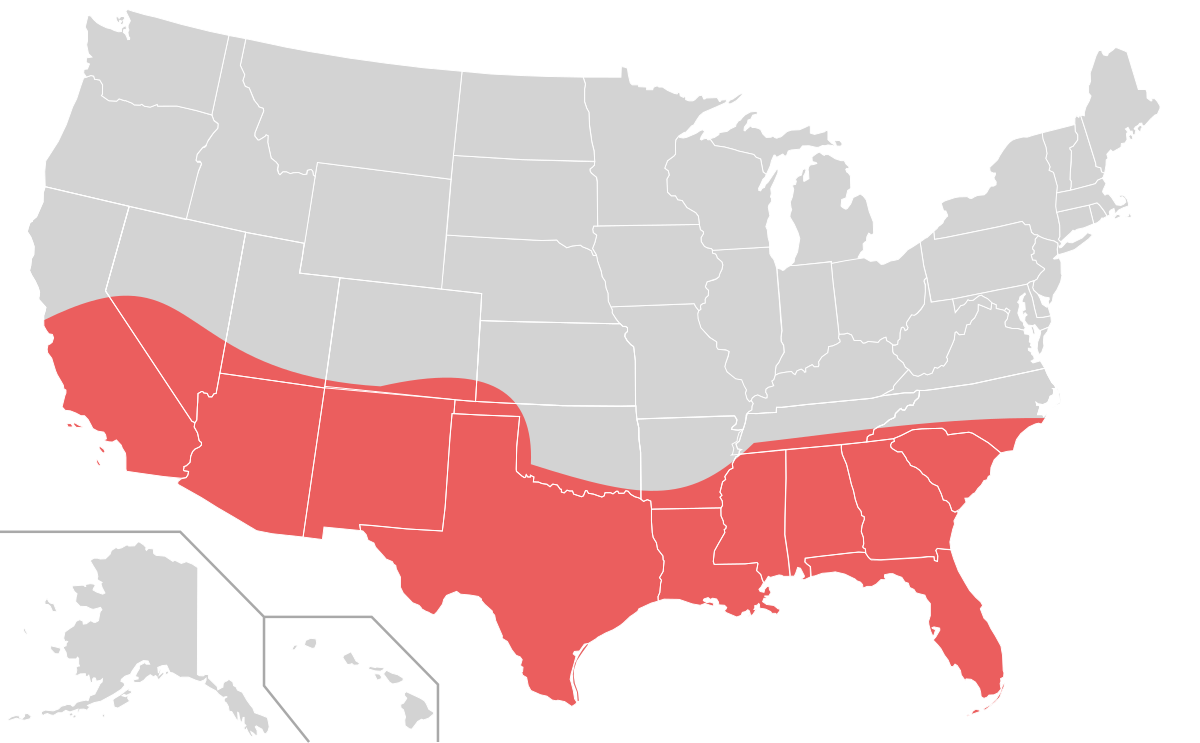
I "came out" almost nineteen years ago and finally broke all ties to the Republican Party shortly thereafter given the Party's take over by Christofascists and the Party's aggressive anti-gay agenda which included support for sodomy laws and bans on even civil unions for same sex couples.  Here in Virginia at that time the Virginia GOP made the conscious decision to double down on its efforts to pander to rural voters and Christian extremists to the exclusion of moderate to liberal suburban voters. Subsequently, open white supremacists were welcomed into the Virginia GOP base.  Nationally, the GOP made a similar conscious decision to reject growing population areas in favor of shrinking rural areas. In Virginia, the result has been that the Virginia GOP has not won a statewide race in eleven years and the state is increasingly viewed as a blue state - all the result of what I warned Republican friends was a form of slow political suicide.   Now, that same slow suicide may be accelerating on a national level with the Covid-19 pandemic perhaps being the spark needed to see a sea change in 2020.  A lengthy piece in The Atlantic looks at the GOP's potential losses in states like Arizona, Texas, North Carolina and Florida all thanks to Trump and the GOP's suicidal focus on an aging and shrinking rural base.  Here are article highlights:

The wildfire of coronavirus cases burning through the Sun Belt’s largest cities and suburbs could accelerate their movement away from President Donald Trump and the GOP—a dynamic with the potential to tip the balance in national elections not only in 2020, but for years to come.
Until the 2016 election, Republicans had maintained a consistent advantage in the region’s big metros—including Atlanta, Houston, Dallas, and Phoenix—even as Democrats took hold of comparable urban centers in other parts of the country. But under Trump, the GOP has lost ground in these diverse and economically thriving communities. And now, a ferocious upsurge of COVID-19 across the Sun Belt’s population hubs—including major cities in Florida and North Carolina where Democrats are already more competitive—is adding a new threat to the traditional Republican hold on these places.
In 2016, Trump won all five of the large Sun Belt states that could be battlegrounds in November. But the improving Democratic performance in the big metros provides Joe Biden a beachhead to contest each of them. Polls consistently give the former vice president a lead in Arizona and Florida, show him and Trump locked closely in North Carolina, and provide the president only a small edge (at best) in Texas and Georgia. New York Times/Siena College polls released today give Biden solid leads in Arizona, Florida, and North Carolina, and commanding advantages in the major population centers of each state, including Phoenix, Miami, Charlotte, and Raleigh. Fox News polls also released today show Biden leading Trump narrowly in North Carolina, Georgia, and (even) Texas, while opening up a comfortable 9-point advantage in Florida.
Even the Republicans relatively confident that Trump’s grip on rural voters will allow him to hold most, if not all, of these states recognize the implications of a trend that has them losing ground in the communities that are preponderantly driving economic and population growth.
“The trends of 2016, ’17, ’18 are continuing apace, with continuing weakness of the Republican brand in suburban areas that had traditionally voted Republican, coupled with strengthening of the Republican brand in rural areas that had traditionally voted Democrat,” Whit Ayres, a Republican pollster who has long specialized in southern suburbs, told me. “The problem, of course, is that the Republicans are trading larger, faster-growing areas for smaller, slower-growing areas, and the math does not work out in the long run with that sort of trade.”
The new twist in this ongoing reconfiguration is the coronavirus. . . . . . the number of new cases in and around Sun Belt cities is exploding. “If we stay on this current trajectory, then we will overwhelm our hospitals” in July, Steve Adler, the mayor of Austin, Texas, told me yesterday, echoing the public alarms of many mayors across the region.
The trend lines are daunting. From May 23 through Tuesday, the total number of confirmed cases more than doubled in the counties centered on Austin (Travis), Houston (Harris), and Dallas; nearly doubled in Fort Worth (Tarrant); and roughly tripled in San Antonio (Bexar). In Maricopa County, Arizona, which comprises Phoenix and its sprawling suburbs, the total number of cases more than quadrupled
Public-health experts expect the numbers to continue rising for weeks. In Arizona, “we are experiencing a second surge after an early-May plateau,” Joe Gerald, a professor at the University of Arizona College of Public Health, told me. “This surge is much larger than the first one and basically our foot is still on the accelerator. It is going to get worse before it gets better.”
Across almost all of the Sun Belt states, the spikes are exacerbating tensions between Republican governors who rely mostly on suburban and rural areas for their votes, and Democratic local officials in the most populous cities and counties. Taking cues from Trump, Republican Governors Ron DeSantis in Florida, Brian Kemp in Georgia, Greg Abbott in Texas, and Doug Ducey in Arizona have all moved aggressively to reopen their state economies; refused to deviate from that course as the caseloads have increased; and blocked municipal officials from reversing or even slowing the pace of the reopening.
The one concession from DeSantis, Abbott, and Ducey has been to allow local governments to require some degree of mask wearing. But experts say that requirement alone, especially given the uncertainties of compliance and enforcement, cannot stop the rapidly rising caseload in these states. “I don’t think [masks] are going to be sufficient to slow the spread or prevent us from exceeding our hospital capacity,” Gerard told me.
For Trump and the GOP, an urban/suburban backlash against these Republican governors—combined with a broader negative verdict on the federal pandemic response—risks accelerating the trends reshaping metropolitan politics across the Sun Belt.
Democrats are now finally seeing the same trends fortify their position in the Sun Belt population centers.  Take Gwinnett and Cobb counties, outside Atlanta. In 2014, Republican Senator David Perdue, who’s up for reelection in November, won comfortable margins of about 55 percent in each. In 2016, though, Hillary Clinton won both by relatively narrow margins against Trump, and in 2018, the Democratic gubernatorial nominee, Stacey Abrams, carried them more resoundingly. Abramowitz expects them to continue moving toward the Democrats in 2020, with margins sufficient enough to give Biden and Perdue’s Democratic opponent, Jon Ossoff, a competitive shot at the state, and also to flip an open U.S. House seat in Gwinnett.
In Texas, the arc looks similar. The University of Houston political scientist Richard Murray has charted a clear blue bend in voters’ political preferences in the 27 counties that comprise the state’s four huge metro areas—Houston, Dallas, San Antonio, and Austin—which together account for about 70 percent of the state’s votes and jobs.
Murray said he expects Biden to capture as much as 58 percent in November. With the higher presidential-year turnout, he predicts, that could produce an advantage of more than 1 million votes for Biden in and around those four cities. Murray said there is no guarantee Trump can squeeze out enough rural votes to hold Texas. But even if he does, the GOP faces some brutal arithmetic: As Ayres and Murray both noted, it’s relying more and more on the places that are shrinking or stagnant in population while retreating in the growing places. This problem is especially acute in Texas, Murray said, because the metropolitan areas are among the nation’s fastest growing, and they are becoming much more racially diverse as they expand.
[F]or November, Arizona is the state where these dynamics may matter most. Many Democrats see Arizona, which Democrats have carried only once since 1948, as Biden’s best chance to reach 270 Electoral College votes if he can’t dislodge Trump’s hold on either Wisconsin or Florida.
Maricopa County is the key to those hopes. It was the biggest county in America that Trump won in 2016, when he carried it by almost 45,000 votes. But in 2018, it propelled the Democratic Senator Kyrsten Sinema to her victory when she took it by about 60,000 votes. Noble’s recent polls have consistently found both Biden and Democratic Senate candidate Mark Kelly leading their respective Republican opponents by roughly double digits in the sprawling county . . . . no matter how much Republicans run up the score, as Trump is likely to do, in the state’s rural regions. “They are still in trouble in Maricopa County,” he said.
Republicans are leaking support from two groups in Maricopa: college-educated white voters (especially women) and seniors. Both populations are among those who have expressed the most concern about the coronavirus, even before the fearsome surge now buffeting the area.
Trump’s response? When he stopped in Maricopa for a rally in north Phoenix on Tuesday, he did not wear a mask or require one for those attending the event, despite public pleas to do so from Mayor Kate Gallego. He barely mentioned the outbreak in his 90-minute speech. In other words, even while visiting metropolitan Phoenix, Trump’s focus seemed to be on his preponderantly white base in the exurban and rural communities beyond it.
Across the Sun Belt, November will test whether Trump’s base-first strategy can overcome the resistance that’s coalescing against him in the population centers now confronting the full force of the coronavirus outbreak.

Monday, October 28, 2019

Republicans Escalate Voter Suppression Efforts

What do you do when you belong to a political party that finds its message and policies rejected by the majority of voters?  You try to limit those who can vote to those who are buying your agenda of exclusion, racism, homophobia and economic war on the poor, the non-white and anyone your base deems "other."  This is precisely what the Republican party is seeking to do across the country, especially in states where Republicans still control state legislatures.  As a column in the Washington Post notes, Texas - where the growing urban areas are increasingly voting Democrat and are nearing a point of being able to out vote the backward rural regions of the state - is a prime example.  Rather than change their agenda, Republicans simply want fewer and fewer people to be able to vote if they might not be buying the GOP's toxic agenda.  To be totally candid, the GOP no longer believes in democracy. Here are column highlights on the GOP voter suppression effort:
MOBILE POLLING places that popped up on college campuses and other population-dense areas were “the most effective program we had,” Dana DeBeauvoir, the chief elections official in Travis County, Tex., told the New York Times. That would explain why Texas Republicans shut them down.
The Times reported last week that, as Texans head to the polls, it will be substantially harder for college students to vote. A new state law required all polling places to remain open for the state’s full 12-day early-voting period. Localities could not afford to keep the pop-up sites open that long, so colleges in Austin, Brownsville, Fort Worth and elsewhere have had to close them. That guarantees lower turnout among people whom Republicans do no want voting: Democratic-leaning students.
Early voting is meant to enable more people to vote: Shift workers, for example, who cannot wait in line at a polling place on a Tuesday can still have a voice. Texas’s law turns that vote-enabling system into a vote-suppressing weapon. Republicans throughout the country have embraced voter suppression as a strategy for party survival, and this is one more sad example.
In Florida, Republicans have tried repeatedly to end early voting on state campuses. They also tried to circumscribe the reach of a law that allows former felons to vote, even after voters overwhelmingly approved the law in a referendum. Republicans in New Hampshire, North Carolina, Tennessee and Wisconsin have made voting difficult for students in various ways; Republicans often use voter identification laws to exclude student voters, rejecting forms of ID that college students are likely to have. Typically, the pretext is the need to block in-person voter fraud — a practically nonexistent problem in the United States.
Citizens are citizens, whether they are 18 or 88. All should be encouraged to vote. But year in, year out, even jurisdictions not run by people seeking to discourage voting have trouble keeping lines reasonable, equipment functional and the experience less than excruciating. As 171 George Mason University students who recently had their registrations rejected can tell you, as The Post reported, registering from a campus address can be particularly difficult.
States should be trying to fix such problems, starting with competent staff and convenient polling locations and hours, rather than removing opportunities for eligible voters. Congress should require states to register people automatically when local government authorities have the information needed to do so — DMV records, for example. And the Republican Party should stake its future on offering policies and candidates that can attract voters — not on keeping potential voters away from the polls.


The GOP in its present incarnation needs to die - the sooner, the better.  This from a former Republican. 

Tuesday, September 03, 2019

Could Dorian Be a Disaster for North Carolina?

click image to enlarge.

Like Virginia Republicans who talk about "repetitive flooding" rather than rising sea levels and climate change , North Carolina Republicans are climate change deniers and, as a result, a number of bad policy decisions have been made as scientific and climate experts are ignored.   With Hurricane Dorian likely to make landfall based on the latest track somewhere at the southern end of the Outer Banks, a piece in Slate argues the North Carolina GOP may have set the state up for disaster. Now, with a Democrat in the governor's mansion, some efforts are being made to bring the state's policies into line with scientific reality.  That said, bad decisions of the past by Governor Roy Cooper's predecessor and the GOP controlled legislature cannot be magically undone.  Meanwhile, Dorian may soon visit that state.  Here are article highlights: 
Puerto Rico has escaped the worst of Hurricane Dorian. And it looks like Florida might, too: On Saturday morning, the storm again shifted paths, and it appears likely to skirt Florida’s eastern coast instead of making a direct hit. That doesn’t mean the danger is over for Florida, and it does put the rest of the southeastern coast, especially Georgia and the Carolinas, in harm’s way sometime next week. South Carolina has already declared a state of emergency.
The stakes have grown much higher when a hurricane threatens to hit the coast. There are a lot of reasons for this. As I explained two years ago, “Some are psychological, others are practical, and many are self-inflicted.” Climate change is part of the problem, with warmer temperatures fueling deadlier, wetter storms. Rising sea levels increase the chances of coastal flooding. But it’s also the blind spots that North Carolina politicians have developed on climate change. While seas are rising, these lawmakers have encouraged building in low-lying areas, and in some cases discouraged state law from reflecting scientific realities.
The Carolinas are flanked by low-lying narrow barrier islands that have seen housing and tourist development during the past few decades “in places where it probably should not have been,” according to the Associated Press. Much of that development has been subsidized by a federal flood insurance program that shelled out $1.5 billion to cover flood claims in two dozen coastal counties even before Hurricane Florence struck. Last year, when Florence made landfall as a Category 1 hurricane, it dealt the region $24 billion in damages and 53 deaths. The floodwaters breached hog lagoons and coal ash pits and threatened Superfund sites.
Unwise development isn’t the only problem. As in Florida, North Carolina politicians have also allowed climate change denial to dictate their decision-making.
In 2010, a panel of scientists advising the North Carolina Coastal Resources Commission, which guides the state’s coastal development, issued a report projecting 39 inches of sea-level rise by the end of the century. The report triggered political backlash from developers and the Republican-controlled legislature, which preferred that the commission rely only on historical data. The state ended up passing a law requiring a broader range of projections to dilute findings that sea level rise would accelerate. Newer research has found that the sea level is rising even faster along the southeastern coast than global averages. Instead of considering the best science out there, the governor-appointed commission ultimately limited the science panel’s projections to 30 years into the future.
North Carolina’s Democratic Gov. Roy Cooper, elected in 2017, has begun to loosen these restrictions on how development plans incorporate the latest science. Last year, a month after Florence struck, Cooper issued an executive order to create an interagency climate change council.  In late September, the Coastal Resources Commission will look at updating the 30-year limit placed on the science advisory panel as it prepares a five-year update to its 2015 report, according to the News and Observer.
Of course, by late September, Dorian may have already come for a visit.

Sunday, July 07, 2019

Will the NRA Meltdown Aid Democrats and Gun Control?

On Tuesday the Virginia General Assembly will open a special session to address the issue of enacting common sense gun control.  It is a near guarantee that most Republicans in both houses of the General Assembly will continue their slavish self-prostitution to the NRA and gun industry.  Thus, the question of the hour will be whether the NRA's current upheaval and financial meltdown might embolden a few Republicans to reach across the aisle to join Democrats in at last updating Virginia's abysmal gun laws. At the national level, a feeble NRA could harm the re-election efforts of Donald Trump and far right Republicans. For those who care about gun control and responsible government in general, the NRA's troubles are most welcome.  A piece in Politico looks at the ongoing turmoil and possible consequences.  Here are highlights: 
The National Rifle Association aired an avalanche of TV ads and pushed its 5 million-plus members to the polls for Donald Trump in 2016, propelling him in the Rust Belt states that delivered him the presidency.
Now, the gun rights group is in total meltdown — and senior Republicans and Trump 2020 officials are alarmed.
In recent weeks, the NRA has seen everything from a failed coup attempt to the departure of its longtime political architect to embarrassing tales of self-dealing by top leaders. The turmoil is fueling fears that the organization will be profoundly diminished heading into the election, leaving the Republican Party with a gaping hole in its political machinery.
With the Chamber of Commerce and Koch political network withdrawing from their once-dominant roles in electing conservatives, Republicans worry that three organizations that have long formed the core of their electoral infrastructure will be effectively on the sidelines.
The predicament has so troubled some Republicans that they are calling on the famously secretive NRA to address its 2020 plans. Within the past week, senators have privately expressed concerns about the group to National Republican Senatorial Committee Chairman Todd Young.
With the organization mired in palace intrigue and confronting a daily barrage of negative publicity, some NRA officials are skeptical a 2020 plan will emerge. Many Republicans are convinced the job of turning out Second Amendment supporters will fall to the cash-flush Republican National Committee, which is constructing a massive get-out-the-vote and data machine devoted to turning out conservatives. Jane Timken, chairwoman of the Ohio GOP, said her organization would work closely with the RNC to microtarget firearm owners. The national party, Timken noted, has compiled extensive voter data through sources ranging from gun licenses to gun magazine subscriptions.
Concerns over the NRA intensified last week after the resignation of Chris Cox, who had been the head of its lobbying arm since 2002. . . . . With Cox gone, it's an open question who will oversee the NRA’s 2020 strategy.  “Chris Cox is the guy everybody dealt with,” said Steven Law, president of the Senate Leadership Fund, a super PAC closely aligned with Majority Leader Mitch McConnell.
The organization's troubles are hard to overstate. The most serious threat is an investigation by New York state attorney general's office into its tax-exempt status. In April, NRA President Oliver North was ousted in an ugly public spectacle in which he declared the group was in a "clear crisis." News organizations have also reported that NRA chief executive Wayne LaPierre used $275,000 of the group's money to buy luxury clothes at Zegna in Beverly Hills, Calif., and that the organization logged tens of thousands of dollars in other expenses that benefited its officials.
Trump weighed in on the NRA's problems Tuesday morning, tweeting that the group is a "victim" of "political harassment by New York State and Governor Cuomo."
Issues surrounding the Republican Party's outside infrastructure go beyond the NRA. The Chamber of Commerce, a key player in Republican politics over the past decade, spent just $10 million during the 2018 cycle, about a third of what it spent during the previous election cycle, according to the Center for Responsive Politics. The scale back has led many to believe the organization, a staple of the business community, is preparing to play a diminished role in 2020.
Meanwhile, the Koch network is gradually shifting away from partisanship and toward policy issues like addressing poverty and drug addiction. The network, which like the Chamber has at times found itself at odds with the president, plans to sit out the 2020 presidential race and is recasting itself in a nonpartisan fashion.
The uncertainty surrounding all three groups is likely to increase pressure on America First Action, a super PAC devoted to backing Trump.

Saturday, June 29, 2019

Virginia's History of Stonewalling Against Gay Rights

This weekend as many in New York City - and many other parts of the USA - recognize the 50th anniversary of the Stonewall Riots, an openly gay man is in the upper tiers of the Democrat presidential primary contest, Ralph Northam, the most gay friendly governor in Virginia's history occupies the Executive mansion in Richmond, and numerous LGBT individuals hold local and state elected office, Virginia still lacks any non-discrimination protections for LGBT employees or even those merely seeking housing. Why?  The answer can be summed up in one word: "Republicans." If a second word is needed, then I suggest "Christofascists."  These two groups have worked hand in glove for decades to thwart any advances in LGBT rights in Virginia and have stonewalled against any progress.  Thanks to them, same sex relationships carried the potential of a felony conviction until the U.S. Supreme Court struck down Texas' and Virginia's (and eleven other states') sodomy statutes in 2003. In 1975, a statute was enacted barring same sex marriage.  Not content with that message of hate, in 2006 the Republicans and Christofascists rammed through the so-called Marshall-Newman Amendment to the state constitution in a very disingenuous campaign only to have that struck down by the 4th Circuit Court of Appeals and then the U.S. Supreme Court in 2014, and 2015, respectively. Despite the latter rulings, thanks to Republicans, the 1975 statute and the Marshall-Newman Amendment remain of the books even though unenforceable. A piece in the Roanoke Times looks at Virginia's discriminatory history which can only be ended by voting control of the Virginia General Assembly to Democrats  in Virginia's November, 2019, elections.  Here are highlights:

You may hear the word “Stonewall” a lot today. It will not refer to the Stonewall we’re most familiar with.
The Stonewall in this case is not the Confederate general but the 50th anniversary of the so-called “Stonewall riots” in New York in 1969.
If you don’t know what those are, then consider this more of the history we never learned, perhaps because this history concerns what one 19th century poet delicately called “the love that dare not speak its name.”
The Stonewall Inn was a famous gay bar in New York City. On June 28, 1969, police raided the establishment, and violence broke out. The details are complicated . . . What matters is what happens next: The two days of street violence marked the beginning of a gay rights movement.
Some context for the times: Even the city’s most liberal newspaper, the legendary counter-cultural Village Voice, refused to print the word “gay” in advertisements. Within six months of the Stonewall riots, no fewer than three gay-related publications sprang up in New York. Within two years there were gay rights organizations in every major city in the western world.
Of course, the Stonewall riots weren’t really the starting point of the gay rights movement, just the modern one. France was the first country to legalize homosexuality — in 1791. . . . .However, the Stonewall riots served as an ignition spark that galvanized a movement, in much the same way that Rosa Parks getting arrested served to ignite a civil rights movement for African-American equality that had been going on for a long time.
Social movements do not always move in straight lines, and Virginia provides a good example. In the years following Stonewall, Virginia took one step after another to crack down on anything that resembled gay rights. Meanwhile, gay Virginians — who, of course, had been there all along — were becoming more and more visible.
In 1975, Virginia decided to ban same-sex marriages. The idea of such a thing had not crossed the public mind before then, but now it had and Virginia wanted to make sure such a thing didn’t happen here. That same year, Roanoke had at least three establishments catering to a gay clientele. The first had been quietly operating since 1953 — the Trade Winds, on what is now Elm Avenue and Franklin Road. Others opened in 1973 and 1975. By the time The Park opened in 1978, Roanoke counted six gay bars, although many people were unaware any of them existed. Such was the nature of Roanoke, and the nature of the times. Roanoke’s gay community first gathered for a “Pride in the Park” event in 1990; the organizers also made sure it attracted no media attention. They later described the event as “real scary” because the 300 to 400 attendees weren’t sure how the event would go.
Subsequent “Pride in the Park” events were publicized, but many in Roanoke were still unaware there was any gay community here at all until one tragic night in 2000. That September, a Florida drifter targeting the gay community walked into the Backstreet Café on Salem Avenue and opened fire — killing one man and wounding six others. Even in those pre-social media days, Roanoke was national news. And Roanoke’s response? Nearly 1,000 people marched through the streets to decry the shooting. The Roanoke Times reported the reaction to the shooting this way:
It has led untold numbers of gays to reveal their orientation publicly for the first time, produced Roanoke’s first gay political action committee in years, persuaded two lawmakers to reconsider their opposition to adding sexual orientation to hate crime laws, and brought international attention to Roanoke’s heretofore barely visible gay citizenry. Until now, average straight Roanokers probably didn’t think they knew any gay people, said the Rev. Catherine Houchins, a lesbian minister. “Now they’re finding out we’re their neighbors, their customers ... their employers, their employees.”
In some ways, the Backstreet Café shooting was Roanoke’s Stonewall riot — except that no one died in New York. Someone here did. Yet six years later, Roanoke still voted against one major goal of the gay rights movement — the right to marry.
A mere statue against same-sex marriage wasn’t considered strong enough. In 2006, the General Assembly passed and sent to voters a proposed constitutional amendment than would write the ban into the state’s fundamental law. Called the Marshall-Newman Amendment after its sponsors — Del. Bob Marshall, R-Manassas, and state Sen. Steve Newman, R-Lynchburg — the amendment passed by 57% to 43%.
In 2014, Virginia Attorney General Mark Herring declined to defend the amendment in federal court, calling it unconstitutional. The courts later agreed, striking down that provision of the state Constitution — a year before the U.S. Supreme Court cleared the way for same-sex marriage everywhere.
Despite the U.S. Supreme Court ruling, though, the Marshall-Newman Amendment remains part of the state’s Constitution — unenforceable but still on the books in case some future U.S. Supreme Court changes its mind.
Today, there are openly-gay elected officials in Blacksburg, Roanoke and the General Assembly, something unthinkable at the time of the Stonewall riots. One of the top-tier candidates for the Democratic presidential nomination is gay and that’s not even the most interesting thing about Pete Buttigieg’s background. Yet in Virginia (and lots of other states), someone can still be fired simply for being gay. In some ways, Virginia still stands like a stone wall.

Sunday, June 02, 2019

Thank the Virginia GOP for Killing All Attempts at Common Sense Gun Control

As I anticipated would be the case, the Virginia Beach shooter seemingly purchased his murder weapon legally.  Frighteningly, his purchases included a silencer and large capacity magazines.  The latter are legal in Virginia thanks to Virginia Republicans who as recently as this past January killed a bill that would have outlawed large capacity magazines.  As I indicated at the end of yesterday's post, if one wants to begin to end such carnage, the first step is to vote Republicans out of office at all levels of government.  Should Democrats win control of the Virginia Senate and House of Delegates in November, it would allow a flood of progressive bills, include gun control bills to finally win passage.  A piece in the Washington Post at the Virginia GOP's all too typical killing of a bill that would have protected law abiding Virginians.  (Note Virginia Senate Majority Leader Thomas K. Norment Jr. (R-James City) disingenuous lie that it was too soon after the Virginia Beach killings to talk politics.)  Here are article excerpts:
A Virginia bill designed to ban sales of large-capacity magazines similar to those used by the Virginia Beach gunman died in committee in January on a party-line vote.
The fate of the legislation, SB1748, was so widely expected that the outcome drew virtually no public attention. For more than 20 years, Republicans and a few rural Democrats in the General Assembly have killed almost every measure aimed at restricting gun ownership.
The GOP blocked a major push for gun control after the 2007 Virginia Tech shootings, where 33 people died. They chose instead to respond to that shooting by joining Democrats to enact mental-health reforms.
Each year, Democrats propose multiple gun-control measures, such as strengthening background checks, limiting handgun purchases to one per month and allowing localities to regulate guns in public buildings. They call these “common-sense” measures to save lives.
Each year, Republican majorities in one or both chambers of the legislature vote them down, usually in committee. GOP legislators say their goal is never to infringe on people’s Second Amendment rights.
“There’s been no tragedy that has gotten the [Republican] majority to think twice and consider reasonable efforts,” said state Sen. Adam P. Ebbin (D-Alexandria), who sponsored SB1748 and is co-chair of the Gun Violence Prevention Caucus. A big reason, he said, is the political influence of gun rights organizations.
“Part of the problem is that the [Virginia] Citizens Defense League and the NRA have a stranglehold on the votes of the Republicans,” Ebbin said.
The NRA did not respond to requests for comment. It typically maintains a low profile in the days immediately after a highly publicized shooting incident.
After the Virginia Tech slayings, then the worst mass shooting by an individual in U.S. history, gun-control advocates led by then-Gov. Tim Kaine (D), now a U.S. senator, pushed hard to change some laws. The centerpiece of his package was a proposal to require gun sellers to conduct background checks on all buyers at gun shows.
Instead, with GOP support, the legislature lowered the standard under which a mentally ill person can be forced into treatment, and expanded the criteria under which a mentally ill person can be barred from buying or owning guns.
“The gun lobby likes to blame the gun violence problem on persons with mental illness, and nothing could be further from the truth,” said Lori Haas, state director for the Coalition to Stop Gun Violence. Her daughter was shot and injured at Virginia Tech.
Virginia Senate Majority Leader Thomas K. Norment Jr. (R-James City) said it was too soon after the Virginia Beach killings to talk politics.
Virginia Beach police said their officers shot and killed the gunman after a lengthy gun battle in which he used two .45-caliber semiautomatic handguns that were purchased legally.
Along with the weapons at the scene, investigators found a sound suppressor and extended magazines, which contain more than the standard number of rounds.
Ebbin’s bill would have prohibited any person from importing, selling, bartering or transferring a firearms magazine designed to hold more than 10 rounds of ammunition. Eight Republicans voted it down, with six Democrats in favor, in the Senate Courts of Justice Committee on Jan. 28.
Another bill that died in the Virginia House in January would have allowed localities such as Virginia Beach to ban firearms from government buildings such as the one where the attack on Friday occurred. Virginia Beach Council member Guy King Tower said after the shooting that it was regrettable that the city needed state approval to take such actions.
The biggest change in gun laws in Virginia in recent years has been one that relaxed controls. In 2012, then-Gov. Robert F. McDonnell (R) signed a bill repealing the state’s one-per-month limit on handgun purchases.
Democrats have repeatedly sought to restore the limit, but without success. New York and other states have complained that the change has contributed to Virginia’s status as a major center of gun trafficking on the East Coast.
Gov. Ralph Northam (D), in an interview with NPR, said he would continue to push lawmakers to pass gun safety legislation. Northam noted that the GOP-controlled General Assembly killed gun-related bills he had proposed earlier this year as well as the year before. Earlier in the day, Virginia Attorney General Mark Herring (D) told MSNBC that it was time to enact “red flag” legislation, background checks and other gun regulations.
At present, the GOP holds two-seat majorities in both the House and Senate. Based on experience, Democrats would have to win control of both chambers to change the status quo.

I'm sorry, but if you vote Republican, you are part of the problem and have blood on your hands.  Vote out Republicans in November, 2019.

Saturday, June 01, 2019

Mass Shooting in Virginia Beach: Will Virginia GOP At Last Support Gun Control?

Historically, Virginia Beach has been a Republican bastion, although during the last few election cycles that distinction is fading as the city becomes more racially and socially diverse.  Yesterday, some of the Virginia GOP's anti-gun control agenda came home to roost as 12 innocent city of Virginia Beach employees were murdered at the city municipal center by another city employee armed with a gun with a silencer and multiple extended magazines - things one does not need if one merely has a weapon for self-protection.  The event was chilling for me since when I worked in the past with a large Virginia Beach law firm and represented developers, I frequently went to meetings in Building 2 at the municipal center which is now a major crime scene.  

As one friend on Facebook asked "How many mass shootings is it going to take before we say NO to the murder merchants at the NRA and YES to gun legislation that actually works?"  Any politician who sends "thoughts and prayers" to the victims and their families yet has voted against gun control legislation is nothing short of a lying hypocrite.  In their own way, they have blood on their hands just as much as the shooter who from the facts known fits the pattern of the quiet loner filled with hate inside - precisely who should not have a gun with multiple extended magazines.  I suspect as more information becomes known, it will be found that the shooter legally purchased the weapon and magazines used to snuff out 12 lives. Virginia Attorney General Mark Herring summed it up well:

In recent years there have been mass shootings at American elementary schools, colleges, government buildings, offices, concerts, movie theaters, nightclubs…even churches, mosques, and synagogues. We have to do more to stop this kind of violence. Life doesn’t have to be this way, and it shouldn’t be this way.

New Zealand acted decisively in the wake of its recent mass shooting.  The usual suspects will whine that now is not the time to talk gun control, which is patently untrue.  The USA could do the same as New Zealand if politicians ceased taking NRA and gun manufacturer gun money and voted for common sense gun control that included strict background checks and rigidly restricted automatic weapons and extended magazines. 

Come November, the entire Virginia General Assembly is up for election.  Take the time to register to vote and get out and vote for pro-gun control candidates - which will mean voting a straight Democrat ticket.  Vote the political whores of the NRA and gun lobby out of office. Regular mass shootings does NOT have to be the norm.

Tuesday, February 05, 2019

Virginia Republican Leaders Foolishly Kill LGBTQ Rights Bills


Virginian Republicans again demonstrated that they are totally beholden to the Christofascists at The Family Foundation and other purveyors of anti-gay lies by killing all LGBT non-discrimination bills through rules games in a House of Delegates committee.  If Republicans were smart - a huge if - they should have allowed passage of the bills and have removed the largest reason the vast majority of  Virginians have for almost exclusively supporting Democrats. In addition, such a move might improve the Virginia GOP's position with younger voters, many of whom find the GOP's anti-gay agenda abhorrent and a prime motivator to vote Democrat, especially in the increasing crucial so-called urban crescent stretching from Northern Virginia down through Richmond and then to the cities of the Hampton Roads region.  With Virginia Democrats in a civil war over Ralph Northam, the timing would have been perfect to split off the LGBT vote from the Democrats.  Foolishly, the Virginia GOP opted to remain the political whore of Virginia's leading hate merchants.  A piece in The Advocate looks at this foolish and discriminatory move.  Here are excerpts: 
Legislation to ban anti-LGBTQ discrimination in housing and public employment in Virginia has died for this session.
Republican leaders in the House of Delegates Thursday removed the two nondiscrimination bills from the agenda of the General Laws Committee. “The move prevents the pieces of legislation from getting past committee and squanders any hope that they may become law in this legislative session,” the Washington Blade reports.
The Senate had passed similar measures, one banning discrimination in housing and the other in public employment, January 18, the Human Rights Campaign notes. The chamber had also approved bills like this over each of the past several years, but they have always stalled in the House. Virginia does not include sexual orientation or gender identity in any of its civil rights laws.
“It’s shameful that Speaker [Kirk] Cox, Majority Caucus Chairman Tim Hugo and leaders in the House of Delegates continue to use every political trick in the book to kill these crucial, commonsense nondiscrimination protections for LGBTQ Virginians,” HRC national field director Marty Rouse said in a press release. “For several years in a row, bills that would protect LGBTQ Virginians from discrimination in housing and public employment have passed the state Senate, but House leadership continues to obfuscate the political process and obstruct this legislation. Let’s be clear: Cox is using LGBTQ people as political pawns. This fall, voters in Virginia will head to the polls to elect their state representatives. If current leaders cowardly refuse to protect all Virginians, then voters will elect lawmakers who will. We will remember this in November.”
Polling has shown bipartisan support among Virginians for legislation banning discrimination based on sexual orientation and gender identity, the HRC notes. Business groups had lobbied for the legislation this year, including the Virginia Beach Restaurant Association and the Virginia Beach Resort Advisory Commission.
“Today’s anti-LGBTQ actions by Virginia House leadership are dramatically out of step with voters, lawmakers, and Americans from all walks of life,” said a statement issued by Freedom for All Americans CEO Masen Davis, according to the Blade. “Equality is not a partisan issue, but a human issue — and it’s a shame when legislators who don’t yet realize that fundamental truth have the power to thwart commonsense, bipartisan bills to protect their constituents.”


With thoughts of possibly challenging either my state senator of member of the House of Delegates (who is probably the more vulnerable), the GOP's anti-gay agenda makes it impossible for me to consider doing so as a Republican. 

Sunday, February 03, 2019

Republicans Call out Northam For "Racism" and Give Trump a Pass


Democrats do not have a monopoly on hypocrisy when it comes to the the Northam controversy.  At the Virginia level. the GOP Speaker of the House of Delegates has called for Northam's resignation citing the concerns of the black caucus.   Meanwhile, everything the Virginia GOP does is aimed at harming black Virginians on an everyday basis in current real time be it pushing efforts to disenfranchise them through voter ID laws and, among other things, refusing to reform Virginia's marijuana laws which have been used disproportionately against blacks.  At the national level, the GOP has Donald Trump, an out right racist with a history of racism stretching back for over 40 years. A column in the Washington Post highlights Republican hypocrisy when it comes to matters of race.  Here are highlights:
Finally, the GOP is calling out a chief executive for his appalling insensitivity on an issue of race: Saturday, via Twitter, House Minority Leader Kevin McCarthy (R-Calif.) decried that chief executive’s “past racist behavior” and said “He should resign.
Republican Party chair Ronna McDaniel listed off what she sees as that same chief executive’s callousness on race, including, apparently, his appearance in a photo, 35 years ago in which one person is in blackface and the other is wearing a Ku Klux Klan hood. The conduct that these Republicans denounced clearly deserves condemnation, no matter how or when it occurred.
Unfortunately, they’ve reserved their scorn for one chief executive, Virginia Gov. Ralph Northam, a Democrat, and have held back when it comes to criticizing a chief executive from their own party, President Trump, for his racially divisive statements and public positions. That is naked hypocrisy.
Republicans, sensing a relatively rare moment when, for once, the other party had to own a race-relations debacle, joined Democrats in calling for Northam’s ouster. In addition to McCarthy and McDaniel, Virginia GOP chair Jack Wilson called on Northam to step down, saying the governor has “lost the moral ability” to lead. Ever since Election Day 2016, when Trump’s supporters promised he wouldn’t be as awful as his critics — including me — warned he would be, Republicans have longed for a moment when they could at least pretend to gain the high moral ground. Republicans who continue to support a party dominated by Trump can’t be taken seriously on this point. Trump’s record on race-related issues is abysmal. For years, he fueled birtherism to attack President Barack Obama. He once argued that a federal judge, Gonzalo P. Curiel, couldn’t be impartial in a case involving Trump because, as Trump said, “He’s a Mexican. We’re building a wall between here and Mexico.” Early in his presidential candidacy, Trump called for a “total and complete ban on Muslims entering the country.” In office, he ruminated on the United States needing more immigrants from places such as Norway and fewer immigrants from “shithole” countries, referencing Haiti, El Salvador and African countries. Despite polls taken at various times during his presidency that show significant percentages of Americans either see Trump as racist or, at a minimum, someone who has “emboldened” racists, the president still enjoys the support of Republicans in Congress and 78 percent approval among Republicans in the latest Washington Post/ABC News poll. For the most part, the party has indulged his race-baiting comments and his crude handling of racial issues.
 But somehow party leaders, who stand firmly behind him, and a national party that just passed a resolution expressing “undivided support” for him, seems to have no qualms about calling out Northam. [W]hen commentators such as David Limbaugh ask if Trump supporters must “forfeit the right to pass any moral judgments” because of their continual excuse-making for him, the only reply is: yes. Criticizing Northam for “past racist behavior” and his present equivocation after more than two years of overlooking an astonishing record of divisiveness reflects little more than a self-serving, morally repellent double standard.

Saturday, January 26, 2019

Poll: Majority of Virginia Republicans Back LGBT Protections


As the Washington Blade reports, a new poll indicates that a majority of Virginia Republicans support the enactment of LGBT non-discrimination protections.  Sadly, that does not guarantee passage at long last of such protections by the Virginia General Assembly.  Why? Because the Virginia GOP remains under the control of The Family Foundation, Virginia's leading hate group, and Christofascist extremists like Pat Robertson and Jerry Falwell, Jr. Of course, at the national level, Trump has sold his soul - if he has one, which I doubt - to a who's who of Christofascists even as Mike and Karen Pence celebrate anti-LGBT discrimination as they play their false false Christian martyr roles.  Time will tell if the pending non-discrimination bills survive the GOP controlled House of Delegates.  The best solution long term is to flip control of both the Virginia Senate and the House of Delegates to Democrats come November 2019. Here are excerpts from the Blade article:

A new poll finds a majority of Virginia Republicans support efforts to ban anti-LGBT discrimination.
Mason-Dixon Polling between Jan. 7-9 asked Republicans voters in Virginia whether they supported protections for LGBT individuals in housing and public employment. The survey found 53 percent of Republicans would support “legislation at the General Assembly this year that would update Virginia’s nondiscrimination laws to protect gay and transgender people from discrimination in housing.” And 63 percent would support similar legislation in public employment.
These results come 11 months after The Tarrance Group, a Republican polling firm, conducted a similar survey. The February 2018 survey found 55 percent of Republican voters believed discrimination against gay and transgender people in housing should be illegal and 59 percent believed similar discrimination in public employment should be forbidden.
The Republican Party of Virginia’s 2016 platform makes no mention of LGBT people or protections. It explicitly opposes same-sex marriage and “condemns” the U.S. Supreme Court rulings in the Windsor and Obergefell cases that paved the way for same-sex marriage across the nation. And in its discussion of religious liberty, it implies that businesses should be able to discriminate against LGBT people.
The idea that a majority of Republican voters in any state would support nondiscrimination protections for LGBT people would be ludicrous based on this document alone, but many are saying they expected these survey results.
“This is a trend we’re seeing across the country. Voters simply have no appetite for discrimination and want to be sure that their friends and neighbors are protected the same way they are,” said Human Rights Campaign Senior Vice President for Policy and Political Affairs JoDee Winterhof. “The ground really has shifted on these issues of discrimination against the LGBTQ community. There is much more support for these anti-discrimination efforts.”
Winterhof noted legislation in most states hasn’t caught up to this new level of public support.
Virginia is one of 31 states that lacks protections for LGBT people in housing and public employment. “The ground has shifted, but lawmakers … didn’t get that memo, and we’re certainly trying to educate and share more of that information,” said Winterhof.
[James] Parrish [of Equality Virginia] said Republican support for LGBT equality has lagged behind that of the general public but that “support for LGBT issues among all Americans has been inching up for decades.” In Virginia specifically, Parrish pointed to two instances from the past five years that he believes led to a shift in attitudes toward LGBT issues.
In Bostic v. Schaefer, a U.S. district court ruled the Marshall-Newman Amendment in Virginia’s Constitution that defines marriage as between a man and a woman was unconstitutional. The 4th U.S. Circuit Court of Appeals upheld the 2014 decision, and in October of that same year, the Supreme Court refused to take up the case. Bostic v. Schaefer legalized same-sex marriage in Virginia before it was permitted in much of the rest of the country.
Danica Roem, the first openly transgender member of the state House of Delegates, in 2017 defeated consistently anti-LGBT Bob Marshall who Parrish noted introduced “quite a number of bills to harm our community.”
“That also brought change,” said Parrish. Equality Virginia has focused some of its recent efforts on gathering favor for LGBT protections among Republicans.
Trump has banned transgender individuals from serving in the military, and Vice President Pence recently defended his wife’s decision to take a job at a school that forbids LGBT employees and students. As an entity, the GOP remains staunchly opposed to any legislation that would advance LGBT equality. Individual politicians may be changing their tune, but the Republican Party’s official stance looks to be set in stone for at least the next two years and likely longer.

Tuesday, January 01, 2019

Will the Virginia GOP Kill Marijuana Decriminalization Again in 2019?


More and more states are reforming their marijuana laws to allow medical marijuana, decriminalizing simple possession and/or reducing penalties.  Virginia has lagged behind this changing reality largely thanks to Virginia Republicans.  Why the resistance?  Actually, it is quite simple.  For years Virginia Republicans have sought to disenfranchise as many minority voters as possible be it under the smoke screen of preventing non-existent voter fraud, using Virginia's draconian drug laws to saddle minority voters with felony convictions that deprive them of the right to vote, or other disingenuous lies and ruses. As note, a significant part of this GOP agenda has been the disproportionate arrest of blacks for marijuana possession.   Among the worse offenders in this unconscionable agenda has been the City of Norfolk where blacks were far more likely to suffer arrest and conviction than whites.  Now, the City of Norfolk has changed its position and is calling for the decriminalization of simple possession of small amounts of marijuana for recreational use.  Polls indicate that a majority of Virginians want decriminalization of possession of small amounts of marijuana for personal use.  However, the goal of the Virginia GOP ceased to be furthering the wishes of a majority of the population many years ago.  A piece in the Virginian Pilot looks at what may transpire in the 2019 session of the Virginia General Assembly.  Here are highlights:
When it comes to marijuana, Virginia has lagged behind many states where the drug has been decriminalized or legalized for recreational use.
With lawmakers approving an expansion of the state's medical marijuana program in 2018, supporters of decriminalization are hoping that momentum will continue in 2019. But Virginia Republicans don't appear willing to support decriminalization. 
As the General Assembly gears up for a new legislative session starting Jan. 9, Democratic state Sen. Adam Ebbin has submitted a bill to decriminalize simple marijuana possession — defined as ½ ounce or less — and provide a maximum civil penalty of $50 for a first violation. The current law carries a jail sentence of up to 30 days and a maximum $500 fine for a first offense.
"Will Virginia eventually decriminalize personal possession of marijuana? Yes. Will it be in 2019? That's very unlikely," said Jenn Michelle Pedini, executive director of the Virginia chapter of the National Organization for the Reform of Marijuana Laws.
Legislation to decriminalize possession of small amounts of marijuana has been introduced in Virginia for years, but has always died in committee. Pedini said the House and Senate Courts of Justice committees are made up largely of Republicans — some with law enforcement backgrounds — making it difficult to build support for decriminalization or legalization.
Ebbin, however, said a criminal charge for marijuana possession can have lasting ramifications, including negative impacts on job opportunities and child custody cases. He said he hopes his bill can at least gain some support, if it is not passed outright.
"The lobby for marijuana reform is getting larger and larger, particularly for Virginia families with members who have been impacted by our current marijuana penalties," Ebbin said.
We have other states that have decriminalized and the sky has not fallen," he said.  Public opinion polls show the majority of Virginians support decriminalizing the possession of small amounts of marijuana and making it punishable by fines rather than jail.
One city in Virginia has also given its seal of approval. The Norfolk City Council endorsed decriminalization in its 2019 legislative agenda.
The National Organization for the Reform of Marijuana Laws says 23 states have decriminalized or legalized marijuana, while 33 states have passed laws allowing medical cannabis programs.
In Virginia, five companies are expected to open the state's first medical cannabis dispensaries in 2019. 
Legislation passed in 2018 allows in-state production and sales of cannabis oils to patients with certificates from their doctors. The initial legislation passed in 2016 called for cannabis oils to be available only for people with intractable epilepsy.
It is now 2019 and all responsible Virginian need to begin working now to (i) get progressive legislation passed during the coming legislative session, and (ii) send Republicans into a permanent minority status in both the Virginia Senate and the House of Delegates in November, 2019.