Showing posts with label Brexit. Show all posts

Friday, December 13, 2019

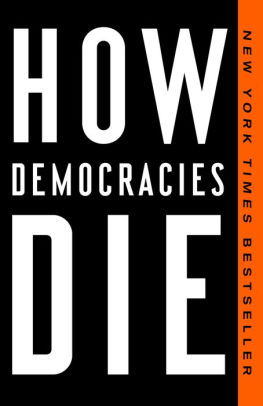
How Democracies Die

History tells us that individuals and nations often do not make good decisions and live to regret mistakes in judgment.  The election in Britain yesterday may be one such example as that nation appears hell bent now to leave the European Union thereby setting the stage from new efforts in Scotland to break away and perhaps even Northern Ireland to follow suit. England may revel in it xenophobia and go it along attitude now, but down the it may be a different tale.  History also tells us that democracies die often not just because of the rise of a strong man, but also because too many citizens and allow it to happen.  The end of democracies from as far back as the death of the Roman Republic also lays blame for the decline of democratic rule on politicians willing to sell their souls in order to cling to personal power - at least in the short term - with little or care for the nation's or their constituents long term future.  We are now witnessing such conduct by most elected Republicans in America. Like the English, many Americans may come to long regret their shortsightedness of today in the light of a far worse tomorrow.  A column in the New York Times makes this case and urges one to not give up the resistance.  Here are highlights:  
The despair felt by climate scientists and environmentalists watching helplessly as something precious and irreplaceable is destroyed is sometimes described as “climate grief.”
Lately, I think I’m experiencing democracy grief. For anyone who was, like me, born after the civil rights movement finally made democracy in America real, liberal democracy has always been part of the climate, as easy to take for granted as clean air or the changing of the seasons. When I contemplate the sort of illiberal oligarchy that would await my children should Donald Trump win another term, the scale of the loss feels so vast that I can barely process it.
After Trump’s election, a number of historians and political scientists rushed out with books explaining, as one title put it, “How Democracies Die.” In the years since, it’s breathtaking how much is dead already. Though the president will almost certainly be impeached for extorting Ukraine to aid his re-election, he is equally certain to be acquitted in the Senate, a tacit confirmation that he is, indeed, above the law. His attorney general is a shameless partisan enforcer. Professional civil servants are purged, replaced by apparatchiks. The courts are filling up with young, hard-right ideologues. One recently confirmed judge, 40-year-old Steven Menashi, has written approvingly of ethnonationalism.
In “How Democracies Die,” Professors Steven Levitsky and Daniel Ziblatt of Harvard describe how, in failing democracies, “the referees of the democratic game were brought over to the government’s side, providing the incumbent with both a shield against constitutional challenges and a powerful — and ‘legal’ — weapon with which to assault its opponents.” This is happening before our eyes.

In The Washington Post, Michael Gerson, a former speechwriter for George W. Bush and a Never Trump conservative, described his spiritual struggle against feelings of political desperation: “Sustaining this type of distressed uncertainty for long periods, I can attest, is like putting arsenic in your saltshaker.”
I reached out to a number of therapists, who said they’re seeing this politically induced misery in their patients. . . . . Karen Starr, a psychologist who practices in Manhattan and on Long Island, some of her patients were “in a state of alarm,” but that’s changed into “more of a chronic feeling that’s bordering on despair.” Among those most affected, she said, are the Holocaust survivors she sees. “It’s about this general feeling that the institutions that we rely on to protect us from a dangerous individual might fail,” she said.
Trump, she said, has made bigotry more open and acceptable, something her patients feel in their daily lives. “When you’re dealing with people of color’s mental health, systemic racism is a big part of that,” she said.
Obviously, this is hardly the first time that America has failed to live up to its ideals. But the ideals themselves used to be a nearly universal lodestar. The civil rights movement, and freedom movements that came after it, succeeded because the country could be shamed by the distance between its democratic promises and its reality. That is no longer true.
Democrats and anti-Trump Republicans are often incredulous seeing the party of Ronald Reagan allied with Vladimir Putin’s Russia, but the truth is, there’s no reason they should be in conflict. The enmity between America and Russia was ideological. First it was liberal democracy versus communism. Then it was liberal democracy versus authoritarian kleptocracy.
But Trump’s political movement is pro-authoritarian and pro-oligarch. It has no interest in preserving pluralism, free and fair elections or any version of the rule of law that applies to the powerful as well as the powerless. It’s contemptuous of the notion of America as a lofty idea rather than a blood-and-soil nation.
The nemeses of the Trumpist movement are liberals — in both the classical and American sense of the world — not America’s traditional geopolitical foes. This is something new in our lifetime.
Thus we have a total breakdown in epistemological solidarity. In the impeachment committee hearings, Republicans insist with a straight face that Trump was deeply concerned about corruption in Ukraine. Republican Senators like Ted Cruz of Texas, who is smart enough to know better, repeat Russian propaganda accusing Ukraine of interfering in the 2016 election. The Department of Justice’s Inspector General report refutes years of Republican deep state conspiracy theories about an F.B.I. plot to subvert Trump’s campaign, and it makes no difference whatsoever to the promoters of those theories, who pronounce themselves totally vindicated.
But despair is worth discussing, because it’s something that organizers and Democratic candidates should be addressing head on. Left to fester, it can lead to apathy and withdrawal. Channeled properly, it can fuel an uprising. I was relieved to hear that despite her sometimes overwhelming sense of civic sadness, Landsman’s activism hasn’t let up. She’s been spending a bit less than 20 hours a week on political organizing, and expects to go back to 40 or more after the holidays. “The only other option is to quit, and accept it, and I’m not ready to go there yet,” she said. Democracy grief isn’t like regular grief. Acceptance isn’t how you move on from it. Acceptance is itself a kind of death.
I for one will not quite.  I fear too much for the future of my children and grandchildren if Trumpism and Republican treason is left unopposed.  Thankfully, at least for the next two years, Virginia is poised to do its part to oppose Trump/Republican misrule.

Saturday, March 30, 2019

After Brexit, Other European Countries Say: No Thanks


Across Europe right wing political factions have played the nationalist and racist, anti-immigrant card that motivated many pro-Brexit voters in the United Kingdom - and, of course, Trump voters in the USA - to build their own followings and to argue against remaining in the European Union.  Now, witnessing the UK's self-inflicted political and economic catastrophe, many of those elements are quickly saying "no thank you" to what they had heretofore clamored for.  Suddenly, the reality of the consequences of savoring and fanning racial hatred and resentment have served as a bucket of ice water on ugly motivations.  Would that Trump supporters would learn form their own idiocy who continue to back a narcissistic megalomaniac who wants to slash the healthcare and social programs many of these toxic individuals rely upon.  A piece in the Washington Post looks at reality crashing down on ultra-nationalists and far right elements across Europe.  Here are excerpts:  
Just three years ago, in country after European country, populist politicians were drawing up plans to follow Britain out the door. The French nationalist party leader spoke of a Frexit. The Dutch far-right leader wanted a vote on Nexit. Some politicians predicted a secessionist contagion. Might there be a Swexit? A Czech-out? An Italeave?
“Now it’s our turn,” the leader of Italy’s ascendant far right, Matteo Salvini, said at the time about exiting the European Union.
But the 2016 Brexit vote has spawned no copycats. Nor did it lead to the crackup of the E.U. Even the most ardent Brussels-bashing politicians have concluded it is better to stick with the bloc than endure a messy, years-long divorce.
On Friday, the day Britain was supposed to leave the E.U. and “take back control,” the British Parliament was still fighting over how and whether to leave. Lawmakers rejected, for the third time, the withdrawal deal negotiated between Prime Minister Theresa May and E.U. leaders. The pound fell on fears that Britain will abruptly crash out of the bloc on April 12, with massive disruptions to trade and travel.
Even if Britain manages an orderly departure, economic forecasters say Brexit could dampen growth for years. And the political and social divisions between “leavers” and “remainers” may persist.
Watching all this, the continent’s influential Euroskeptic parties — from Scandinavia to the Mediterranean — have recast their message. They have dropped calls to leave the E.U. and are instead advocating for the less drastic approach of changing the bloc from within. The European political scene has scarcely a party remaining advocating for a Brexit-style departure.
“The agony of Britain in the last two years has clearly been a subtext for ‘Let’s try to make this thing work’ ” within Europe.
The shift does not mean that the E.U. has averted turmoil or that Europe’s political insurgents are happy with the status quo. . . . Those populists want to decentralize power within the E.U. and are hoping to use European parliamentary elections in May to expand their influence and carry out their ideas.
But even as Europeans find reason to grumble about the bloc, voters do not seem to have the appetite for an irrevocable split. In fact, some have grown fonder of the European Union.
The E.U.’s approval rating increased sharply in 2017 as Britain began to debate the terms of its exit. A new Pew Research Center survey of 10 European nations shows that 62 percent of people hold a favorable view of the E.U.
A separate poll from last year showed that 67 percent of Europeans believed their country benefited from E.U. membership — the highest figure in 35 years.
“You had the Brexit referendum. Also the Trump election,” said Stefan Lehne, a visiting scholar at Carnegie Europe in Brussels. “It created a lot of fear and uncertainty, and the response [from Europeans] was, we want the known over the unknown.”
The reasons to stick with Europe go beyond a distaste for Brexit redux. A significant number of Europeans, even those who support Euroskeptic parties, appreciate the freedom of movement allowed by E.U. rules and the ability to live in other countries. They also like the outsize influence of the unified bloc, which makes it easier for countries to contend with China and the United States.
For now, some parties have simply dropped exit-the-E.U. plans from their platforms.
[I]n Italy where the evolution of the populist message on Europe is perhaps most stark. The country’s government is composed of two Euroskeptic parties that cheered Britain’s Brexit vote when it happened. Now, those parties say it would be inconceivable to follow suit.
As messy as Brexit has been, the exit process could be even more turbulent for a euro-zone nation that would have to contend with not only customs and border headaches but also the introduction of a new currency — or the return to an old one.
Marta Grande, a Five Star member who heads a parliamentary committee on foreign affairs, said that within her party, views on Europe were all over the map several years ago. But those views have gradually converged on the idea that the European Union needs to be criticized constructively and improved. She acknowledged that politicians in Italy continued to cast blame at Brussels but said, “People don’t want to leave the E.U.”
Analysts say that insurgent parties across Europe hope to curtail E.U. power over budget-making and bring their hard-line migration ideas to Brussels.  But the elections are a referendum on the strength of the union — not on whether the union should exist.

Sunday, March 24, 2019

Trump Supporters and Brexiters: the Same Ugly Mindset

As noted numerous times on this blog, in my view the mindset of Trump supporters and those in the United Kingdom who continue to support Brexit - a form of national economic suicide - remains very much alike.  Both groups long for a past that was never as ideal as they now fantasize and, rather than embrace change and work for a better future, they are willing to destroy everything out of anger and bitterness, and especially, their hatred of racial minorities.  If Britain does end up leaving the European Union, the economic consequences will be catastrophic - a fact the Brexiters refuse to face as they long for lost empire.  Here in the USA, Trump supporters cheer the destruction of America's leadership in the world, tariffs and economic policies that are not saving jobs as promised, and which are poisoning the environment and shredding the social safety net.  All that matters is that they feel good lashing out and patting themselves on the back for their "patriotism," although one has to question how patriotic it is to harm ones country and seek to demonize millions of one's fellow citizens.  An op-ed in the New York Times looks at the disaster that is the Brexit movement in the UK and the mindset that accompanies it.  The parallels with America are profound (not to mention that both groups were manipulated by Russian cyber attacks aimed at fomenting political chaos).  Here are excerpts:

It’s not just our political life that feels suffused with the toxicity of Brexit, but also our cultural and even personal lives, too. At dinner with friends and family, on our couches in front of the television, even in our attempts at cinematic escape, there is only one subject of conversation: our departure from the European Union, the need to either oppose it or enact it. As we walk the supermarket aisles, speculating as to the continuing availability of our favorite foods, as we sit with our European loved ones and try to convince ourselves of the security of their stay, as we lay out the day’s medicines and fret about the continuing viability of their procurement, Brexit is inescapable.
Brexit is not just an event, it is a feeling — suffocating and dispiriting and freighted with gloom. With no refuge from that feeling, we seek solace in another: national pride.
We’re the world’s fifth-largest economy and likely to sink to seventh this year. Industry and finance are falling over themselves to flee. Nor am I convinced that anyone should be “rightly proud” of a country in which, according to the homelessness charity Crisis, the number of people sleeping on the streets has risen 140 percent since 2010; in which over a million emergency food packages were given to those struggling financially in the 2017-18 financial year; in which over 4 million children are living in poverty; and in which local councils in England face an £8 billion financial black hole by 2025, endangering not only their upkeep of communal spaces, but also their ability to provide adequate care for children, the elderly and people with disabilities.
So here we are, facing more delays and uncertainty. The Defense Ministry reportedly is hunkering down in a nuclear bunker, preparing for “no deal,” a crash headlong into a future from which we mistakenly thought our past would protect us. We are pathologically unable to say what needs to be said: that nostalgia, exceptionalism and a xenophobic failure of the collective imagination have undone us. This is not a time of national pride, it is a moment of deep and lasting national shame. We are unable to lead yet determined never to follow. We have nothing of note to say and yet still refuse to listen. The very forces that have shored up our self-regard and poisoned our place in history are about to erode us from within, and unless we find in ourselves the humility we’ve always abhorred, we face a brutal and potentially permanent humbling.
Cups of tea will neither turn back time nor show us, in their cold and increasingly bitter leaves, the future we’ve failed to imagine: a future in which what limited achievements we might have been proud of — our system of social care, our commitment to protecting the people least able to protect themselves — lie in ruins, and all we can do is sit in the dark, paying our favorite celebrities to chant to us, over and over again, our tattered mantra of virtue.
 

Saturday, March 16, 2019

Trump Voters and the Dreams of Brexit Britain


My many posts about Trump supporters and the Brexit leave faction in the United Kingdom have been typically less than kind.  In both groups, I see hatred, resentment and a delusional longing for a past that is forever lost - if it ever even existed as viewed in their minds - that in the longer term will harm the proponents of Trumpism and the Brexit leave supporters. And yes, race does play a major role in the mindset of both groups whether spoken or unspoken, as does a sense of lost privilege both domestically and internationally.  The Brexit leave group still longs subconsciously for the days of the British Empire when Britain dominated the global economy and the sun truly never set on the empire.  For Trumpists, they long for a return of the immediate post-WWII and early 1950's when the USA was the unchallenged world hegemon.   The problem is that the policies they support cannot restore the lost world either group longs for.  Meanwhile, especially in the case of Britain and Brexit, the policies will ultimately make their circumstances even worse.  A piece in the New York Times looks at the Brexit mindsel.  The parallels with Trump supporters are profound.  Here are highlights:

The June 2016 Brexit referendum left Britain a divided nation. That much we know. But the referendum didn’t create division. It exposed something that was already there, latent. This was hard to see if you attended to people’s conventional political views about taxation or public spending; even the issue of immigration, by itself, wasn’t “it.” Nor was it to be found in something as vague as “feelings” or “emotions.” It lay elsewhere, in the realm of the individual political psyche, that blending of personal, family and nonacademic history, casually informed reasoning, clan prejudice, tribal loyalty and ancestor worship that forms the imaginative framework in which, as we represent it to ourselves, our lives relate to events in the wider world.
In that framework, the way our representation of the past relates to our representation of the present isn’t always linear. What may seem, rationally, to be dead, gone and replaced (or to have never existed) is actually still there, immanent, or hidden, or stolen. An empire. An all-white Britain. A socialist Britain. A country that stood alone against the Nazi menace. One’s young self. A word for this is “dreaming.”
The past week has laid bare the crisis in British politics. . . . . How this situation resolves remains anyone’s guess.
The major cause of this paralysis is the breakdown of the just-about-ruling Conservative Party — one faction prepared to compromise over Brexit, the other, a small minority in Parliament, eager to break absolutely with the European Union whatever the consequences. This makes sense only if you understand the hard-core Brexiteer minority as most in tune with the Leaver dreaming: that state of mind where it’s natural to talk about the Britons who endured the Nazi siege of the early 1940s as “we,” as if the present and the past, the dead and the living, were one and the same, bound to re-enact the slaying of a European dragon every few generations.
Remainers have their own rich dreams, no less fascinating, but I spoke mainly to Leavers, since they were the disrupters. . . . . I noticed three things.
One was a strong sense of oppression, of being censored, and an attendant resentment. There were several occasions when Leavers I spoke to left pregnant gaps that could only have been filled with anti-immigrant sentiments that they weren’t “allowed” to say. By no means all Leavers are racist, but I ended up with the impression that for many, casual racism is regarded as a lost patrimony; that as much as Leavers might oppose immigration, they are no less resentful of the “elites” rendering it awkward to categorize people along racial lines.
Another thing I noticed was the internationalism of Leavers — internationalism with a particular flavor: the nostalgia for Ian Smith’s Rhodesia by a Norfolk farmer and member of the European Parliament from the far-right U.K. Independence Party. . . . 
The third thing was the preoccupation with the state as defender of its people. This was literal — U.K.I.P. fliers boasting of how many extra aircraft carriers they would build in government — but also figurative, that it was the British government’s job to defend native Britons against immigrants; foreign competition; greedy capitalists; and, through the National Health Service, illness.
I used to be skeptical of the idea that Britain hadn’t come to terms with the loss of its empire. It was such a long time ago, and not a single one of the many Leavers I’ve had hours of conversations with over the years has explicitly expressed wanting it back. How could you? It would be ridiculous.
I believe now that a subliminal empire does persist in the dreaming of a large number of Britons, hinted at in a longing for the return of guilt-free racial categorization, in the idea that my country can be both globally open and privileged in an international trading system where it can somehow turn the rules to its advantage, in the idea of a safe white core protected from the dark hordes beyond by a mighty armed force. This idea, which begins to make sense only if your country happens to control a global empire, came from someone whose childhood dream was to be an official in the Indian Civil Service. It has been orthodoxy for four decades, not just in her own party but for a time, at least, in the main opposition. The bizarre and already disproved notion that the global free market might work as an avatar of Britain’s imperial power lies at the heart of the die-hard Brexit psyche. Propagating it was Mrs. Thatcher’s personal success, and that success, as we can now see, was her great failure.

Saturday, March 09, 2019

Brexit: Putin's Other Huge Victory


One of Vladimir Putin's long term goals has been to destabilize western democracies.  Toward this goal, Russian agents fanned the flames of the pro-Breit forces in the United Kingdom and at the same time worked to throw the 2016 presidential election to Donald Trump.  Putin has triumphed beyond his wildest dreams. Both the UK and the United States have been torn apart socially and politically as both nations have found themselves with two camps: (i) the rural, older, racist, xenophobic, less educated (and I would add, delusional) base that voted for Brexit and voted for Trump, and (ii) the urban, educated, younger, future facing base that voted to remain in the European Union and against Trump. In the UK, the division is becoming more extreme - and perhaps offers a glimpse of where the USA is headed - and is being likened by some to a civil war.  A piece in the New York Times looks at the simmering animosity splitting the British public.  Here are article excerpts:
Like the election of President Trump, the 2016 Brexit referendum vote crystallized divisions between cities and towns, young and old, the beneficiaries of globalization and those left behind.
And far from fading, the Brexit divide seems to have become entrenched within many British workplaces, families and social circles.
Friendships lost or relationships broken by Brexit have been bemoaned by politicians, featured in newspaper advice columns and spawned novels and at least one play.
According to one survey, more than a third of those who wish to remain in the European Union would be upset if a close relative married a strong leave supporter, suggesting that Brexit has morphed into a clash of values.
In the aftermath of the referendum, Relate, a counseling service, said that a fifth of the 300 relationship support practitioners surveyed had worked with clients who argued over Brexit. And analysts say Britons are increasingly likely to define themselves in relation to Brexit, rather than allegiance to a party, a dividing line noticed by psychotherapists too. “It’s a bit like 16th-century France between the Catholics and the Protestants,” said Brett Kahr, senior clinical research fellow in psychotherapy and mental health at the Center for Child Mental Health, adding: “I think there is a great deal of hatred of one position toward the other, and a lack of willingness to engage.
Some experts worry that, rather than open feuding, a chilly silence has descended across parts of a population that is often adept at avoiding confrontations.
“Brexit is ever-present in the consulting room,” said Sarah Niblock, chief executive of the United Kingdom Council for Psychotherapy. “It is now so excruciating, and so difficult for people to have conversations about Brexit — families, workplaces neighbors are so split — there is so much of a division between groups in society that it is almost as if the therapeutic room has become the last place people can talk with any ease.”
Those trying to make sense of it all include Candida Yates, professor of culture and communication at Bournemouth University, who is researching Brexit sentiment. . . . . For the remainers it was rather like a bereavement group. “There was this huge sense of loss. People talked about waking up on the day of the vote crying and in shock and they didn’t fully understand it themselves. They understood that they were upset but why did they feel so strongly? So it was a bit like a therapy group.”
For leavers there was more a sense of grievance than grief, Ms. Yates said, and a feeling “that they had been left behind, they had been forgotten, it was really this town-city divide.” Winning the referendum was an unexpected victory — some described it as a gift — but a precarious one.
“They couldn’t quite believe their luck and also said — even back then in 2016 — ‘It will be taken away,’ ” Ms. Yates said. “They were saying, ‘They won’t let us have it.’
There was a real feeling of ‘them and us’ and a feeling of powerlessness. They had managed to get this, but how long they could hang on to it, they didn’t know,” she added.
“People talked about it being like a civil war,” she said. Indeed, some mentioned Britain’s Civil War, which took place in the 17th century, or even episodes further back in history.  “They talked about the Civil War, they talked about the Norman yoke, people have gone back and back. It’s as if these earlier schisms had been reawoken.”
Frankly, I understand the feelings of the remainers.  I find it very difficult to understand or even remain close to those who voted for Trump.  Their vote, to me, demonstrated that I had misread who I thought these people were. They were not the intelligent, decent people that I thought they were.  Meanwhile, Vladimir Putin is smiling.

Saturday, January 26, 2019

A Toxic "Conservatism" on Both Sides of the Atlantic


In a post earlier in the week I did a post about the looming economic crisis in the United Kingdom - a crisis brought on by the hate and bigorty of largely rural white voters who hate immigrants and hold delusions of restoring the forever gone British Empire. These are the voters who voted to leave the European Union. The parallels with Trump's supporters is striking: hatred of others, xenophobia and dreams of a lost past are their motivation despite efforts to claim otherwise.  In both nations this toxic outlook is labeled "conservative" although the attributes of these so-called conservatives is anything but classic conservatism.   Webster's defines conservatism as follows: "a political philosophy based on tradition and social stability, stressing established institutions, and preferring gradual development to abrupt change."  The toxic conservatism, if you will of both the UK and the USA seek to destroy everything.  They also share another common denominator: both the Republican Party and the Conservatives (or Tories) in the UK now place party ahead of the national interest.  Their claims of patriotism are false and both parties are for the most part morally bankrupt.  A column in the Washington Post looks at this sad reality,  Here are highlights:
In the capital cities of the two great anglophone powers, public business has ground to a halt. On one side of the Atlantic, federal workers are lining up to receive free food while the president holds the government to ransom. On the other side, the House of Commons, a legislative body that likes to call itself the “mother of parliaments,” is completely frozen by its inability to legislate. The government cannot pass the Brexit deal it has negotiated. The opposition cannot unseat the government. The stiff and uncharismatic British prime minister, Theresa May, might as well be living on a different planet from the vulgar and mendacious President Trump. Yet there is nevertheless something curiously parallel about the two crises: Both are being driven by post-ideological conservative parties, the American Republicans and the British Conservatives, transatlantic cousins who have both lost their way. Their double failure is no mere coincidence. . . . . Pummeled by events — the financial crisis, the wars in Iraq and Syria — both parties have lost that faith. But they have failed to find anything else to replace it. Instead, they have been captured by angry minorities. They are easily manipulated by big funders and special interests. They have stopped thinking about the good of the nation and can focus only on what’s good for the party — or for themselves. Certainly this is true in Britain, where May’s main focus since 2016 has been party management, not British interests. . . . . Had she been willing to reach across the aisle and forge a compact with the Labour Party, she could have ended the stalemate already: There is a majority in the House of Commons for Britain to remain inside a customs union with Europe, a solution that would let trade continue and avoid the need for a hard border with the island of Ireland. . . . . Her party, not the country, is what matters to her most.
At least until now, Republican leaders in Congress have also refused to embrace a pragmatic solution — pass legislation to reopen the government, make a compromise on border security — for exactly the same kinds of reasons. Like May, Senate Majority Leader Mitch McConnell (R-Ky.) has refused to reach across the aisle in order to pay civil servants because he fears a split in his party. Like the British Conservatives, American Republicans answer only to their own voters, not to the population at large. . . . .  Trump’s personal narcissism leaves no room for concern for anyone ­— not government workers, not his party colleagues. His voters seem motivated by tribalism, not ideas, to support him.
[E]ven when the stalemates in Washington and London come to an end, this moment should not be forgotten. The collapse of any motivating ideas on the center-right in the two great anglophone powers will have broader consequences. By losing the ability to think and act in the name of national interest, British Tories and American Republicans have also lost the ability to think internationally. For Europeans accustomed to thinking of Anglo-American politicians as pragmatic and outward-looking, it has come as a shock to learn just how little British Tories actually know about Europe and about trade, just how little Republicans really care about far-flung allies, and just how much conservative politics in both countries has given way to self-dealing and self-interest. I don’t believe that May honestly thinks her Brexit deal is any good, just as I don’t believe that McConnell thinks his tax cut benefited anyone except wealthy friends and donors. These are nihilists who have abandoned one set of values and failed to acquire any others.

Friday, January 25, 2019

Britain Begins Stockpiling for Its Self-Inflicted Brexit Apocalypse


If you want a glimpse of where Donald Trump and his base are taking America, look no farther than the United Kingdom where the Russian manipulated Brexit vote is inching closer and closer to bringing economic ruin to that nation.  The forces that brought this disaster parallel those that placed the utterly unfit Trump in the White House: (i) anti-immigrant animus, and (ii) angry rural whites with delusions of restoring an empire and white privilege lost forever. The parallels between the pro-Brexit voters and Trump's base are truly remarkable.  The irony in both cases is that the economic harms will in many cases harm those who voted based on bigotry and a hatred of modernity itself.  The other parallel is that in both instances, Vladimir Putin is smiling broadly - if not laughing out loud - the self-inflicted harm occurring in the UK and Trump's America,  A piece in at Vanity Fair looks at the impending harm about to befall the UK if the Brexit vote is not quickly reversed.  Here are excerpts:
While Brexit negotiations have stalled, British businesses are heaving with activity—though not of the freewheeling, entrepreneurial variety that Brexiteers once promised. Instead of rejoicing in the cutting of European red tape, top executives now find themselves making preparations for the United Kingdom to crash out of the E.U. with no plan, no customs union, and no way to conduct trade with its single biggest market. “This is a disaster for business,” according to Business Minister Richard Harrington, who is presumably in a position to know. 
The crisis isn’t just playing out in Parliament, but in boardrooms across London and Leicester, Luton and Loughborough. Every time Theresa May fields a vote of no confidence, top supermarket brass are strategizing about stockpiling tins of tuna. As Jeremy Corbyn continues to deny voters clarity as to Labour’s stance on the impending divorce, somewhere outside Westminster, a top pharmaceutical honcho is drawing up plans to accumulate medicine. Pets at Home is collecting cat food. Associated British Foods, which produces the beloved Twinings tea, is pre-buying ingredients. One savvy businessman has begun selling emergency “Brexit Boxes,” which contain freeze-dried favorites like chicken tikka, plus a water filter and a fire starter, in the event of a no-deal economic apocalypse.
All these hasty preparations have sparked another problem: Britain, morphing into an oversize warehouse, is running out of storage capacity. According to Harrington, “nearly every square meter” of warehouse space in the country is now full. The drab image of Britain’s warehouses overflowing with life-saving supplies and tin pots of peas is a far cry from the smooth, sparkling vision outlined by Vote Leave leaders. “Britain is a great country. We will be even greater if we take back control of our own democracy,” cheered Brexiteers Michael Gove, Boris Johnson, and Gisela Stuart in an online post just before the 2016 referendum vote. . . . . there won’t be a sudden change that disrupts the economy.” With Brexit scheduled to arrive in nine weeks, and Parliament still divided over May’s withdrawal deal, the British food sector is trying desperately to take back control. Tesco, the largest supermarket chain, has rented an emergency supply of refrigerated units. Marks & Spencer, already in significant financial trouble, is stockpiling nonperishable items. . . . . The government has slapped non-disclosure agreements on multiple companies to keep them from revealing the severity of the crisis. The automobile industry is suffering from a similar problem. . . . . BMW’s supply chain relies on small parts being imported from the E.U. and used at a specific time in the assemblage process. “We are looking for additional [warehouse] space, but in the end, it’s not possible. A key frustration for businesses is that, while they are funneling their resources down a black, Brexit-shaped hole, politicians might suddenly stop fighting, strike up a compromise, and avert a no-deal. . . . Still, it’s understandable why businesses are intent on taking precautions. The government’s contingency planning hasn’t exactly been reassuring . . . .
 [O]thers have decided that Brexit Britain isn’t an economically viable option, and have announced plans to set up shop elsewhere. Among those fleeing are Sony (moving its European HQ to Amsterdam); P&O (registering its English Channel ferries in Cyprus); and, perhaps most controversially, Dyson. Rebranding as a “global technology company” rather than a British hoover brand, it is “future-proofing” by heading to Singapore, which, as The Guardian’s Jonathan Freedland points out, recently signed a trade agreement with the E.U. James Dyson, of course, is not only Britain’s wealthiest man, but also an unrepentant Brexiteer who, in 2017, said of a no-deal with Europe, “They’ll come to us.” He must be hoping that the public will accept the official line that Dyson’s move has “nothing to do with Brexit.” Then again, by the time Brexit happens, he’ll be cushioned from accusations of hypocrisy by more than 6,000 miles—and, presumably, a steady income in euros.


This is what Trump - and Putin - want to bring to America.  They must be stopped. 

Thursday, January 24, 2019

Setting the Stage for a Possible Global Recession.

Racism and greed were, in my view, the main motivations for those who voted for Trump in 2016.  The racists were the angry whites fearful of lost white privilege while never looking in the mirror to see their own role in the plight.  The other group was comprised of the very wealthy and others of a similar mindset who want to horde their money and never contribute to the best interests of the nation.  Now, thanks to the actions of Der Trumpenführer - trade wars, tax cuts ballooning the federal deficit, and the government shutdown - , actions  of like minded anti-immigrant racists in the UK and other parts of Europe, and China's structural economic problems, these same people may be about to see the start of a recession that will worsen their plights.  A column in the New York Times looks at the potentially coming Trump/GOP recession.  Here are highlights: 
The last global economic crisis, for all its complex detail, had one big, simple cause: A huge housing and debt bubble had emerged in both the United States and Europe, and it took the world economy down when it deflated. 
[The slump] in 1990-91, was a messier story. It was a smorgasbord recession — a downturn with multiple causes, . . . . The best guess is that the next downturn will similarly involve a mix of troubles, rather than one big thing. And over the past few months we’ve started to see how it could happen. It’s by no means certain that a recession is looming, but some of our fears are beginning to come true. Right now, I see four distinct threats to the world economy. (I may be missing others.)
China: Many people, myself included, have been predicting a Chinese crisis for a long time — but it has kept not happening. China’s economy is deeply unbalanced, with too much investment and too little consumer spending; but time and again the government has been able to steer away from the cliff by ramping up construction and ordering banks to make credit ultra-easy.
But has the day of reckoning finally arrived? Given China’s past resilience, it’s hard to feel confident. Still, recent data on Chinese manufacturing look grim.
And trouble in China would have worldwide repercussions. We tend to think of China only as an export juggernaut, but it’s also a huge buyer of goods, especially commodities like soybeans and oil; U.S. farmers and energy producers will be very unhappy if the Chinese economy stalls.
Europe: For some years Europe’s underlying economic weakness, due to an aging population and Germany’s obsession with running budget surpluses, was masked by recovery from the euro crisis. But the run of good luck seems to be coming to an end, with the uncertainty surrounding Brexit and Italy’s slow-motion crisis undermining confidence; as with China, recent data are ugly.
And like China, Europe is a big player in the world economy, so its stumbles will spill over to everyone, the U.S. very much included. Trade war: Over the past few decades, businesses around the world invested vast sums based on the belief that old-fashioned protectionism was a thing of the past. But Donald Trump hasn’t just imposed high tariffs, he’s demonstrated a willingness to violate the spirit, if not the letter, of existing trade agreements. . . . . For now, corporate leaders reportedly believe that things won’t get out of hand, that the U.S. and China in particular will reach a deal. But this sentiment could turn suddenly if and when business realizes that the hard-liners still seem to be calling the shots.
 The shutdown: It’s not just the federal workers not getting paid. It’s also the contractors, who will never get reimbursed for their losses, the food stamp recipients who will be cut off if the stalemate goes on, and more. Conventional estimates of the cost of the shutdown are almost surely too low, because they don’t take account of the disruption a non-functioning government will impose on every aspect of life.
As in the case of a trade war, business leaders reportedly believe that the shutdown will soon be resolved. But what will happen to investment and hiring if and when corporate America concludes that Trump has boxed himself in, and that this could go on for many months?
So there are multiple things going wrong, all of which threaten the economy. How bad will it be?
The good news is that even taking all these negatives together, they don’t come close to the body blow the world economy took from the 2008 financial crisis. The bad news is that it’s not clear what policymakers can or will do to respond when things go wrong.
Monetary policy ­— that is, interest rate cuts by the Federal Reserve and its counterparts abroad — is normally the first line of defense against recession. But the Fed has very limited room to cut, because interest rates are already low, and in Europe, where rates are negative, there’s no room at all.
Fiscal policy — temporary hikes in government spending and aid to vulnerable workers — is the usual backup to monetary easing. But would a president who’s holding federal workers hostage in pursuit of a pointless wall be willing to enact a sensible stimulus?
Finally, dealing effectively with any kind of global slump requires a lot of international cooperation. How plausible is that given who’s currently in charge?
Again, I’m not saying that a global recession is necessarily about to happen. But the risks are clearly rising: The conditions for such a slump are now in place, in a way they weren’t even a few months ago.

Wednesday, January 16, 2019

Vladimir Putin Could Not be Happier as Turmoil Grips US and UK


In the wake of yesterday's vote in Parliament which rejected Theresa May's hideous Brexit plan, the United Kingdom is in the worse political crisis since the end of WWII and Britain faces an economic nightmare of its own creation.  Estimates are that at least $1 trillion has fled the British financial system and things may get far worse if the UK leaves the European Union.

Meanwhile, political chaos reigns in the USA as Trump refuses to strike a deal to reopen the federal government. 800,000 federal employees are going without pay and airports are slowly edging towards shutdowns as TSA workers and air traffic controllers prepare to seek new employment in order to save themselves and their families financially. 

Though separated by the Atlantic Ocean, the two crises share two common threads.  One is that the cause of the instability traces to rural white voters who hate urban and suburban populations and, in the final analysis are racists who long for a return of the "good old days."  The other common thread is that Russian cyber attacks and social media ploys helped drive what is in my view described as a "populist" movement. In both the USA and the UK the voters supporting Trump and Brexit are in reality most motivated by hatred of others and fear of modernity (and perhaps even thinking for themselves).  A piece at CNN looks at the phenomenon and the man smiling through it all, Russia's Vladimir Putin.  Here are highlights:

The news just keeps on getting better for Vladimir Putin.
On either side of the Atlantic, the United States and Britain, the two great English-speaking democracies that orchestrated Moscow's defeat in the Cold War, are undergoing simultaneous political breakdowns.  And the Russian leader may have had a hand in triggering the turmoil. In London, Theresa May on Tuesday suffered the worst defeat in the modern parliamentary era by a prime minister, as lawmakers shot down her Brexit deal with the European Union by a staggering 432 votes to 202. The United States, meanwhile, remains locked in its longest-ever government shutdown, which is now entering its 26th day, is nowhere near ending and is the culmination of two years of whirling political chaos sparked by President Donald Trump. It's hard to believe that two such robust democracies, long seen by the rest of the world as beacons of stability, have dissolved into such bitter civic dysfunction and seem unmoored from their previous governing realities. The political self-recrimination is a far cry from the days when President Franklin Roosevelt and Prime Minister Winston Churchill and President Ronald Reagan and Prime Minister Margaret Thatcher bonded to face down totalitarian threats to Western, liberal democracy. Now the threat to the political solidity of the West is coming partly from the inside, from a fractured political consensus that makes it impossible to address vital questions like Britain's relations with Europe and immigration in the US. Supporters of Trump in the US and Brexit in Britain see their revolts as uprisings against distant or unaccountable leaders who no longer represent them or share their values. . . . . The meltdown in Britain has some foreign investors wanting to know if Britain has "lost its mind," said Tina Fordham, chief global political analyst for Citigroup.
 [S]ome common factors combined to lay siege to what have long been two of the world's most resilient democracies. The allies are experiencing the reverberations of populist revolts that erupted in 2016 -- in the Brexit vote and the election of Trump -- and are now slamming into legislatures and breeding division and stasis. The result is that Britain and the United States are all but ungovernable on the most important questions that confront both nations. That's music to Putin's ears.
 The Russian leader has made disrupting liberal democracies a core principle of his near two-decade rule, as he seeks to avenge the fall of the Soviet empire, which he experienced as a heartbroken KGB agent in East Germany. In the last two years, Putin has had a witting, or unwitting, ally in Trump, whose attacks on NATO and US allies and decision to pull US troops out of Syria played into Russia's goals.
Whether the political distemper in the West was sown by a Russian intelligence operation masterminded by Putin may not matter because he is making a belated effort at winning the peace after the end of the Cold War. His success is adding urgency to the question that special counsel Robert Mueller has spent nearly two years investigating -- whether Trump's campaign cooperated with Moscow to influence the election in 2016. In another win for Putin, America is tying itself in knots in a surreal national debate over whether Trump -- who incidentally is a vocal supporter of Brexit -- is working on behalf of Russia, following a bombshell New York Times report. Trump's enlistment of rural, conservative voters against metropolitan elites echoes the arguments of leaders orchestrating Britain's exit from Europe. Now, in both nations, the unwillingness of rebels to dilute the purity of their goals is causing gridlock and resistance in Congress and in Parliament. Britain, meanwhile, is mired in the worst political crisis since World War II. While a slim majority voted to leave the EU, there is no consensus on how to do it, and about half the country still wants to stay in the bloc. Trump has been saying the same thing for days -- that Democrats are soft on the border and need to capitulate. But he's failed to rally a coalition of Americans behind his border wall. Effectively he's led the Republican Party into a political dead end. May repeatedly insists that her rejected deal is the only way to honor the 2016 referendum, right up until its massive defeat.  But she has failed to build public support for her approach. If anything, she's more locked into a failed political position than Trump is on the shutdown. And the deeper the trans-Atlantic dysfunction gets, the better it is for Putin.

Tuesday, January 15, 2019

Brexit and Trump: Self inflicted Harm With Help From Russia


Separated by the Atlantic Ocean, perhaps the two greatest democracies in the world - the United Kingdom and the United States - are each suffering from self-inflicted harm.  There are parallels between the two scenarios of democratic suicide: (i) Russia employed cyber-space attacks fanning racial fears and bigotry and pushed for votes that would render harm both internally and externally, and (ii) in each case far less than a majority of voters (mostly rural), many fighting against modernity and others clinging to delusions of restoring a lost past, voted against the best interests of themselves and their nations.  The only true winners: Vladimir Putin and Russia. Now, Britain is at a true crisis point and it's economic future uncertain.  To anyone sane, the solution is a new referendum that could reverse the race towards the cliff.  A piece in the New York Times looks at the crisis.  America is not far behind the UK in terms of self-destruction. Here are article excerpts:

With Prime Minister Theresa May’s bill expected to lose, the question dominating British politics is: What comes next?
If the agreement is not approved, she would have until Monday to present a backup plan to Parliament. The range of possibilities is wide, unappealing and a bit bewildering.
If the deal loses by a narrow margin, she might be able to win a few concessions from Brussels and bring those revisions to Parliament for a second vote. But if the defeat is a crushing one, that option is likely to be unavailable.
As things now stand, Britain will leave the European Union on March 29. Neither Mrs. May’s government nor the European bloc wants that to happen without an agreement in place — most experts predict that a no-deal Brexit would be chaotic and do severe economic damage.
With little time left to negotiate anew with the European Union, the prime minister may be forced to ask Parliament to postpone Brexit.
She could also call a second referendum, an option favored by lawmakers who hope that British voters have changed their minds. But Mrs. May and the Labour Party leader, Jeremy Corbyn, have both rejected that idea.
Mr. Corbyn wants to force early elections, and seems likely to call for a vote of no confidence in the government, putting the prime minister on the brink.
The vote will provide little of the detail that businesses need to plan their operations, but it could at least narrow the options.
“The longer this Brexit political drama continues, the less and less attractive the U.K. is going to be” to investors, Iain Anderson, the executive chairman of the consulting firm Cicero Group, said last week.
Manufacturers remain concerned that a no-deal situation would wreak havoc on just-in-time manufacturing, which relies on goods crossing the British border, sometimes multiple times, and arriving within minutes of assembly. — Amie Tsang
Last week, a member of Parliament proposed an amendment requiring Prime Minister Theresa May to return within three days to announce what the government intended to do next if the original deal was rejected. She previously had 21 days to decide.
By Parliament’s arcane rules (it mostly hinged on the meaning of “forthwith”), Mr. Bercow should have rejected that amendment. But he didn’t. And Parliament passed it by a slim margin.
That decision single-handedly tipped the balance of power to Parliament from Mrs. May’s government. The episode made a no-deal exit less likely and will let lawmakers weigh in — quickly — with alternatives.
And Mr. Bercow may not be done yet. Commentators said it could end up being the most radical shift in relations between the government and Parliament since the speaker defied King Charles I in 1642. — Benjamin Mueller

Friday, December 21, 2018

Trump Propels the Government and Markets into Crisis


The image above must be how Vladimir Putin looks today in Moscow: a big grin as America lurches into crisis at the hands of Putin's operative (see this piece in Forbes) in the White House.  He's also smiling as the United Kingdom approaches the Brexit cliff and chided Theresa May to NOT hold a second referendum to avoid economic catastrophe - something that Putin sought when Russia played a major role in stoking pro-Brexit frenzy in the UK before the ill-fated vote in 2016.  Meanwhile, the knuckle draggers in Trump's base are too blinded by their hate of others and overt racism to see that they are cheering on perhaps the worse traitors in American history.  On top of all of this, Virginia governor Ralph Northam - a neurosurgeon - described Trump as mentally ill.  Be very afraid for where the nation is headed.  A piece in the Washington Post looks at the looming crisis facing the United States due to the Trump goaded on by Fox News where to be an anchor one must (i) have a lobotomy or (ii) be a raging white supremacist (think Tucker Carlson).  Here are article highlights:  
Trump began Thursday under siege, listening to howls of indignation from conservatives over his border wall and thrusting the government toward a shutdown. He ended it by announcing the exit of the man U.S. allies see as the last guardrail against the president’s erratic behavior: Defense Secretary Jim Mattis, whose resignation letter was a scathing rebuke of Trump’s worldview.
At perhaps the most fragile moment of his presidency — and vulnerable to convulsions on the political right — Trump single-handedly propelled the U.S. government into crisis and sent markets tumbling with his gambits this week to salvage signature campaign promises.
Hawks condemned his sudden decision to withdraw U.S. troops from Syria. Conservatives called him a “gutless president” and questioned whether he would ever build a wall. Political friends began privately questioning whether Trump needed to be reined in. . . . And officials said Thursday that Trump is preparing to send thousands of troops home from Afghanistan, as well.
Leon Panetta, who served as defense secretary, CIA director and White House chief of staff for Democratic presidents, said, “We’re in a constant state of chaos right now in this country.” He added, “While it may satisfy [Trump’s] need for attention, it’s raising hell with the country.”
Panetta said the resignation of Mattis is a singular moment and that his letter, which underscores how Mattis sees Trump’s approach as misguided, “puts the security of the nation right now at some degree of risk.”
Trump has been isolated in bunker mode in recent weeks as political and personal crises mount, according to interviews with 27 current and former White House officials, Republican lawmakers, and outside advisers to the president, some of whom spoke on the condition of anonymity to offer candid assessments. “There’s going to be an intervention,” one former senior administration official said speculatively. “Jim Mattis just sent a shot across the bow. He’s the most credible member of the administration by five grades of magnitude. He’s the steady, safe set of hands. And this letter is brutal. He quit because of the madness.”
On Thursday, as criticism over his capitulation on the wall grew louder by the hour, Trump complained to friends and aides that he felt politically shackled. He had no plan but was spoiling for a fight. By midday, the president picked one.
“I’ve made my position very clear: Any measure that funds the government must include border security. Has to,” Trump said Thursday. He added that he had “no choice” but to act.
Trump’s advisers acknowledged that the funding may not be secured in the end but boasted that the spectacle would be remembered favorably by his base voters as proof of his mettle.
[O]n Fox News Channel and across conservative media, there was a brewing rebellion. Prominent voices urged Trump to hold firm on his wall money and warned that caving would jeopardize his reelection.
Rush Limbaugh dismissed the compromise bill on his radio program as “Trump gets nothing and the Democrats get everything.” Another firebrand, Ann Coulter, published a column titled “Gutless President in Wall-less Country.” Trump even found resistance on the couch of his favorite show, “Fox & Friends,” where reliable Trump-boosting host Brian Kilmeade chided him on the air Thursday.
“One of the things he’s most vulnerable to is mockery and mockery by his own supporters,” said Mark Krikorian, a leading anti-immigration activist.  Members of the conservative House Freedom Caucus joined in the rebellion.
The administration drama comes at an especially perilous juncture for Trump, following his thumping at the polls in November’s midterm elections. Democrats are preparing to take control of the House in January and to use their subpoena power to investigate Trump’s finances and conduct in office, as well as alleged corruption in the administration.
Meanwhile, Republicans, in their last gasp of unified government, are divided. . . . . Inside the Oval Office on Thursday, Trump was in what one Republican close to the White House described as “a tailspin,” acting “totally irrationally” and “flipping out” over criticisms in the media.
Even as aides argued to him that protesting over wall funding could deprive government workers of paychecks over Christmas, Trump warned in private conversations with Republican lawmakers that they all would get “crushed” if they did not get the wall built.
If Republicans get "crushed" it will not be due to the wall funding but rather because they were cowardly political whores who failed to put the interests of the country first.  As for Trump, who doesn't read or know history, someone needs to slip him a brief summary of what happened to an equally unhinged Nicolae CeauÈ™escu in 1989.