Showing posts with label China. Show all posts

Saturday, April 11, 2020

Coronavirus Has Laid Bare the Flaws of America's Society/Economy

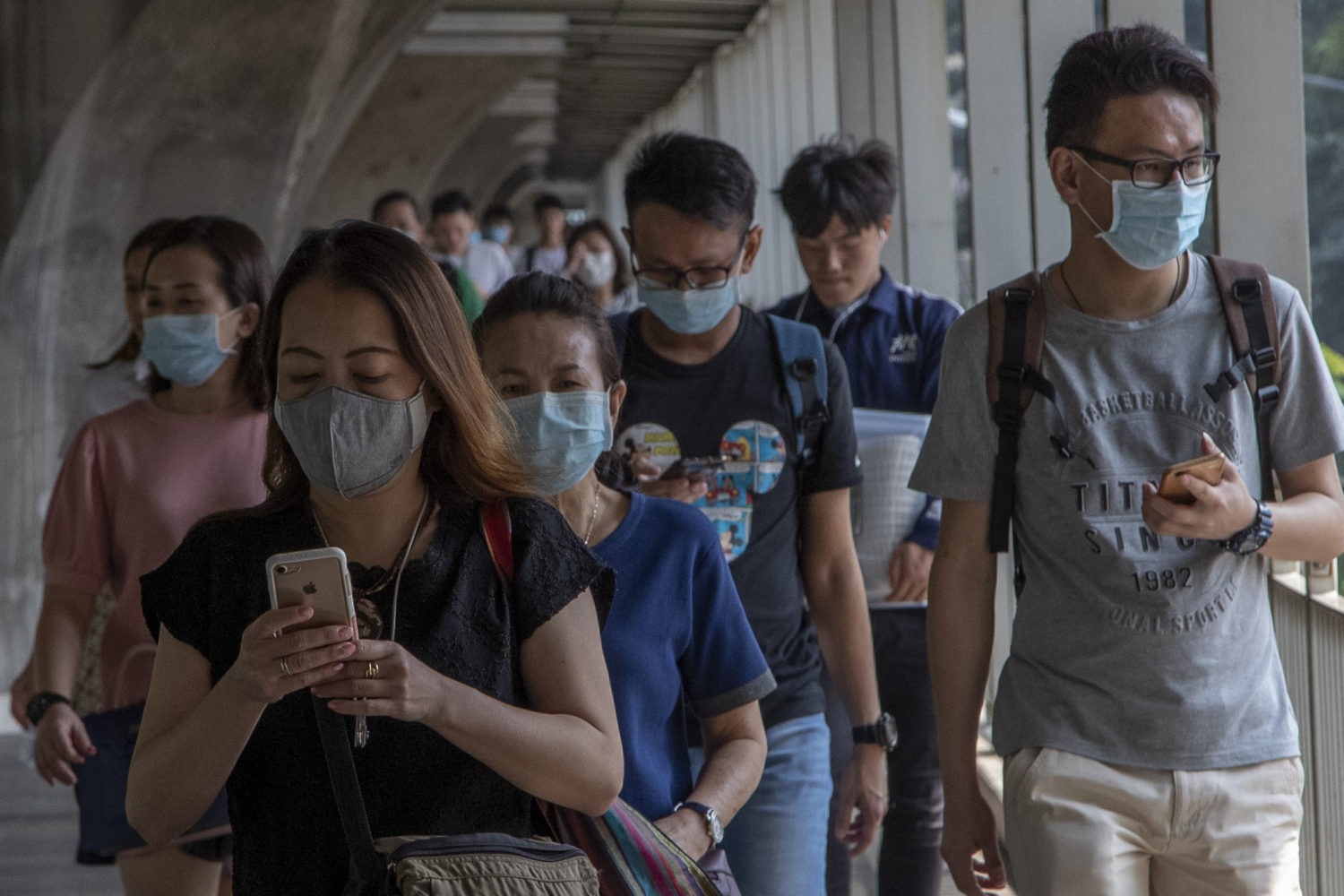
As America and the world continues to be in a tail spin from the coronavirus pandemic, the situation has been clarifying in many ways. It has demonstrated that the American business community's (and this extends to America's hospitals where even supposed non-profits act as if they were out to maximize cash flow) approach of "just-in-time" supply lines and moving manufacturing and even medical supply production to the areas with the lowest wages in the world, principally China, leaving the nation desperately dependent on foreign supply sources and ultimately foreign governments.  Meanwhile, at home labor has been beaten down and the vast majority of Americans live pay check to pay check and one medical crisis leads to bankruptcy - many who have physically sickened and then survived Covid-19 will likely be facing financial ruin from the medical bills.  Politically, much of the nation has been forced to face the reality of the consequences of election an individual who is a combination of crime syndicate boss and carnival huckster to the White House (there are Trump mini-me's when it comes to incompetence in a number of governor's mansions as well - think Texas  and Alabama for starters).  A piece in New York Magazine looks at this clarifying situation, especially America's insane dependence on a political enemy, China, to keep its economy and society from collapsing.  Here are column highlights:

The most advanced, sophisticated, and wealthy civilization ever to exist on planet Earth — our glorious, multinational, globalized, technological miracle — has now been brought to a screeching halt by a pathogen so tiny no one was able to see their complex structures until the last century. For all our unparalleled wealth and knowledge, our streets are empty; our businesses for the most part are suspended; and our efficiency and technological mastery have been mocked by a speck of nature. This minuscule organism that isn’t even technically alive could, all by itself, generate a global depression unlike any since the 1930s.
All our carefully maintained, just-in-time supply lines have crashed in a matter of days. Our addictive elixir, economic growth, has evaporated. Global trade has been put on ice. We have no vaccine — and, barring a miracle, we won’t until next year. We have no effective treatments, although that may, with any luck, change. We have only very porous defenses — social distancing — which amount to a drastic, utterly unsustainable shift in how we live from day to day. And that’s it. We don’t know how contagious this virus is, how exactly it may mutate, how widespread it already is in the population at large, and even if it can reactivate in those who have recovered from infection.
Yes, there are some more successful countries like Germany, and some outliers, like South Korea, but the rest seem to be following the same rough trajectory. And yes, we are flattening the curve … but it’s a temporary flattening due to unprecedented global shutdown of human activity. We may well be able, by suspending our entire way of life for a long while, to keep this virus from wreaking excessive and immediate damage, and overwhelming our hospitals. But we will not have beaten COVID-19. We will merely have stretched out the time it takes to spread.
The moment we relax, it will come back. Singapore, an early model for suppressing the virus, is now seeing a new wave after relaxing some controls. A leaked draft of a memo from the E.U. notes that “any level of [gradual] relaxation of the confinement will unavoidably lead to a corresponding increase in new cases.” The same risks of a rebound are being seen in China, in so far as we can believe a word that murderous dictatorship tells us.
It’s a brutal reality check, this thing — relentlessly ripping the veil off our delusions of control. So much is being laid bare. The promise of a truly globalized world, where government is increasingly international, and trade free, and all would benefit, was already under acute strain. Now, it’s broken, perhaps irrevocably.
The nation-state was beginning to reassert itself before, but COVID-19 has revealed its indispensability. Europeans realized, if they hadn’t already, that a truly continental response was beyond the E.U. Borders were suddenly enforced, resources hoarded by individual nations, and the most important decisions were made by national governments, in national interests. Americans, for their part, saw their own dependence on foreign countries, especially dictatorships, for core needs — like medicine, or medical equipment — as something to be corrected in the future. Japan is now spending a fortune paying its own companies to relocate from China to the homeland.
And for both Europe and America, the delusions that sustained the 21st-century engagement with China have begun to crack. We still don’t know how this virus emerged — and China hasn’t given any serious explanation of its origins. What we do know is that the regime punished and silenced those who wanted to sound the alarm as early as last December, and hid the true extent of the crisis from the rest of the world.
On January 18, despite the obvious danger, the Chinese dictatorship allowed a huge festival in Wuhan that drew tens of thousands of people.
On January 23, President Xi locked down all air traffic from Wuhan to the rest of China — but, as Niall Ferguson pointed out, not to the rest of the world. It’s as if they said to themselves, “Well, we’re going under, so we might as well bring the rest of the world down with us.” This is not the behavior of a responsible international state actor. Trump’s ban on Chinese travel was better than nothing, but it did not prevent over 400,000 non-Chinese from arriving in the U.S. from China as COVID-19 was gaining momentum. It’s fair to say, I think, that after the immediate, unforgivable cover-up in China, a global pandemic was inevitable.
I’m not excusing Trump for his delusions, denial, and dithering — he is very much at fault — but the core source of the destruction was and is Beijing. Bringing a totalitarian country, which is herding its Muslim inhabitants into concentration camps, into the heart of the Western world was, in retrospect, a gamble that has not paid off.
The Chinese dictatorship is, in fact, through recklessness and cover-up, responsible for a global plague and tipping the entire world into a deep depression.
In other cases, the cold triumph of reality represented by the virus has been salutary. It’s been remarkable to observe something Donald Trump cannot lie his way out of. He tried. And he’s still trying. He’s gaming out various ways to get himself reelected in a pandemic, but the pandemic keeps reminding us that this is in its control, not his. His daily performances are not informing anyone about anything — they are failing attempts to impose a narrative on an epidemic which has its own narrative, and doesn’t give two fucks about Trump.
And this is the truth about reality. It really does exist (whatever the postmodernists might argue). It’s complicated. And even if it can be ignored or forgotten in our very human discourses, it wins in the end. This virus is, in a way, a symbol of that reality. It can be stymied for a while; it can be suppressed and avoided.
[O]nly a vaccine can make a real difference. The coming months will be an unsatisfying series of starts and stops as we struggle to live with it. We are not, in other words, fighting and winning this war — we are merely negotiating the terms of our surrender to reality. And there is nothing more humbling for humans than that. And nothing more clarifying either.
Trump, various business interests, the Christofascist Trump has embraced, and, of course, the right wing media will continue to try to dupe Americans into looking away from and accepting reality, but for once they may have met a force that will succumb to their lies and propaganda. Thinking Americans need to take stock on how our economy and society need to be reordered to be prepared for future pandemics once we put this one behind us. 

Tuesday, February 25, 2020

CDC: Officials Warn Coronavirus Outbreaks Likely in the U.S.

A woman in Milan, Italy where a coronavirus outbreak has occurred.
While Donald Trump and his sycophants are ignoring the advise of experts and saying that the coronavirus has been contained and that no outbreaks are likely in the USA, medical experts are telling a very different story.  Indeed, some are saying that Americans need to be prepared for major disruptions with schools closed, businesses shut down, and potentially areas quarantined.  From its huge drop over the last two days - roughly 1900 points - the stock market is believing the medical experts and not the liar-in-chief in the White House.  Just as disturbing is the reality that the Trump/Pence regime has been cutting funding to the CDC and eliminating health officials who speak the truth based on scientific fact and knowledge during the regime's misrule.  A piece in the New York Times looks at what medical experts are saying in contrast to the lies of the Trump/Pence regime.  Here are article excerpts:
Federal health officials starkly warned on Tuesday that the new coronavirus will almost certainly spread in the United States, and that hospitals, businesses and schools should begin making preparations.
“It’s not so much of a question of if this will happen anymore but rather more of a question of exactly when this will happen,” Dr. Nancy Messonnier, director of the National Center for Immunization and Respiratory Diseases, said in a news briefing.
She said that cities and towns should plan for “social distancing measures,” like dividing school classes into smaller groups of students or closing schools altogether. Meetings and conferences may have to be canceled, she said. Businesses should arrange for employees to work from home.
“We are asking the American public to work with us to prepare, in the expectation that this could be bad,” Dr. Messonnier said.
Shortly after the news conference, stock markets plummeted for the second day as investors dumped stocks and turned to the safety of government bonds. The S&P 500 fell by more than 3 percent, following a 3.4 percent slide on Monday — the worst day for the American markets since February 2018.
In contrast to his own health officials, President Trump, traveling in India, played down the threat, saying, “You may ask about the coronavirus, which is very well under control in our country.”
[G]iven the outbreaks in more than two dozen countries, officials at the C.D.C. seemed convinced that the virus’s spread in the United States was inevitable, although they did not know whether the impact would be mild or severe.
“We cannot hermetically seal off the United States to a virus,” Alex M. Azar II, the secretary of health and human services, told a Senate panel on Tuesday. “And we need to be realistic about that.”
Globally, public health officials are confronting a multipronged threat. China’s battle to contain the epidemic has shown signs of success, with a plunge in the rate of new infections.
But this has been overshadowed by new clusters of infections in Iran, South Korea and Italy. The emergence of these new hubs underscored the lack of a coordinated global strategy to combat the coronavirus, which has infected nearly 80,000 people in 37 countries, causing at least 2,600 deaths.
In Iran, a spike in coronavirus infections — including to the top health official in charge of fighting the disease — has prompted fears the contagion may spread throughout the Middle East. In Italy, one of Europe’s largest economies, officials are struggling to prevent the epidemic from paralyzing the commercial center of Milan.
[L]awmakers from both the Democratic and the Republican parties grilled Mr. Azar and other members of the administration at the Senate hearing, apparently unconvinced that the Trump administration was prepared for the outbreak that the C.D.C. is forecasting.
Senator John Kennedy, Republican of Louisiana, grew exasperated when the acting secretary of the Department of Homeland Security, Chad F. Wolf, could not say how many people were expected to become infected.
Senator Patty Murray, Democrat of Washington, asked the health secretary whether he thought the United States currently had enough health masks in stock.
Hospital officials were assuming the efforts to contain the virus would delay, not prevent, a pandemic — sustained transmission of the coronavirus on more than one continent.
“We are really staging it, from a minor issue of small numbers of patients, to a full-blown community spread,” said Dr. Mark Jarrett, the chief quality officer at Northwell Health, which operates 23 hospitals on Long Island and elsewhere in New York.
Hospital administrators nationwide anticipate a wave of patients that could strain their intensive care units and isolation rooms. Many are starting to conserve medical supplies, including specialized masks and ventilators.
W.H.O. officials have also warned that the world is unprepared for a leap in infections, which could overwhelm medical resources in many countries. They also cautioned that new cases could suddenly resurge in China, as the government struggles to get people back to work.
And there are persistent doubts about the accuracy of infection figures reported by the Chinese government, raising the possibility that the true magnitude of the outbreak remains under reported.   

Tuesday, February 04, 2020

Coronavirus Shows the Vulnerability of the "Chinese Model"

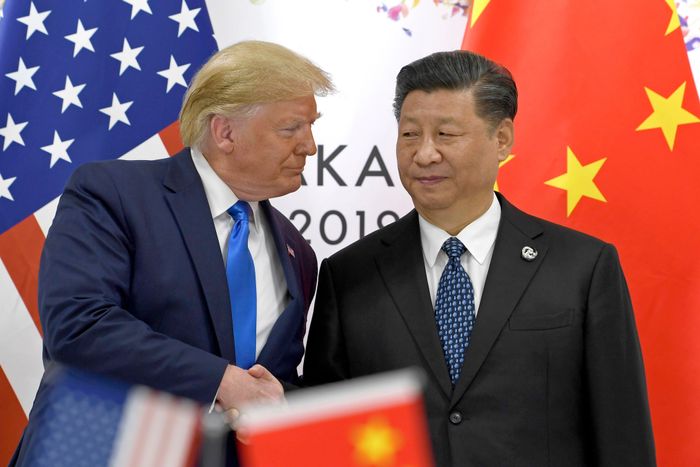
America's would be dictator and China's dictator.
As Donald Trump - an admirer of autocratic regimes and head of an administration that is forcing out scientists and experts who do not support his climate change denying, anti-safety regulation agenda - delivers his State of the Union speech (I'm not watching because (i) I loath the sound of his voice, (ii) his remarks will be filled with lies, and (iii) there will be countless reports on what he said),  the health emergency in instructive as to the dangers of silencing those who seek to publicize inconvenient information and truths. By all accounts other than those of the Chinese government, the coronavirus outbreak was horribly mismanaged by the Chinese government and those who early on sought to warn of the danger were harassed and punished.    Indeed, the Chinese attempt to downplay the health emergency parallel's Trump's claim that Iranian rockets had not harmed any members of the U.S. military when, in fact numerous service members had suffered traumatic brain injuries.  A piece in the Washington Post looks who the Chinese government failed its own people and have put the world potentially at risk.  Here are highlights:

The “Chinese model,” as enthusiasts sometimes describe Beijing’s autocratic system for dictating policy, can look eerily successful — until you consider catastrophic events such as the recent coronavirus outbreak.
China’s response to the epidemic that began in Wuhan nearly two months ago shows some advantages of its police-state approach, and some severe disadvantages: Chinese authorities can commandeer resources to build a hospital in 10 days. But by stifling bad news and even arresting vigilant doctors, they create deep distrust at home and abroad, risking their ability to be effective.
Chinese people simply don’t believe their government. They know that government health data is suspect, just like China’s official economic numbers.
The public’s distrust of the government emerged in interviews conducted this week by an American business executive who worked in Shanghai for three years and who shared with me conversations with former colleagues there. These Shanghai residents expressed deep skepticism about official data, which as of Tuesday showed more than 23,000 cases and 490 deaths.
“I personally doubt the numbers are accurate. I believe there are lots of missing cases, especially in rural area,” said one of the Chinese residents. “I think there are definitely miscounted numbers as some people died before there were cases diagnosed,” said a second. “Don’t trust the official numbers,” bluntly cautioned a third.
This third Shanghai resident expressed a widely shared fear that the authorities didn’t learn from the SARS outbreak in 2003: “Seventeen years after SARS, they are still making the same mistakes, nightmare mistakes, that’s my deepest despair. From holding back the truth, to [inadequate] preparations for disaster, to [slow] speed of reaction. 
A dramatic example of how China’s police-state tactics backfired is the case of Dr. Li Wenliang, an ophthalmologist at Wuhan Central Hospital. In late December, Li noticed cases of a virus that resembled SARS. He posted a warning to other doctors on Dec. 30, advising them to wear protective clothing. On Jan. 1, the Wuhan Public Security Bureau, the local equivalent of the FBI, summoned Li to sign a statement that he had made “false comments” that “severely disturbed the social order.”
Xinhua News Agency joined the public shaming of Li and other doctors who had posted warnings. . . . . Three weeks after Li had tried to sound the alarm, China declared the virus outbreak a national emergency. The Supreme People’s Court later denounced the arrests of Li and others and said: “Rumors end when there is openness.”
Xu Zhiyuan, a Chinese journalist who decried Beijing’s actions in suppressing the SARS outbreak, wrote later about the costs of such censorship. The Times article quoted his social media post: “The system is successful in that it destroyed the people with integrity, the institutions with credibility and a society capable of narrating its own stories.”
The financial cost of suppressing information and letting coronavirus spread in its early weeks could run to hundreds of billions of dollars. Goldman Sachs estimated in a forecast for clients Tuesday that a severe outbreak could reduce China’s gross domestic product growth in 2020 by more than a full percentage point. Already, Chinese financial markets have taken a huge hit.
China’s command economy, managed by a one-party dictatorship, has achieved miracles in recent decades. In comparison, an open and contentious democracy like the United States can sometimes seem like a losing proposition. But we’re now witnessing a striking reminder of the need for open sources of information and public officials who aren’t cowed by political pressure.
Xi thundered on Monday that Chinese officials who “lack boldness” in responding to coronavirus will be punished. Perhaps he will dictate that patients who don’t get well quickly will be jailed, too.

Friday, January 31, 2020

Coronavirus: the World Pays for China’s Dictatorship

Dictatorships and authoritarian regimes suffer from two phenomenon which are being showcased by the Coronavirus sweeping China and perhaps gaining a foothold in other nations: (i) inconvenient facts and problems are buried/silence rather than have them reflect badly on the dictator's rule, and (ii) dictators typically find themselves surrounded by ass kissers and sycophants who keep critical information from the ruler rather than upset him.  As a column in the New York Times lays out, China's dictatorship completely botched the handling of the Coronavirus and set the stage for a far worse epidemic seemingly out of a desire to stifle anything that might reflect negatively on the ruling regime.  Now, that regime faces fury from citizens at home and anger from other nations who now find themselves with a possible contagion.  This situation ought to be a wake up call to Americans as the Trump/Pence regime drives scientists and experts from government agencies and replaces them, if at all, with lackeys who will spout the dictated regime story line.  Here are column highlights: 

China’s leaders sometimes seem 10 feet tall, presiding over a political and economic juggernaut that has founded universities at a rate of one a week and that recently used more cement in three years than the United States did in the entire 20th century.
[W]e’re now seeing the dangers of Xi’s authoritarian model, for China and the world.
The first known coronavirus infection in the city of Wuhan presented symptoms beginning on Dec. 1, and by late December there was alarm in Wuhan’s medical circles. That would have been the moment for the authorities to act decisively.
And act decisively they did — not against the virus, but against whistle-blowers who were trying to call attention to the public health threat. A doctor who told a WeChat group about the virus was disciplined by the Communist Party and forced to admit wrongdoing. The police reported giving “education” and “criticism” to eight front-line doctors for “rumormongering” about the epidemic; instead of punishing these doctors, Xi should have listened to them.
China informed the World Health Organization of the virus on Dec. 31 but kept its own citizens in the dark; as other countries reported infections even as China pretended that it had confined the outbreak to Wuhan, Chinese joked grimly about a “patriotic” virus that only struck foreigners.
Wuhan’s mayor said he wasn’t authorized to discuss the virus until late this month. In that time, people traveled to and from Wuhan and didn’t take precautions.
The government finally ordered a lockdown on Jan. 23 that effectively quarantined people in Wuhan. But by then, according to the mayor, five million people had already fled the city.
Partly because the government covered up the epidemic in the early stages, hospitals were not able to gather supplies, and there are now major shortages of testing kits, masks and protective gear.
One reason for the early cover-up is that Xi’s China has systematically gutted institutions like journalism, social media, nongovernmental organizations, the legal profession and others that might provide accountability. These institutions were never very robust in China, but on and off they were tolerated until Xi came along.
I conducted a series of experiments on Chinese blogs over the years beginning in 2003 and was sometimes surprised by what I could get away with — but no longer. Xi has dragged China backward in terms of civil society, crushing almost every wisp of freedom and oversight.
For the same reason that Xi’s increasingly authoritarian China bungled the coronavirus outbreak, it also mishandled a swine flu virus that since 2018 has devastated China’s hog industry and killed almost one-quarter of the world’s pigs.
Dictators often make poor decisions because they don’t get accurate information: When you squelch independent voices you end up getting just flattery and optimism from those around you. Senior Chinese officials have told me that they are routinely lied to on trips to meet local officials and must dispatch their drivers and secretaries to assess the truth and gauge the real mood.
For this or other reasons, Xi has made a series of mistakes. He mishandled and inflamed the political crisis in Hong Kong, he inadvertently assured the re-election of his nemesis as president of Taiwan, and he has presided over worsening relations with the United States and many other countries.
The coronavirus has already reached the Xinjiang region in the Far West of China, and one risk is that it will spread in the internment camps where China is confining about one million Muslims with poor sanitation and limited health care.
[L]et’s get over any misplaced admiration some Americans have for Xi’s authoritarian model.
The Chinese social contract has been that citizens will not get ballots but will live steadily better lives, yet China’s economy is now as weak as it has been in three decades — and the coronavirus will sap growth further. Xi is not living up to his end of the bargain, and this is seen in the anger emerging on Chinese social media despite the best efforts of censors.
I don’t know if Xi is in political trouble for his misrule, but he should be. He’s a preening dictator, and with this outbreak some citizens are paying a price.

Friday, January 24, 2020

The Trump/Pence Regime Continues Its War on Science

Science is the way of the future.  It also has the ability to show the falsity and/or wrongness of past ways of doing things, including the manner in which humans - especially large greed driven corporations - have ravaged the environment.  For Trump's far right Christian base, it also has shown more and more the falsity of their world view and shown aspects of their faith to be false.  The Trump/Pence solution?  Gut environmental laws and drive scientists from government agencies.  Meanwhile, of course, the rest of the world presses on with scientific research and China may soon pull ahead of the United States in the realm of science - and the future. Gutting wetlands protections and clean air and water regulations will not make for a better future - not that Trump and his sycophants care. Its a mindset reminiscent of post WWI Britain which failed to adapt to the changing world and ultimately lost its empire as a consequence. A piece in the Washington Post looks at this war on science and the potential long term consequences for America's future.  Here are excerpts:
Dozens of government computers sit in a nondescript building here, able to connect to a data model that could help farmers manage the impact of a changing climate on their crops.
But no one in this federal agency would know how to access the model, or, if they did, what to do with the data.  That’s because the ambitious federal researcher who created it in Washington quit rather than move when the Agriculture Department relocated his agency to an office park here last fall.
He is one of hundreds of scientists across the federal government who have been forced out, sidelined or muted since President Trump took office.
The exodus has been fueled broadly by administration policies that have diminished the role of science as well as more specific steps, such as the relocation of agencies away from the nation’s capital.
While the administration has come under fire for prioritizing the concerns of industry at the expense of science in government decisions, the cumulative effects are just beginning to appear after three years of Trump in the White House.
Some farmers said the USDA staff upheaval has made it harder to access information they need.
Torrential rains last spring dashed the plans of Liz Brownlee, who runs a livestock farm with her husband, to expand her pasture in Crothersville, Ind. Then an unseasonably dry autumn brought 90-degree days that baked the farmers’ seeds. “With all this uncertainty from climate change, I need the best data possible” to know when to plant, she said. “I’m worried I’m not going to have it.”
In the first two years of the Trump administration, more than 1,600 federal scientists left government, according to Office of Personnel Management employment data analyzed by The Washington Post. That represents a 1.5 percent drop, compared with the 8 percent increase during the same period in the Obama administration.
One-fifth of the high-level appointee positions in science are vacant — normally filled by experts who shape policy and ensure research integrity.
Of those who departed, the numbers were greatest among social scientists, soil conservationists, hydrologists and experts in the physical sciences — chemistry, geology, astronomy and physics.
At the Environmental Protection Agency, nearly 700 scientists have left in the past three years, according to The Post analysis. . . . . the loss of expertise weakens the government’s ability to make sound decisions.
As a presidential candidate, Donald Trump called climate change a “hoax.” Once in office, he began dismantling much of President Barack Obama’s climate plan. He has installed industry figures in regulatory roles and rolled back scores of rules and policies that he considers harmful to the fossil-fuel industry. Trump’s actions spurred scientists into the streets, joining protesters for a March for Science rally on the Mall in 2017 and again in 2018.
After historic rainfall last spring swept away livestock and grain in the Midwest, crop planting was delayed by weeks. Andrew Crane-Droesch, 38, a researcher at the Agriculture Department’s Economic Research Service, started work on a data tool that could predict months in advance the impact of, say, heavy rainfall on crop prices or planted fields. He hoped that knowledge could help farmers, commodity traders and government disaster planners prepare.
But when Agriculture Secretary Sonny Perdue moved forward with his controversial plan to relocate the Economic Research Service and the National Institute of Food and Agriculture — two key research agencies — to Kansas City, Crane-Droesch headed for the exit.
He joined two-thirds of affected employees in his division who either retired or found other jobs rather than move to the greater Kansas City region. At the National Institute of Food and Agriculture, which oversees $1.7 billion in scientific funding for researchers, nearly 8 of every 10 employees have left.
The move to Kansas City has also meant dozens of reports and millions in research funding have been delayed or scuttled as the Agriculture Department scrambled to keep up with departures.
Current and former employees interviewed said they felt the move to Kansas City was intended to diminish research areas such as trade policy, farm income and climate change; Perdue is a climate skeptic who recently described the problem as “weather patterns, frankly.”
Some federal researchers said they left the Trump administration after concluding their work was being undermined.
The study found that long-term exposure to levels of soot and smog lower than current national standards can cause premature death among older Americans. Such a finding suggests that current standards don’t adequately protect public health, which would have implications for industries that pollute. An unidentified EPA spokesman attacked the study in an interview with the Washington Times, an act Costa called “scientifically unethical.”
Elsewhere in the government, political appointees have delayed grants for scientific work.
Across the government, the administration is scaling back advisory committees that offer input to policymakers from scientists and other experts. Last year, Trump required agencies to eliminate one-third of their advisory panels, with a few exceptions.
Much of the impact of the federal government's shrinking science capacity will not be felt for years, observers said.
"If we're gone, is the world going to be a worse place?" he mused. "I like to think so. But it's not going to be immediate."

Thursday, October 03, 2019

Is China Heading for Crisis?

With America's current political crisis sucking up most of the media attention, even as Trump strives to be an authoritarian ruler above the law, it is easy to forget that even dictatorships seem to have a maximum life expectancy and that nations like China, which seeks to hold a hegemony of Asia, have their own perils to face. While the Chinese regime is not as fossilized as that of the Soviet Union on the eve of its collapse, political strains are growing and not just in Hong Kong, a city state that exists as a sharp reminder of a dictatorial regimes limitations. Yes, China's leadership has a vision of where it wants the country to go in terms of economic power and influence, but the very prosperity that this will bring undermines dictatorial rule.  A piece in the New York Times looks at the growing difficulty China is experiencing in holding conflicting goals and desires under control.  How it all ends is anyone's guess.  Here are column excerpts:

China — or, rather, the Chinese regime — is in trouble. Tuesday’s gigantic parade in Beijing to celebrate the 70th anniversary of the People’s Republic looked like something out of the late Brezhnev era: endless military pomp and gray old men. Hong Kong is in its fourth straight month of protests, marked and stained by this week’s shooting of an unarmed teenage demonstrator. The Chinese economy is growing at its slowest rate in 27 years, even when going by the overstated official figures.
Meantime, capital is fleeing China — an estimated $1.2 trillion in the past decade — while foreign investors sour on Chinese markets. Beijing’s loudly touted Belt-and-Road initiative looks increasingly like a swamp of corruption, malinvestment and bad debt. Its retaliatory options in the face of Donald Trump’s trade war are bad and few. And General Secretary Xi Jinping has created a cult-of-personality dictatorship in a style unseen since Mao Zedong, China’s last disastrous emperor.
Remember the “Chinese Dream” — Xi’s vision of China as a modern, powerful, and “moderately well-off” state? Forget it. The current task for Chinese leadership is to avoid a full-blown nightmare of international isolation, economic decline, and domestic revolt.
The question is whether that’s still possible.
China’s presumptive trajectory once seemed clear. In domestic affairs: rapid economic reform; slow political opening. Lather, rinse, repeat. In international affairs: peaceful rise; burgeoning clout. It was to be a model of managed development, a Middle Kingdom fit for the 21st century.
That’s not what happened, for reasons that Chang and others saw coming long ago. Rapid growth is easy when labor and capital are plentiful and cheap. But most developing countries inevitably fall into what’s called the middle-income trap, when they no longer have the cost advantages of poor countries but haven’t yet acquired the legal, educational, or technological advantages of rich ones.
Beijing’s dilemmas go deeper. Economic reforms generate sudden riches that are ripe targets for extravagant graft, particularly by powerful state actors. Graft creates incentives for further self-dealing, which distorts economic decision-making and breeds public cynicism. . . . The result: more corruption, more cynicism, more repression. How long that can keep going is an open question.
[S]cholars such as Larry Diamond and Minxin Pei have noted that dictatorships tend to have a roughly 70-year lifespan. At some point, the revolutionary fervor that sustains the first generation of leaders and the will to power that sustains the second gives way to the policy failures, mounting discontents, outside shocks and inner doubts that prove the undoing of the third.
Especially when the regime experiences some kind of blunt trauma, either in the form of a foreign-policy fiasco, an economic shock, or a moral outrage. In its attempts to respond to Hong Kong’s protests, Beijing risks all three.
Accommodating the protesters’ demands, above all the granting of genuine universal suffrage, is the right thing to do, but introduces a democratic principle fatal to the regime’s self-preservation.
Hence the looming crisis. It could be defused, if Beijing guarantees amnesty for all nonviolent protesters and removes the troops it has brought in from the mainland in exchange for a meaningful process of negotiation. Or it could be “solved” through some form of hyper-aggressive policing that stops short of an outright massacre. But that only puts a lid on discontents that will continue to boil.
A policy of hoping the protesters discredit themselves or simply run out of steam shows no sign of working. A Tiananmen-style crackdown would underscore the regime’s brutishness and incompetence, destroy Hong Kong as a global financial capital, and spur China’s neighbors to arm to the teeth and draw closer to Washington.
But if the regime’s travails prove anything, it’s that China’s current despot is no more enlightened than despots elsewhere, and China’s people are no less eager to have what people have elsewhere: justice, fairness, rights, freedom from fear, freedom itself. In China’s looming crisis, the human condition shines through.

Tuesday, August 27, 2019

Trump's Trade War Deepens Farmers' Financial Plight

In 2016 many American farmers succumbed to Donald Trump's racist messaging and voted for a bombastic con-man who had bankrupted numerous companies, lost millions of dollars for others, and left a trail of unpaid contractors.  Now, Trump's trade war with China is pushing many of these same farmers towards their own bankruptcy filings.  Divine justice?  Perhaps, yet some surveys continue to show strong majorities of farmers putting their support for Trump's racist and xenophobic policies ahead of their own financial well being.  It's a case of the GOP's long ability to use race and other forms of bigotry to induce individuals to vote against their own interests on steroids.   Do I wish these folks well?  Not really and perhaps if the trade war with China continues they will reap the economic catastrophe they deserve.  A piece in the New York Times looks at the deepening financial plight in the heartland.  Here are excerpts:

American farmers have become collateral damage in a trade war that Mr. Trump began to help manufacturers and other companies that he believes have been hurt by China’s “unfair” trade practices.
More than a year into the trade dispute, sales of American soybeans, pork, wheat and other agricultural products to China have dried up as Beijing retaliates against Mr. Trump’s tariffs on Chinese imports. Lucrative contracts that farmers long relied on for a significant source of income have evaporated, with Chinese buyers looking to other nations like Brazil and Canada to get the commodities they need. Farm bankruptcy filings in the year through June were up 13 percent from 2018 and loan delinquency rates are on the rise, according to the American Farm Bureau.
The predicament of farmers is becoming a political problem for Mr. Trump as he heads into an election year. For months, farmers have remained resolute, continuing to pledge support to [Trump] a president who says his trade policies will help the agricultural industry win in the end. While there are few signs of an imminent blue wave in farm country, a growing number of farmers say they are losing patience with [Trump's] the president’s approach and are suggesting it will not take much to lose their vote as well.
Mr. Trump, who regularly brags about an economic boom despite signs of a slowdown, has in some cases made matters worse.
We’re not starting to do great again,” Brian Thalmann, the president of the Minnesota Corn Growers Association, told Mr. Perdue at the event. “Things are going downhill and downhill quickly.”
On Monday, after a 72-hour period during which Mr. Trump twice escalated his trade war with China, Mr. Thalmann said he could no longer support [Trump] the president as he did in 2016.
Losing the world’s most populous country as an export market has been a major blow to the agriculture industry. Total American agricultural exports to China were $24 billion in 2014 and fell to $9.1 billion last year, according to the American Farm Bureau. Exports of farm products to China fell by $1.3 billion in the first half of the year, the agriculture group said this month.
A report from the Agriculture Department this month found that Canadian wheat exports to China have “rocketed” this year, while exports from the United States have plunged.
The administration has tried to mollify farmers by rolling out two financial aid packages totaling $28 billion. . . . But as the trade fight gets uglier, farmers are beginning to panic. Last week, Mr. Trump said he would increase tariffs on $250 billion worth of Chinese imports to 30 percent and impose a 15 percent tax on another $300 billion worth later this year. China has already said it will no longer buy American agricultural products and announced on Friday that it would raise tariffs on $75 billion of exports from America.
The trade conflict’s toll on farmers is spreading to the manufacturers that serve them. Deere & Company, the maker of agricultural equipment, said this month that it was cutting its profit forecast for the second time this year. The company’s chief executive said farmers were delaying purchases because of concerns about access to export markets.
Mr. Trump is also trying to appease corn farmers who complain that an Environmental Protection Agency decision this month will hamper ethanol production. Farmers say the agency’s decision to exempt small oil refineries from a requirement to blend corn-based ethanol into gasoline has led to a drop in demand for the fuel.
At Minnesota’s Farmfest, it was clear that Mr. Perdue’s Southern charm could go only so far. His answers to questions about how the trade war with China would end were curt, and his quip about whining farmers left some with a sour taste.
But many farmers continue support Mr. Trump and express hope that [Trump] the president knows what he is doing in his dealings with China. A July survey from Farm Journal found that 79 percent of 1,100 farmers still back Mr. Trump despite the lack of progress in negotiations with China. And Mr. Perdue largely remains an effective emissary, with the industry still hoping Mr. Trump can pull off the kind of trade deal he has been promising.


Putting one's hope in a liar and con man doesn't strike me as a smart thing to do, yet Trump's continued calls to white nationalism seem to drown out all common sense in some circles. 

Wednesday, August 07, 2019

America's Future: Getting Rid of Trump Will Help

Increased racial hatred, increased gun violence, trade wars damaging American farmers and perhaps moving the country toward a recession, and frayed relations with long time allies.  All trace back in varying degrees to a single individual:  Donald Trump.  The main is a boil (if not a cancer) on nation and conservative columnist and former Republican Jennifer Rubin makes the case that almost anyone else would be better in the White House and would set the stage where serious, sane progress to address pressing problems could begin.   If Trump cannot be removed by impeachment, then he needs to be removed at the ballot box in November 2020.  The cancer that he embodies must be removed and not allowed to further metastasize.  True, we will still have to contend with his dangerous supporters, but his removal from office will be a much needed beginning.  Here are column excerpts:
Even if we get a Democratic president Americans don’t like all that much, or whose limitations are obvious, we’ll be in a better spot than we would be with President Trump. That’s an unsurprising assumption by Democrats. But, increasingly, independents and disaffected Republicans — as seen from their praise of former president Barack Obama’s remarks on the mass murders in El Paso and Dayton, Ohio — know this to be true. “Anyone but Trump” should be the goal for all Americans, even Republicans.
For one thing, Republicans won’t have to observe the debasement of other Republicans like Sen. John Cornyn (Tex.), who lamely tried to create some moral equivalence between Trump, who incites white nationalism of the type motivating the El Paso terrorist, and Sen. Elizabeth Warren (D-Mass.), who incites no one to hatred and whose ideology — progressive capitalism — hasn’t driven anyone to kill.
Whatever the problem, things would be better without Trump even with a president whose ideology and/or performance might not thrill most Americans.
Combating domestic terrorism? Just getting rid of the instigator of white nationalism would be a plus. The Post reports:
The administration has also curtailed or disbanded a Department of Homeland Security program that had been created to counter violent extremism by working with regional authorities and organizations to identify those vulnerable to radicalization, whether by Islamist groups or the far right. . . . this presidency has come to be defined by policies that are aligned with aspects of the white nationalist agenda and his penchant for fanning racial animus.
We could curtail Trump’s presidency and rebuke the white nationalist ideology, or we could reelect the man who stoked their grievance. It’s pretty easy to figure out the best option from a national security standpoint.
The trade war with China? Trump now has seized “control” of policy, . . . And how’s that working out? Not well:
Business executives, economists, and former government officials have said the worsening conflict between the White House and China was damaging the U.S. economy. Business investment contracted in the second quarter of 2019, and a number of White House officials are worried that the economy is beginning to slow.
Get rid of Trump and you would, at the very least, have a less chaotic, less impulse-driven policy from someone who understands U.S. consumers and not China pay the tariffs.
Relations with allies? They’ll immediately improve without Trump. Human rights policy? Once Trump is gone, we wouldn’t be in the business of praising mass murderers (e.g., Kim Jong Un). Environmental policy? Even some Republicans are dumping their climate change denial, but as long as Trump is in office, any hope of progress is illusory. Russia? No Democrat or Republican likely to be elected will kowtow to Vladimir Putin.
I don’t mean to suggest that all our problems will go away if Trump does, nor do I mean to suggest it doesn’t matter who succeeds him. However, we would eliminate a slew of Trump-created problems and inanities and make it possible rationally to address issues.
It’s not hyperbole to say Trump is a threat to our democracy, to national security and to progress on virtually any issue. We want the best possible president, but we will settle for anyone who isn’t Trump.

If you care about America and the future, vote Democrat in 2020 and in Virginia's 2019 elections.

Thursday, August 01, 2019

Trump's Trade Wars Continue to Decimate Farmers

Many farmers, especially in the Mid-West voted for Donald Trump whose appeals to racism and xenophobia won them over despite the false narrative than it was financial insecurity rather than bigotry that won their votes.  Now, many are paying - in my view - a much deserved price as Trump's trade wars continue to wipe out markets for American agricultural products and leave many farmers dependent on government bailouts (something they condemn when benefiting others) to stave off bankruptcy. A piece in Yahoo News looks at this self-inflicted harm and notes how farmers want a return to "more normal times" - something that will only be achieved by voting Trump and Mike Pence out of office.  While my heart goes out to children and youths in struggling farm families, I find it hard to dredge up any sympathy for their parents who voted for Trump. Here are article excerpts:
The White House recently announced that it would be providing an additional $16 billion in aid to American farmers affected by the trade war between the U.S. and China.
But the problem for American farmers has becomes bigger than something a bailout can fix.
“This trade thing is what’s brought on by [Trump] the president and it’s really frustrating because he took away all of our markets,” Bob Nuylen, a farmer from North Dakota who grows spring wheat and sunflowers, told Yahoo Finance. “We live in an area where we’re kind of in the middle of nowhere. It costs us a lot of money — over $1 a bushel to get our grain to markets.”
Since trade tensions began in 2018, farmers have faced major financial challenges, since China was once a major U.S. agriculture buyer.
And losing customers has become a major issue. Soybean farmers have been dealing with this, as China has turned to other countries like Brazil for soybeans. Nuylen said this is also happening for wheat farmers, as China has begun importing wheat from Russian regions.
“All these countries went to different countries to get their grain,” Nuylen said. “How are we going to get the relations back with them to buy our grain again and be our customers?”
“Our prices are probably as low as I’ve seen them in a long time,” he told Yahoo Finance. “We were losing just about $70 an acre just by putting our crop in [the ground] this spring.” The Trump administration pledged two installments of a farmer bailout program. The first round of payments totaling $4.7 billion was paid in September 2018, while the second round was distributed in December. By February 2019, the total aid payments reached $7.7 billion.
“Payments are a welcome help for the bottom line of Missouri farmers,” Blake Hurst, president of the Missouri Farm Bureau, told Yahoo Finance in an email statement. “Although the trade payments vary widely from county to county, they’ll keep more than a few farmers in business for another year. ...
“Having said all that,” the statement added, “farmers are profoundly wary of the trade war, embarrassed that ad hoc government subsidies are all that stands between many of us and financial ruin, and ready for the return of more normal times.”
If these farmers continue to support Trump, they deserve any and every misfortune that befalls them. Hate, racism and bigotry need to carry a very heavy price.

Thursday, June 13, 2019

Trump Throws Open the 2020 Election to Foreign Interference

A post last night referenced a troubling interview that Donald Trump, a/k/a Der Trumpenführer, gave to ABC News wherein he basically welcomed interference from foreign governments in the 2020 elections.   CNN looks at the shocking - well, not shocking given who Trump has shown himself to be - statements and indifference towards the legitimacy of American elections.  For Trump, the country doesn't matter, it is all about him.  Daily, Trump is showing the dangers of putting a malignant narcissist in any office much less the presidency.  This is not "fake news," because I heard the interview.  Trump is a clear and present danger to the nation.  Here are highlights from CNN and some of the reactions to what some would call potential treason:

Donald Trump just made a staggering offer to every foreign spy agency and American enemy: Have at the 2020 election -- especially if you have dirt that can help him win.
Even in a presidency that long ago burned through all conceivable superlatives, Trump's statement was a stunner.  This was more than a mere candidate calling on Russia to find Hillary Clinton's emails. It went further than dumping on US intelligence agencies by believing Russian President Vladimir Putin's smirking denials of election interference. Or Trump's claims that the Kremlin's 2016 interference caper is one big Democratic hoax. This was the President of the United States -- the man charged with protecting the Constitution, American democracy and the Western world -- sitting at the Resolute desk in the Oval Office, saying he would accept damaging information from Russia and China on his 2020 opponent. Anchor George Stephanopoulos brought up FBI Director Christopher Wray's warning that anyone who received incriminating information from a foreign power should call the bureau.
"The FBI director is wrong," Trump said, anger hardening his voice. He denied that interfering in American elections -- as Russia did in 2016 to help him win -- is even a problem. The immediate political effect of Trump's interview was to fan more Democratic calls for [Trump's] the President's impeachment -- and to make House Speaker Nancy Pelosi's life more difficult.
"It is past sad. It is past frustration. This is criminal. It is criminal. And we need to hold this president accountable," Democratic Rep. Brenda Lawrence, D-Michigan, told CNN's Erin Burnett. "The #MuellerReport made it clear: A foreign government attacked our 2016 elections to support Trump, Trump welcomed that help, and Trump obstructed the investigation," Sen. Elizabeth Warren, D-Massachusetts, tweeted. But the political consequences of Trump's statements on Wednesday may pale in comparison with the intelligence and national security problems they will seed. The President did not just risk the integrity of the 2020 vote, he reinforced the already strong impression that he would do anything it takes -- anything -- to win. Since he has the power of the presidency, that's a troubling thought. Given that reality, any foreign entity that helps him in 2020 might expect all kinds of unspecified accommodations in policy or otherwise -- one reason why Trump's private meetings with Putin so trouble his opponents. While US intelligence agencies -- and even the White House -- say they are doing everything they can to protect the election, the most powerful man in the world is signaling he doesn't care and would be willing to undermine those efforts. And it may not even matter if any dirt gleaned on his opponents is true, since the Russian effort in 2016 showed that rumor and misinformation can be just as powerful as genuine information.
Trump's swipe at Wray will also spark new speculation about the position of the President's second FBI director. On the evidence of past kerfuffles, Republican senators can be expected to dodge and hedge. Conservative pundits will deny he did anything wrong. And his White House may accuse journalists of taking him out of context or deny the evidence on tape that the President said it at all. That is not to say there will not be reverberations from the President's interview. In the real world, there will be political, practical and intelligence implications. After all, he's inviting anyone to play in the process that ultimately underscores American democracy. If elections have no integrity, the public's faith in those to whom it grants power cannot be guaranteed and the system will be in severe jeopardy. Trump's comments represented a particular repudiation of special counsel Robert Mueller, who even in his taciturn way made an impassioned plea for Americans to protect their democracy.


Trump needs to be removed from office by any means necessary.

Monday, June 03, 2019

Economists' Fears of a 2020 Recession Surge

Trump brags about the state of the US economy but economists increasingly fear his economic policies are about to drive the economy into the ditch.  The main cause of concern?  Trump's insane tariff and trade policies that are already slamming many manufacturers and farmers and, if continued will also begin to hit consumers with steeply higher prices.  If these fears prove correct, I hope they hit early enough in 2020 so as to help purge Trump from the White House and lead to the defeat of numerous Republicans.  CNN looks at the economic forecast:
America's business leaders are growing more worried that the United States will enter a recession by the end of 2020. Their primary fear: protectionist trade policy.
That is the topline finding of a report released Monday by the National Association for Business Economics. The survey, based on responses by 53 economists, is a leading barometer of where the US business community thinks the economy is headed.
"Increased trade protectionism is considered the primary downwide risk to growth by a majority of the respondents," Gregory Daco, chief US economist for Oxford Economics, said in a statement. The report found what it called a "surge" in recession fears among the economists.
The report comes as the United States ratchets up its trade war with China and has gone after other major trading partners, including Mexico and India. The risk of recession happening soon remains low but will "rise rapidly" next year. The survey's respondents said the risk of recession starting in 2019 is only 15% but 60% by the end of 2020. About a third of respondents forecast a recession will begin halfway through next year.
The United States is probably somewhere in the last stages of an epic run of economic growth that began in 2009. Dramatic and coordinated responses by the Federal Reserve, Congress and the Obama administration helped pull the country up from the Great Recession.
Donald Trump, who took the reins of the US economy from Barack Obama in 2017, has aggressively tried to reorder the US position on global trade. He has picked prominent fights with China and Europe and has threatened tariffs on Mexico over illegal immigration and India over access to its markets.
Other notable findings from the National Association for Business Economics: 
-- 56% of respondents cited increasingly protectionist trade policy as the greatest risk to the US economy in 2019. Separately, 88% pointed to US trade policy, and retaliation by other nations, for why they lowered their GDP growth forecasts.
-- 14% believe a "substantial" decline in the stock market, and 10% feel a slowdown in global growth, are the biggest risks to the US economy.
-- Business spending will moderate this year and next after growing a strong 6.9% in 2018.