Showing posts with label homeless LGBT youth. Show all posts

Sunday, August 25, 2019

LGBT Youth Continue to Lack Social Support


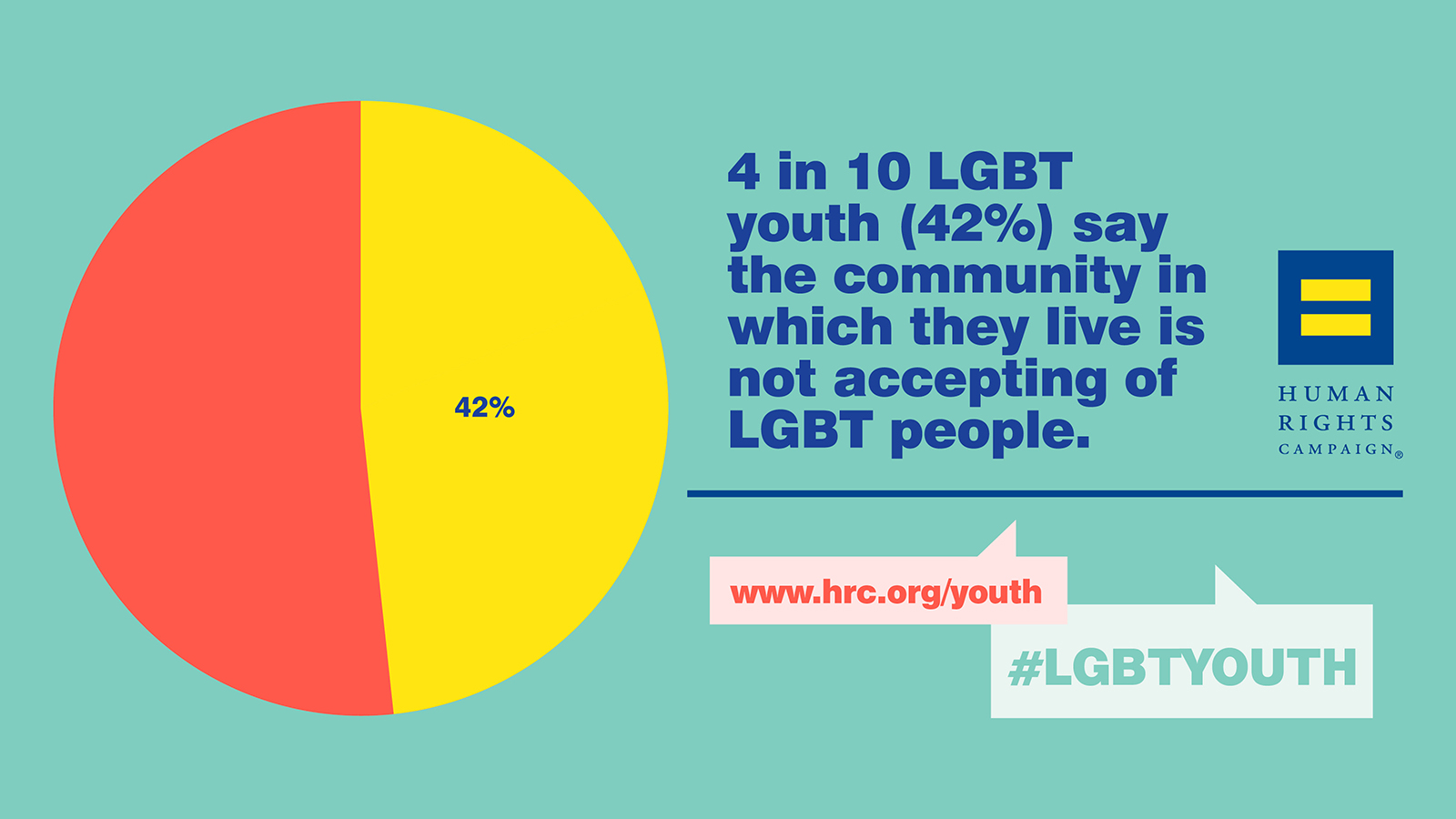
Growing up gay is not easy, especially at younger ages when one does not even know the term for who one is.  All you know is that you are different even if one cannot describe or quantify the difference.  As one gets older, the disconnect grows stronger and, in my case, high school was a nightmare, as I tried to hide my innate difference.  Today, things are far better for many LGBT youth, but for many others, little has changed over the last 50 years.  While there are now LGBT role models and celebrities and some schools have gay-straight alliances, church and family expectations and anti-gay bigotry still make lives of many LGBT youth a living hell.  Indeed, estimates are that 40% of all homeless youth are LGBT, often thrown out by parents or feeling forced to flee.  Now, with the Trump/Pence regime pushing the U.S. Supreme Court to legalize anti-LGBT discrimination, the stress many LGBT youth experience is likely to increase.  A piece in The Atlantic looks at the lack of social support so many LGBT youth experience.  Here are highlights:

The 12-year-old drag star Desmond Napoles is one of a growing number of kids who have embraced an LGBTQ identity at an early age. He has already come out as gay. Recent postings on his Instagram feed, which has 181,000 followers, feature him posing in a purple wig with red lips pursed, or in a rainbow dress at Brooklyn Pride. . . . “He is spreading the message that it is okay for kids to drag,” his mother, Wendy Napoles, told Gay Star News. And to “explore their identity and express themselves, without shame, without hiding.”
Her son may be precocious, but most queer kids remember feeling different very early in their lives. . . . . Years later, a family photo surfaces—of a boy holding a doll, say, as his brothers roughhouse nearby—that, in retrospect, makes the story seem obvious. These unwittingly campy childhood photos also communicate a reality generally overlooked in society: Budding queer identities have nonsexual elements that often form long before puberty, signaling what lies ahead.
Nevertheless, seeing preteens involved in drag shows—an age-old staple of LGBTQ culture, often performed in gay clubs—makes a lot of people uncomfortable. Critics have accused Desmond’s mother of allowing her son’s sexualization and exploitation. After another preteen boy performed drag in Ohio, state Republicans proposed legislation barring these performances, linking them, without evidence, to child trafficking.
Over time, American society has been steadily making peace with gay adults, gay marriages, even gay political candidates. Yet it still broadly pretends that people are straight until, at some point after age 18, they proclaim themselves otherwise. . . . . by this logic, all things LGBTQ should be relegated to adult spaces, preventing children’s premature sexualization. This explains why the backlash to preteen drag performers like Desmond has been so fierce—and why so many queer kids, with their difference manifesting as awkwardness, are forced to tread the rough waters of adolescence with no social support.
Numerous studies have shown that children who eventually come out as gay, lesbian, or bisexual—scientists call them pre-homosexual, or pre-GLB kids—demonstrate more childhood gender nonconformity in their speech, body language, and choice of activity than their pre-straight contemporaries do. These reports have also produced evidence of a “dosage effect”: The more gender nonconformity someone shows in childhood, the more likely they will identify as gay, lesbian, or bisexual as an adult.
Critics instead see adults in and aligned with the LGBTQ community as sexualizing children by exposing them to what a National Review writer calls a “deeply and perversely erotic subculture.” Conservative media have accused Wendy Napoles of endangering her son.
This adult disquiet allows for the continued neglecting of nascent queerness, leaving pre-GLB kids to be mocked, rather than affirmed, fostering another generation of queer people who carry scars into adulthood. “Growing up gay, it seems, is bad for you in many of the same ways as growing up in extreme poverty,” Michael Hobbes wrote in a much-discussed 2017 HuffPost article. A 2015 study showed that gay people as adults produce less cortisol, the hormone that regulates stress—–“their systems were activated, so constantly, in adolescence that they ended up sluggish as grownups”––than their straight counterparts. A 2014 study similarly showed that “stressful life events” inflict more damage on gay kids’ nervous systems than on their straight peers’ nervous systems.
Growing up LGBTQ is isolating, a reality pointedly depicted by a 2016 Saturday Night Live sketch titled “Wells for Boys.” . . . .To that script we might add: Some kids are straight; other kids are gay.
But pre-GLB kids, even if they’re not as forthright in their nonconformity as Desmond is, should not be forced to wait for adulthood to receive society's permission to be themselves. Instead, they need age-appropriate safe spaces—so they don’t have to co-opt more mature queer arenas—in which they can come to grips with their otherness. Queer kids know they’re different, even before most have the words to say so; for their sake, we need to listen a bit more closely.

Friday, December 14, 2018

Organized Religion: The Worse Bully of LGBT People

Now, in the midst of the Christmas holiday season, many LGBT individuals across America and so-called Christian areas of the world find themselves disconnected from any religious aspect of the season.  Why?  Very simple: through out much of its history - at least since the 1100's - Christianity has been one of the worse tormentors and enemies of LGBT people. Much of this mistreatment of LGBT individuals traces back to the ignorant writings of the Hebrew Old Testament - ignorance which was sadly also picked up by Islam.  Add to the poison of a few passages in Leviticus the sick need of many to fell superior to others and to have some target for abuse as "other", and organized religion has been a toxic evil to so many LGBT people throughout history since the rise of Christianity and the dissemination of the message of hate by Christian missionaries.  A piece in The Advocate looks at this sad truth.  Here are excerpts:
As a gay youth, I attended church like I attempted suicide: half-heartedly, with a lack of conviction, and pretty sure it wasn’t for me. That makes me one of the lucky ones.
Growing up in Wilmington, Del., in the 1970s and 1980s, I had no idea how lucky I was to be brought up in a hodge-podge of faith traditions. My parents were raised in different Protestant traditions, but my mother had converted to Catholicism to marry (and shortly divorce) her first husband. They had an ethical and moral basis in the teachings of Christianity, but neither was particularly connected to the trappings of any specific tradition.  They were married in the Episcopal Church, the best option for a divorced woman in 1971. Early on, and because of that choice, they were part of a congregation that was less judgmental of difference. 
Additionally, since my parents had met onstage in community theatre, they had many friends who were gay and this was the world into which I was born. I went to Sunday school for a few years and went to services on Christmas Eve and on Easter Sunday.
It wasn’t until I came out to them in the late '80s that the subtle insidiousness of church teachings reared its head. Despite having gay friends in the theatre, in their social groups and even in our living room on a regular basis, having a gay son was not an option my mother wanted to consider. I was told I could never bring a boyfriend home, and she openly confessed to worrying what people would think of her. She worried that people would think she was a bad mother and that she’d done something wrong when they found out she had a gay son.
This was not the reaction I expected. Nowhere in her secular life was I given any clue that she would feel any differently about a gay son. Years later, as I reflected on this painful (and thankfully, brief) period, I came to understand that it must have been feelings ingrained by her own religious upbringing.
Like most LGBTQ+ youth, when I started feeling different and out of place (Steven Carrington on Dynasty was the only significant LGBTQ+ character on TV in those days), I was confused. I was depressed. I was anxious. I’d been the subject of bullying for most of my life,  . . . . In the absence of other factors and in the presence of other LGBTQ+ people in her social circles leads me to believe that the religion of her upbringing had coded these feelings deep into her subconscious, and that is where religion became an issue for me.
For too many LGBTQ+ teens, though, religion IS the issue. According to data from a 2011 study from the University of Texas at Austin’s Research Consortium , gay and lesbian youth who reported that religion was important to them were 38 percent more likely to have had recent suicidal thoughts.  . . . Only 5 percent of the heterosexual youth surveyed had considered suicide.
No person, no matter their sexual or affectional orientation, their gender, their class, their beliefs or their interests should be made to feel inferior, particularly in a community that is meant to provide support and love. Religious bullying, whether direct, or in my mother’s case, subconscious, can serve as one of the most destructive forms of bullying and more has to be done to prevent it.
Religious-based bullying of  LGBTQ+ people is insidious. It can lead to isolation, disrespect, and exclusion. According to the National LGBTQ Task Force, nearly 40 percent of homeless youth identify as LGBTQ+, and many of them are likely homeless because their families’ faith could not accept them for who they are. Worse, it is killing LGBTQ+ young people.
[W]e have a moral obligation to embrace each other’s differences: true faith doesn’t bully. It is about love and support. I’m proud to have recently joined the team at the Tyler Clementi Foundation, where our “True Faith Doesn’t Bully” campaign is working to provide tailored resources to help faith communities affirm the value of the lives of every single individual, no matter their identity. . . . We all deserve that.
I have more or less walked away from Christianity in any organized form.  Like many of their generation, my children are now "Nones" despite having been raised Catholic, and my grandchildren, thankfully, are being spared from Christian indoctrination and all of the self-hate and judgment of others that it sadly embodies.

Wednesday, November 22, 2017

Coming Out for the Holidays: Family Acceptance Could Save Lives


As I noted in my most recent VEER Magazine column, studies indicate gay men are significantly more likely to attempt suicide than their straight counterparts, with the numbers increasing exponentially during the holidays.  To me, the reason for this phenomenon is: (i) the family rejection many gays have experienced, (ii) alienation from the religious backgrounds in which they were raised and (iii) the forced effort to be "happy" during the holiday season.  Indeed, my holiday seasons during the first years of my "coming out" journey could be best described by two words: depression and therapy.  It took literally years of therapy to overcome the emotional and psychological damage I suffered from my Catholic upbringing.  And deep depression can lead to suicide attempts.  I survived two such attempts, both of which sent me to the hospital.  Thankfully, that was years ago and I have moved on in my life and I now find myself in a very different place emotionally and psychologically. But many in the LGBT community, especially those still in the early stages of "coming out" still find the holiday season to be challenging at best.  As a piece in USA Today notes, how families react to those coming out can literally make a difference at times between life and death.  Here are article highlight:
Holiday gatherings feel fraught for many families, but around-the-table affairs can put distinct pressures on those newly out as lesbian, gay, bisexual or transgender.
Maybe your cousin is going by different pronouns than last year. Perhaps a nephew makes first mention of a boyfriend from school. How a family reacts to such revelations can seriously impact that relative's wellbeing, said Jaime Grant, director of the LGBTQ advocacy group PFLAG.
Grant, a lesbian, was shunned by her mother when she came out in the early '80s. She missed a decade of holiday gatherings thereafter, she said, carrying a rejection that led to years of drug addiction. LGBT youth who feel highly rejected by families are three times as likely to use illegal drugs, according to 2009 research from San Francisco State University's Family Acceptance Project. They're eight times as likely to have attempted suicide. 
"It’s not just a feel-good thing. It’s a life-saving thing," said Grant, now a mother herself. "One of my kids is bi, and he is coming home for Thanksgiving to talk to me about his first semester at college — new crushes, student government, the whole bit."
Here's how to best offer support should a newly out guest join your table for the holidays, according to PFLAG.
First: Thank them for opening up to you“The first thing to say is, 'I feel so honored, blessed, happy, like a treasured person in your life that you want to share this with me,'" Grant said. "And then listen." Show interest and empathy. For some, coming out is a struggle, she said. For others, it's exciting. The person may offer up preferred pronouns, or mention a previously undisclosed partner, but don't rush the process or overstep by asking prying questions, Grant said.
Set the tone for acceptance among your familyReactions from family members may vary from surprise, to gladness, to dismay. Let them know how to address this new-to-them aspect of your guest's identity and that you expect them to be treated no less than anyone else at the table, said Marsha Aizumi, a PFLAG national board member from Pasadena, Calif. If a relative's coming out announcement came at the dinner table, "I would jump up and immediately give them a hug," she said. If unkind remarks fly, call them out; the brief discomfort doesn't outweigh any potentially damaging effects.
Help relatives process the new infoWhen Aizumi's transgender son came out during the holidays, she dealt with feelings of shame, fear and doubt. Family members might need time beyond a holiday to fully process the new information, she said. You can lift some burden from a newly out family member by having a dialogue and educating family members who have questions or seem less accepting. While it's important to allow space to reflect for yourself and others, Aizumi said, make clear to the newly out relative that you still love that person. "My son needed to hear it more than ever," she said.
Own your mistakes with graceEven family members striving to be inclusive can let an unintentional pronoun slip. Opportunities for fumbles and unintentional hurt abound as family members adjust and learn more about a newly out relative's orientation or identity. Fostering grace is key for all parties. There's nothing wrong with simply owning a mistake. 
Follow up after the holidayIn the days following a holiday gathering, check in with your newly out family member. Remind them you appreciated their presence. Ask them how they thought it went. Understand their journey with your family goes beyond this first holiday. Ben Hodges, the son of PFLAG President Jean Hodges, first introduced his partner to his family 21 years ago. "Remember that telling family and friends you are LGBTQ is a process," he said. "This is a healthy dialogue that will not be resolved over the holiday meal."

Sadly, far too many families do not follow this wise advice.  I was lucky and was fully accepted by my parents and siblings and aunts and uncles.  Even with such support, coming out was a difficult process.  Roughly 40% of homeless youths in America are LGBT, most having been disowned and discarded by their falsely pious parents who call themselves "Christian" or, in some cases, devout Muslims.  With three children of my own, I truly cannot fathom how anyone "Christian" can discard their own children due to the writings of ignorant, uneducated and unknown Bronze Age herders.   In memory of my parents, I endowed a scholarship fund to help graduating LGBT high school seniors who may have found themselves without parental financial support.  If you are inclined to donate to the fund, you can do so here.  The donation is tax deductible.

Wednesday, October 11, 2017

Reflections on National "Coming Out" Day 2017 - Why It Still Matters


It has been 16 years since I commenced my "coming out journey when I first began to reveal to family and friends that I was gay after many years of internal strife and immeasurable amounts of self-hatred engendered by my Catholic upbringing.  Since that time, I typically reflect on the state of my own life and other members of the LGBT community on October 11th, National Coming Out Day.  Past illustrative blog posts can be found here and here. For those unfamiliar with the term, National Coming Out Day was first observed in 1988 as a form of activism to fight against homophobia and anti-LGBT discrimination.  It can be described as follows according to Wikipedia:
[A]n annual LGBTQ awareness day observed on October 11 and October 12 in some parts of the world.  Founded in the United States in 1988, the initial idea was grounded in the feminist and gay liberation spirit of the personal being political, and the emphasis on the most basic form of activism being coming out to family, friends and colleagues, and living life as an openly lesbian or gay person. The foundational belief is that homophobia thrives in an atmosphere of silence and ignorance, and that once people know that they have loved ones who are lesbian or gay, they are far less likely to maintain homophobic or oppressive views. 

Some now argue that the observance is no longer needed given the advances in LGBT rights.  In fact a thirty something college professor at a liberal university makes such and argument in a column in the Washington Post today.  I respectfully beg to differ.  Strenuously, despite the seeming good intentions of the author.   The reality is that today the LGBT community finds itself under unrelenting attack.  Last Friday a law became effective in Mississippi that makes anti-LGBT discrimination legal and gays can be turned away for business, hotels and public accommodations, and, of course fired from their jobs.  At the national level, the Trump/Pence regime has declared war on the LGBT community and is both rolling back legal protections and under the ruse of "protecting religious liberty" granting Christian extremists a license to discriminate akin to what is now fully legal under Mississippi's foul law.  Here in Virginia, we are faced with a Republican statewide ticket that, if elected, would bring such anti-LGBT discrimination to the fore in Virginia (GOP attorney general candidate John Adams would work to rescind same sex marriage rights).

While LGBT citizens may lead much safer lives in liberal states, large cities and university towns than was the case in 1988, things are still frightening in much of so-called fly over country and even in places like Southwest Virginia.  

As one of the linked posts notes, my coming out saga when I came to realize that I just could not continue to live my life as an actor on a stage if you will, pretending to be something that I was not through no choice of my own. I had to either to do something about my situation and “come out” or kill myself. I chose the former, unwittingly almost on National Coming Out Day.  Along the way, I did end up having two serious suicide attempts motivated by my desperation to escape some of the bigotry LGBT individuals face, including being fired from my law firm and the ruinous financial nightmare that was triggered.

I survived, but sadly, many LGBT individuals succeed in taking their lives on a near daily basis.  Often, they are only in their teens and see suicide is the only way to escape relentless bullying. It saddens me greatly to know that a number of gay teens will never know the freedom I have eventually found because they chose to end their lives.  They simply saw no other option thanks to the bigotry that still thrives in "red America." 
 
Just as disturbing is the reality that studies indicate that 40% of homeless youth are LGBT, perhaps the majority having been thrown out of their homes by their "god fearing" parents.  And yes, LGBT individuals continue to be fired from their jobs due to their sexuality or gender identity - I routinely get calls form those who have been fired.  All of this remains perfectly legal in Virginia and 28 other states.  Until these situations change and the laws change to provide full equal protection for every LGBT American, National Coming Out Day is still sorely needed.

On a personal note, I am largely at the place I imagined and envisioned in my mind's eye that I wanted to achieve when I started my coming out journey. I am married to wonderful guy who truly loves me, I now work at a law firm where my sexual orientation is not an issue - my burgeoning Hindu client base only care about me taking care of their legal needs and some have LGBT family members - and my husband and I are active activists in the LGBT community (see the photo above).  In short, I am  "totally out" and no longer feel the need to hide or apologize to anyone. It can "get better" and through National Coming Day we need to continue to make sure it gets better for every LGBT individual.   There is still so much work to be done.  There are literally lives to be saved.

Saturday, September 16, 2017

Christian Extremist Attacks Showing of "Pro-Gay" Suicide Prevention Video


I have long argued that the principal "sin" of LGBT individuals in the eyes of Christofascists is that we challenge their Bronze Age beliefs on human sexuality and suggest that perhaps the legends and myths they cling to just might not be true.  Indeed, our very existence is an offense in their eyes even as they engage in conduct that makes the Pharisees of the New Testament seem like pillars of decency and honesty.  The Christian Post is reporting on an incident where the leader of a Christian extremist organization is raising hell over the showing of a suicide prevention video that he deemed "pro-gay" - apparently because it acknowledged gays exist and have feelings and love for those of their own gender (the other likely offense in the mind of this "godly Christian" is that one of the boys in the video was black - Penkoski is likely a racist as well as a homophobe).  I suspect this individual would prefer that every gay commit suicide.  As for the impact on his delicate daughter, she probably more than anyone needs suicide prevention counseling given the lunacy and hatred that define her father.  Here are article excerpts:
A conservative Christian parent in West Virginia has voiced concern after a middle school teacher showed her class a suicide prevention music video that featured two male high school students in bed together and a sex toy.
Rich Penkoski, who is the father of a 13-year-old student at Mountain Ridge Middle School in Gerrardstown, West Virginia, voiced his outrage with the school's principal Thursday after his daughter told him that her homeroom teacher, Jackie Coffin, showed the the music video in class on Tuesday.
The music video in question is from hip-hop artist Logic's 2017 song, titled "1-800-273-8255," which is also the number to the National Suicide Prevention Lifeline.
The plot of the video follows a gay African-American student as he struggles to gain society's acceptance of his sexual orientation. In one scene, the student visits a male classmate's house and has dinner with the classmate and his parents. The next scene shows the classmate's dad catching his son in bed with the male student.
In another scene, the African-American student opens his gym locker to find a dildo affixed to the inside of the locker door as an anti-gay joke.
Penkoski is most known for his work as one of the leaders of the "Warriors for Christ" online ministry and Facebook page. The Facebook page made headlines and received much backlash earlier this summer when it announced that anyone who posted an LGBT rainbow flag emoji to the Facebook page would be banned by the page's administrators.
Penkoski and other administrators at Warriors for Christ have also launched a new Christian social media alternative to Facebook called SocialCross.org. So far, nearly 10,000 users have joined the new platform.
No doubt Penkoski supports gay bashing and under other circumstances would have been laughing it up over the anti-gay incident in the video.  Gay youth are committing suicide almost daily across America, especially in rural backwater areas.  Many others find themselves homeless after being thrown out by their "godly Christian" parents - 40% of homeless youth are LGBT.  None of this seems to upset Penkoski.  No, all he is concerned is that his daughter might realize the ugliness and ignorance that her father's beliefs represent by seeing "the rest of the story" as Paul Harvey used to say.  As I say over and over again, in the final analysis, fundamentalist and evangelical Christians are not nice or decent people.  Selfishness, hatred of others, and the embrace of ignorance are their defining characteristics. 

Sunday, July 10, 2016

Illinois Seeking LGBT Couples to Adopt/Foster Homeless LGBT Youth

LGBT youth continue to make up a hugely disproportionate percentage of the homeless youth population, not because their parents cannot take care of them, but rather because these parents (who typically are the part of the "godly Christian" crowd) have discarded them as if they were trash simply because of their sexual orientation or gender identity. In short, these parents use their religious belief to justify what amounts to nothing less than child abuse and, in my view, states ought to start prosecuting such parents and/or forcing them to contribute to the support of their children.  Meanwhile, in Illinois, state agencies are seeking to identify LGBT individuals and couples to either adopt or serve as foster parents for LGBT youths who have been thrown away by their parents.   Here are some highlights from Gay Star News:
Fostering and adoption agencies in Illinois are looking to increase the number of same-sex parents on their books, in order to help young people disowned by their families because of their sexual orientation. According to Renee Lehocky, director of strategic initiatives at social services organization Lawrence Hall, around 50% of homeless LGBTI teenagers have come into contact with the Department of Children and Family Services. In the hopes of better meeting their needs, Illinois agencies are now partnering to increase the pool of LGBTI parents who would like to foster or adopt. Susan Stoga, board member for non-profit fostering and adoption education initiative Let It Be Us, told Chicago local press: ‘Usually, when you think about a child or a teen entering foster care, there is a set of circumstances you think about, like mom and dad cannot take care of them or they were removed. ‘With a lot of teens in the LGBTQ community, it’s because their parents don’t want to support who they’ve become, and that is heart-breaking.’
An outreach event at the University of Illinois in Chicago today aims to recruit more LGBTI parents to fostering and adoption, with further outreach programs planned. As Debbie Saucedo, senior director of operations at the Illinois Center for Adoption and Permanency, told the Windy City Times, ‘[LGBTI parents] are able to expose children to a diverse world and [are] able to accept those differences. ‘Also, when they adopt the decision is extremely intentional, and they tend to have more resources and more support systems.’ Lehocky added that the LGBTI community had been a largely untapped resource and that today’s targeted outreach event represented a first for many adoption and foster agencies.
While LGBTI parents may be a largely untapped resource, Saucedo revealed her agency had seen a 22% increase in same-sex couples adopting within the last year, which she hailed as ‘a great improvement’. 

If you want to witness true "Christian" behavior, don't look for it among the "godly folk" who are today's version of the Pharisees of the New Testament.  I openly admit that I hold these people in utter contempt and view them as a toxic evil that poison the world. 

Thursday, June 16, 2016

What Growing Up In An Anti-Gay Household Does to a Gay Person


I grew up in a relatively conservative Republican home where we regularly attended Roman Catholic Church services.  I was very Catholic and served as an altar boy fro age 8 to 17 (I had just turned 18 when I started college) and went on to become a 4th Degree Knight of Columbus as I desperately tried to "pray away the gay."  That said, while my religious upbringing was virulently anti-gay as was the norm back in those days - actually, it still is if one is raised Catholic - my parents were not homophobic.  Indeed, it was only in later years I figured out that one of my maternal great aunts by marriage had a gay brother who was partnered for roughly 40 years.  This gay couple were part of our extended family for all of my youth and first years of college.  Their relationship was never discussed around us children, but was totally accepted by my parents and aunts and uncles and grand parents.  

Despite this surprisingly enlightened mindset, my religious upbringing nonetheless wreaked havoc on me emotionally and psychologically.  In the wake of the horrific massacre in Orlando over the past weekend, there is much speculation over the mindset of the shooter who killed 49 innocent people. The facts as known to date suggest perhaps toxic influences from ISIS propaganda were a motivation for the bloodbath, yet on the other hand, given the emerging facts about the shooter's exposure to fundamentalist Muslim beliefs and his homophobic father, some believe that internalized homophobia might also have been in play.  A piece in the Washington Post looks at the damage done to LGBT individuals raised in anti-gay homes and the role that this might have played in the tragedy in Orlando.  Here are excerpts:
Imagine growing up hearing from those you love and trust that certain groups of people are evil. In fact, these people are so bad, so wrong, that God himself will punish them. Imagine absorbing this hatred deep into your bones. Imagine that you then discover, at some point in your adolescence, that you are one of these people. They are the hated. You are the hated.
We don’t know the details of Omar Mateen’s sexuality. Perhaps he did not fully understand. But according to some, Mateen expressed romantic interest in men. A classmate from his 2006 police academy class told the “Palm Beach Post” that Mateen had asked him out. Sometimes, after class, Mateen would go with friends to gay nightclubs, the classmate said.
We will never understand what triggered Mateen. But there is abundant evidence that the prejudice we face is toxic. And when anti-gay prejudice comes from parents or religion, the effect is profound. According to University of Tennessee Knoxville psychology professor Dawn Szymanski, research shows that experiencing rejection from parents of your sexual identity is linked to traumatic internalized negativity – what psychologists call “internalized homonegativity” or “internalized stigma.” The same is true when a person belongs to a religion that rejects homosexuality.
One consequence of this internalized stigma is violence: Studies of same-sex couples show that internalized homophobia is significant predictor of violence within a relationship. Self-hatred also creates profound psychological distress: One meta-analysis found that higher levels of internalized anti-gay stigma were correlated with worse mental health. The psychological distress can include anxiety, depression, poor self-esteem and hyperarousal – a state of increased tension that includes irritability, anger and aggression.
Anti-gay prejudice is especially pernicious because it creeps into the intimacy of one’s own family. For other forms of bias – racism, for example, or prejudice based on one’s religion — the family can be a refuge against the hatred of the outside world. But anti-gay prejudice is different. The hatred comes from not outsiders, but from loved ones. Parents’ rejection of their children is the one of the biggest reasons as many as 40 percent of homeless youths are LGBT.
Politicians will continue to use “radical Islam” as a culprit. But it’s not clear that Mateen was motivated by ideology; indeed, he claimed to support a jumble of groups with conflicting points of view. On the other hand, his ex-wife told CNN, “It doesn’t surprise me that he was leading two totally different lives and was in such deep conflict within himself.” 
Imagine a young person sitting in his congregation, listening. Imagine this young person absorbing that certain people deserve to die because of who they are. Now imagine that child growing up to discover that he is gay. He, too, deserves to die. Imagine the chaos and self-hatred growing inside his heart.

The root cause, of course, of anti-gay beliefs is religion, especially Abrahamic religions.  The same religions that over the centuries have lead the the deaths and stigmatization of millions of people.  As I have said before, religion is a pernicious evil that needs to be eradicated.

Thursday, January 21, 2016

America's Continued Gay Rights Blindness

Despite the victory for same sex marriage, much still needs to be done before LGBT Americans will have full equality under the laws.  Sadly, a new Harris Poll finds that most Americans are clueless on the issues and discrimination that LGBT individuals face.  They are similarly blind about the plague of LGBT homeless youth - most thrown out by their "godly Christian" parents and families - HIV treatment and support, and many other issues.  The Daily Beast looks at this blindness and failure of Americans to look into their own hearts and see that they are part of the problem.  Here are article highlights:

Same-sex marriage was legalized nationwide last year in a landmark Supreme Court ruling but, as we enter 2016, new data from GLAAD shows that many Americans believe Obergefell v. Hodges was the finish line for LGBT equality.

Half of all non-LGBT Americans believe that gay people currently have the same rights as everyone else, according to a Harris Poll survey of over 2,000 adults commissioned by GLAAD for its second annual Accelerating Acceptance report.

The findings only get more disheartening from there. Nearly 30 percent of non-LGBT respondents said they feel uncomfortable when they see a same-sex couple holding hands or learn that their child’s teacher is LGBT. A quarter of them believe that high rates of depression andsuicide among LGBT people are “not serious” and 27 percent said the same about violence against transgender people.

These numbers are an improvement from last year but not by much. Many fell by only a few percentage points and some—like discomfort with LGBT history lessons being taught in schools or at seeing an LGBT co-worker’s wedding photo—were virtually unchanged. In 2016, it may be legal for a lesbian to get married but she will still likely pause before planting a picture of her spouse on her desk.

Over a third of non-LGBT respondents to the Harris Poll survey—36 percent—said that social acceptance of LGBT people wasn’t a serious problem, even though many of their own survey responses ironically prove that it still is.

The facts about the current state of LGBT acceptance are easy enough to consult: Over half of all states have no statewide employment non-discrimination law covering sexual orientation or gender identity. Lesbian, gay, and bisexual youth are four times more likely to attempt suicide than straight kids, and a quarter of transgender youth have made an attempt. Twenty-one transgender people, primarily young transgender women of color, were murdered in the U.S. last year—the highest recorded number in history. Those numbers don’t lie, and there are plenty of other sobering statistics where they came from.

When same-sex marriage was legalized by the Supreme Court last June, leaders of major LGBT organizations in the U.S. told The Daily Beast that their fight was far from over, citing a wide range of remaining issues including employment discrimination, anti-transgender violence, school bullying, detention of LGBT immigrants, bisexual acceptance, and LGBT youth homelessness.

What’s concerning now is just how many people think it’s over, and just how wrong they are.  

Somewhere between 20 and 40 percent of homeless youth are LGBT but 37 percent of non-LGBT respondents to the Harris Poll survey said the problem wasn’t “serious.” That includes 10 percent who said it was “not at all serious.”


There's more, so read the entire piece.

Thursday, December 24, 2015

Spending Christmas Without Family Because You're Gay


As long term readers know, when I finally came out I was accepted and supported without reservation by my parents - I endowed a scholarship for LGBT students in their honor - but many LGBT individuals are not so lucky.  Indeed, 40% of homeless youth nationwide are LGBT, the majority of whom have been rejected by their families who place their perverted form of Christianity, Judaism or Islam over their own children.  This time of year my heart goes out to all those in the LGBT community who face family rejection and may find themselves spending Christmas alone.   A piece in Huffington Post looks at this sad and, in my mind, tragic circumstance.  Here are excerpts:
[S]itting with friends and talking about our Christmas wishes and the one recurring wish was "to see my family."

Hearing this was heartbreaking for me because it became so clear that I wasn't alone in my emotional rollercoaster. You see, earlier this year, I made the most difficult decision of my life. I had to choose between staying in a homophobic country where my life was being threatened as a lesbian with no help from authorities and leaving my family behind to migrate to a country where I could live my life without persecution. I made the obvious choice!

As we speak, there are thousands of gays, lesbians, bisexuals and transgender folks from across the world who are not able to spend Christmas with their families this year. They have been beaten, cursed at and made to feel like they do not belong, leading them to say goodbye to their family and friends.

I could write a list of wishes to Santa for health, wealth and success, but my only wish for this Christmas is for all the men and women, who were forced to leave their countries because of their sexual orientation, to see their families.

As you celebrate Christmas with your loved ones this year, remember the families who are without their mothers and fathers, sons and daughters, aunts and uncles, cousins and friends because they decided to be true to themselves. Let this be a reminder of how our attitudes tear families apart and leave hearts broken. May this Christmas bring love and acceptance for all!
As noted, the cause of all this heartache and emotional pain is ultimately religion, one of the most evil and perverse forces in the world.   I wish I could take in all the LGBT youth who have been discarded by their "godly" parents and families. 

Sunday, September 20, 2015

Petition to Pope Francis and U.S. Catholic Bishops

Faith in America has launched a petition drive via Change.org to make a plea to Pope Francis and the always anti-gay U.S. Conference of Catholic Bishops to cease preaching that homosexuality and homosexual relationships are a sin.  Study after study has shown that the number one cause of homelessness for LGBT youth is religious based discrimination and bigotry that motivates parents to treat their LGBT children as if they were disposable trash.  This bigotry in turn traces ultimately to the writings of unknown ignorant authors from two millennium ago.  I would urge readers to sign the petition.  Here are highlights about the petition:
Pope Francis and Catholic Bishops, we are asking for your help and the Catholic Church's leadership in righting a grave moral wrong that is being perpetrated on untold millions of lesbian, gay, bisexual and transgender youth as well as their parents, siblings and other members of their families.

By teaching that homosexual conduct is sin or that homosexuality is a sinful inclination, the Catholic Church and other Christian and non-Christian churches are causing immense emotional, psychological, spiritual and physical harm to these youth and families worldwide.

• Last year at least 200,000 LGBT youths experienced homelessness in the United States. LGBT youths make up 40% of the homeless youth population in this country, despite comprising only about 5% of the overall youth population.
• A recent study of Family Rejection found that parents who identified as "strongly religious" were significantly more likely to reject their LGBT children.
• A recent study published by the American Psychological Association reported that a majority of gay participants cited religious teaching as the primary source of conflict within families after they came out.
LGBT youths who are rejected by their families are eight times more likely to attempt suicide than LGBT youths whose parents accept them.

The pain and torment does not end with LGBT youth as the conflict results in derogation to the entire family – parents, siblings, grandparents and other relatives.

The conflict is often viewed as irreconcilable and parents and other family members feel they cannot affirm the LGBT youth and remain true to their faith. The young person may feel they are the source of such conflict within the family and then are burdened with more guilt from feeling they have brought pain and anguish to their parents, siblings and others.

Such emotional, psychological and spiritual trauma leads many young LGBT youth to feel they must leave the family as their way of resolving the conflict.

Most tragically, many LGBT youth decide that suicide is their only escape from the type of personal and familial conflict that results from religious teaching that condemns their same-sex attraction as a sinful inclination or their sexual acts or expressions of affection with other same-sex individuals as sin. 

So many of these youth feel their sexuality is in conflict with their Christian faith as church teaching tells them they are separate and apart from God. Parents, siblings, grandparents, other relatives and peers also experience this conflict and therefore a profound hindrance to the Gospel is being allowed to flourish within our society.

When the church in the past has refused to examine fault within scriptural teaching, such moral wrongs as genocide, slavery, subjugation of women have flourished within society. The ultimate result of the church's complicity in such moral failure is the denigration of the Christian faith. We see this happening today in relation to traditional church teaching on homosexuality. A younger generation recognizes the church's inability and unwillingness to right a grave moral wrong being perpetrated on their LGBT brothers, sisters, parents, relatives and friends.

We are asking that you, Pope Francis and Catholic Bishops, to allow the Catholic faith to lead the world's religious communities in bringing an end to this grave moral failure in the church's response to and its embrace of LGBT youth and families.
 I have signed the petition and I hope you will do so as well.

Sunday, July 26, 2015

Disposable Children - One of the Evils of Religion


I happened upon the video above which is a advertisement for the Los Angeles LGBT Center. Yes, it's a dramatization, but the story depicted in it sadly happens virtually daily across America.  Forty percent of homeless youth are LGBT youth.  Many, if not most, have been discarded by their parents who put belief in mythical ancient writings over the lives and well being of their their own children.  It literally sickens me.   I was lucky that when I came out, my parents embraced me - hence the scholarship for LGBT youth I endowed.   So many LGBT youth are not so lucky.  What happens to them is one of the great evils caused by religion.  In Islamic countries, their fates are often even worse.  We need to end deference to - and I would argue even tolerance for - religious belief.  All too often it perpetrates evil.  Worse yet, due to tax-exempt status for anti-gay churches, the rest of us are indirectly funding such evil.

Make a difference and make a donation to an organization that helps homeless LGBT youth.

Thursday, July 23, 2015

How LGBT Assimilation Is Hurting The LGBT Community's Most Vulnerable

While the advances in gay rights since I came out in October, 2001, have been amazing, not all in the LGBT community have benefited equally  in the advances, particularly those living in still anti-gay red states and those from minority populations and/or less affluent backgrounds.  I complain at times about life in Virginia - which remains far from the bright center of the LGBT universe in many ways - but overall, the husband and I have it far better than many others, including LGBT individuals stuck living in rural areas of Southwest Virginia or what's called "Southside" to the west of Hampton Roads.   The contrasts are huge and may be growing.  We find ourselves socially acceptable and in professions where our sexual orientation seemingly is less and less of an obstacle to success.  A mere 100 miles to the west, it's a very different world (recently visiting the Farmville, Virginia, area, my comment was that if I had to live there, razor blades might seem like an attractive option).  The same holds for those in minority communities.  Hopefully, this will change in time, but for now the divergence is growing.  A piece in Huffington Post looks at the phenomenon.  Here are excerpts:
On the evening of June 28, two very different celebrations took place to mark the most historic New York City Pride week in decades. 

The flashier of these celebrations was the iconic Dance on the Pier. . . . .  Complete with laser lights, multiple jumbotrons, fireworks and a legion of half-naked go-go dancers, the event was a brazen testament to the newfound trendiness of urban gaydom. Admission started at $80, but that didn't stop 10,000 enthusiastic fans from snatching up tickets to what organizers billed as one of the world's top-tier LGBT events.

[A]cross the Hudson to the north, they may have seen the outline of the Christopher Street Piers, where a celebration of a very different kind was taking place. Here, a motley crowd of queer homeless youths -- who definitely could not afford admission to Dance on the Pier -- decided to throw an impromptu party of their own. With the bass from the Ariana Grande concert pulsing in the background, the youths -- male, female, cisgender, transgender, gay, lesbian, bisexual, black and Latino -- drank, smoked, sang, vogued and played cards under the dim light of the street lamps.

Both parties paid homage to a common past by celebrating Pride and the decades of struggle it commemorates. Both parties acknowledged a common present by sharing space on the Hudson River Piers, the heart of New York's LGBT community. But the extravagant Ariana Grande concert and its upscale audience could not have seemed more out of place among the piers that have served as a safe haven for the queer community's most marginalized -- mostly queer homeless youth of color -- for decades.

While the gay rights movement in the United States has achieved a remarkable string of successes over the past several years, including the invalidation of the Defense of Marriage Act and the legalization of gay marriage, not everyone within the LGBT community is equally positioned to take advantage of these successes. 

After all, although marriage is a declaration of love, in many ways it is also an expression of interpersonal stability, economic security and social respectability -- attributes that many marginalized LGBT people do not have. So while love may have won for middle and upper class gays, many transgender people, queer people of color and queer homeless youths instead find themselves left behind by a community that has become increasingly defined by the interests of its white, cisgender, middle and upper class members.

Marriage is an institution of respectability. The fight for gay marriage suggested that the gay community had grown up, left its radical past behind and was ready to join mainstream society as a reputable partner.  . . . . It was also an assertion that the gay rights movement had reached an important milestone, transcending basic issues of health, safety, economic security and social stability.

But the problem is, it hadn't. Over 20 percent of all LGBT youth are homeless, and 40 percent of all homeless youth are LGBT. 58 percent of queer homeless youth have been sexually assaulted. 64 percent of transgender people make less than $25,000 per year. 41 percent of transgender people and 62 percent of queer homeless youth have attempted suicide. And 10 transgender women have been murdered in the U.S. so far this year. 

Is this to be the brave new gay world?  A world in which the public face of the queer community -- the gay, the white, the cisgender and the wealthy -- take their place among society's elite, leaving the transgender, the non-white, the poor and the homeless to fend for themselves?

A world where queer youths are disowned and thrown out on the street by their families
, only to find that they are also considered second-class citizens in the community they reach out to for love and acceptance?

[A]s the gay elite have become increasingly integrated into the power structure of society, many have used their newfound influence not to alleviate the inequalities within the queer community, but instead to cement their position at the pinnacle of an expanding LGBT hierarchy.

Instead of collaborating with queer homeless youth to recreate the old Village's culture of diversity and acceptance, many residents of this new Greenwich Village -- many of them gay and lesbian -- have sought to "clean" their streets

And instead of protecting queer homeless youths from harassment, the Christopher Street Patrol has increasingly hounded them for petty quality of life infractions, a strategy eerily similar to that of the anti-gay vigilantes the patrol was in part founded to combat. As one black transgender youth put it, "The damage comes from our own community. You'd think we'd be safe on our own piers."
But the worst part about this trend is that because the discrimination is perpetrated at least in part by our own community, it is given a sense of legitimacy. After all, it can't be homophobic if it's queers versus queers, right?!

With the stunning advances in gay rights and growing prosperity of America's LGB community over the past decade, it's easy to forget that the very groups we are now marginalizing are the ones who launched the queer rights movement at a time when being gay was still a crime.

If queer homeless youths, black drag queens, transgender women and gay hustlers had not risen up against oppression at Compton's Cafeteria and Stonewall over 45 years ago, we would not have gay marriage today.
So as long as LGBT youths sleep on the street, transgender people fear for their lives, and queer people of color live in poverty, my new right to marry will be diminished.The LGBT movement still has a long way to go . . .
The author is correct - there is a huge amount of work still to be done and anti-gay discrimination (much of it generated by foul religious denominations) needs to be fought and crushed at all levels of society and across America from the big cities to small rural towns.  Never ending activism is exhausting, but there is still so much to be done.  The fight must continue.