Showing posts with label politics of division. Show all posts

Tuesday, July 21, 2020

Trump Adopts the "Dictator's Handbook" as He Sinks in the Polls

Many of us realized that Donald Trump's election posed a grave threat to American democracy and moral decency.  Since his inauguration, Trump has shown that he will lie, slander others, put children in cages and now make illegal use of federal agents against citizens to try to prop up his sinking poll numbers.  His tactics are akin to those of Vladimir Putin and Bashar al-Assad who would destroy their nations before they would relinquish power.  Frighteningly, Congressional Republicans are deliberately looking the other way as Trump engages in illegal and dangerous conduct.  Meanwhile, those of us who pay attention find ourselves wonder if this is how decent moral Germans felt as they saw Hitler turned Germany into a police state.  Make no mistake, Trump cares nothing about the damage he does to the rule of law and the harm inflicted on citizens.  As always, with Trump, it is only about himself and his malignant ego.  A column in the New York Times looks at the parallels between Trump's current actions and those of cruel dictators.  Here are highlights, including what liberals and progressives need to do to blunt Trump's tactics:
Some presidents, when they get into trouble before an election, try to “wag the dog” by starting a war abroad. Donald Trump seems ready to wag the dog by starting a war at home. Be afraid — he just might get his wish.
“As the virus spread, and businesses had to shut down again and schools and universities were paralyzed as to whether to open or stay closed in the fall, Trump’s poll numbers nose-dived. Joe Biden opened up a 15-point lead in a national head-to-head survey.
“So, in a desperate effort to salvage his campaign, Trump turned to the Middle East Dictator’s Official Handbook and found just what he was looking for, the chapter titled, ‘What to Do When Your People Turn Against You?'
“Answer: Turn them against each other and then present yourself as the only source of law and order.”
America blessedly is not Syria, yet, but Trump is adopting the same broad approach that Bashar al-Assad did back in 2011, when peaceful protests broke out in the southern Syrian town of Dara’a, calling for democratic reforms; the protests then spread throughout the country.
But al-Assad did not want to share power, and so he made sure that the protests were not peaceful. He had his soldiers open fire on and arrest nonviolent demonstrators, many of them Sunni Muslims. Over time, the peaceful, secular elements of the Syrian democracy movement were sidelined, as hardened Islamists began to spearhead the fight against al-Assad. In the process, the uprising was transformed into a naked, rule-or-die sectarian civil war between al-Assad’s Alawite Shiite forces and various Sunni jihadist groups.
In the end, his country was destroyed and hundreds of thousands of Syrians were killed or forced to flee. But al-Assad stayed in power. Today, he’s the top dog on a pile of rubble.
[W]hen I heard Trump suggest, as he did in the Oval Office on Monday, that he was going to send federal forces into U.S. cities, where the local mayors have not invited him, the first word that popped into my head was “Syria.”
Listen to how Trump put it: “I’m going to do something — that, I can tell you. Because we’re not going to let New York and Chicago and Philadelphia and Detroit and Baltimore and all of these — Oakland is a mess. We’re not going to let this happen in our country.”
This is coming so straight from the Middle East Dictator’s Handbook, it’s chilling. In Syria, al-Assad used plainclothes, pro-regime thugs, known as the shabiha (“the apparitions”) to make protesters disappear. In Portland, Ore., we saw militarized federal forces wearing battle fatigues, but no identifiable markings, arresting people and putting them into unmarked vans. How can this happen in America?
Illiberal populists — whether Recep Tayyip Erdogan in Turkey, Jair Bolsonaro in Brazil, Rodrigo Duterte in the Philippines, Vladimir Putin in Russia, Viktor Orban in Hungary, Jaroslaw Kaczynski in Poland, or al-Assad — “win by dividing the people and presenting themselves as the savior of the good and ordinary citizens against the undeserving agents of subversion and ‘cultural pollution,’” explained Stanford’s Larry Diamond, author of “Ill Winds: Saving Democracy From Russian Rage, Chinese Ambition, and American Complacency.”
In the face of such a threat, the left needs to be smart. Stop calling for “defunding the police” and then saying that “defunding” doesn’t mean disbanding. If it doesn’t mean that then say what it means: “reform.”
All of this street violence and defund-the-police rhetoric plays into the only effective Trump ad that I’ve seen on television. It goes like this: A phone rings and a recording begins: “You have reached the 911 police emergency line. Due to defunding of the police department, we’re sorry but no one is here to take your call. If you’re calling to report a rape, please press 1. To report a murder, press 2. To report a home invasion, press 3. For all other crimes, leave your name and number and someone will get back to you. Our estimated wait time is currently five days. Goodbye.”
Today’s protesters need to trump Trump by taking a page from another foreign leader — a liberal — Ekrem Imamoglu, who managed to win the 2019 election to become the mayor of Istanbul, despite the illiberal Erdogan using every dirty trick possible to steal the election. Imamoglu’s campaign strategy was called “radical love.”
As a recent essay on Imamoglu’s strategy in The Journal of Democracy noted, he overcame Erdogan with a “message of inclusiveness, an attitude of respect toward [Erdogan] supporters, and a focus on bread-and-butter issues that could unite voters across opposing political camps. On June 23, Imamoglu was again elected mayor of Istanbul, but this time with more than 54 percent of the vote — the largest mandate obtained by an Istanbul mayor since 1984 — against 45 percent for his opponent.”
I bet that could work in America, too. It’s the perfect answer to Trump’s politics of division — and it’s the one strategy he’ll never imitate.

Friday, May 01, 2020

Is Trump's Ploy to Divide Americans Beginning to Fail?

Donald Trump won election by sowing division and hatred and pandering to racists and Christian extremists.  That game plan has continued from inauguration day through today.  Trump has never made an effort to represent all Americans instead focusing on his 35-40% base where hatred of others is a constant, be it whites losing privilege hating minorities to Christofascists hating gays and others who reject their hate based beliefs (having followed "family Values" groups for over 25 years, their fundraising is ALWAYS based on hate). Now, the pandemic may be eroding Trump's formula as Americans appear to be moving to a more unified mindset as they face a common menace.  Yes, there are the far right protests against lock-down orders, but few have been truly spontaneous and behind the scenes most have been funded and orchestrated by far right billionaires who, like Trump, have hate as their stock in trade, and even white nationalist groups. Sadly, it often takes a common calamity - a hurricane, attacks like 9-11, or now, a pandemic - to drive home the message that we are more alike than different. One recent poll even found that only 29% of Americans believe what Trump says.  A column in the New York Times looks at the phenomenon.  Here are highlights:

Even in a pandemic there are weavers and rippers. The weavers try to spiritually hold each other so we can get through this together. The rippers, from Donald Trump on down, see everything through the prism of politics and still emphasize division. For the rippers on left and right, politics is a war that gives life meaning.
Fortunately, the rippers are not winning. America is pretty united right now. In an ABC News/Ipsos poll last week, 98 percent of Democrats and 82 percent of Republicans supported social-distancing rules. According to a Yahoo News/YouGov survey, nearly 90 percent of Americans think a second wave of the virus would be at least somewhat likely if we ended the lockdowns today.
A Pew survey found 89 percent of Republicans and of Democrats support the bipartisan federal aid packages. Seventy-seven percent of American adults think more aid will be necessary.
According to a USA Today/Ipsos poll, most of the policies on offer enjoyed tremendous bipartisan support: increasing testing (nearly 90 percent), temporarily halting immigration (79 percent) and continuing the lockdown until the end of April (69 percent). A KFF poll shows that people who have lost their jobs are just as supportive of the lockdowns as people who haven’t.
The polarization industry is loath to admit this, but, once you set aside the Trump circus, we are now more united than at any time since 9/11. The pandemic has reminded us of our interdependence and the need for a strong and effective government.
It’s also taken us to a deeper level. The polarization over the past decades has not been about us disagreeing more; it’s been about us hating each other more. This has required constant volleys of dehumanization.
The pandemic has been a massive humanizing force — allowing us to see each other on a level much deeper than politics — see the fragility, the fear and the courage.
In normal times, the rippers hog the media spotlight. But now you see regular Americans, hurt in their deepest places and being their best selves.
Everywhere I hear the same refrain: We’re standing at a portal to the future; we’re not going back to how it used to be.
If you want to be there at one harbinger of the new world, I suggest you tune in to “The Call to Unite,” a 24-hour global streamathon, which starts Friday at 8 p.m. on Unite.us and various digital platforms. It was created by Tim Shriver and the organization Unite. There will be appearances by world leaders, musicians, religious leaders, actors and philosophers — everybody from Oprah and George W. Bush to Yo-Yo Ma and the emotion scholar Marc Brackett.
When the streamathon was first being organized (I played an extremely minor role) the idea was to let the world give itself a group hug. But as the thing evolved it became clear that people are not only reflecting on the current pain, they are also eager to build a different future.
If you tune in, you’ll see a surprising layers of depth and vulnerability. You’ll see people hungering for The Great Reset — the idea that we have to identify 10 unifying ideas (like national service) and focus energy around them.
Americans have responded to this with more generosity and solidarity than we had any right to expect. I’ve been on the phone all week with people launching projects to feed the hungry, comfort the grieving, perform little acts of fun with the young. You talk with these people and you think: Wow, you’re a hidden treasure.  The job ahead is to make this unity last.

Sunday, November 10, 2019

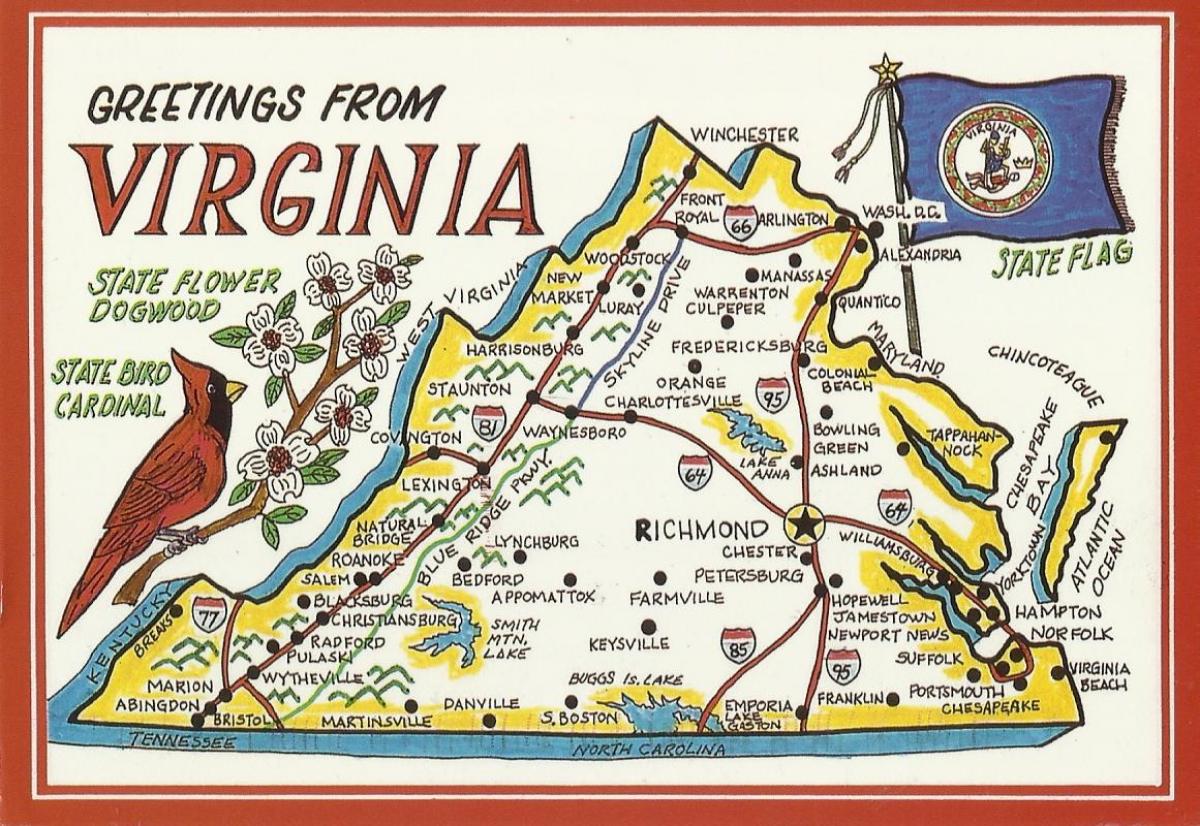
The Demographic Revolution in Virginia

The husband and I spent part of yesterday morning at the Executive Mansion in Richmond where a celebratory air reigned in the wake of last week's Virginia elections and where the governor said it was time to be bold and move Virginia forward with the passage of progressive legislation long blocked by Republican control of the General Assembly.  It was part of a mindset that embraces Virginia's demographic changes and a much more diverse population that is increasingly highly educated and is powering Virginia to new levels of wealth not seen since before the Civil War when Virginia ranked among the wealthiest states,  In sharp contrast to this embrace of change and diversity, nothing is more frightening to the Republican Party of Virginia and its base that educated and non-white voters - two groups in particular who find Donald Trump and today's GOP's agenda of division repulsive. Nowhere is this sharp contrast more pronounced than in Virginia's booming suburban areas where those new to the state or who fled rural areas of the state - causing a significant brain drain and driving up the average age of residents in rural regions - have settled.  A lengthy piece in the New York Times looks at the demographic revolution in Virginia that is also occurring in some other Southern states  and even Texas.   The take away is that until the Virginia GOP ceases to be a party of tacit white supremacists and right wing Christian zealots, ts future prospects in Virginia are bleak.  Here are article highlights:

Once the heart of the confederacy, Virginia is now the land of Indian grocery stores, Korean churches and Diwali festivals. The state population has boomed — up by 38 percent since 1990, with the biggest growth in densely settled suburban areas like South Riding. One in 10 people eligible to vote in the state were born outside the United States, up from one in 28 in 1990. It is also significantly less white. In 1990, the census tracts that make up Mr. Katkuri’s Senate district were home to about 35,000 people — 91 percent of them white. Today, its population of 225,000 is just 64 percent white.
“It’s a totally different world,” said Charles Poland, 85, a retired history professor whose family has lived in Loudoun County for four generations. His family farm is now dotted with subdivisions filled with four and five-bedroom homes that sell for $750,000. The family legacy is a road named Poland. “If my parents came back today, they wouldn’t recognize the place. The changes came like a tidal wave.”
It’s not just Virginia. From Atlanta to Houston, this pattern is repeating itself — a new kind of suburbanization that is sweeping through politics. The densely populated inner ring suburbs are turning blue, while the mostly white exurban outer ring is redder than ever. Elections are won and lost along that suburban line, and in some places — like Atlanta, Denver, and Riverside County, Calif. — Democrats have begun to breach Republicans’ firewalls.
Democrats took control of the House and elevated Nancy Pelosi to speaker in 2018 because of victories in these fast-changing parts of America, and both parties are preparing for battle over these voters in 2020.
“What was interesting about 2018 was not just that Democrats succeeded in places where they didn’t in 2006, but also that they did as well in places that 10 years ago we never would have considered competitive,” said Amy Walter, national editor of The Cook Political Report, which provides analysis of elections and races.
In Virginia, the political pendulum has swung several times in the statehouse over the past decade. Large swaths of Virginia are still very conservative and Mr. Trump is popular in those places. In 2016, he won 93 of Virginia’s 133 counties, but it wasn’t enough to take the state.
The influx of immigrants and their U.S.-born children, the spread of high-density suburbia and the growth of higher education all tilt the field toward the Democrats. Still, that doesn’t give them a lock on the state, said Larry Sabato, director of the University of Virginia’s Center for Politics.
As Virginia’s population has grown it has also gotten wealthier. Households earning at least $150,000 have grown at three times the rate of the population over all.
But when he got his citizenship in March and started talking with his friends about whom to vote for in the first election of his life, he realized it had to be Democrats. Mr. Trump helped him decide.  “The way he speaks, you get the feeling that you are separate,” Mr. Katkuri said. “This is not what we signed up for in America.”
Of the 10 metro areas that had the largest South Asian growth, five are in the South, said Ms. Sridaran, who was born in Atlanta, after her father took a teaching job at Morehouse School of Medicine in the early 1980s.  One of them was Richmond.
In Centreville on Thursday — smack in the middle of House District 40, where the nonwhite population has jumped by more than fivefold since 1990, driven by immigrants from South Korea — several people said Mr. Trump was the reason they voted this week.
“People are just sick and appalled at this president,” said Dr. Charles Huh, a gastroenterologist, as he waited for takeout at the food court in Lotte Plaza Market, a Korean grocery store. “He’s the best thing Republicans have done for Democrats in a long time.”
“It is literally a new day in Virginia,” he said, a table of snacks set up in the back. He explained that demographic changes meant the people in the room were now in a position to help shape policy. “Come to Richmond,” he said. “This is really our chance.”
Thank goodness it is a new day in Virginia and, for the LGBT community the next legislative session will see passage of non-discrimination protections long blocked by Virginia Republicans.   A more welcoming state may, in fact further accelerate the demographic changes that have brought Virginia to this point. 

Wednesday, November 08, 2017

Trump and Trumpism Rejected in Virginia

I will admit that I am on a post election win high at the moment.  Last nigh's Democrat blow out victory has helped restore my faith in the decency of Americans - at least Virginians after a depressing year watching Donald Trump trash decency, wage war on LGBT citizens and strive to make the reprehensible normal.  Thankfully, Virginia rejected Trumpism and bitch slapped Republicans who for the most part have prostituted themselves to Trump and all but donned KKK robes as they sought to emulate his racism/hate and bigotry agenda.  A column in the Washington Post looks at the election aftermath.  It correctly notes that yesterday was a first step in taking America back from the forces of hate, division and bigotry.  Trump lost big time even though not on the ballot.  Here column are excerpts:
One year after President Trump rode a campaign of white nationalism into the White House, the American people struck back. Decisive Democratic wins for governor in New Jerseyand Virginia, not to mention the Democratic victories for lieutenant governor and attorney general, are a clear sign of the electorate’s disquiet with Trump’s low-road Twitter presidency.
But three other signs come to mind in the afterglow of Election Day 2017. Here are my quick thoughts.
Borrowing pages from Trump’s white-nationalist playbook will hurt you.
Nothing was more disturbing and degrading of the presidency than Trump’s both-sides nonsense in response to the ugly white supremacist rallies in Charlottesville, where Heather Heyer was allegedly killed by a racist who plowed his car into a crowd of counter-protesters. That Ed Gillespie adopted Trump’s rhetoric on monuments to Confederate generals and tried to scare voters with loose talk of Latino gangs clearly was a bridge too far the people of the commonwealth. 
No, Democrats don’t need to have a progressive, Bernie-anointed candidate to win.
Tom Perriello lost the primary to now-Governor-elect Ralph Northam, a centrist anchored in the establishment. Perriello was endorsed by Sen. Bernie Sanders, the Vermont independent who ran for president in the Democratic Party in 2016 but doesn’t see fit to join the party. But Perriello didn’t disappear. He worked hard on Northam’s behalf and not grudgingly. . . . Thus proving that a vanquished primary opponent who works hard to help his victor during the general election is essential.
The American people are not afraid of self-correction.
When the election was called for Northam, I was sitting in the same spot on my sofa where I watched in horror the dawn of Trump nation a year ago. The American people broke my heart that night. Everything that I knew to be true — hoped to be true — about my country was voided by voters who responded positively to the most racist, xenophobic and misogynistic campaign for president in recent memory. The fear his election unleashed was raw and palpable. But the ugliness and incompetence that followed Trump into the White House had an impact.
The Democratic gubernatorial victories in New Jersey and Virginia are the first sign of correction. Another is the successful run of Justin Fairfax, the newly-elected lieutenant governor of Virginia who will become only the second African American to win that seat. L. Douglas Wilder won the post in 1985. He went on to become the commonwealth’s and the nation’s first black governor. And yet another is the election of Danica Roem to the Virginia House of Delegates. She becomes the first openly transgender state legislator in the United States by defeating the homophobic and anti-transgender Republican incumbent Bob Marshall.
Zac Petkanas, former rapid response chief for Hillary Clinton’s presidential campaign, summed it up best in a tweet after the race was called for Northam. “The #resistance began on November 9, 2016,” he wrote. “The #revolution began tonight [Nov. 7].”
Onward to taking our country back from the marauding forces of division and hate in 2018. This is not over.


Friday, December 16, 2016

Scott Rigell: It’s Clear Russia Influenced 2016 Election


I will be the first to admit that I never have liked GOP Congressman Scott Rigell, but as he has wound down his time in Congress, he seems to have finally gotten his head out of his ass in a number of ways and belatedly spoken the truth and stopped putting his political party ahead of the nation and the best interests of the residents of the Virginia 2nd Congressional District.  Perhaps knowing that he no longer had to worry about a primary challenge by white supremacists and Christofascists in the GOP base, Rigell has felt free to speak candidly.   His recent comments on the 2016 election and Der Fuhrer are most part directly on point.  One can only hope that newly elected Scott Taylor will act as Rigell has in the waning days of his term of office. Here are highlights on Rigell's remarks from Roll Call:
Retiring Virginia Rep. Scott Rigell, who made waves when he broke with the Republican Party over Donald Trump’s presidential nomination, said the president-elect's choice of Rex Tillerson for Secretary of State is “deeply flawed.”
In addition to his worries about Tillerson’s lack of diplomatic experience, Rigell told Hampton Roads TV station WAVY he is concerned about the Exxon Mobil CEO’s close ties to Russian President Vladimir Putin, and the role Russia may have played in the U.S. presidential election.
“It is clear to some degree they influenced our election,” Rigell said.
Additionally, Rigell hopes Trump takes seriously the implications of the hack, and heeds the intelligence agencies call for further investigation.
“I think it would actually heighten his presidency if he would lead and advance the cause of exactly what happened,” Rigell added. 
Rigell, who represents Virginia's 2nd District, was an outspoken opponent of Trump’s candidacy, and eventually endorsed Libertarian Gary Johnson over his party’s nominee.
At one point, Rigell called the real estate mogul “a bully unworthy of our nomination,” and asserted that a Trump presidency would be “reckless, embarrassing and ultimately dangerous.”
Months later, Rigell’s opinion hasn’t changed.  “I have always said there is not one character trait in him that I would want my son to emulate. Not one," Rigell told WAVY. 
“I think Donald Trump has deeply divided our country, and I cannot see him bringing us together,” Rigell said. “Do I hope that happens? Yes, I do because I am an American first, but for him to say, ‘We are going to make Mexico pay for it’ is a bizarre statement."
Rigell decided not to seek a fourth term in January, and will be replaced by Republican Scott Taylor.

I guess Rigell's conversion is a case of better late than never.  Scott Taylor needs to know that we will be watching him closely, especially when it comes to voting on anti-LGBT legislation.  Personally, I cannot fully trust Taylor after his endorsement of Trump. 

Friday, August 21, 2015

Bernie Sanders: GOP Opposition to Gay Marriage Part of Economic Con Game


I often lament that today's republican Party uses racism, homophobia, nativism, anti-immigrant bias, and other types of division to con voters into voting against their own financial and economic interest.  Stated another way, their bigotry towards others is used to dupe them into voting for GOP politicians who are raping their futures as they work for a new Gilded Age.  Now, in typical form, Bernie Sanders has shouted this truth out.  He has also slammed members of the mainstream media for their failure to look at serious issues and expose the toxicity of GOP policies for the average American.  Here are highlights of Sanders' call out via Towleroad:
Speaking after a campaign appearance in Iowa, Sanders said same-sex marriage is among issues Republicans have used to divide people to get them to vote against their own economic interests:

“I think the Republicans have done a brilliant job over the years — they’re very smart guys — in dividing people on a million different issues. They divide people on gay marriage. They divide people on abortion. They divide people on immigration. And what my job is, and it’s not just in blue states, believe me, we’re going to go to red states, we’re going to conservative states, is to bring working people together around an agenda that works for their kids and works for their parents. Raising the minimum wage to 15 bucks an hour, having a trade policy that creates jobs in America, not in China, making sure all our of kids can get a college education regardless of their income, fighting for pay equity for women workers. We have an agenda that I believe can bring people together, and when we do that, we’re going to win this election very easily I think.”

Sanders’ comments were part of an epic response to reporters who’ve continued to try to get him to attack Democratic frontrunner Hillary Clinton. In response to a question from a Wall Street Journal reporter about his differences with Clinton, Sanders said “the corporate media likes to talk about all kinds of issues except the most important issues”:

“Time after time, I’m being asked to criticize Hillary Clinton, that’s the sport that you guys like. The reason this campaign is doing well is because we’re talking about the issues that impact the American people. … The issue I want to be talking about is the collapse of the American middle class. You guys don’t to write about? Is that an important issue? The need for millions of decent-paying jobs, the obscenity of the kind of income and wealth inequality that we have today. The reason our campaign is doing well is because people are responding to those issues, so I’m not going to get into the game of sitting around attacking Hillary Clinton.”

In other words, the media’s endless game of gotcha — just like the GOP’s opposition to same-sex marriage — is nothing more than a distraction.

Saturday, February 25, 2012

The GOP, Religion and the Politics of Division


If one follows the GOP presidential nominee candidate clown car one thing you'll likely never hear is talk of unifying the country or working for a common purpose. Rather, it's all whining and snarling about those the Christianist/Tea Party controlled GOP base dislikes - blacks, gays, Hispanics, non-Christians, foreigners, etc. - and protecting the privileges and benefits of the top 1%. Woven throughout all of the negativity and division is the common thread of conservative/fundamentalist Christianity which focuses great attention of the fire and brimstone of the Old Testament but ignores the Gospel message almost entirely. And anyone who doesn't subscribe to this foul hate and fear based version of religion is labeled as "the enemy." Topping the enemy list, of course, is Barack Obama who is doubly curse for being part black and a non-Bible beater. An article in the Washington Post looks at the constant efforts to divide the populace that is a hallmark of today's GOP. Here are some highlights:

Last week, the Christianity police, in the persons of Rick Santorum and Franklin Graham, came forward to discredit the president’s religious beliefs. First, Santorum called President Obama’s theology “phony”; then, on “Morning Joe,” Graham refused to accept Obama into his Christian band of brothers: “He has said he’s a Christian, so I just have to assume that he is.”

With rhetoric like this, these Christian conservatives are playing an ancient game. They are using religion to separate the world into “us” and “them.” They are saying, “The president is not like us.”

The president’s Christian beliefs are hardly unusual. He was raised by a mother whom he has called “agnostic” and who today might be dubbed “spiritual but not religious.”

Religion has done much good in the world, but it becomes dangerous when the “us and them” worldview grows rigid — when “we” claim moral (or theological) superiority over others. No one should know this better than Santorum, for Roman Catholics have been among the most persecuted groups in America. Yet for Santorum, history has had no modulating effect.

One major theological disagreement between Obama and religious conservatives concerns salvation. Obama happens to be the kind of Christian who believes non-Christians, including his beloved mother, can go to heaven. . . . Most Americans are with Obama on this. According to a 2008 poll by the Pew Forum on Religion & Public Life, more than half of American Christians believe there are many paths to heaven. The data say it best: No matter what exclusivist doctrines pastors preach from the pulpit, Americans are more open-minded.

America was founded by people who hoped that by allowing religious diversity to flourish, they might discourage extremism from growing. Counter to the claims of so many Christian conservatives, the intent of the First Amendment is not to protect any particular brand of Christianity from government encroachments, but to allow all kinds of believers to practice freely.

“I hate polemical politics and polemical divinity,” a politician once said. “My religion is founded on the love of God and my neighbor; on the hope of pardon for my offenses; upon contrition . . . in the duty of doing no wrong, but all the good I can, to the creation of which I am but an infinitesimal part.” It is only unfortunate that these sentiments were those of John Adams — and that they are two centuries old.

As I have noted many times before, it is the Christianists and the far right who seek to destroy the Founding Fathers' design for religious freedom, not liberals, gays or non-Christians. Once again, it's those who claim to be most godly who are the biggest threat to freedom.

Sunday, December 11, 2011

The Flight From Organized Religion

With the Republican Party now basically a sectarian party controlled by the far right Christianists, it's hard to escape the constant invectives against gays, immigrants, non-whites, and non-Christians of those who purport to represent the face of Christianity. Yes, there are other who are Christian, but sadly, they seem to hid from view as they quietly do good works and avoid wearing religiosity on their sleeves. The result is that we have vile figures like Pat Robertson, Tony Perkins, Benedict XVI, Maggie Gallagher, Archbishop Dolan of New York, James Dobson who preach an endless message of contempt - if not outright hatred - of others seen increasingly as the face of religion in this country. And the fall out from it all? The fastest growing segment of the religious demographic is those who renounce any affiliation with organized religion. That's not to say these refugees from religion reject the concept of God or spirituality. They simply want nothing to do with the ugliness that is religion in America today. And I find myself feeling the lure of distancing myself from organized Christianity more with each passing day. So much of what is wrong with this country stems from the Christianists and their favored failed political and economic policies. Here are highlights from an op-ed in the New York Times that looks at the phenomenon:

THE holidays are upon us again . . . . the season affords an opportunity to reconnect with our religious heritage. For others, myself included, it’s a time to shake our heads over the sad state of our national conversation about God, and wish there were another way.

The discourse has been co-opted by the True Believers, on one hand, and Angry Atheists on the other. What about the rest of us? The rest of us, it turns out, constitute the nation’s fastest-growing religious demographic. We are the Nones, the roughly 12 percent of people who say they have no religious affiliation at all. The percentage is even higher among young people; at least a quarter are Nones.

Apparently, a growing number of Americans are running from organized religion, but by no means running from God. On average 93 percent of those surveyed say they believe in God or a higher power; this holds true for most Nones — just 7 percent of whom describe themselves as atheists, according to a survey by Trinity College.

Why the rise of the Nones? David Campbell and Robert Putnam, of the University of Notre Dame and the Harvard Kennedy School, respectively, think politics is to blame. Their idea is that we’ve mixed politics and religion so completely that many simply opt out of both; apparently they are reluctant to claim a religious affiliation because they don’t want the political one that comes along with it.

We are more religiously polarized than ever. In my secular, urban and urbane world, God is rarely spoken of, except in mocking, derisive tones. It is acceptable to cite the latest academic study on, say, happiness or, even better, whip out a brain scan, but God? He is for suckers, and Republicans.

All we see is an angry God. He is constantly judging and smiting, and so are his followers. No wonder so many Americans are enamored of the Dalai Lama. He laughs, often and well. Precious few of our religious leaders laugh. They shout.

What is the solution? The answer, I think, lies in the sort of entrepreneurial spirit that has long defined America, including religious America. We need a Steve Jobs of religion. Someone (or ones) who can invent not a new religion but, rather, a new way of being religious.

I imagine a religious space that celebrates doubt, encourages experimentation and allows one to utter the word God without embarrassment. A religious operating system for the Nones among us. And for all of us.


The Christianists, of course, want no doubt - because it threatens their house of cards belief system and their warped psyches that require the denunciation of others for self-satisfaction. The irony is that the would be protectors of Christianity and their boot licking political whores in the GOP (think Rick Perry and Michelle Bachmann) are slowly but surely killing the brand.

Tuesday, March 18, 2008

Obama Urges Americans to Help Heal Racial Divide

In the wake of controversial statements by his pastor and race baitng by Hillary Clinton's campaign, Barack Obama gave a lengthy speech today addressing his pastor's perhaps ill advised remarks, the issue of race in this country, and the politics of division which have been the hallmark of both the GOP's tactics over the last eight years as well as the hallmark of the Clinton campaign. Personally, I am sick to death of politics that deliberately pits rich versus poor - a former GOP colleague forward me an e-mail tody that shows how the McCain campaign is already going down this road - black versus white, immigrant versus long time residents, gay versus Christianists, and so on.


Based on Barack Obama's speech which can be found in full here (http://www.cnn.com/2008/POLITICS/03/18/obama.transcript/index.html) and his past statements I continue to believe that he is the best hope of moving beyond this posionous form of politics and actually moving the country forward for the betterment of all. Otherwise we will face a warmed over version of the Bush regime with McCain or the horrible partisan politics that marked Bill Clinton's tenure in the White House. Worse yet, the serious things that must be done to turn the nation around will not get accomplished. Here are a few highlights from the speech:


Of course, the answer to the slavery question was already embedded within our Constitution -- a Constitution that had at its very core the ideal of equal citizenship under the law; a Constitution that promised its people liberty, and justice, and a union that could be and should be perfected over time. And yet words on a parchment would not be enough to deliver slaves from bondage, or provide men and women of every color and creed their full rights and obligations as citizens of the United States.

What would be needed were Americans in successive generations who were willing to do their part -- through protests and struggle, on the streets and in the courts, through a civil war and civil disobedience and always at great risk -- to narrow that gap between the promise of our ideals and the reality of their time. This was one of the tasks we set forth at the beginning of this campaign -- to continue the long march of those who came before us, a march for a more just, more equal, more free, more caring and more prosperous America.


I am the son of a black man from Kenya and a white woman from Kansas. I was raised with the help of a white grandfather who survived a Depression to serve in Patton's Army during World War II and a white grandmother who worked on a bomber assembly line at Fort Leavenworth while he was overseas. I've gone to some of the best schools in America and lived in one of the world's poorest nations. I am married to a black American who carries within her the blood of slaves and slaveowners -- an inheritance we pass on to our two precious daughters.

I have brothers, sisters, nieces, nephews, uncles and cousins, of every race and every hue, scattered across three continents, and for as long as I live, I will never forget that in no other country on Earth is my story even possible. It's a story that hasn't made me the most conventional candidate. But it is a story that has seared into my genetic makeup the idea that this nation is more than the sum of its parts -- that out of many, we are truly one.


And yet, it has only been in the last couple of weeks that the discussion of race in this campaign has taken a particularly divisive turn. On one end of the spectrum, we've heard the implication that my candidacy is somehow an exercise in affirmative action, that it's based solely on the desire of wide-eyed liberals to purchase racial reconciliation on the cheap.

On the other end, we've heard my former pastor, Rev. Jeremiah Wright, use incendiary language to express views that have the potential not only to widen the racial divide, but views that denigrate both the greatness and the goodness of our nation -- that rightly offend white and black alike. I have already condemned, in unequivocal terms, the statements of Rev. Wright that have caused such controversy.


We can dismiss Rev. Wright as a crank or a demagogue, just as some have dismissed Geraldine Ferraro, in the aftermath of her recent statements, as harboring some deep-seated racial bias. But race is an issue that I believe this nation cannot afford to ignore right now. We would be making the same mistake that Rev. Wright made in his offending sermons about America -- to simplify and stereotype and amplify the negative to the point that it distorts reality.

The fact is that the comments that have been made and the issues that have surfaced over the last few weeks reflect the complexities of race in this country that we've never really worked through -- a part of our union that we have yet to perfect. And if we walk away now, if we simply retreat into our respective corners, we will never be able to come together and solve challenges like health care, or education, or the need to find good jobs for every American.

Anger over welfare and affirmative action helped forge the Reagan Coalition. Politicians routinely exploited fears of crime for their own electoral ends. Talk show hosts and conservative commentators built entire careers unmasking bogus claims of racism while dismissing legitimate discussions of racial injustice and inequality as mere political correctness or reverse racism. Just as black anger often proved counterproductive, so have these white resentments distracted attention from the real culprits of the middle-class squeeze -- a corporate culture rife with inside dealing, questionable accounting practices and short-term greed; a Washington dominated by lobbyists and special interests; economic policies that favor the few over the many.


This is where we are right now. It's a racial stalemate we've been stuck in for years. Contrary to the claims of some of my critics, black and white, I have never been so naive as to believe that we can get beyond our racial divisions in a single election cycle, or with a single candidacy -- particularly a candidacy as imperfect as my own. But I have asserted a firm conviction -- a conviction rooted in my faith in God and my faith in the American people -- that working together we can move beyond some of our old racial wounds, and that in fact we have no choice if we are to continue on the path of a more perfect union.

For the African-American community, that path means embracing the burdens of our past without becoming victims of our past. It means continuing to insist on a full measure of justice in every aspect of American life. But it also means binding our particular grievances -- for better health care, and better schools, and better jobs -- to the larger aspirations of all Americans, the white woman struggling to break the glass ceiling, the white man whose been laid off, the immigrant trying to feed his family.

In the white community, the path to a more perfect union means acknowledging that what ails the African-American community does not just exist in the minds of black people; that the legacy of discrimination -- and current incidents of discrimination, while less overt than in the past -- are real and must be addressed. Not just with words, but with deeds -- by investing in our schools and our communities; by enforcing our civil rights laws and ensuring fairness in our criminal justice system; by providing this generation with ladders of opportunity that were unavailable for previous generations.

It requires all Americans to realize that your dreams do not have to come at the expense of my dreams; that investing in the health, welfare and education of black and brown and white children will ultimately help all of America prosper.

Or, at this moment, in this election, we can come together and say, "Not this time." This time we want to talk about the crumbling schools that are stealing the future of black children and white children and Asian children and Hispanic children and Native American children. This time we want to reject the cynicism that tells us that these kids can't learn; that those kids who don't look like us are somebody else's problem. The children of America are not those kids, they are our kids, and we will not let them fall behind in a 21st Century economy. Not this time.

This time we want to talk about how the lines in the emergency room are filled with whites and blacks and Hispanics who do not have health care, who don't have the power on their own to overcome the special interests in Washington, but who can take them on if we do it together. This time we want to talk about the shuttered mills that once provided a decent life for men and women of every race, and the homes for sale that once belonged to Americans from every religion, every region, every walk of life.

This time we want to talk about the fact that the real problem is not that someone who doesn't look like you might take your job; it's that the corporation you work for will ship it overseas for nothing more than a profit. This time we want to talk about the men and women of every color and creed who serve together, and fight together, and bleed together under the same proud flag.


I would not be running for president if I didn't believe with all my heart that this is what the vast majority of Americans want for this country. This union may never be perfect, but generation after generation has shown that it can always be perfected. And today, whenever I find myself feeling doubtful or cynical about this possibility, what gives me the most hope is the next generation -- the young people whose attitudes and beliefs and openness to change have already made history in this election.

Monday, January 21, 2008

Rove Has Taught Hillary Well


Andrew Sullivan has a good column in the Times of London (http://www.timesonline.co.uk/tol/comment/columnists/andrew_sullivan/article3215287.ece) that focuses on the aspect of the Clinton campaign that I find disgusting and - if a decent GOP candidate is the nominee - which might cause me to vote for the GOP candidate rather than Hillary if she is the Democrat nominee. I am not alone in these feelings. I was at a party over the weekend and there were a number of people - the majority gay - who said they would be inclined to vote against Hillary because of her and Bill's sleazy tactics. I increasingly believe Hillary cares more about her own ambition than the good of the Democrat party or the country. We have had seven years of that mentality and we do NOT need four years more. Here are highlights from Andrew's column:


But Clinton deftly purloined it for her own purposes, pivoting a classic Karl Rove tactic against one of her opponents. Rove, you might remember, was chief political adviser to President George W Bush and the strategist in charge of his reelection campaign. Ever since the Clintons’ near-death experience in the Iowa vote, their campaign has been playing a very Rovian game. The use of the politics of fear is just the start. In fact classic Rovian tactics are now at the heart of the Clinton campaign.

First, play to your base. Obama continues to appeal beyond core Democrats to independents and even a surprising number of disenchanted Republicans. Clinton decided, in response, to craft her appeal directly to core Democrats: public sector employees, the elderly, working women, the urban middle class. She constantly reminds people that she remains a lightning rod for Republicans. She also retooled her message to focus on the economic concerns that are becoming paramount in the race.
Second, attack your opponent on his strong point. Obama’s biggest strength among Democrats is his early and clear opposition to the Iraq war. And so, following Rove’s golden rule, Bill Clinton dismissed Obama’s long opposition to the war as a “fairy tale”. Because in 2004 Obama had refrained from criticising Kerry’s pro-war vote, Clinton argued that Obama implicitly agreed with it. Because he had voted – like so many others – to continue funding the troops, Obama was no different than Hillary. It didn’t work. But it was a classic Rove try.

Third, wedge issues. She lost women to Obama in surprising numbers in Iowa. So how to heighten gender tensions to her advantage? Earlier in the campaign, she had put out a positive message of breaking the glass ceiling. But she also included blatant appeals to gender. When Obama and her other Democratic rival John Edwards both criticised her in her first bad debate performance, her surrogates put out word that they were “boys” “piling on” a female candidate. As she looked like losing in New Hampshire, she adopted the persona of the badgered woman, unfairly attacked, yet struggling through like so many others. The now-famous emotional incident worked. The Democratic gender gap – previously small – widened dramatically in her favour.
Then there was simple sleaze. The Clinton campaign kept reminding people that Obama had not been “vet-ted”. Her pollster brought up Obama’s cocaine use on national tele-vision. Her New Hampshire campaign chairman also raised the drug issue. Two staffers were caught sending out e-mails accusing Obama of being a closet Muslim. Last week a blizzard of e-mails appeared on Jewish lists accusing Obama of being fond of the notorious black antisemite Louis Farrakhan.
Finally, the real toxin: race. Their calculation was that simply by forcing Obama to become the “black candidate” they would neutralise his postracial appeal. They would polarise the base electorate into blacks and whites, make Obama look more like Jesse Jackson, and so pick up enough white and especially Hispanic votes to win.

The hardball tactics of Rove have defined American political life for a long time. The Clintons have now shown they have learnt from the master. The question for the Democrats is whether they want a candidate who can play the Rove game as cynically and as brutally as the Republicans. Or whether they want a new start and a new politics. That’s what is at stake now in the Democratic race. And one side has shown its true colours.