Showing posts with label Andrew Sullivan. Show all posts

Thursday, June 18, 2020

Is It Time to Claim Victory in the Gay Rights Struggle?


Since I came out in mid-life, the changes in the legal rights for LGBT Americans have been stunning.  When I first came out, in Virginia a same sex relationship could land one with a felony convictions, you could be thrown out of the military for being LGBT, same sex couples could not marry and you could be fired at will by bigoted employers - as I was.  In a piece in New York Magazine gay conservative (and former Republican) Andrew Sullivan looks at the changes, starting with this week's stunning U.S. Supreme Court ruling which granted employment non-discrimination protections to LGBT Americans nationwide. I believe that Sullivan's inclination to declare victory is premature for three reasons: (i) contrary to Sullivan's statement, public accommodation protections remain missing in the majority of states - in Virginia we will have them starting July 1st - (ii) there will be years of lawsuits against employers who ignore the new scope of Article VII of the Civil Rights Act of 1964, and (iii) Christofascists will continue to strive to use alleged religious belief as an excuse for ignoring the law. That said, the wins have been immense and many LGBT rights organizations will find the focus of their efforts much more circumscribed - already Equality Virginia seems largely focused on transgender rights.  Here are highlights from Sullivan's column:
The last major obstacle to civil equality for gay men, lesbians, bisexuals, and transgender people was toppled this week — by another Republican-appointed justice, Neil Gorsuch. (It will surely be one of the ironies of this period that gay equality in America has been judicially delivered by white cis straight men nominated by, respectively, Ronald Reagan and Donald J. Trump). Gorsuch’s reasoning was far more constrained than Anthony Kennedy’s in Obergfell — which guaranteed gays and lesbians the right to civil marriage — and was, in many ways, a punt. He used the “sex” discrimination aspect of the Civil Rights Act of 1964 to retroactively grandfather in gay men, lesbians, and trans people. 
I don’t buy Gorsuch’s stated logic for an instant, of course. Rather, the ruling is a way to give gay and transgender people practical protection from discrimination in all states, without creating a new, explicit standard. And it doesn’t even pass Gorsuch’s own standard for textualism.
Gorsuch relies on a very simple idea to counter that point: that “sex” in the 1964 Act meant discrimination on the basis of being male or female, and that because gay men are penalized for having relations with men, rather than women, lesbians with women rather than men, and transgender people because they may no longer be the sex they started out as, it’s all a form of sex discrimination. It makes sense from that semantic point of view — but it’s a stretch on the substance. It dodges the core question of civil rights specifically for gay and transgender people, by subsuming us under the rubric of an existing category, sex. And it does so by mere textual reading of a statute, invoking no grander constitutional principles.
Nonetheless, its impact is immediate and transformative. Every single goal the gay-rights movement set out to achieve in my lifetime has now been won. Gays can marry; we can serve our country openly with pride; we are categorically protected from discrimination in employment [except] and public accommodations in every state.
[T]he remaining business: a battle between religious freedom and gay and transgender equality.
With any luck, we’ll reach a deal in Washington, D.C., rather like that achieved in Utah, where, in a very Mormon compromise, key measures against discrimination against gays were balanced with strong protections for religious freedom. . . . . . if Evangelical Christians and conservative Catholics decide to die on the hill of firing gay people, they will experience a brutal defeat, and tarnish what credibility they still have. The Gospels are not about shunning sinners, or pharisaical puritanism. They are about the imperative to see in everyone the image of God.
But this comprehensive victory obviously presents the major institutions of the gay-rights movement with a dilemma: What do they exist for after this?
If current trends are any indication, these groups will simply merge into the broader intersectional left and become as concerned with, say, the rights of immigrants or racial minorities as they are with gay rights. In the political climate on the left at the moment, singling out gays as a separate category is increasingly impermissible.
None of this means that we live in a world where homophobia has ceased to exist, where discrimination is unknown, or where visceral fear of and disgust toward trans people does not endure. In fact, prejudice and discrimination against the unknown or different are part of human nature, and partly because of that, young trans people of color are very much at risk. So we can try to keep shifting the culture — and man, has it shifted — in order to lessen the prevalence of irrational prejudice. And we can ensure equality of opportunity and protections against discrimination in employment . . . . .
As Eleanor Roosevelt is believed to have said: “No one can make you feel inferior without your consent.”
One of the remarkable truths of gay history is how so many, under social and legal pressures exponentially greater than today, were able to withhold that consent. They were objectively victims, but subjectively free. It took real imagination, courage, and vision for these heroes and heroines of our past — and that past stretches for centuries before Stonewall — to live lives of authenticity and integrity. Now that the formal and legal obstacles to gay and transgender equality have been entirely removed, let’s follow their example, and forge a future that requires the consent and approval of no one but ourselves.

I like the last sentiment.  Part of being a self-accepting LGBT individual is gaining a mindset where you need no one else's approval for who you are.

Friday, March 20, 2020

Will Surviving a Plague End Trumpism?

No living native Americans have ever lived through an experience like the nation now faces. 9-11 was a national trauma, but its impacts were short term for most of the country save New York City first and foremost, and around the Pentagon and Shanksville, Pennsylvania, to a lesser extent.  The questions that some are asking are (i) will this change America's divided state, and (ii) will it end Trumpism and its focus on an "us versus them" mentality.   A piece in Politico looks at these questions as does a column in New York Magazine by Andrew Sullivan.  Here is a taste from the optimistic piece in Politico piece: 

[N]o matter how the coronavirus pandemic passes, or how quickly, there is likely in these strange housebound weeks a new political epoch being born.


Trumpism as a style is defined not just by boasting and bluster; his triumphalism depends on projecting certitude. The president early on acted as if he could indeed create reality by proclamation, when he assured the public that U.S. infections would soon be down to zero.
Only in recent days, as the possibility of widespread domestic disease mounts, has Trump acknowledged imprecision—the fragmentary nature of our understanding of how far the virus has spread, how effective efforts to blunt its impact will be, or when these efforts will be deemed sufficient.
The coronavirus pandemic does not remotely have the cataclysmic shock and violence of 9/11. For many people, however, the virus’ actual day-in, day-out impact will be more pervasive. 9-11 was followed by a period, which turned out to be short-lived, of national connection and goodwill. Trump, who has made mockery and castigation of opponents his signature, surely did not conjure fuzzy feelings from many quarters with his appeal at the White House on Wednesday that, “We are all in this together.”
Yet the pandemic has a logic that transcends politics and personal feeling. Never mind how one feels about Trump. Never mind how we feel about one another. The reality of a dangerous virus is that we are all in this together.


Andrew Sullivan's piece is lengthier and notes among other things that much of America's medical supplies come from China - the nation Trump is seeking to blame for his administrations failure to prepare for a pandemic.  It also looks at how the pandemic could either strengthen Trump - especially among his cult followers - or be his undoing.  It might also force Americans to reassess where American society had descended.  Which direction will prevail is yet to be seen.  Here are column highlights:

And this will change us. It must. All plagues change society and culture, reversing some trends while accelerating others, shifting consciousness far and wide, with consequences we won’t discover for years or decades. The one thing we know about epidemics is that at some point they will end. The one thing we don’t know is who we will be then.
I know that I was a different man at the end of the plague of AIDS than I was at the beginning, just as so many gay men and many others were. You come face-to-face with mortality and the randomness of fate, and you are changed. You have a choice: to submit to fear and go under, or to live with the virus and do what you can. And the living with it, while fighting it, is what changes you over time; it requires more than a little nerve and more than a little steel. Plague living dispenses with the unnecessary, lays bare whom you can trust and whom you can’t, and also reveals what matters. Plagues destroy so much — but through the devastation, they can also rebuild and renew. . . . . Like wars, plagues can make us see where we are, shake us into a new understanding of the world, reshape our priorities, and help us judge what really matters and what actually doesn’t. Testing kits matter. Twitter not so much. Politically, who knows? Much will depend on the skills of the politicians grasping this moment for their various ends. But a lot is at stake, and I suspect that those who think COVID-19 all but kills Donald Trump’s reelection prospects are being, as usual, too optimistic.
National crises, even when handled at this level of incompetence and deceit, can, over time, galvanize public support for a national leader. As Trump instinctually finds a way to identify the virus as “foreign,” he will draw on these lizard-brain impulses, and in a time of fear, offer the balm of certainty to his cult and beyond. It’s the final bonding: blind support for the leader even at the risk of your own sickness and death. Watching Fox News operate in real time in ways Orwell described so brilliantly in Nineteen Eighty-Four — compare “We had always been at war with Eastasia” with “I’ve felt that it was a pandemic long before it was called a pandemic” —  you’d be a fool not to see the potential for the Republican right to use this plague for whatever end they want. On the other hand, even further incompetence or failure on Trump’s part could finally, maybe, puncture the cult, and deliver the White House to Biden and the Congress to the Democrats. And the huge sums now being proposed by even the GOP to shore up the economy and the stock market at a time of massive debt, as well as the stark failures of our public-health planning, could make an activist government agenda much more politically palatable to Americans. “You never want a serious crisis to go to waste,” as Rahm Emanuel once put it. And if a public-health catastrophe doesn’t bring home the need for effective universal health care, what could? This virus is also an opportunity for the left to move away from its unpopular woke identity obsessions toward a case for structural economic change fitting for the scale of the epidemic. For the weeks and months ahead, we’ll be spending much, much more time at home, or communicating entirely virtually. There will abruptly be less work to do, and less money coming in, and marriages under the acute stress of unending cohabitation. We will retreat into our online worlds, where viruses only affect computers, and withdraw from our neighbors when we could do with coming together. Good will happen too. Surely it will. The silence in the streets portends something new. The other day, I realized I’d been texting a lot less and calling a lot more. I wanted to make sure my friends and family were okay, and I needed to see their faces and hear their voices to be reassured. As we withdraw from each other in the flesh, we may begin to appreciate better what we had until so recently: friendship and love made manifest by being together, simple gifts like a shared joint, a head resting on your shoulder, a hand squeezed, a toast raised. These weeks of confinement can be seen also, it seems to me, as weeks of a national retreat, a chance to reset and rethink our lives, to ponder their fragility. I learned one thing in my 20s and 30s in the AIDS epidemic: Living in a plague is just an intensified way of living. It merely unveils the radical uncertainty of life that is already here, and puts it into far sharper focus. The trick, as the great religions teach us, is counterintuitive: not to seize control, but to gain some balance and even serenity in absorbing what you can’t. . . . There may be moments in this great public silence when we learn and relearn this lesson.

Thursday, August 08, 2019

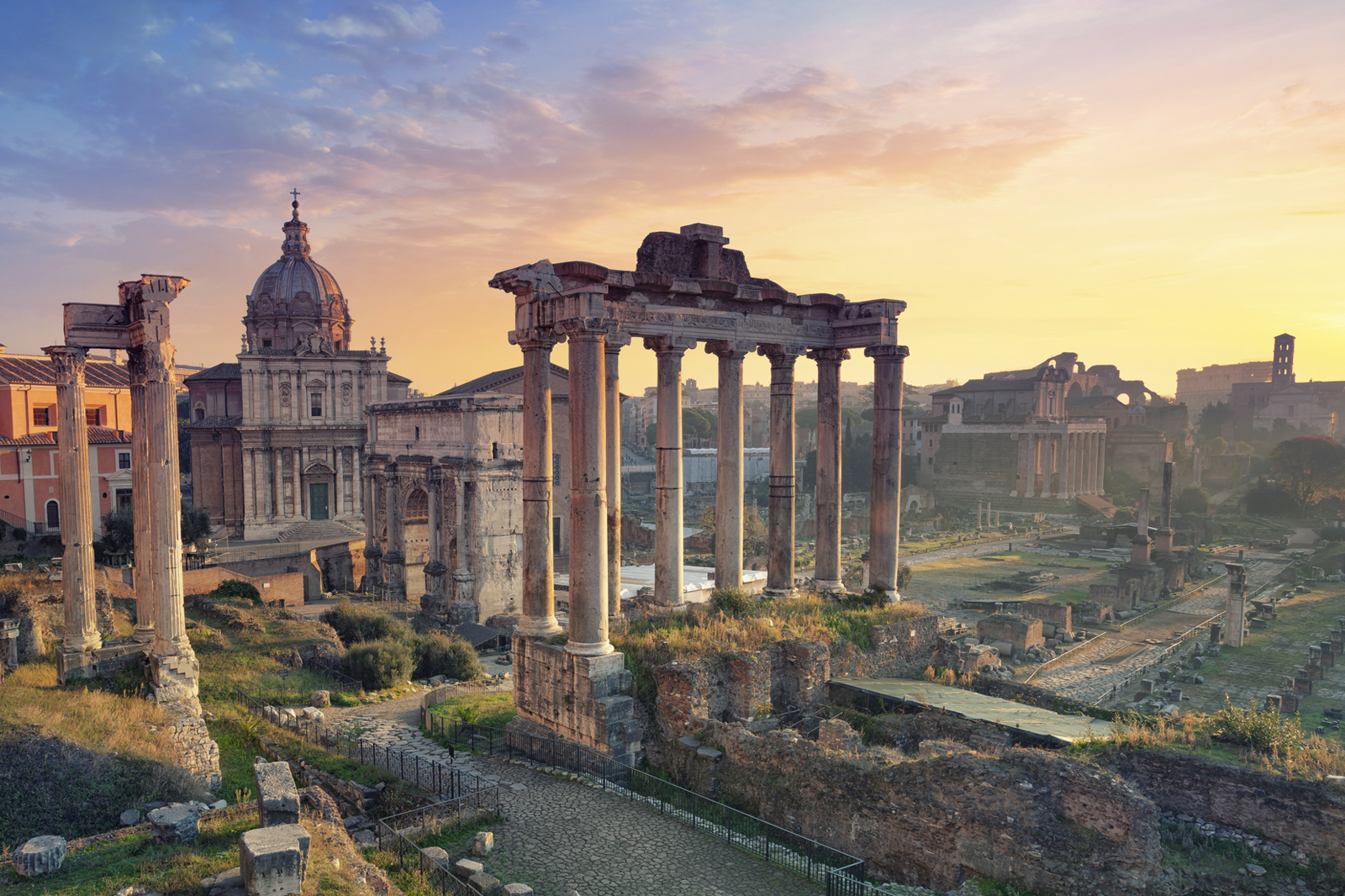
Is America Going the Way of the Roman Republic?


History - a subject increasing ignored in America's education system and of which far too many Americans are woefully ignorant - can teach us lessons.  Some will argue that what happened in the past has little relevance to today, yet over the centuries, human nature has not changed as much as some would like to think and megalomania, narcissism, and tribalism remain alive and well under the veneer of civility.  Moreover, many remain an easy target for demagoguery and toxic forms of populism that stir mankind's worse instincts.  Throw in propaganda such as what one sees on Fox News - which today incredibly blamed liberals for fanning hate and division - and the same dangers from the past lurk ready to undermine democratic government and, I would argue, common decency. In a very long piece in New York Magazine Andrew Sullivan looks at the parallels between America in 2019 and the Roman Republic of over two millennia ago and notes the danger signs that ought to disturb true American patriots who put the U.S. Constitution and the rule as a top priority.  Here are article excerpts:
[O]ne obvious and arguably apposite parallel exists: the Roman Republic, whose fate the Founding Fathers were extremely conscious of when they designed the U.S. Constitution. That tremendously successful republic began, like ours, by throwing off monarchy, and went on to last for the better part of 500 years. It practiced slavery as an integral and fast-growing part of its economy. It became embroiled in bitter and bloody civil wars, even as its territory kept expanding and its population took off. It won its own hot-and-cold war with its original nemesis, Carthage, bringing it into unexpected dominance over the entire Mediterranean as well as the whole Italian peninsula and Spain.
And the unprecedented wealth it acquired by essentially looting or taxing every city and territory it won and occupied soon created not just the first superpower but a superwealthy micro-elite — a one percent of its day — that used its money to control the political process and, over time, more to advance its own interests than the public good.
As the republic grew and grew in size and population and wealth, these elites generated intense and increasing resentment and hatred from the lower orders, and two deeply hostile factions eventually emerged, largely on class lines, to be exploited by canny and charismatic opportunists. Well, you get the point.
Of course, in so many ways, ancient Rome is profoundly different from the modern U.S. . . . But there is a reason the Founding Fathers thought it was worth deep study. They saw the destabilizing consequences of a slaveholding republic expanding its territory and becoming a vast, regional hegemon. And they were acutely aware of how, in its final century and a half, an astonishing republican success story unraveled into a profoundly polarized polity, increasingly beset by violence, shedding one established republican norm after another, its elites fighting among themselves in a zero-sum struggle for power. And they saw how the weakening of those norms and the inability to compromise and mounting inequalities slowly corroded republican institutions. And saw, too, with the benefit of hindsight, where that ultimately led: to strongman rule, a dictatorship.
So when, one wonders, will our Caesars finally arrive? Or has one already?
Drawing parallels between Rome’s fate and America’s is not new, of course — from Gore Vidal’s trenchant critique of American imperialism in the Cold War, to Patrick Buchanan’s A Republic, Not an Empire in the late ’90s, to Cullen Murphy’s Are We Rome? in the aughts. But the emergence of Trump adds a darker twist to the tale of imperial overreach and republican decline: that the process is accelerating, and we may be nearing a point of no return.
The story of Rome is as unlikely as America’s. Its republic emerged from a period of rule of consecutive kings, elected for life, beginning around 750 BCE, or so later Roman historians claimed. That period lasted a couple of centuries before the last king, a despised figure called Tarquinius Superbus, was overthrown. From then on, from 509 BCE to 49 BCE, the rule of one man was anathema and the title rex a political kiss of death. A Senate and other assemblies replaced the monarch, and power was more widely distributed.
The new offices of state, including the most powerful, the consuls, were all held by at least two people, with strict term limits of one year — and with each officeholder given a mutual veto, to guard against any monarchical pretensions. The power awarded to the consuls and the Senate — representing the landed elite and, increasingly, the business class — was balanced against that of the tribunes (there were, at first, two), representing the masses, who had their own assembly with real clout. A new office of “dictator” was created — a break-glass-in-case-of-emergency assignment to one man to assume total power if civil unrest threatened the republic as a whole. But the dictator had a maximum of six months in office, after which he had to step down.
I’m crudely simplifying a complex and evolving set of arrangements, but the core idea was the dispersal and balancing of power, so that every segment of Roman society, apart from slaves, could have some input, even as the Senate effectively, if not definitively, called the shots. (It was a republic and emphatically not a modern democracy.) What kept this contraption together, without a written constitution, was something the Romans came to call the mos maiorum, the “way of the elders.” Tradition, in other words, or what we would call long-standing democratic norms — adherence to precedent, give-and-take in political negotiations, respect for proper procedures, a willingness to accept half-measures rather than imposing zero-sum solutions, and, above all, loyalty to the republic over one’s own ambition. Whenever someone seemed to push against these norms, they were demonized as a wannabe king.
The fact that Rome was in a semi-permanent war with its neighbors — a “forever war” if ever there was one — gave military commanders greater and greater clout, and the loot they hauled from Africa to Asia overwhelmingly enriched the elites beyond anything they had previously experienced.
These were decades and centuries of sudden growth in wealth and territory, but also tension. The forever war required small landowners to leave their farms untended for extended periods to fight. Romans saw many of these small estates fall into decay or ruin and begin to be bought up by wealthier landowners and consolidated into vast estates.
And into this fraught moment came the first real populists, the Gracchus brothers, who rose — from within the elites, as Trump and many others have in the millennia since — in the 130s BCE.
The first, Tiberius, . . . he went straight to the People’s Assembly. Then he tried to get his fellow tribune thrown out of office to avoid his veto, and ran for an unprecedented second term as tribune, at which point several senators, out of procedural tools, organized a small mob, grabbed whatever came to hand, entered the vote-counting arena, and clubbed Tiberius and 300 of his supporters to death.
This kind of violence seems unthinkable in America today, though it was not so unusual in the decades before the Civil War, when senators were repeatedly at each other’s literal throats on the Senate floor. But look past the violence and the situation seems a bit more familiar: deepening polarization, mutual mistrust, abandonment of norms, and trashing of precedents. Soon, it was possible to speak, very roughly, of two Romes: the rich Establishment and the rising masses, the optimates and the populares, waging a zero-sum war through Roman political institutions.
Tiberius’s cause was taken up by his younger brother, Gaius, who ran for the tribunate, won, and proposed even more distribution of land, new colonies for landless citizens, a major investment in roads and infrastructure, the removal of some senators from juries, and a subsidized grain dole for any Roman in need. It was something for everyone but the elites . . . A bloodbath ensued, in which Gaius was slaughtered along with 3,000 of his followers, their corpses thrown into the Tiber.
In The Storm Before the Storm, Duncan quotes the great Roman historian Sallust, who, looking back, pulled a “both sides” argument — “The nobles began to abuse their position and the people their liberty.” . . .  A cycle of polarization had begun.
Within a decade, though, the underlying patterns deepened, and nearly all of Sulla’s reforms collapsed. What lasted instead was his model of indefinite dictatorship, with the power to make or repeal any law. He had established a precedent that would soon swallow Rome whole.
This was no longer a republican culture protected by an austere elite, but an increasingly authoritarian one, with great military leaders and a handful of wealthy men dominating the political scene through money, legions, and military success. The ancient institutions and customs still existed but were slowly losing relevance. Worrywarts in the Senate and intelligentsia became concerned about strongmen emerging within the system — “The political situation alarms me more each day,” wrote Cicero. Two in particular stood out: Pompey, a hugely successful celebrity general who, at the tender age of 35, was made consul; and an up-and-coming Julius Caesar, rampaging through Gaul and then Britain, besting Pompey’s imperial acquisitions, and generating wide popular enthusiasm.
These two celebrity commanders had so many soldiers, had conquered so much territory and won such widespread support, that the Senate had effectively become irrelevant. It could vote, and it did, but its votes no longer mattered.
The civil war that followed lasted four years, spanned several continents, resulted in Pompey’s murder in Egypt and gave Caesar a monopoly of power. He used it on a grandiloquent scale; his parades were beyond sumptuous and displayed the humiliation of his domestic as well as his foreign enemies, as the wider public thrilled to the spectacle. He was granted the position of dictator by the Senate to stabilize the war-torn polity, then reappointed as dictator in 48 BCE for a whole year, and by 44 BCE had been formally named dictator-for-life.
His assassination — the famous murder on the Ides of March — was accomplished not by a mob but by a group of senators, who feared another rex and worried that their own attenuated power — or the republic itself — would disappear entirely. But it was a last-ditch attempt to save any kind of checks and balances within the system. After years of further civil war, Caesar’s adopted nephew, Augustus, finally destroyed his enemies, shed any pretense of republican rule, and established himself as emperor. His reign would last 40 years. Only emperors succeeded him.
History doesn’t repeat itself, but it often rhymes . . . . The vast American middle class that stabilized liberal democracy at the height of the 20th century never existed in Rome. We have a welfare state that provides some measure of buffer against popular revolt and a written, formal Constitution far harder to flout brazenly than the unwritten mos maiorum of the Romans.
But still. It’s impossible to review the demise of the Roman Republic and not be struck by the parallel dynamics in America in 2019. We now live, as the Romans did, in an economy of massive wealth increasingly monopolized by the very rich, in which the whole notion of principled public service has been eclipsed by the pursuit of private wealth and reality-show fame. Cynicism about the system is endemic, as in Rome. The concept of public service has evaporated as swiftly as trust in government had collapsed. When the republican virtues of a Robert Mueller collided this year with the populist pathologies of Donald Trump, we saw how easily a culture that gave us Cicero could turn into a culture that gave us Caesar.
Class conflict — which, in America, has merged with a profound cultural clash — has split the country into two core interests: the largely white lower and middle classes in the middle of the country, roughly equivalent to Rome’s populares and susceptible to populist appeals by powerful men and women; and the multicultural coastal elites, whose wealth has soared as it has stagnated for the rest, and who pride themselves on their openness and meritocracy: the optimates. And just as in late-republican Rome, each side has begun not to complement but to delegitimize the other.
The battles in this Cold Civil War take place all the time on the front lines of the two forces: in states where fights over gerrymandering and vote suppression are waged; in swing states in presidential elections; in the courts, where the notion of impartial justice has been recast in the public mind as partisan-bloc voting; in Congress, where regular order is a distant memory, disputes go constantly to the brink, the government is regularly shut down, the entire country’s credit is threatened, and long-established rules designed for republican compromise, like the filibuster, are being junked as fast as any Roman mos maiorum.
And the American system has a vulnerability Rome didn’t. We have always had a one-man executive branch, a head of state, with exclusive and total command of the armed forces. There is no need for an office like Rome’s dictator for when a systemic crisis hits, because we have an existing commander-in-chief vested with emergency powers who can, at any time, invoke them.
So what happens when a populist celebrity leverages mass resentment of elites to deploy that power — as Marius and Sulla and Pompey and Caesar did — in ever more expansive, innovative, and authoritarian ways?
When you think of how the Founders conceived the presidency, the 21st-century version is close to unrecognizable. Their phobia about monarchy placed the presidency beneath the Congress in the pecking order, stripping him of pomp and majesty. . . . . Like Roman commanders slowly acquiring the trappings of gods, presidents have long since slipped the bounds of republican austerity into a world of elected monarchs, flying the world in a massive, airborne chariot, constantly photographed, and now commanding our attention every single day through Twitter.
No one in the American system at this level [i.e., Trump] has ever behaved like this before, crudely trampling on republican practices, scoffing at the rule of law, targeting individual citizens for calumny, openly demonizing his opponents, calling a free press treasonous, deploying deceit impulsively, skirting the boundaries of mental illness, bragging of sexual assault, delegitimizing his own government when it showed even a flicker of independence — and yet he almost instantly commanded the near-total loyalty of an entire political party, and of 40 percent of the country, and this loyalty has barely wavered.
If republicanism at its core is a suspicion of one-man rule, and that suspicion is the central animating principle of the American experiment in self-government, Trump has effectively suspended it for the past three years and normalized strongman politics in America. Nothing and no one in his administration matters except him, as he constantly reminds us. . . . . He muses constantly about extending his term of office indefinitely, just as those Roman populists did.
Does he mean it? It almost doesn’t matter. He’s testing those guardrails to see just how numb a public can become to grotesque violations of ethical or rhetorical norms, and he has found them exhilaratingly wanting. And he has an unerring instinct for where the weaknesses of our republican system lie.
Is recovery possible? The Roman lesson is that it is in the short term, but that recovery is fragile because norms are so much easier to break than to build, let alone rebuild, and that the longer republican norms are trashed, the weaker they subsequently become. And much depends, of course, on what comes immediately after, whether these compounding trends can be nipped or reversed before they entrench themselves.
In Rome, it took a long while, but there were periods of much quicker erosion, as charismatic figures established a space for authoritarianism that came to be permanent. And then, of course, a sudden and unexpected collapse. In America, the question of whether this history will repeat itself hangs ominously in the air. But that sound you hear in the distance is of future Caesars preparing to make their move.

Saturday, July 13, 2019

Pelosi: Please Stop Coddling Donald Trump

I like Andrew Sullivan's writing skills and applaud the fact that he finally left the GOP and has come to recognized the toxic force that party has become - he now needs to leave Catholicism, in my view - but in his latest column he seems too hard on Democrats and Nancy Pelosi in particular.  Yes, Pelosi has been cautious and has danced around impeachment out of fear of a reprise in 2020 of what Republicans suffered after their impeachment effort against Bill Clinton.  In the argument in favor of impeachment of Trump, the differences between Bill Clinton's lying about a personal sexual misdeed versus Trump's never ending lies and clear obstruction of justice are in totally different leagues.  Yet, a majority of American voters appear opposed to impeachment - something Pelosi must take into account like it or not and whether or not it is even a rational perspective. Plus, unless and until Democrats take control of the U.S. Senate, impeachment would ultimately go nowhere.  Indeed, Trump could be video taped raping a 13 year old girl (or boy, but that would more likely be the closeted Mike Pence) on the high altar of St. Peter's basilica, and today's Republicans would still not vote to impeach him,  Decency, morality and the rule of law long lost favor in today's GOP which worries only about the satiating the hatreds that motivate the party's racist and religious extremist base.  Of course, Democrats have other options which Sullivan lays out and, in the case of Trump's New York State tax returns, they ought to pursue vigorously. The following are highlights from Sullivan's latest column in New York Magazine:
I suspect many of us voted for the Democrats last fall because we wanted a serious check on President Trump’s intensifying authoritarianism. That includes many of us who don’t support the far left’s takeover of the Democrats, but who saw the urgency of an opposition with teeth, confronted as we are by a deranged, tyrannical bully in the White House. What would happen if the Mueller Report emerged with a Republican House still intact, we worried? How could we begin to investigate Trump’s tax returns, or his cronies’ corruption, or his foul pedophile friends, or his murky real estate money-laundering, if Paul Ryan, the Randian eunuch from Wisconsin, were still in charge?
It turns out, six months later, that on all these topics, the Democratic House majority didn’t matter much at all. Whenever a serious administration abuse of power seems to demand investigation, Speaker Pelosi springs almost instantly into inaction. There is nothing she won’t not do.
When, for example, a highly dubious decision years ago by Labor Secretary Alex Acosta — to give Jeffrey Epstein an incredibly lenient plea deal for the sexual abuse of 40 underage girls — blew back into the headlines, Pelosi instantly ruled out any notion of impeaching Acosta: “It’s up to the president, it’s his Cabinet. We have a great deal of work to do here for the good of the American people and we have to focus on that.”
Really, Madam Speaker, oversight of shady dealings by Cabinet officials is the work of the president now? And holding a corrupt administration to account is not “work … for the good of the American people”? This “distraction” from real “work” meme is, in fact, a Republican talking point.
The most epic moment of Pelosi’s oversight abdication was, of course, her response to the Mueller Report. She was completely out-foxed by Bill Barr’s shameless misdirection at first, and once his sleight of hand became obvious, she seemed to have no strategy to hold Trump to account in any way. She was presented with striking evidence that President Trump repeatedly abused the power of his office to obstruct justice — the charge that brought down Nixon, and one charge that forced even Bill Clinton into a Senate trial - and was all but invited by Mueller to move the ball forward through impeachment: “If we had confidence that the president clearly did not commit a crime, we would have said so.” Pelosi immediately, reflexively, punted.
Later this month, we will finally get testimony from Mueller. This week, the House Judiciary Committee has issued 12 new subpoenas for Trump officials, including Jared Kushner. This time, they tell us, they’re serious. These subpoenas come after almost all previous ones were rebuffed entirely by an unprecedented blanket assertion by the president that all oversight inquiries are of a partisan nature and should therefore be ignored. But last month the Democrats passed a resolution seeking court enforcement of their subpoena power. How long will this process take? Who knows?
Or take the issue of Trump’s tax returns. Judd Legum is aghast that it took the Democrats four months even to ask for them! When Trump (surprise!) refused to hand them over, Ways and Means chairman Richard Neal filed a lawsuit arguing that the reason he was doing so was not because he wanted to see if Trump had committed fraud or other financial crimes, but that he needed “to decide if legislative action is needed” on “the mandatory presidential audit program.” He believed the claim should be as modest as possible to help guarantee an eventual court victory. But “eventual” is the operative word here.
The goods are there though. So when Governor Andrew Cuomo signed a bill allowing Trump’s state tax returns to be examined directly by Neal, Neal refused, even though the data would be largely the same as the federal returns. He preferred to wait for the result of his own federal legal case — which could be months or years in coming! . . . It is an effective abandonment of a critical tool for exposing presidential corruption.
I know that aggressive oversight, especially impeachment hearings, is a politically fraught decision, full of risk. I know the polls suggest it splits the country and, by her own expert counting, divides the House Democrats as well. I know her party won the House in 2018 by focusing on health care, rather than Trump. I think that should be their focus next year as well. But fortune favors the brave. If she doesn’t act against a serious threat to the Constitution, voters will infer that the Democrats don’t actually believe there’s a threat. If she lets this president own the narrative, as he keeps doing, Democrats will end up following his story rather than their own.
And there is no essential conflict between holding impeachment hearings and making the case for your policies. It should be possible for a competent and gifted Speaker to do both.
The best gloss I can think of to explain Pelosi’s abdication is that she believes that it’s only a matter of time before Trump loses in 2020, so why risk alienating moderates who get nervous with the I-word now? Why impeach when the Senate will acquit? Why go to war now, when it might imperil electoral victory next year?
Here’s why. There is a strong possibility that Trump is going to win the next election. I know it’s early but the head-to-head polling against most of the Democratic candidates is very close — and that’s before the GOP has gotten to work on oppo research on those Democrats who aren’t well known. Incumbency in a strong economy is usually dispositive.
If Pelosi keeps playing it safe and Trump is reelected, it will set a precedent that a president can obstruct justice and be rewarded for it. He can avoid all serious congressional oversight and get away with it. The Congress will continue its journey as a withered limb in a Constitution that actually gives it pride of place, Article 1. And every time Trump gets away with another crime, or abuse of power, he is emboldened. Vindicated by re-election? God help us.
And what Trump now knows after six months of Democratic control of the House is that he is as free from congressional checks whether it is run by Democrats or Republicans. Pelosi has shown every future president that they can obstruct justice with impunity, refuse every subpoena with impunity, lie with impunity, and violate the separation of powers with impunity.
At some point, Madam Speaker, history may show you had one critical chance to stop this slide toward populist authoritarianism. And you decided you had better things to do.

Saturday, April 20, 2019

Trump Is More Dangerous Than Ever

Yet a former Republican, Andrew Sullivan, has let loose with a lengthy column in New York Magazine that lays out his revulsion towards Donald Trump and the Mussolini like regime that is being propped up by Republicans who have as little regard for the Constitution as the Vichy French showed for the French Republic as the Nazis invaded France.  Interestingly, Sullivan who formerly threw cold water on talk of impeachment now takes the position that patriotic Americans have a duty to demand the impeachment of Donald Trump. The obstacle, of course, will be the Vichy Republicans in the U.S. Senate who place party and retaining power at any cost above the good of the country, the rule of law, and basic morality. Among the worse offenders are Lindsey Graham and Mitch McConnell who, were their mothers still living, seemingly would sell them into prostitution simply so as to not upset the foul and toxic base of the GOP as they face reelection in 2020.  In his column, Sullivan looks at the obstruction of justice committed by Trump to date and the even worse acts that can be anticipated now that those who restrained him are gone.  Here are column highlights (it ends with the words "impeach Trump now):

Yes, it was worth waiting for. The merit of the Mueller report is that it gives us the whole narrative again, a chance to review the last three years with new perspective and fresh eyes, to get above the daily drizzle of short-attention-span disinformation and lies. First of all, it lays out a foreign government’s extraordinary attempt to corrupt our democratic system — in very close and damning detail.
The Trump campaign had no problem with foreign interference if it could help them, were eager and hopeful it would occur, publicly encouraged it … but never initiated this or followed through. The scale of Moscow’s operation is as remarkable as the lack of evidence that the Trump campaign was actively in on it.
Why the mutual love between Trump and Russia? The answer is over-determined. Trump is an authoritarian; he reveres thugs and bullies and murderers and mobsters; he believes in an economy based on fossil fuels; he has a thing, believe it or not, for cult-worshipping kleptocracies. From Trump’s point of view, what’s not to like? Trump prefers Kim Jong-un to democratic leaders; and Bolsonaro and Duterte over May or Merkel. Putin has said nice things about him; and the CIA worried Trump might be compromised. Of course Trump prefers Putin to his own intelligence services. The idea that Trump could only be pro-Putin because Putin has some dirt on him is silly.
But to my mind, the conspiracy question is far less important than what Mueller discovered on obstruction of justice. Mueller quite rightly notes that obstruction of justice can easily occur even without an underlying crime. And his report, quite simply, is devastating. To be fair to the conspiracy believers, the lies and obstruction and abuse of power would, in most cases, suggest that the president is guilty of something criminal — and was obviously trying to cover it up.
He [Trump] merely had to believe that the investigation would cloud his presidency and subject him to an authority beyond his control. This is something we now know his psyche cannot tolerate. In a contest between his own diseased ego and the rule of law, there has never been any contest.
So of course he lied when he didn’t have to. And of course he tried to kill an investigation that might have embarrassed him, even if it would not convict him of a crime. Mueller spells it all out in agonizing detail.
Once the investigation began, and Trump realized he could be vulnerable on obstruction of justice, he stepped up the obstruction! Of course he did. He instructed White House counsel Don McGahn to get Mueller fired; he engaged in character assassination of potential witnesses; he “launched public attacks on the investigation and individuals involved in it who could possess evidence adverse to [him], while in private, [he] engaged in a series of targeted efforts to control the investigation.” Mueller cites ten separate cases of obstruction. In six of them, he establishes an obstructive act; a link with an official proceeding; and a corrupt intent. Which is to say there is no doubt that this is what Trump did six times. In another case, Mueller found substantial evidence of obstruction.
And then there is Trump’s persistent claim that a president is effectively above the rule of law. This is attorney general William Barr’s belief — that a president has total executive control over the administration of justice and can direct it away from himself for any reason with complete impunity.
The only reason he didn’t get rid of Mueller was because a handful of his underlings — Priebus, McGahn, and Sessions among them — resisted him. And so this is not just about past obstruction; it is about the very high likelihood of future obstruction. It’s about recrafting the rule of law into one where one man controls everything and can do anything he pleases.
All of this is an unprecedented series of impeachable offenses. It is a textbook definition of “high crimes and misdemeanors.” It is the story of a president assaulting the rule of law, attempting to manipulate the justice system, dangling pardons to induce perjury, and reflexively putting his own personal interests — or simply ego — before any interest of the country as a whole. Mueller openly states that his own investigation was thwarted by the president to the extent that the “the justice system’s integrity [was] threatened.” When a president openly threatens the integrity of the justice system, and says he has unlimited power to do so in the future, he not only can be impeached, he must be impeached.
I understand the prudential concerns about this. I share them. I worry about pushing Trump into outright insanity. And I worry that the contemporary GOP is all too happy to create a presidency — as long as it’s theirs — beyond the rule of law.
What are the consequences of not impeaching?
They are, it seems to me, real and immediate. Trump now has a Justice Department run by a loyalist who believes in total executive supremacy, and who has just revealed himself as a man willing to lie and deceive and distort to please his master. Every official who might have restrained this president is gone. There are almost no heads of agencies, and no dissent in the Cabinet. The country is effectively being ruled by a monarch and his court.
Foreign policy has been given to family members. The Fed is being rigged to remove professionals and install loyal toadies. The judiciary is being filled with judges who defer to presidential power in every circumstance. We have a president who only last week told his new acting DHS secretary, Kevin McAleenan, to break the law if necessary to stop asylum seekers from entering the country, and that he’d have his back and pardon him if he got into trouble. In any other time, that alone would demand impeachment. We know now, however, that this is just one instance of a clear pattern of lawlessness.
We also know that [Trump] the president will put his personal ego above even an investigation of an assault by a foreign power against our democracy — a threat far graver than lying under oath about an affair or passively covering up a two-bit robbery (the cause of the last two impeachments). It is a declaration that this president will not stop that foreign meddling from happening again, and will be happy if it helps reelect him. This is, quite simply, intolerable.
We have a president who is an instinctual criminal and liar, who threatens the integrity of our justice system and of our democratic elections, who is incapable of understanding the rule of law, backed by an attorney general who just outright distorted the findings of the special counsel.
What more do we need to know? To refuse to use the one weapon the Founders gave us to remove such a character from office is more than cowardice. It is complicity.
This disgusting man is not just a cancer in the presidency. His presidency is a cancer in our Constitution and way of life. How long do we let this metastasize even further? How long before we take a stand? Mueller has given us the road map. He has done his duty. Now it’s our turn to do ours: “to support and defend the Constitution and laws of the United States of America against all enemies, foreign and domestic.”
There is no qualification in that oath of citizenship. Impeach Trump now.

Saturday, January 12, 2019

Welcome to Act III of America's Tragedy


An America tragedy began on November 8, 2016, when an unfit, malignant narcissist won roughly 70,000 more votes spread over three states despite losing the popular vote by 3 million votes.  The tragedy was made cemented when the Electoral College certified Trump's fluke win, ignoring the intent of the Founding Fathers that electors protect the nation from electing an individual who was demonstratively unfit for office and dangerous to national security.  Since that day, the nation has been gripped in an ongoing tragedy that is only intensifying as Vichy Republicans continue to support a would be despot much as the Vichy French collaborated with their Nazi overloads during WWII.  With a large part of the federal government shutdown due to a tyrannical temper tantrum, the nation is moving into Act III, with the growing possibility of a constitutional crisis exploding any day.  Many saw this disaster on the horizon from moment the result were clear on the morning of November 9, 2016.  The question now is whether constitutional democracy will survive.  Andrew Sullivan reviews the growing tragedy and threat to American democracy.  Here are excerpts:   
When is the moment we can say that Trump has clearly gone over the line in erasing democratic and constitutional restraints on his personal power?  I’d say declaring a national emergency when there isn’t one to fund a project he can’t get through Congress pretty obviously qualifies. Wouldn’t you?
He couldn’t manage to get his wall funded when his own party controlled the entire government. He even turned down a bipartisan offer to build a “wall” in return for a path to citizenship for Dreamers last year, because he wanted a reduction in legal immigration as well. He petulantly refuses to accept greater funding for border control and immigration enforcement if his symbolic wall isn’t part of the package. He says he intends to use the military to do what a civilian border force is constitutionally designed for. He even intends to seize private land in order to construct the Great Wall of America, using a military version of “eminent domain.”
His benchmark for when an emergency begins? When Nancy Pelosi refuses to budge. Which is proof that this “emergency” is pulled out of his giant, shapeless ass.
And for all this, he has shut down much of the federal government as leverage to get his way, jeopardizing public safety and health, disrupting the lives (and now paychecks) of millions.
The words he has used to justify all of this are an assault on liberal democratic norms and the rule of law. Emergency powers do exist in the event of a national security crisis — but, as David French has noted, they only apply in an actual national emergency that “may require” the use of the military and even then only for “already authorized” construction projects “essential” to “national defense.” These laws were designed to restrain the executive through the law, not to give him carte blanche to appropriate funds Congress has designated otherwise. The laws were never designed to enable [Trump] the president to do things the Congress had never authorized (the 2006 funds for border fencing have already been used up), and which the Congress actively, indeed strongly, opposes.
There is indeed a crisis at the border — caused by a big increase in the numbers of families with children from Central America applying for asylum. But they are not trying to evade a wall, and even if they were, you couldn’t build one fast enough to stop them. Regular economic migration from Mexico is way down. The overwhelming majority of drugs come through routine ports of entry, not the open border, or, like fentanyl, through the mail from China. Almost everything [Trump] the president has said about all of this is a lie . . . . He just wants his goddamn wall, and he will shut down the government and violate the Constitution if he cannot get it. I’m not against fortifying the southern border. I would have given the man his funds to start his beloved wall a long time ago, as part of a package that would also provide much more funding for immigration courts, detention facilities, more judges, and a path to citizenship for so many caught in the horrible DACA limbo. It’s also vital to see this in a broader context. The Executive branch has been getting more and more powerful and unilateral for a long time, through Bush’s torture program up to Obama’s unconstitutional moves with respect to DACA. But Obama resorted to that in part because tribalism had spiraled, especially on the right, and what should have been complicated but manageable compromises became impossible. Our system has broken down. The Congress is effectively not functioning, elections merely rearrange the tribal deadlock, and reasoned discourse has been tweeted out of existence in the wider public space. This democracy has no effective means to govern itself, except through bitter paralysis or executive fiat.
Now we’ve added an instinctive tyrant to this equation, and the last two years have been blinking bright red for constitutional corrosion and collapse.
It was bad enough when he was fighting his own party, his own Cabinet, and all of our allies. Now he’s lost the House and fired everyone who disagreed with him in his own Cabinet. He runs the country by impulsive, often contradictory diktat, and grips other tyrants— from MBS and Sisi to Putin and Bolsonaro — more closely to his chest. With the Mueller report pending, a docile new attorney general in the wings, and a majority on the Supreme Court inclined to give the executive the benefit of the doubt, we are about to enter Act III of this tragedy.
We all knew this was coming. Our liberal democracy is in abeyance. We now wait to see what the replacement will be. It could come sooner than we think.
Be very, very afraid.

Saturday, August 25, 2018

How Will The Trump/Pence Nightmare End


As Andrew Sullivan notes "There was a sense among some this week that we had at last reached that golden “inflection point” when all of Trump’s lies, scams, cons, and crimes finally sink in with Republicans, and the cult begins to crack."  A piece in The Atlantic notes a similar feeling but then cautions "This is an inflection point. And yet an equally well-informed friend insists, “I no longer believe in political inflection points and neither should you.”  How the national nightmare ends - and I include Mike Pence who once misused campaign funds in the past along lines that now has GOP Rep. Duncan Hunter under multiple federal indictment - is unclear.   Were we back in the Watergate era, when Republicans put the rule of law and the nation above continued self-enrichment and political power, the end game would be clear and the optimism of some that Trump is going to go down would be justified.  Now, most Republicans are little better than Trump and his base is truly the "basket of depolarables" that Hillary Clinton aptly called them even if her honesty was not politically correct.  Sullivan takes a darker view of where America might be headed given the hatred of others that motivates the Trump/Pence base and the lawlessness of Trump (Pence stands by and quietly applauds him).  Here's a portion of what Sullivan warns could happen:
I tend to think something else is happening: that we are entering the most dangerous phase of Donald Trump’s presidency. We always knew this would happen — that the rule of law and Trump would at some point be unable to coexist — but we had no idea how it would specifically play out. Now we see the lay of the land a little more clearly.
Trump has also revealed himself this week to regard Watergate hero John Dean as a “rat” for defending the rule of law under Nixon, a view that even Nixon never expressed in public. And he holds the views of a mob boss when it comes to the idea of plea bargains as a way of shutting down organized crime: “I know all about flipping. For 30, 40 years, I’ve been watching flippers. Everything is wonderful and then they get ten years in jail and they flip on whoever the next highest one is or as high as you can go … It’s called ‘flipping’ and it almost ought to be illegal.” Almost.
Who else, by the way, do you know has spent four decades of his life “watching” the intricacies of mob round-ups? Yes, I know Trump made his fortune in part through the mob. They were regulars at his Taj Mahal casino, which was found to have “willfully violated” the money-laundering rules of the Bank Secrecy Act, was the subject of four separate IRS investigations for “repeated and significant” deviations from money-laundering laws, and was forced to pay what was then an industry record for the largest money-laundering fine. The Russian mob was critical to buying his real estate in secret as well. This is a president who has surrounded himself with criminals, especially Russian criminals, for decades. But still: the man who took an oath to enforce the laws of the land is openly touting the logic of mobsters in their battle with law enforcement. Before this presidency, that would have been inconceivable.
A republic cannot be governed by a man who acts like a mafia boss, following mafia rules. The minute that happens, the corrosion begins. Every day such a crook holds the highest office in the land represents yet another crack in the law of the land. If this figure decides to wage an actual war on the rule of law, and retains the solid support of his own party, all bets are off. And it is a staggering fact that in the wake of this week’s verdicts and Trump’s responses, no Republican leaders have yet decisively called their president out, and no right-wing media outlet has sounded any kind of alarm. It has fallen to Jeff Sessions to issue a statement defending the DOJ.
 [T]his is the beginning, not the end. Everything we know about Trump would lead you to believe he will defend himself, like every other mafia boss, to the bitter end. His current strategy is to dismiss the recent convictions as nothing to do with him, and nothing to do with collusion with Russia. “NO COLLUSION.” And that may well work with his base — unless evidence does emerge of a knowing conspiracy with Russia, giving Mueller the goods without any serious doubt. Or unless we discover that Trump himself obviously used his constitutional powers to obstruct justice.
But if the evidence for one or both does come to light, that’s also when the implicit danger becomes explicit. At that point, Trump would have several options. He could fire Sessions and Rosenstein and others until he found someone who would fire Mueller. (And he has just signaled that that is exactly what he will do.) He could pardon everyone implicated by Mueller and declare the entire affair a travesty of justice.
But Trump could also launch a political campaign to purge the government of those he views as global elitists who have been trying to overturn the result of a democratic election since November 2016. He could perform, in other words, a mini-Erdogan, go to the country in 2020, and appeal for mass support against the “swamp.” He could double down on the populism. If impeached, he would encourage and foment what Rudy Giuliani called this week a “people’s revolt.”
He could also ratchet up the foul white-nationalist rhetoric he has been spouting for so long, seizing on events, such as the awful murder of Mollie Tibbetts, to generate anti-immigrant hysteria. Newt Gingrich, one of the most sinister figures in modern American politics, has openly mused about running a midterm campaign on fears of violence by brown illegal immigrants. Trump could tweet out scare stories about land reform in South Africa, raising classic fears of black violence against whites, in order to rally his base. He could openly allow Russia to interfere again with the elections, this time the midterms, and indeed his administration just blocked a vital new bill to provide support for election security.
And in all this, he will have a completely shameless state propaganda network [Fox News] to amplify the message, and legitimize it.
I would like to believe that Trump would fail, and be removed from office, or, better still, voted decisively out of it. That would actually strengthen our liberal democracy. But it’s impossible to view the tribalism now defining our culture and the despicable character of this president and find this conclusion inevitable. The good news this week is that a poll shows growing support for the Mueller investigation, and a Democratic wave this November could force even this putrefying version of what was once the GOP to reconsider its options.
As Salena Zito noted this week: “Right now the value of Trump to the Trump voter is he is all that stands between them and handing the keys to Washington back over to the people inside Washington. That’s it. He’s their only option. You’ve got to pick the insiders or him.”
But what if picking him over the insiders means picking autocracy over the rule of law? The next few months will tell us if enough Americans prefer a criminal president to a Democratic one. I’m genuinely afraid of what the answer may be.
Frighteningly, Sullivan's assessment is, to me, on point.  I have no faith in today's GOP or the hideous GOP base to opt for the rule of law and democracy. 

The piece in The Atlantic is less dark and cautionary and hopes for a better end.  But it too notes the current foul state of the GOP and its knuckle dragging base (for Fox News viewers, Mussolini was an Italian dictator aligned with Hitler who was ultimate hanged by his people):
A tyrant is unloved, and although the laws and institutions of the United States have proven a brake on Trump, his spirit remains tyrannical—that is, utterly self-absorbed and self-concerned, indifferent to the suffering of others, knowing no moral restraint. He expects fealty and gives none. Such people can exert power for a long time, by playing on the fear and cupidity, the gullibility and the hatreds of those around them. Ideological fervor can substitute for personal affection and attachment for a time, and so too can blind terror and sheer stupidity, but in the end, these fall away as well.
And thus their courtiers abandon even monumental tyrants like Mussolini—who at least had his mistress, Claretta Petacci, with him at his ignominious end. (Melania’s affections are considerably less certain.) The normal course of events is sudden, epic desertion, in which an all-powerful political figure who loomed over everything is suddenly left shrunken and pitiful, a wretched little figure in gaudy robes absurdly too big for him, a figure of ridicule as much as, and even more than, hatred.
This is going to happen to Trump at some point. Of the Republicans in Congress it may be said of most of them: Those he commands move only in command, nothing in love. For now, admittedly, there are those who still court his favor—Senator Lindsey Graham, for example, once the trusty vassal of Senator John McCain, the bravest of warriors and noblest of dukes, seems to have switched his allegiance from his dying lord to the swaggering upstart aged prince. But that is about ambition, not affection.
For the moment, the Republicans will not turn on Trump. They fear a peasant revolt, many of them; they still crave favors; they may think his castle impregnable, although less so if they believe what the polls tell them about some of its tottering walls. But if they suffer a medieval-style slaughter on Election Day, the remnants of the knights of the GOP will know a greater fear than that of being primaried. And at the moment when they no longer fear being swept away in 2020, when the economy may be in recession and Robert Mueller’s probe is complete with revelations whose ghastliness would delight the three witches of the Scottish play, they will suddenly turn on Trump. Act V of this play will also have a nonlinear finish.
And what of Trump himself? In this respect he will be like Macbeth. Where Nixon, who was a statesman, saw the inevitable and resigned, this president is more likely to go down spitting defiance.
And so it will likely be, as Americans gaze back and wonder how on earth this rare monster, now deposed, ended up as their president.
How do we insure a good end?  Make sure you and everyone you know is registered to vote and that you and all of them vote Democrat in November.  Only an electoral massacre will push today's Republicans to do what those of 1974 did with Nixon. 

Saturday, July 28, 2018

Donald Trump: Portrait of a Con Man


In his latest column, former Republican Andrew Sullivan has a hard hitting, but in my view very accurate portrait of Donald Trump for what he is - and has always been: a con man who things that laws apply to "little people" but not to him. Indeed, his entire real estate career has involved skirting the law wherever possible.  The pattern was learned from his father who had a business partner who was a front for Mafia interests.  Ethics and legality have never figured high on the Trump priority list.  The Donald merely took things to a whole new level.  His difficulty, especially in the White House is that the much more detail scrutiny is making it harder and harder to maintain the con, with the requisite number of lies mushrooming. With Michael Cohen's apparent intent to flip on Trump, they lies are moving into stratospheric levels.  Here are column highlights:

The leaked tape recording of Michael Cohen and Donald Trump discussing how to handle the payoff to silence yet another extracurricular paramour, Karen McDougal, is more important, it seems to me, than has been generally acknowledged.
It’s only a shade under three minutes long. But unlike the Billy Bush tape, Trump is not performing or bragging or trying to charm someone he doesn’t know that well. He’s at work, with an intimate, trusted wingman, every single guard down. It really feels like the actual Trump, the man behind the curtain. And this Trump is quite clearly in charge. He’s not some addled 70-something, delegating large swathes of responsibility for day-to-day operations to underlings. . . . He talks about how some issue will blow over: “I think this goes away quickly … in two weeks; it’s fine.” He then asks Cohen, “Can we use him anymore?” referring to an Evangelical pastor, and Cohen says absolutely.
Then they briefly discuss “the financing” for the National Enquirer’s capture and withholding of the McDougal story.
What this tiny glimpse into reality reveals is something quite simple. It’s not that it’s a shock that Trump has been lying about this incident from the very beginning. That has long been clear. But there’s something about listening to his voice acknowledging this in such a breezy, matter-of-fact tone that exposes the purity of the cynicism behind the lies. “We have no knowledge of any of this,” Trump spokesperson Hope Hicks, had, after all, originally told The Wall Street Journal when it broke the story days before the 2016 election. The idea that Trump had had an affair at all, let alone organized hush money to the National Enquirer, was “totally untrue.” And yet here, as the curtain is pulled back, we hear Trump himself figuring out how to finance its cover-up.
It’s a world-weary operator in sleaze and outright deception, dealing with an item of everyday business. The euphemisms — “info,” “financing,” “our friend David,” etc. — are those of people who know they’re doing something shady. He even talks of “using” a religious-right figure. It’s the tape of a con man, discussing the con with an underling in a kind of consigliere code. And this revelation is therefore dangerous. It demonstrates that Trump is, in fact, just another crooked pol — and does so in his own voice.
Con men usually know that a con has a life span, and not a long one. At some point, it will collapse because it is, in fact, bullshit. By then, the best con men have made the sale — think of “Trump University” — and moved on. They also know that keeping the suckers sealed off from other sources of contrary information is essential until the deal is done. You have to maintain a fiction relentlessly, dismiss or delegitimize external information that might get your marks to think differently, and constantly make the sale.
It has worked many times before. It’s at the root of his entire shady business career. His problem now, however, is that this is the biggest of all cons, if you’re playing at a presidential level, and is also the longest. It has to be sustainable for at least four years. And that’s an extremely long time to keep it alive.
This is why, it seems to me, Trump tweets so often and so aggressively. It’s his chief mechanism for keeping his dupes under his spell, for sustaining the narrative of the con while reality tugs at it. He’s making the sale every news cycle of every day because the alternative is the whole thing crashing to the ground. It’s also why he keeps holding rallies. You need that kind of mass crowd hysteria to sustain a con . . .
And it’s why he has to lie, and lie with greater and greater intensity and frequency.
And sure enough, the rate of Trump’s lies is accelerating, as the con ages. All six of the last six weeks rank in the top ten most dishonest of his presidency, as the indefatigable Daniel Dale has noted. Last Tuesday, Trump actually made the subtext text, in a speech to a Veterans of Foreign Wars national convention: “Just remember, what you are seeing and what you are reading is not what’s happening … It’s just a con man getting a little rattled, as his trade war is beginning to wreak havoc in the Midwest.
When you have brazenly declared that such wars are easy to win, and agriculture in the heartland is nonetheless reeling, and manufacturing is increasingly jittery about the cost of imported steel, what else are you going to do? Well, you can bribe the farmers with some $12 billion. Or ask companies and their workers to be patient. But some in the middle of the country will still start doubting — and his polling in three Midwest swing states that gave him the presidency is now slipping.
That VFW appeal — and his visit to Illinois and Dubuque, Iowa, yesterday — is a sign, it seems to me, of a little desperation.
Desperate is insisting that what is clearly the word would — from the tape and the tone and the sentence structure of his Helsinki press conference — is actually the word wouldn’t. Desperate is responding to the Carter Page FISA documents by insisting that they say the opposite of what they actually say.
Desperate is banning a CNN reporter from a press conference because she had previously asked difficult reality-based questions about Michael Cohen — and then quibbling over the term ban.
Desperate is the attempt by some House Republicans to impeach Rod Rosenstein, a move that has not even been cheered by the far-right media, and that is swiftly deflating.
Desperate is doubling down on the “witch-hunt hoax,” while the chief money guy for the Trump Organization, Allen Weisselberg, gets a subpoena, and Michael Cohen’s lawyer says of his client, who knows far too much, “He has hit the reset button; he’s made a turn — to be on his own, speaking the truth.”
No, this is not an unraveling. But the con is definitely fraying badly. And it is not going to get easier to keep patching it up as time goes steadily by.
Sadly, Trump's marks - his base - are only too happy to continue to believe the con.  The only other option is to admit that they were played for fools and they happily assumed that role. Their egos make this an unacceptable option, at least for now.  But should Michael Cohen and Allen Weisselberg unload what they know, the con will fall apart to the point where denial is near impossible. May that day come very soon.