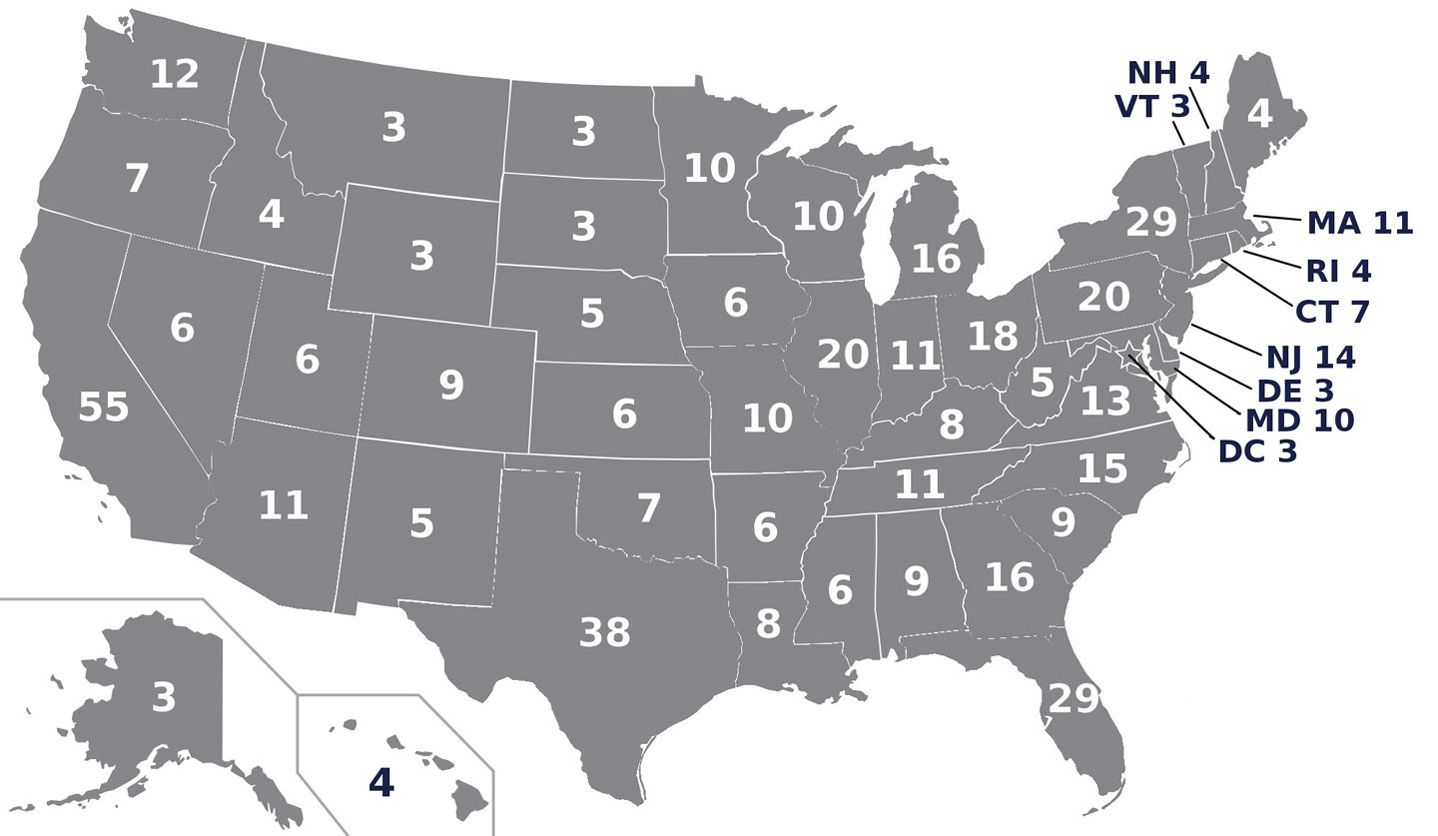
Some Donald Trump supporters are so invested in their racism and hatred of "liberals" that they will likely never open their eyes to the reality that Trump's tariff wars and tax cuts for the very wealthy and regulation cuts to big business are the real source of their worsening personal financial situations. Then there are evangelicals so obsessed with Trump's promises of special rights that place them above the law and grant them a license to discriminate that they seem unable to grasp the financial ruin Trump has ushered in for them. Now, however, the covid-19 pandemic and the related economic collapse may wake some of them up, especially in hard hit rust belt states that collectively gave Trump a 70,000 vote margin and an Electoral College victory. A piece in Politico looks at Trump's adverse current situation in these same rust belt states and how November will be a referendum on Trump's policies and failures to handle the pandemic crisis. Here are highlights:
The Industrial Midwest was always going to be a battleground in November.
The region is now becoming a new frontline for Americans’ lives and livelihoods as coronavirus hotspots proliferate and jobless rates spiral. The confluence of a ferocious pandemic, deepening economic turmoil and rising political tensions is more pronounced here than anywhere else in the country. And it sets the stage for a combustible campaign season that is testingPresidentDonald Trump’s efforts to move on and insulate himself from the crisis—and Joe Biden’s ability to blame him for the fallout.
On Thursday, Trump ventured to a swing county in Pennsylvania, stopping off at a Lehigh Valley medical equipment distributor where he used an official speech to mock “Sleepy Joe,” chastise governors for moving too slowly to reopen and assail the news media as a “disaster” while touting American workers.
“I say it’s the ‘transition to greatness.’ The transition is the third quarter," Trump said. "The fourth quarter is going to do very well. And next year is going to be through the roof.”
The numbers and interviews, however, paint a much grimmer picture. The virus has moved from urban centers like Detroit and Chicago into suburbs and more sparsely populated counties, a trend seen from western Pennsylvania to Minnesota and Iowa. In Wisconsin, Michigan and Pennsylvania—Democrats’ so-called “Blue Wall”—19 counties report coronavirus cases doubling in less than 14 days. Trump won all but one of those counties, by an average of 65 percent.
Democrats are working to ensure that doesn’t happen again by casting his stewardship over the virus and economy as a betrayal.
“There are so many things Trump has done to attack the labor movement to undermine and betray workers,” Sen. Sherrod Brown (D-Ohio) told POLITICO. “And since the coronavirus, he’s done nothing to help the essential workers.”
The region has been devastated by job losses amid pandemic-induced economic shutdowns, in some cases far outpacing the national average in terms of the proportion of their workforces that have applied for unemployment benefits since mid-March.
In Michigan, more than 3 in 10 workers have sought aid in the past two months, according to a POLITICO analysis of Labor Department data. Layoffs and furloughs are also piling up in Pennsylvania, where more than one-fourth of the workforce — or 29.6 percent — has filed an unemployment claim.
The double shock of the virus and financial meltdown has further sharpened partisan divides in the states. Wisconsin and Michigan were home to the highest percentage of people saying their state governments were overreacting to the crisis, according to a survey conducted by researchers at Harvard, Northeastern and Rutgers Universities last month.
Overall, however, the public has remained solidly behind governors who are urging caution, giving them high marks for their performances while their assessments of Trump’s handling of the outbreak sag.
And private surveys conducted by both parties and described to POLITICO show concerns about the virus and health care running ahead of worries over the economy.
Personal protective equipment also remains a problem in many jurisdictions, health officials say, and there are fears of how rural areas with rising caseloads and fewer hospitals will manage future outbreaks, particularly in Michigan, where health officials are starting to see spikes in rural counties.
The economic fallout is expected to be even more long-lasting, casting a shadow over the presidential election. Biden has maintained polling leads over Trump in Wisconsin, Pennsylvania and Michigan, while public polling of Ohio has been scarce.
The emerging economic downturn has also further undermined [Trump's] the president’s promises of reviving American manufacturing, particularly the steel industry.
In some industries — construction and building trades, for example — workers are used to long breaks between jobs, and many have filed for unemployment in the past. But the abrupt nature of the country’s shutdown threw many out of work with little warning, leaving them without time to prepare.
Democrats maintain that the region’s long standing financial difficulties were already being exacerbated by the Trump administration in the three years before the coronavirus struck. They point to tariffs and renewable fuel-standard waivers that impacted corn farmers. Manufacturing, too, has taken big hits. Last year, Pennsylvania saw a drop of 5,700 factory positions, while Michigan was down 5,300 and Wisconsin lost 4,100 jobs.
In her conversations with constituents, Sen. Tammy Baldwin (D-Wis.) says they now recognize Trump’s role in a string of earlier economic setbacks, which have been compounded by the virus. “They are very clear about what those missteps are and, frankly, they are angry," Baldwin said.
Trump aides and allies are primarily focused on changing the subject from the pandemic and ensuing economic devastation — highlighting Biden’s vulnerabilities in the region rather than defending the administration’s response.
Pennsylvania Democratic Gov. Tom Wolf last month vetoed a GOP-backed bill to reopen more businesses. He's issued stern warnings in recent days that county leaders who defy current state orders will lose out on funding.
“Even though we are seeing a positive trend in our Covid-19 cases, we know that we’re far from done with this,” said Benjamin Weston, director of medical services for the Milwaukee County Office of Emergency Management, who added that the county will continue dealing with the coronavirus and continued outbreaks and surges until a vaccine is, hopefully, available sometime next year.
Democrats need to relentlessly hammer Trump for his trade wars, war against unions and the working class and utter malfeasance in the federal government covid-19 response.