Showing posts with label defeating Republicans. Show all posts

Tuesday, November 05, 2019

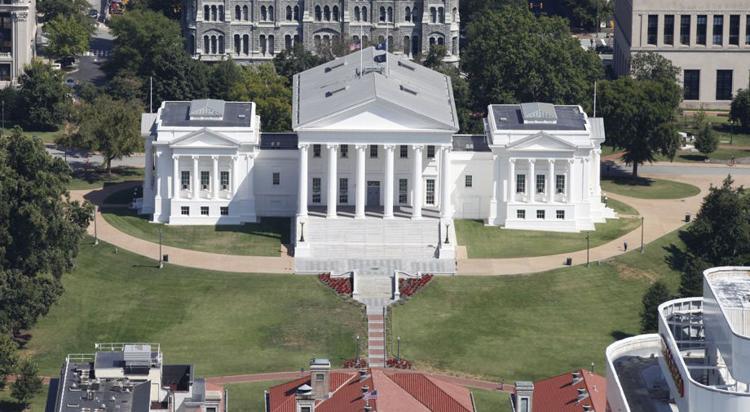
Democrats Take Control of Virginia General Assembly


In what will hopefully be a prelude to the 2020 federal elections, Democrats in Virginia have won control of both the Virginia Senate and the House of Delegates for the first time since 1993.  Both House Delegates candidates that the husband and I backed financially - Martha Mugler and Shelly Simonds - were victorious.  As Governor Ralph Northam - a good friend  - noted, this will usher in a much needed sea change in Virginia:
“Tonight, the ground has shifted in Virginia government. The voters have spoken, and they have elected landmark Democratic majorities in both the Senate and the House of Delegates. I am proud of my fellow Democrats and inspired by our shared victory.

“Since I took office two years ago, we have made historic progress as a Commonwealth. Tonight, Virginians made it clear they want us to continue building on that progress.
“They want us to defend the rights of women, LGBTQ Virginians, immigrant communities, and communities of color. They want us to increase access to a world-class education for every child, and make sure no one is forced to go bankrupt because they or a family member gets sick. They want us to invest in clean energy and take bold action to combat climate change. And they want us to finally pass commonsense gun safety legislation, so no one has to fear being hurt or killed while at school, at work, or at their place of worship.
No doubt there is much gnashing of teeth among white supremacist circles and among Christofascist zealots who for the last two decades have sought to inflict their hate and fear driven version of religion on all Virginians.  Tonight, a majority of Virginians said "no more." and sent those who coddle the gun lobby and haters of all stripes into retirement.   The Virginian Pilot reports in part as follows:
Democratic victories in two senate districts in suburban Richmond and one in Loudoun County gave them a 21 seat majority, while the GOP held narrow leads in two Virginia Beach districts targeted by by million-dollar-plus efforts to flip to blue.
A new 55-or-more-seat Democratic majority in the House came in part from gains in two House districts on the Peninsula, including the Newport News one where a tie vote and a drawing of a lot gave the GOP a 51-49 majority in 2017. Republicans held slight leads in two Beach seats Democrats had targeted with the final precincts still to count.
House Appropriations Committee chairman Chris Jones, R-Suffolk, [who lied extensively in his campaign ads and used racist dog whistling messaging] was defeated by Democrat Clinton Jenkins in a district federal judges drastically changed to undo the General Assembly’s illegal 2011 gerrymandering.
Senate Majority Leader Thomas K. Norment Jr., R-James City, was re-elected. But like Cox, he will lose most of his power to steer or block legislation with the new Democratic majority.
Throughout the election, Democrats sought to tie Republican candidates to President Donald Trump, warning them that a vote for Republicans would mean siding with the gun lobby and reducing access to affordable health care, including birth control.
On the Peninsula, Democrat Martha Mugler flipped a reconfigured Hampton and Poquoson 91st House district, after the retirement of one of the most loved Generaly Assembly members, Del. Gordon Helsel, R-Poquoson. Democrat Shelly Simonds defeated Del. David Yancey, R-Newport News. He was returned to Richmond after a tie vote in 2017 after he won a lot drawing. Democrat victories in the last GOP-held seat in Fairfax county, and a victory in the Frederickburg suburbs secured House majority.
Democrats held on to the 15 House seats they won in the 2017 blue wave election. . . . Turnout was higher than expected in the usually sleepy off-off year elections.
House Democrats out raised Republicans by nearly $10 million this election cycle, according to the Virginia Public Access project. On the Senate side, Democrats out raised Republicans by $5 million.
We celebrated at both the Mugler and Simonds victory parties.  It was a wonderful night to celebrate democracy and seeing the forces of hate, bigotry and obstruction go down to defeat.

Friday, June 22, 2018

Parkland Survivors Launch Voter Registration Tour


One of the ironies is that younger voters have the most to lose long term from the Republican Party's toxic reverse Robin Hood, racist, trash the environment agenda, yet historically they fail to register to vote and to vote against candidates that are most harmful to their futures.  A piece in NPR looks at how the student survivors of the Parkland High School massacre hope to change this pattern by getting younger citizens to not only register to vote, but to also remain energized and show up at the polls.  While not endorsing candidates, their anti-gun message by default will boost Democrats and threaten Republicans in the pocket of the NRA and gun manufacturers.  Here are article highlights:
Three months ago the students from South Florida established themselves as a potent force in the gun debate with the March For Our Lives rally. This summer they're hitting the road with a new mission: turn the wave of young activism they helped spark into an energized voting bloc for the November mid-term elections.
At the annual end-of-year peace march in Chicago, organized by St. Sabina Catholic Church, Grammy-winners Chance the Rapper and Jennifer Hudson, along with former U.S. Rep. Gabrielle Giffords, joined the Parkland survivors to launch a bus tour called Road to Change.
It's a voter mobilization effort aimed at getting young people registered and keeping them energized through the summer.
A nationwide tour will make 50-plus stops in more than 20 states, including Iowa, Texas, South Carolina and Connecticut. The will also be a Florida tour stopping in all 27 of the state's Congressional districts.
"The main purpose of this tour is not just to educate people on gun violence and what we can do to prevent gun violence, but is also to register more people to vote," says Matt Deitsch, chief strategist for March For Our Lives.
Andy Bernstein heads the national non-profit HeadCount which partners with recording artists like Jay-Z, Pearl Jam and the Dave Matthews Band to register voters at music concerts.
"I really think that the Parkland students have done something remarkable. They have made voter registration cool," Bernstein says.  [B]y in large, young voters do not tend to show up to the polls in mid-term elections.
According to the Census Bureau in the last midterm cycle in 2014, only 23 percent of 18 to 34-year-olds voted. When narrowed to 18 to 24, that fell to just under 16 percent.
There are signs the anti-gun violence movement is having an impact on potential young voters, according to Kei Kawashima-Ginsberg who is the Director of Center for Information and Research on Civic Learning and Engagement (CIRCLE) at Tufts University.  Crunching available voter registration numbers through June 13, she and fellow researchers discovered there is evidence of young registrants getting more engaged in the political process.
"What we did find was that in a lot of states the youth registration numbers actually exceeded the numbers from the November of 2016," Kawashima-Ginsberg says. "And that's really significant because young people mostly register to vote in September and October of the election year."
Harvard University poll released in April showed that 77 percent of 18 to 29-year-old likely voters said that gun control is an important issue for them in the 2018 elections.   The test, he says, is whether these young activists can exceed the voting intensity of second amendment right supporters.
"If you are a single issue voter and guns is the issue, what we've seen in the past is that it's the pro-second amendment, pro-gun voter that is almost guaranteed to show up at the polls."  Matt Deitsch, the March For Our Lives chief strategist, says he is up for the challenge.
"We're making voting something that is not just checking a box. It's literally you being a hero and you saving lives," Deitsch says. "That's why we have to do this."

Tuesday, February 27, 2018

Progressives Are Energized, Now They Must Turn Out to Vote


If nothing else, Donald Trump has energized progressives and decent people - which I am sorry, does not include evangelical Christians - appalled by Trump's corruption, vulgarity and endless dishonesty.  Add to that the Trump/Pence regime's attack on the rule of law and political and societal norms and there's plenty to be energized against.  The one problem, however, is that progressives have a bad track record in getting themselves to the polls on election day. This is especially true with younger voters who have the most to lose long term under GOP policies.  The same is true for minority voters facing a GOP which is increasingly openly racist and discriminatory.  The Virginia 2017 elections underscored that when progressives do mobilize, progressives can win big.  Danica Roem's defeat of the foul Bob Marshall by roughly 10 points is an exclamation point to this reality.  A piece in the New York Times looks at progressives' need to mobilize their turn out effort and to make sure young voters and minorities turn out on election day this coming November.  Indeed, they need to turn out in every election cycle and vote out Republicans be they on city councils and school boards or running for Congress.  Here are article highlights:
The Trump presidency [nightmare] has brought a political awakening for American progressives. It began even before he took office, with the organizing for the Women’s March. Then came the citizen activists who protested at airports and later helped save health insurance for millions of people. Now high school students are trying to transform the gun debate.
In a new article in the journal Democracy, two academic researchers tell the story of the energized progressive movement. The leaders are most often suburban women alarmed by President Trump’s assaults on decency and the rule of law. The movement is more bottom-up than top-down, more face-to-face than virtual, more Middle American than coastal. It does not always identify itself with the Democratic Party, even if it supports almost exclusively Democrats.
It spans “the broad ideological range from center to left” and (despite media coverage to the contrary, they argue) spends little time on Bernie-versus-Hillary fights. Above all, it is trying to elect progressives, including to oft-ignored local offices — and it’s now focused on the 2018 midterms.
That’s smart. Elections are precisely what progressives should be emphasizing. Protests can have an effect, as happened with Obamacare repeal and is happening on guns. But major progress on almost every issue — climate change, immigration, middle-class living standards and gun deaths — depends on electing people who want to make progress. Trump and the current leaders of Congress plainly do not.
Political movements have two main ways to win elections: persuasion and turnout. On persuasion, I think progressives’ best hope is an economic message that focuses the white working class on the working-class part of its identity, rather than the white part. But today I want to concentrate on turnout, because it has an even greater potential to change American politics.
Voter turnout is the biggest opportunity — and biggest challenge — for the new progressive movement. The problem is easy enough to describe: Progressives don’t vote as often as conservatives do.
Americans under age 30, for example, lean notably left. They are socially liberal, worried about climate change and in favor of higher taxes on the rich. But most of them don’t vote, especially outside of presidential elections. In the 2014 midterms — when Republicans took control of the Senate and held the House — only one of every six citizens between 18 and 29 voted. One in six! The same year, more than half of people aged 60 or older voted.
The pattern also holds among Latinos and Asian-Americans. They’re mostly liberal and vote at lower rates than whites.
The new progressive movement has made some early headway on turnout. In both the recent Virginia and Alabama elections, national groups ran huge get-of-the-vote operations, with vital help from the grass roots. The results were impressive. Turnout was surprisingly high, including among younger voters, and Democrats won some shocking upsets. The same has happened elsewhere in special elections for state legislature seats.
But lifting turnout in a one-off election, where activists can focus their energies, is easier than doing so in a nationwide midterm.
The crucial point is that the Trump presidency has created an opportunity to jump-start progress — an opportunity that doesn’t come along often. People who don’t normally pay much attention to politics are doing so. For some, it could become habit. So could voting.
The entire progressive movement — from the top of the Democratic Party to the new neighborhood groups — should be thinking about how to lift turnout. . . . . They should be spending time and money to register voters. They should be asking progressive entrepreneurs how the iPhone, Alexa, social media, podcasts and yet-to-be-built apps can inspire (and nag) people to vote. They should be ruthlessly evaluating what works and what does not.
The mechanics of voter turnout aren’t exciting. But the results can be: Fewer gun deaths. Less climate damage. Less inequality. Higher living standards. And a government that better reflects the views of all its citizens.
Bad things happen when good people fail to act.  Voting is easy and costs nothing.  Nowadays, voting is a way to actively confront and defeat evil.  Each of us needs to work from now through November to turn out progressive friends and family members and get the to the polls when it counts.