
Sunday, June 14, 2020


The Wedding That Started a Republican Civil War
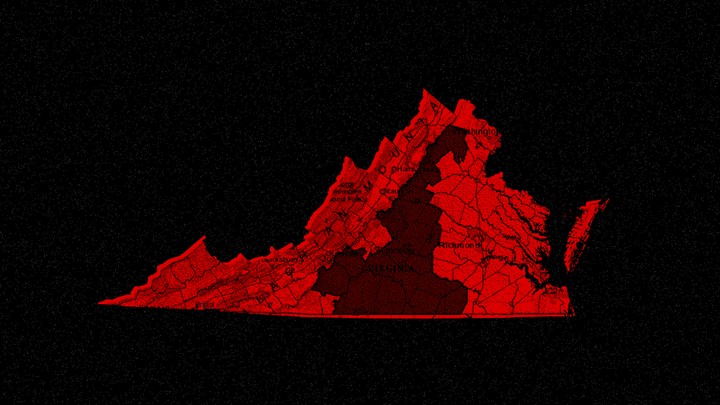 |
| Virginia's gerrymandered 5th Congressional District. |
Virginia is rapidly becoming a blue state despite the efforts of the majority of Republicans, particularly those from rural, economically moribund areas of the state. A minority of Republicans recognize that the either the Virginia GOP changes or the state will have a Democrat majority for the foreseeable future (Republicans last won statewide office in 2009). In a nod to change, 5th Congressional District congressman Denver Riggleman officiated at the wedding of a same sex, mixed race couple, Alex Pisciarino and Anthony “Rek” LeCounte. Little did Riggleman realize that this simple action would ignite a civil war within the Virginia GOP with the forces of reaction seeking Riggleman's expulsion from the party and primary defeat to replace Riggleman with a knuckle-dragging candidate with past ties to the religiously extreme Liberty University in Lynchburg, Virginia. As a piece in Politico reports, the forces of reaction won and Riggleman ousted - likely to the delight of Democrats. Here are highlights:
Rep. Denver Riggleman (R-Va.), who became a target of conservatives after officiating a same-sex wedding last year, was ousted Saturday by GOP voters in a drive-thru district convention.
Good’s victory came after a day-long convention held in the parking lot of a central Virginia church. He ran as a staunch social conservative, campaigning on a traditional view of marriage, his support to make English the official language of the U.S. and to end birthright citizenship.
A piece in The Atlantic looks at the effort behind Riggleman's ouster and the push to drag the Virginia GOP even further rightward and homophobic and racist. Here are excerpts:
Virginia Republicans have spent the past decade getting routed in elections. They lost three U.S. congressional seats and control of both chambers of the state legislature in 2018 [and 2019] alone. Yet today, with another tough election less than five months away, Republicans in Virginia’s Fifth District will gather in a church parking lot to decide whether to boot their incumbent congressman, Denver Riggleman, largely because he officiated a same-sex wedding last summer. The unconventional convention will earn the grooms, Alex Pisciarino and Anthony “Rek” LeCounte, a distinction in their first year of marriage that most people never achieve in a lifetime: They started a Republican civil war.
Virginia’s Fifth is a district where Bible Belt activists, suburban moderates, and college-town free-market types mix together in one massively gerrymandered area larger than New Jersey, stretching from the state’s southern border almost all the way to D.C. Riggleman, who owns a distillery outside Charlottesville, was one of the few rookie Virginia Republicans to win a competitive district amid the Democrats’ 2018 wave. But Riggleman’s success, and even an endorsement from President Donald Trump, may not save his job: The idiosyncrasies of Virginia election law mean there is a real risk he will be ousted by his own party. As Virginia turns blue, the question is whether the GOP can stay close enough to the center to hold competitive seats—or whether it will become more extreme as it shrinks.
“We don’t want a party so small that it just fits in the bedroom,” says Riggleman, an Air Force veteran with libertarian leanings on marijuana legalization, social issues, and small-business regulations. His opponent, Bob Good, who declined to speak with me, is a former athletics director at the evangelical Liberty University who has described himself in interviews as a “strong, bright-red,” “biblical,” and “constitutional conservative.” After Good was elected to the Campbell County Board of Supervisors in 2015, one of his first acts was signing onto a resolution declaring the U.S. Supreme Court “lawless” for legalizing same-sex marriage in Obergefell v. Hodges, comparing the decision to the Dred Scott case.
“We’ve played the ‘Who’s the bigger Christian?’ game in the Republican Party for a long time,” says Matt Hall, a conservative commentator who writes for Bearing Drift, a website focused on Virginia politics. “Bob comes from that minority—that small group of people that says you have to be this way or that way to be a Republican.” Riggleman’s liability, at least in this district, is that he is unwilling to conform to a culture-wars strategy. “Bob Good doesn’t get to define what’s Christian and what’s not Christian,” he told me. “You can say you’re a Christian conservative all day long. What I’m going to say is that I’m going to protect your right to be a Christian conservative. But I’m also going to protect your right to follow any religion that you want to.”
When Pisciarino and LeCounte moved to Charlottesville for graduate school in the summer of 2018, they wanted to get involved in local politics. Pisciarino, who is white, and LeCounte, who is black, were impressed by Riggleman’s record on LGBTQ issues. After Riggleman won, they figured it would be fun to ask him to officiate their wedding, a way of “celebrating the fact that we had a congressman we liked and wanted to elect,” LeCounte told me. . . . . Although they expected that local papers might write a story or two about the congressman’s involvement in their ceremony, LeCounte said, “We were not remotely expecting it to become the kind of story where we’re giving interviews about it almost a year later.”
The backlash was immediate. Melvin Adams, the district committee chair, wrote a post on the district’s website about “inclusiveness,” emphasizing that the Republican Party is committed to recognizing marriage “as the union of one man and one woman.” One Republican group after another in the Fifth District voted to censure or condemn Riggleman: in Cumberland County, then in Rappahannock. “The sanctity of marriage does not need to be redefined because it has been defined for thousands of years as one man and one woman. That’s a standard that I don’t think you can change, because that’s the standard that I believe the God of Creation established in the very first chapters of the Book of Genesis,” Travis Witt, a Bob Good supporter and pastor who serves on the Fifth District committee and the Republican Party of Virginia’s state central committee, told me.
Riggleman may have had an easier time securing his seat in a primary election; he has pitched his campaign as one of broad, conservative-coalition appeal. But the GOP’s Fifth District congressional candidate is about to be chosen by the party’s most ardent activists. Virginia election law allows districts to hold nominating conventions rather than primaries. Out of the roughly 3,500 people preregistered as delegates, some will have to drive several hours to cast their ballot on Saturday morning in the parking lot of Tree of Life Ministries in Lynchburg—Good’s home turf—remaining in their cars to prevent the spread of COVID-19. The whole process is set up to encourage participation from the people with the strongest views.
All of this may end up putting a relatively safe Republican seat in jeopardy. . . . . Choosing the more socially conservative candidate may end being an expensive form of purity: “It will cost the party a lot of money to defend a seat, and possibly lose a seat, that otherwise they’d walk into,” Davis said.
When Bob Good came to Charlottesville, Pisciarino and LeCounte attended one of his campaign events. They wanted to hear for themselves how their wedding had become part of his stump speech. Good moved through that section quickly, presumably because they were there, LeCounte said, but the experience was surreal: “It’s extremely bizarre to watch people argue about what they consider an abstract issue, which is our lives.” Pisciarino and LeCounte haven’t particularly enjoyed receiving calls from reporters to talk about the wedding that might unseat their friend and congressman. But they wanted “to take control of a narrative that was going to include us, one way or another,” LeCounte said. When the couple load up their blue sedan, with its Riggleman and UVA bumper stickers, and drive to Lynchburg today, they won’t just be voting for Riggleman. They’re voting for a different kind of Republican Party.Sadly, there will not be a different kind of Republican Party in Virginia. Only more and more electoral defeats will finally force change or see the much deserved death of today Virginia GOP..

Trump, Tulsa and Gratuitous Misogyny

Perhaps I cannot fully escape my Catholic upbringing that stressed that the difference between good and evil and the call to treat others as one would want to be treated. The Church turned out to be full of evil itself as demonstrated by the still ongoing sex abuse scandal that touches literally every part of the globe. Yet the concept of good and evil remains relevant as does the so-called Golden Rule. Donald Trump embodies evil and a shredding of the Golden Rule. Fanning hate, division, and never ending lies are the norm for Trump as is the denigration of others, especially non-whites and non-heterosexuals. What is most appalling about Trump and his supporters is that they know the are guilty of misogyny but simply do not care. Selfishness and in Trump's case, narcissism, are a defining feature as is a desire to trumpet a white supremacy message even as the majority of Americans are facing the reality of the nation's historic racism and the brutality many blacks have suffered at the hands of whites. Trump's decision to hold a MAGA rally in Tulsa underscores the evilness of Trump's agenda. While moving the rally date to the day after Juneteenth, Trump knows precisely the message he is sending by holding a rally in Tulsa, the site of one of the worse massacre of blacks in the 20th century. A column in the Washington Post looks at Trump's sick message to his followers. Here are highlights:
Trump has decided to push his first post-pandemic campaign rally to the day after Juneteenth. Known as Freedom Day, Juneteenth commemorates the date in 1865 when the last remaining enslaved blacks in Texas learned, two years late, that the Emancipation Proclamation had set them free. He was wise to listen to his African American friends and advisers on that score.
But he is still plowing ahead with a rally in Tulsa, the wrong city for a “Make America Great Again” event in this incendiary moment for our country. Tulsa was the site of one of the most vicious acts of racial violence in U.S. history. In 1921, an angry white mob attacked homes and businesses in a thriving community known as “Black Wall Street,” killing some 300 people and leaving thousands homeless. In another time, and perhaps with a different president, a trip to Tulsa could be an occasion for absolution or remembrance, a chance to talk courageously about healing America’s gaping racial wound.
But for this administration, the decision to hold a rally in that city constitutes an act of diabolical irony. A man who rode to the White House on a hot gust of racial grievance will be visiting a place where white resentment exploded into two days of epic terror, wiping one of history’s most prosperous black communities off the map.
All these years later, they are still trying to find where the bodies of black victims were buried in Tulsa, still trying to calculate the loss of property and income, still trying to determine who set the fires and flew the planes that dropped burning balls of turpentine onto black-owned buildings, still trying to piece together the full history because there was a concerted effort to erase that, too, from news archives and history books.
[T]he voters who allegedly want to make America great again already know Trump is their guy. He doesn’t need to send up a dog whistle to win their approval. But he does crave their roar of affirmation. Why else hold a rally in the midst of a pandemic?
Trump’s office has reportedly been crafting a speech on race. That’s a complicated exercise for a president whose default is to divide and demean.
If this president wants to visit Tulsa on the day following Juneteenth, let’s follow that city’s lead and make sure everyone in America knows about the Tulsa massacre and Juneteenth history.
This would also be a very fine pulse point to talk about the racial bitterness toward black financial success that led white people to burn a prosperous Oklahoma community to the ground. White violence against black aspiration occurred elsewhere: Rosewood, Fla., in 1923; Springfield, Ill., in 1908; and Elaine, Ark., in 1919. It happened after both world wars to returning black servicemen, whose military rank and training conflicted with America’s subordinate station for black men.
The birtherism movement that challenged the fact of Obama’s citizenship was fueled by those who had difficulty accepting a black family in the White House — a backlash that elevated the person who lives there today. This is not to say that racial resentment percolates in everyone who voted for Trump. We know that is not true. But we also know that a number of studies have shown it was a factor for a large percentage of voters. Trump’s appeal was not just about economic anxiety.
[L]et’s make sure that we accept the tragic message from Tulsa: Black success matters, too.
Saturday, June 13, 2020

Trump Regime Rolls Back LGBT Healthcare Protections on Anniversary of Pulse Massacre

The Trump/Pence regime is truly perverse- hateful might be a more accurate description - as it deliberately takes actions to send messages to its ugly base and simultaneously reminds those his base hates are constant targets. First, Trump announces a rally in Tulsa - the site of perhaps the most brutal attack on blacks post Civil War - to take place on Juneteenth, the date when blacks celebrate the of the announcement of their freedom in Texas at the end of the Civil War. Then yesterday, on the fourth anniversary of the Pulse night club massacre of LGBT individuals, the foul regime rolls out its new regulations that end LGBT protections in the health care realm and give a green light to homophobes that they are free to discriminate and/or refuse services to LGBT individuals, particularly transgender individuals. Trump apologists will no doubt whine that the timings were coincidences, but rest assured that Stephen Miller (a look alike for Hitler's Joseph Goebbels) and other Trump henchmen know exactly what they are doing. The two happenings are messages to white supremacists and homophobic Christofascists that Trump is their man. A piece in The Advocate looks at the gutting of LGBT healthcare protections (thanks to Democrats on July 1st, Virginia will have state laws banning such discrimination). Here are highlights:
The U.S. Department of Health and Human Services Friday announced changes to the Affordable Care Act that reverse protections for transgender people added by the Obama administration in December 2016. The previous changes to Section 1557 of the ACA had defined gender as “one’s internal sense of gender, which may be male, female, neither, or a combination of male and female.” Today’s announcement signaled a return to the original text of the law.
“Today’s rule attempts to gut the robust nondiscrimination protections under the Health Care Rights Law, Section 1557 of the Affordable Care Act (ACA),” Winnie Stachelberg, executive vice president for external affairs at the Center for American Progress, said in a written statement. “This move by the administration to undermine anti-discrimination protections in health care for LGBTQ people, women, people with limited English proficiency, people with disabilities, and others, including those who face multiple forms of discrimination, is unconscionable at any time.”
The new language also removes antidiscrimination protections for the groups of people Stachelberg noted, and allows for wide-ranging exemptions from providing services related to abortion if health care workers have faith-based objections.
Lynn Dawson, associate director of HIV policy at the Kaiser Family Foundation, told NPR that changes will be felt beyond basic health care issues. She says insurance companies might be able to raise premium prices for LGBTQ+ people, and trans patients might find limited remedies through the legal system.
"Because of limited access to litigation, I think that it's fair to state that the ramifications [of this rule] could be pretty significant," she lamented.
Several LGBTQ+ groups, other civil rights groups, and medical organizations issued statements condemning the administration's action, and the Human Rights Campaign plans to sue over it.
Today, the Human Rights Campaign is announcing plans to sue the Trump administration for exceeding their legal authority and attempting to remove basic health care protections from vulnerable communities including LGBTQ people. And, to add insult to injury, the administration finalized this rule on the anniversary of the Pulse shooting, where a gunman killed 49 people in an LGBTQ nightclub,” said HRC President Alphonso David. “LGBTQ people get sick. LGBTQ people need health care. LGBTQ people should not live in fear that they cannot get the care they need simply because of who they are. It is clear that this administration does not believe that LGBTQ people, or other marginalized communities, deserve equality under the law. But we have a reality check for them: we will not let this attack on our basic right to be free from discrimination in health care go unchallenged.
“It is particularly brazen of Secretary of Health and Human Services Alex Azar and the President to undermine health care access at a time when the nation is confronted by the coronavirus,” said Andy Marra, Executive Director of the Transgender Legal Defense & Education Fund. “Today’s published rule demonstrates this administration would rather promote discrimination in health care than deliver a comprehensive and evidence-based response to the pandemic. We look forward to challenging these reckless regulations alongside our partners to ensure trans protections remain intact.”In my view, Trump and many in his regime are pure evil.

Donald Trump: Last President of the Confederacy

As more and more states and cities begin to finally recognize Confederate monuments - most, like those erected in Richmond fifty or more years after the end of the Civil War - for what they were meant to be, a message to blacks that whites were once again in charge and that blacks were again subjugated, die hard racists are foaming at the mouth. These monuments all appeared as Southern states (sadly Virginia lead the way) formally ended Reconstruction and fully implemented the Jim Crow era. As a piece in History notes, states implemented :black codes:
Black codes were strict local and state laws that detailed when, where and how formerly enslaved people could work, and for how much compensation. The codes appeared throughout the South as a legal way to put black citizens into indentured servitude, to take voting rights away, to control where they lived and how they traveled and to seize children for labor purposes.
In addition, monuments to the Confederacy and the effort to romanticize the "Lost Cause" grew - Virginia has the most Confederate monuments of any Southern state. History also notes the timing of these memorials:
Most of these monuments did not go up immediately after the war’s end in 1865. During that time, commemorative markers of the Civil War tended to be memorials that mourned soldiers who had died . . . . “Eventually they started to build [Confederate] monuments,” he says. “The vast majority of them were built between the 1890s and 1950s, which matches up exactly with the era of Jim Crow segregation.” According to the Southern Poverty Law Center’s research, the biggest spike was between 1900 and the 1920s. In contrast to the earlier memorials that mourned dead soldiers, these monuments tended to glorify leaders of the Confederacy . . .
Given this history, blacks have good reason to find the monuments offensive. It also explains why they are so loved by white supremacists, including the current occupant of the White House who continues to speak out against their removal and to lash out against NASCAR's decision to ban confederate flags from its events. A a column in the Washington Post looks at Trump's racism and efforts to please white supremacists (and white Christofascists). Here are column highlights:
It should have happened 155 years ago, when Robert E. Lee surrendered to Ulysses S. Grant at Appomattox, but maybe — just maybe — the Civil War is finally coming to an end. And perhaps Donald Trump, not Jefferson Davis, will go down in history as the last president of the Confederacy.
Symbols like flags and monuments matter, because what they symbolize is our vision of ourselves as a nation: the heroes, battles, movements, sacrifices and ideals we honor. So when I see multiracial crowds toppling the statues of Confederate soldiers and politicians, when I see respected military leaders arguing that Army posts should no longer bear the names of Confederate generals, when I see NASCAR banning displays of the Confederate battle flag at its races — witnessing all of this, I let hope triumph over experience and allow myself to imagine that this may indeed be a transformational moment.
Like the Civil War itself, “Lost Cause” symbology is simply and entirely about white supremacy. It has nothing to do with “heritage” or “tradition” or any such gauzy nonsense. The heavily armed “liberate Michigan” mob that invaded the statehouse in Lansing, egged on by President Trump, had no historical reason to be waving the Confederate flag.
Lee’s surrender ended nothing, because the nation did not even begin to grapple with white supremacy. Reconstruction was strangled in its infancy; true racial reconciliation was never even attempted. The statue of Davis in Richmond, brought down by protesters Wednesday night, was not erected until 1907. Like almost all of the Lost Cause monuments, it was built during the revanchist era, when Southern whites were celebrating their reestablished dominance over African Americans via repressive Jim Crow laws and the terrorism of the Ku Klux Klan.
Many recall that the Confederate flag at the South Carolina statehouse was taken down in 2015 following the massacre of nine African American worshipers by a white supremacist at Emanuel A.M.E. Church in Charleston. Few realize that the racist flag had been installed at the statehouse not in 1861 but a century later, in 1961, when black South Carolinians like my parents were agitating for the right to vote.
The killing of Floyd has provoked a national moment of reckoning with police violence and white supremacy. But the position of the Trump administration is that systemic racism does not even exist — that our unexamined and unaddressed racial problems all come down to a few “bad apples” here and there.
Trump has used this moment to side with Lost Cause white supremacy. His all-caps tweets for “LAW & ORDER” sound like George Wallace when he was governor of Alabama; his demand for a militarized response to the protests reminds me of Bull Connor, the Birmingham commissioner of public safety who attacked nonviolent civil rights protesters with water hoses and vicious dogs.
When it was reported that high-ranking Army officials are open to stripping the names of Confederate generals from military posts such as Fort Bragg, Fort Benning and Fort Hood, Trump reacted instantly. He tweeted Wednesday that he “will not even consider the renaming of these Magnificent and Fabled Military Installations.”
He may be historically ignorant enough not to know that the generals in question were traitors as famous for the battles they lost as for any of their triumphs; that ultimate victory went to the Union, not the Confederacy; and that the whole point of the rebellion was to deny freedom to African Americans. Or he may know these facts but believe his political base doesn’t.
NASCAR banned the Confederate flag. If there is one sporting venue that Trump might think of as a safe space, it would be a NASCAR race — until now. Heck, I might even go watch a race when the pandemic ends.
Trump must be bewildered. Unsubtle appeals to racial animus (remember his “birther” lies) have always worked for him in the past, but now he seems to be flailing. If it turns out that the Lost Cause is finally, truly lost, then so is the president who made himself its champion.
Friday, June 12, 2020

GOP to Retain It's Anti-Gay, Anti-Woman, and Anti-Immigrant Party Platform

In yet another clear sign that the Republican Party remains the party of exclusion dominated by "Christian" extremists and white supremacists, the RNC has voted to retain the 2016 party platform in its entirety with no changes that might expand the the GOP's mythical and non-existent "big tent." The "social issues" portion of the platform was largely written by Tony Perkins of Family Research Counsel, a certified hate group that is vitriolically anti-gay and seeks a total end to abortion in all cases. On racial issues, Perkins has documented ties to white supremacy groups and retention of the 2016 platform - combined with Trump's objections to NASCAR ban of the confederate flag and changing the names of military bases bearing the names of Confederate generals - signals that the GOP will play the race card again in 2020. Much of the opposition to any streamlining and toning down of the party platform has come from Christofascists to whom Trump continues to pander. A piece Politico looks at the situation and a platform that hopefully harms down ballot candidates who may try to pretend they are moderates. Here are highlights:
A vote by the Republican National Committee to leave the party’s 2016 party platform unchanged ahead of the November election has infuriated grassroots activists — including moderates who wanted to streamline its message and social conservatives who sought added language on emerging hot-button topics.
The decision by the party’s executive panel Wednesday means the GOP will maintain positions in the 4-year-old policy blueprint — including opposition to same-sex marriage and a nod to gay conversion therapy — and decline to stake out new positions on topics such as police reform, gender identity and third-trimester abortions. Party officials and senior Trump campaign aides had previously discussed ways to pare down the 58-page document to a single note card or abbreviated list of principles, but the effort broke down after several conservative groups registered complaints with the White House.
“America has changed incredibly since 2016 and not updating our platform to reflect that is an unforced error. The RNC should reconsider this terrible decision,” said Terry Schilling, executive director of the American Principles Project and a proponent of updating the platform to oppose efforts to defund law enforcement or permit transgender minors to undergo gender reassignment treatments.
“We can’t go into 2020 with the same platform we had in 2016, and by limiting the ability to make changes you run the risk of having a stale platform. It will be tone deaf,” Schilling added.
At the other end of the GOP spectrum, Jerri Ann Henry, former executive director of Log Cabin Republicans, said the decision effectively upholds “one of the worst platforms in terms of LGBT issues.” Henry, who has spent years fighting for marriage equality within the Republican Party, was supportive of a condensed platform that “harkens back to the party’s big principles and not the minute detail of every microscopic policy.”
But when plans to shrink the bloated platform fell through, the only suitable alternative in her view was to proceed with platform deliberations, which typically occur in the week or two prior to the party’s nominating convention.
The widespread disappointment in the decision to leave the platform unchanged illuminates one of President Donald Trump’s major hurdles as he campaigns for reelection. The same traditional conservative groups that objected to condensing the platform in a way that would have eliminated controversial planks on abortion, parental rights and LGBT issues are now annoyed they can’t change the platform to strengthen its language on some of those same issues and others.
At the same time, positions contained in the 2016 platform on abortion, education, marriage, LGBT rights and family structure could further alienate suburban voters and women. Those demographics abandoned the GOP in droves during the 2018 midterms and the Trump campaign has invested significant resources to try to win them back.
Grassroots conservatives [think Christofascists] view the platform as a mechanism for accountability and worried that eliminating its explicit language on social issues would open the door for Republican candidates to be deliberately vague on key issues. Among their concerns was that mentions of abortion — which comes up 35 times in the 2016 version — would be reduced.
“The full platform is still essential for guiding policy, holding legislators accountable, and for distinguishing policy differences between Republicans and Democrats,” the Eagle Forum had written in its Monday letter to Trump and McDaniels. “We respectfully request that all efforts to streamline the overall platform, which has been forged over more than a century of committed grassroots activism, be resisted.”
With the Platform Committee scrapped, the only official business that is likely to take place next month in Charlotte, N.C. — the original location of the 2020 GOP convention — is the selection of Trump as the party’s nominee. [Trump's]The president’sacceptance speech is expected to take place at a separate facility in Jacksonville, Fla., though the Trump campaign and RNC were still finalizing those details this week.
Subscribe to:
Posts (Atom)