
I had such a crush on him.

One of the poisonous legacies of Donald Trump’s presidency has been to expand the boundaries of expressible prejudice. Through the explicit practice of White-identity politics, Trump has obviated the need for code words and dog whistles. Thus his strongest supporters during the Jan. 6 riot felt free to carry Confederate battle flags and wear “Camp Auschwitz” sweatshirts without fear of reproof from their political allies. Many in the crowd surely didn’t consider themselves racists, but they were perfectly willing to make common cause with racists. In social effect, it is a distinction without a difference.
The party has been swiftly repositioned as an instrument of white grievance. It refuses to condemn racists within its congressional ranks. Its main national legislative agenda seems to be the suppression of minority voting. Trumpism is defined by the belief that real Americans are beset by internal threats from migrants, Muslims, multiculturalists, Black Lives Matter activists, antifa militants and various thugs, gangbangers and whiners. . . . The whole Trump movement, and now most of the Republican Party, is premised on the social sanctification of pre-cognitive fears and disgust.
Yet the largest single group within the new GOP coalition is comprised of people who claim to be evangelical Christians. And the view of human beings implied by Trumpism is a direct negation of Christian teaching (as well as many other systems of belief).
Yet this agenda is failing to be a winning strategy with more and more Americans even in red states where urban areas are growing and trending Democrat. The GOP response has been to seek to disenfranchise as many minority and younger voters as possible in states where Republicans control the state legislatures through "voter ID" laws, restrictions on voting opportunities and blatant gerrymandering. To counter these anti-democratic efforts the House of Representatives has passed sweeping legislation that would thwart the GOP effort to disenfranchise Americans. A piece in the New York Times looks at the bill and the GOP effort to kill it in the Senate that we will soon witness. Here are highlights:
House Democrats pushed through a sweeping expansion of federal voting rights on Wednesday over unified Republican opposition, opening a new front in a raging national debate about elections aimed at countering G.O.P. attempts to clamp down on ballot access.
The bill, adopted 220 to 210 mostly along party lines, would constitute the most significant enhancement of federal voting protections since the 1960s if it became law. It aims to impose new national requirements weakening restrictive state voter ID laws, mandate automatic voter registration, expand early and mail-in voting, make it harder to purge voter rolls and restore voting rights to former felons — changes that studies suggest would increase voter participation, especially by racial minorities.
The vote was the latest bid by Democrats to beat back Republican efforts in statehouses across the country to enact new barriers to voting that would consolidate power for the Republican Party amid false claims of rampant election fraud . . . .
But the measure, which is supported by President Biden, appears to be doomed for now in the Senate, where Republican opposition would make it all but impossible to draw the 60 votes needed to advance. Democratic leaders have vowed to put it up for a vote anyway, and progressives were already plotting to use Republican obstruction of the bill to build their case for jettisoning the legislative filibuster in the months ahead.
“Everything is at stake. We must win this race, this fight,” Speaker Nancy Pelosi, Democrat of California, said as Democrats rallied on the Capitol steps before the vote. “At the same time as we are gathering here to honor our democracy, across the country over 200 bills are being put together, provisions are being put forward to suppress the vote.”
The 791-page bill, designated H.R. 1 by Democrats to reflect its importance to their agenda, would also eliminate partisan gerrymandering, impose new transparency on dark money used to finance campaigns, tighten government ethics standards and create a public financing option for congressional campaigns.
While Congress has worked for decades to expand access to the ballot, often with bipartisan support, the issue has become a sharply partisan one in recent years, as shifting demographics and political coalitions have led Republicans to conclude that they benefit from lower voter participation rates, particularly around cities.
“You can win on the basis of your ideas and the programs you put forward, which is what we choose to do,” said Representative John Sarbanes, Democrat of Maryland and a leading author of the bill. “Or you can try to win by suppressing the vote, drawing unfair districts across the country and using big money to spread disinformation.”
While they [Republicans] did not outright argue for making it harder to vote, they said that states — not the federal government — were best positioned to determine how to conduct their elections with integrity, and that the bill would lead to rampant fraud benefiting liberal candidates.
Study after study, including by Mr. Trump’s own Justice Department, has concluded no widespread fraud exists.
States under conservative control have succeeded in recent years in imposing new strictures that studies suggest disproportionately affect Black voters and those living in urban areas. Proponents argue that the steps are necessary to combat potential election fraud. But the effort has been turbocharged in some places since Mr. Trump’s loss in November, with states racing to strengthen voter ID laws, to make it harder to vote by mail or vote early, and to limit the role outside groups can play in helping Americans vote.
All told, state lawmakers have introduced more than 250 bills in 43 states that would tighten voting rules, according to the Brennan Center for Justice at New York University. The most prominent may be Georgia, where Republican leaders reeling from Democrats’ unexpected statewide victories have unabashedly sought to clamp down on ballot access by advancing sharp limits to voting by mail and early voting on Sundays, when many Black voters cast ballots after church services.
H.R. 1’s voting provisions were originally drafted by Representative John Lewis, the Georgia Democrat and civil rights icon who died last year.
If the bill were to become law, states would be required to automatically register eligible voters, hold at least 15 consecutive days of early voting for federal elections and provide drop boxes for absentee ballots like the ones Mr. Trump falsely claimed led to fraud. It would make it far easier to vote by mail and far harder to purge voters from the rolls.
The legislation also targets partisan gerrymandering of House seats, requiring states to use independent commissions to draw districts based on apolitical metrics rather than ones that would maximize the influence of one party over another. Both parties gerrymander, but the practice has benefited Republicans more over the past decade. With new districts set to be drawn this fall, Republicans are expected to make even greater gains.
The challenge for Democrats is moving any of the bills through a 50-50 Senate, where 10 Republicans would have to vote yes. Under Mr. Trump’s leadership, the Republican Party adopted increasingly hard-line tactics on voting and other government overhaul initiatives, rallying around his winner-take-all political style and the outright lies on which he based his attempt to overturn his election loss.

FBI Director Christopher Wray said on Tuesday that the Jan. 6 insurrection has been “an inspiration to a number of terrorist extremists” — foreign and domestic — and that the bureau is still eyeing whether any foreign actors might seek to infiltrate domestic groups to exploit vulnerabilities.
Wray also said he considers the siege “domestic terrorism” and is deploying intensive resources in every field office to pursue perpetrators.
Wray's public comments are his first since the assault on the Capitol, and they come nearly two months after thousands of Donald Trump supporters stormed the building — and hundreds breached the interior — in an effort to stop lawmakers from certifying the results of the 2020 election.
Wray declined to disclose the cause of death of Capitol Police officer Brian Sicknick, who died following the insurrection, and he evaded saying whether a cause of death had been determined. Authorities have been pursuing a suspect seen in riot footage spraying officers, including Sicknick, with a chemical agent. Wray said the matter is still under investigation.
He also said there is “no evidence” that antifa played any role in the Jan. 6 events, despite Trump allies increasingly using that claim as a talking point.
Wray has faced calls for weeks to address the attack, but he remained largely out of view while FBI investigators initiated a sweeping nationwide manhunt to track down and arrest the rioters. Of the more than 300 arrests, alleged offenses range from trespassing and obstructing Congress to conspiracy and assaulting police officers. At least five people, including Sicknick, died as a result of the insurrection.
The effort has also uncovered increasingly dark and well-coordinated plans by Trump-supporting extremist paramilitary groups, including the Proud Boys and the Oath Keepers, dozens of whom descended on Washington and participated in the siege.
Officials in charge of Capitol security have indicated that an FBI warning about the "war"-like posture of the groups gathering in Washington on Jan. 6 failed to reach senior levels and was not sufficiently vetted.
Wray said that the FBI’s Norfolk field office prepared a “situational” report of “raw, unverified, uncorroborated” information that had been culled from material posted online. That material was shared quickly with law enforcement partners. Capitol Police and Washington DC Metropolitan police indicated in earlier hearings that they didn’t view the material as particularly urgent because it was unconfirmed.
Wray said the info was communicated in multiple ways, including electronically and verbally, "as quickly as possible." He said it was disseminated "consistent with our normal process."
It is far past time that "militia" groups be considered terrorist organizations and steps be taken to shut them down and place their leadership behind bars. As for Republicans, they need to stop aiding and abetting domestic terrorists, including Der Trumpenfuhrer.

Donald Trump’s power grab may have failed, but it’s possible that democracy is now under even greater threat than it was before January 20. The transparent and ludicrous lies that Trump told, over and over, in his desperate campaign to overturn his loss to Joe Biden have now ossified into the official party line, with Republicans across the country attempting—in some cases successfully—to translate the MAGA propaganda into actual laws. The GOP has now put forth bills in 43 states that would dramatically restrict access to the ballot, according to a Brennan Center analysis; in places like Georgia, with Republican-controlled state governments, anti-democracy lawmakers are succeeding. And on Tuesday, the franchise will face perhaps its biggest test in decades when the conservative Supreme Court considers a pair of Arizona laws that could open the floodgates for even more racist voting restrictions.
Democrats, who have lost just one presidential popular vote since 1988 and represent far more Americans on Capitol Hill than their counterparts, are not powerless to protect democracy against attacks by a Republican party that has increasingly embraced Trumpian authoritarianism. They’ve introduced hundreds of their own bills in state legislatures seeking to expand the franchise, and are mobilizing behind a House bill that seeks to knock down barriers to the ballot. But the success or failure of these efforts will almost certainly depend on whether or not Democratic leaders, from the White House on down, fight for Americans’ rights with the same urgency that Trump and the Republicans are fighting to take them away. “Republicans have made opposing voting rights the central tenet of their party,” . . . .
Suppressing the votes of Black Americans and other minorities has long been a key part of the GOP’s election strategy. But their efforts have been even more audacious, bald-faced, and undemocratic in recent months: In swing states where Trump sought to overturn his narrow losses, Republican legislators are using his lies as a pretext for “election security” bills targeting mail-in voting and other measures that expand access to the ballot. In Wisconsin, the GOP has put forth a package that would force voters to show an ID, limit absentee balloting, and that could dampen early voting. Similar legislation is being considered in Pennsylvania. Democratic governors in those states mean the sweeping overhauls proposed by Republican-controlled legislatures probably won’t go far—for now, at least. But things are more concerning in Georgia, where the state House on Monday passed a massive, multi-pronged package of voting restrictions—including one measure scaling back Sunday voting, a direct attack on the “Souls to the Polls” initiative to increase Black turnout.
The GOP’s suppression efforts have always targeted minorities—particularly the Black voters who make up the core of the Democratic base. But under Trump, a man utterly incapable of subtlety, the party has all but done away with pretense. “What I think was really obvious and really upsetting about the 2020 election,” the Brennan Center’s Myrna Perez told NPR last week, “was that there was very little attempt to hide the racialized nature.”
The For the People Act, introduced by Maryland Democrat John Sarbanes, includes a number of anti-corruption reforms, and would expand access to the franchise and restore the Voting Rights Act. The White House has endorsed it, citing the “unprecedented assault on our democracy, a never before seen effort to ignore, undermine, and undo the will of the people, and a newly aggressive attack on voting rights taking place right now all across the country,” and the Democratically-controlled House is poised to pass it. But the bill will run into a buzzsaw in the Senate, where Mitch McConnell and the Republicans are almost certain to filibuster the measure.
Biden is reluctant to end that filibuster. But at a certain point, failing to do so means failing to reckon with the the severity of the threat to democracy—and the particular peril the GOP’s attacks pose to the rights of Black Americans and other minorities. “The argument that preserving the filibuster is necessary because it’s an important tool in our Democracy falls apart when it’s clearer with every passing day that we won’t have a Democracy without Congress passing voting rights legislation,” the former Obama aide David Plouffe remarked Monday. Republicans are mounting a concerted, relentless attack on democracy. To defend against it, Democrats’ response must be proportional. And that means confronting the reality that Trump leaving office didn’t extinguish his Big Lie, but made it more powerful.
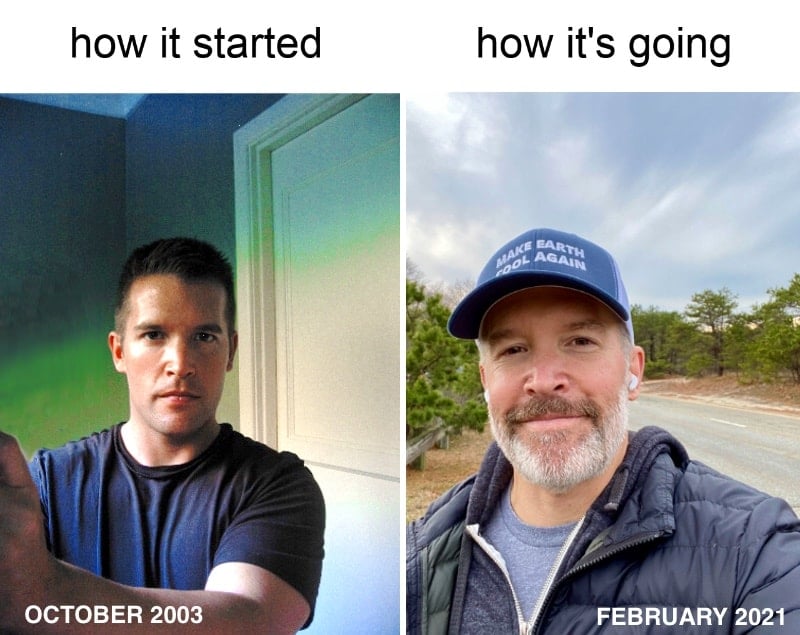
Longtime readers and friends, we’ve come a great distance together. But after nearly 18 years scouring the web for LGBTQ news and bringing it to you on a daily basis, this has been my last week at Towleroad.
It’s been a thrilling experience, and a lot of hard, rewarding work. Towleroad is one of the few independently published LGBTQ news sites left. We’ve survived in a very tough environment by running a tight ship and sticking to our voice and our mission, which has been to bring you a variety of different types of news, both serious and completely silly, with a commitment to truth and honesty. I hope that it has informed you over the years, helped create some positive change in the world, and maybe given someone a laugh or a smile and inspired them to be themselves.
Back in those very early days there were a few independent gay voices doing blogs (notably Andrew Sullivan) but no online clearing houses for LGBTQ information, and it was thrilling to be able to interact with an audience in an exciting and fresh format and I’m grateful to have been in the right place at the right time to do so.
It was a collaborative time in “new media” and I soon found myself among a sea of exciting voices which shared links, inspiration, common cause, and creative ideas, like Pam Spaulding’s ‘Pam’s House Blend’, Joe Jervis’s JoeMyGod, Michael K’s Dlisted, OMGblog, Bil Browning’s The Bilerico Project, Michelangelo Signorile’s The Signorile Report, Keith Boykin, Jeremy Hooper’s Good As You, Rex Wockner, John Aravosis’ AmericaBlog, Chris Johnson and Michael Lavers at the Washington Blade, Jim Burroway and Timothy Kincaid’s Box Turtle Bulletin, Paul Schindler at Gay City News, Rod 2.0, Shakesville, The New Civil Rights Movement, Andres Duques’ Blabbeando, Trent Vanegas’s Pink is the New Blog, Just Jared, Mike Rogers’ BlogActive, Kenneth Walsh’s Kenneth in the 212, Matt Rettenmund’s Boy Culture, Queerty, Alvin McEwen’s ‘Holy Bullies and Headless Monsters’, Greg Hernandez’s Greg in Hollywood, Wayne Besen’s Truth Wins Out, Dan Savage’s Slog, the late Monica Roberts’ TransGriot, Juliano Corbetta’s Made In Brazil, Back2Stonewall, Perez Hilton, Socialite Life, NewNowNext, AfterEllen, AfterElton, Autostraddle and many others. I apologize if I’ve forgotten anyone. By virtue of our formats and audiences, at many times we were able to manifestly affect justice together in so many ways. I would like to thank them all for their support and kindness over the years.
I’ve been gratified to see the tide of public opinion and acceptance of LGBTQ people shift in vast ways. When I launched this experiment George W. Bush was president, and nobody knew what a “blog” was. There were no hate crime protections for LGBTQ people, the military’s “Don’t Ask, Don’t Tell” policy was still in place, and gay and lesbian people couldn’t get married anywhere in the United States. There was no YouTube, no Twitter, no Facebook, no Instagram, and no iPhone!
There’s no one reason I’ve decided it’s time for a change. When you do something for nearly two decades you start to wonder if there’s anything else for you out there. And when there’s a global pandemic and you’re stuck in isolation for a year obsessively absorbing the actions of a fascist in charge of the country you start pondering those ‘life’ questions even more.
So what do I plan to do? I don’t know right now, but I do have a few ideas. I want to get back to creating things. I want to see what else is out there for me. I want to take a deep breath and finally maybe have a weekend off.
So many readers and commenters have offered their words of support over the years and I’m grateful for your lasting readership, and also the criticism. I have tried to learn from it.
I’d also like to thank the many writers and contributors I’ve worked with closely, including Bobby Hankinson, Sean Mandell, Kyler Geoffrey, David Mixner, Corey Johnson, Ari Ezra Waldman, Naveen Kumar, Randy Rainbow, Nathaniel Rogers, Kevin Sessums, Craig Karpel, Ari Karpel, Adam Rhodes, Andrew Belonsky, Lisa Keen, Ed Salvato, Billy Kolber, Anthony Costello, Brandon Thorp and Penn Bullock, Jon Barrett, Josh Helmin, Josh Koll, Brian Sloan, Charles Pulliam-Moore, Christian Walters, Daniel Villareal, Susie Bright, Jon Bailiff, Garth Greenwell, Jake Folsom, John Wright, Josh Trujillo, Julian Ward, Kenneth Walsh, Lewis Payton, Luis Damian Veron, Leo Herrera, Matthew Rettenmund, Muri Assuncao, Nathan Manske, Occupy the Disco’s Ru Bhatt, Josh Appelbaum and Tadeu Maghales, RJ Aguiar, Sam Greisman, Savas Abadsidis, and Steve Pepdjonovic. Again, apologies if I’ve forgotten anyone.
Keep in touch.
Slowly, many of the bloggers and platforms from the Blogger Summit are ceasing to blog although remaining active in advocacy and calling out bigots and hypocrites. I am so thankful for those with whom I was lucky enough to interact over the years. Best of luck Andy!!

The Virginia Legislature approved adult-use marijuana legalization Saturday in a historic vote marking the first state in the Old South to embrace full legalization.
The House passed the measure in a 48-43 vote, and the Senate approved it in a 20-19 vote. Not a single Republican voted for the bill in either chamber.
"This, to me, is a justice bill," Del. Charniele Herring, a sponsor of the legalization bill and the Democratic majority leader, said on the floor. "While it has flaws and it is not the perfect bill ... I think this moves us a step in the right direction."
The vote came after a conference committee struck a deal on Saturday to reconcile different versions of the bill that passed in both chambers earlier this month.
The impact: Virginia is the 16th U.S. state to pass an adult-use marijuana legalization law, though sales would not start until 2024. Only two other states — Illinois and Vermont — have passed legislation to legalize, tax and regulate recreational marijuana through the legislature.
The move puts pressure on neighboring states such as Maryland, where an adult-use legalization bill got its first hearing this month. New Jersey also recently enacted legalization, after voters overwhelmingly backed a referendum in November.
Democratic Gov. Ralph Northam has championed legalization as a racial justice issue.
Under the compromise legislation, marijuana possession would not become legal until January 2024, when regulated sales are scheduled to start. The state would start setting up a marijuana regulatory agency this July.
The background: The state decriminalized marijuana last year during a special session to address criminal justice reform. Virginia’s medical marijuana program is just getting off the ground, and lawmakers passed a bill this session that would expand the program to allow marijuana flower products.
Northam endorsed legalization in November and urged lawmakers to pass his proposal during his state of the state address. The legislation was based on two extensive studies on the issue: a report from his administration and another from the nonpartisan Joint Legislative Audit and Review Committee.
The bills moved quickly through the chambers during a short, 30-day session, which Northam extended with a special session of 16 days. Lawmakers tackled thorny issues such as how to prevent large corporations from taking over the marijuana market, and how to handle automatic expungements of marijuana offenses when the criminal justice system lacks the technology to do so.
Opponents of marijuana legalization pointed to public health concerns such as youth use and impaired driving, as well as tobacco giant Altria’s lobbying on the issue. Altria purchased a $1.8 billion stake in Canadian cannabis company Cronos Group in 2018.
Marijuana advocates pointed to the harms of the disproportionate enforcement of marijuana offenses in communities of color. The bill contains robust social equity provisions, including prioritizing business licenses for individuals deemed to have been disproportionately impacted by criminal enforcement, which dissuaded some otherwise supportive Republicans from voting for the bill.
The bill would allow adults over 21 to possess up to 1 ounce of marijuana. Home cultivation of up to four plants per household would be allowed under the bill.
The bill sets a 21 percent excise tax on marijuana and allows municipalities to add an additional 3 percent tax on retailers on top of existing sales taxes. Marijuana tax revenues would be used to fund pre-K education, substance use disorder treatment programs and other public health initiatives. A portion of revenues would also go toward a Cannabis Equity Reinvestment Fund, which would provide resources such as scholarships and workforce development for communities disproportionately impacted by drug enforcement.
Vertical integration would be allowed in limited circumstances to grandfather in medical cannabis producers and industrial hemp processors. Micro-businesses would be allowed to vertically integrate as well.


