Sunday, November 22, 2026

Many Republicans Are Reluctant Blame the Felon for the Mid-Term Debacle

In the wake of the 2026 mid-tern disaster, some Republicans are trying to do a much needed post mortem on what went so terribly wrong, yet many - indeed, far tooo many - Republicans either refuse or are reluctant to name the real cause of the disaster which can be summarized in one word: Trump. much of the ongoing affordability crisis is the direct result of the Felon's tariffs, war of choice in Iran, and policies that take from the poor and give to the rich as embodied in the falsely named "big beautiful bill."  And then there is the shocking corruption and grifting surrounding the Felon, his family and others in his regime,  Most congressional Republicans rubber stamped the Felon's agenda, have failed to condemn the out of control corruption, and have refused to rein in the Felon and his ill-conceived war of choice in Iran. The voters made clear that they liked none of it and sought their own retribution against Republicans.   With focus now turning to the 2028 elections and who might become the GOP standard bearer, the failure to admit the causes of the 2026 debacle will not aid the party in setting a new direction - the Felon has shown he only intends to double down on what voters rejected.  As for Marco Rubio and JD Vance, the two sold their souls to the Felon and have pushed policies that have tainted them and made it questionable if they could ever free themselves form the taint of the Felon.  Others, such as Ted Cruz and Josh Hawley likewise were cheerleaders for the Felon and will be hard put to escape video clips detrimental to any national campaign. A column in the New York Times looks at the GOP's disarray:

After a generational flogging in the midterms, Republicans are bracing for a sharp loss of power with little consensus on how to regain their footing.

Democrats swept them out of office on the back of a public fury that rivaled the post-Watergate backlash of the 1970s, winning 56 percent of the popular vote — a margin unparalleled in the modern era — and ending decades-long streaks of Republican dominance in Texas, Kansas, Mississippi and South Carolina.

Republicans are now in the early stages of the soul searching that is typical for a party after major election defeats. But for this Republican Party, that period of reflection is complicated by [the Felon's] President Trump’s enduring dominance. A clear divide has already emerged between those who say he bears significant culpability for the midterm losses, and those who are unwilling to cast blame his way.

In interviews, nearly 20 Republican lawmakers, strategists and officials gave a wide range of explanations for what they called a “shellacking,” an “apocalypse” and a “wholesale repudiation” of the party. They cited inflation, off-base messaging, vulnerability to Democratic attacks about corruption, and overzealous immigration enforcement.

David Kochel, an Iowa Republican strategist, called the midterms “a rejection of the president,” adding that “it felt to me like a bit of a recall election — like, ‘We screwed up in 2024 and we’re going to try to fix it as best we can.’”

Other party strategists, commentators and departing lawmakers have also grown far more blunt about what they see as Mr. Trump’s political failings.

Ben Shapiro, a prominent conservative pundit who campaigned for Mr. Trump, told NPR this past week that voters this election “went in and they said: ‘I think that the Trump administration has basically stunk up the joint. Throw ’em out.’” “And I think it was really that simple,” he added.

But many other Republicans have blamed Mr. Trump’s policies, like tariffs, without directly blaming him. . . . . And while Mr. Trump has acknowledged that he may have overstepped on immigration, on Friday he blamed lawmakers for failing to “get the things that I wanted passed.”

The party’s limited reckoning over the midterms foreshadows the coming battle over its direction now that Mr. Trump is a lame-duck president — and suggests that influential Republican figures may be reluctant to change course.

Republican elected officials and strategists broadly agree that the party focused too much on culture-war issues, like transgender athletes in girls’ and women’s sports, and too little on kitchen-table topics that could appeal to independents and swing voters.

Senator Ted Cruz, now set to become the only major statewide Republican official in Texas, said on his podcast days after the election that “too many Republican politicians seemed like they didn’t understand or they didn’t care” about Americans’ “very real pain.”

But the messaging problem was hard to untangle from the party’s actions. Many Republicans became increasingly vocal opponents of Mr. Trump’s tariffs and the Iran war, which were a major driver of cost increases, particularly for gas and diesel. And some aspects of Mr. Trump’s signature domestic policy law also proved unpopular, notably its cuts to Medicaid benefits.

Senator Josh Hawley, a Missouri Republican who is a potential 2028 presidential contender, said the election showed that his party must focus more on affordability issues and working-class voters.

But after this year’s rout, some Republicans have suggested that voters punished the party for the Trump administration’s aggressive tactics. Nationally, Hispanic voters shifted 31 percentage points to the left compared with the 2024 presidential election . . . . Giancarlo Sopo, a Republican strategist who worked on two House campaigns in South Texas, said the immigration crackdown and high prices had supercharged turnout for Democrats and driven many Trump voters to turn on Republicans. . . . In 2024, Mr. Sopo said, Hispanic Americans “voted to make carne asada less expensive and to deport gang members,” not to see longtime neighbors locked up and sent away.

Mr. Trump has not indicated that he will change direction. Days after the election, he announced that Stephen Miller, the architect of his immigration agenda, would be his new chief of staff. The move raised political concerns even from some Trump allies.

“If your team takes a beating as badly as we took last week, you have to fire people,” Representative Marlin Stutzman of Indiana told CNN, calling Mr. Miller’s appointment a “mistake.”

Corruption was a top issue for voters this year, polls showed, a shift from previous elections. . . . Mr. Shapiro, the conservative commentator, told NPR that “the whiff of corruption surrounding the White House is truly awful.”

Former Gov. Chris Christie of New Jersey, a potential 2028 presidential candidate and a longtime Trump critic, said his party needed to demand higher standards of its leaders. . . “That lack of character has an impact on the country.”

Republicans now face an uncertain leadership transition between Mr. Trump and the party’s eventual 2028 presidential nominee. Few in the party have called for a new policy agenda, viewing the headwinds they faced in this year’s midterms as temporary or strictly related to messaging.

Frank Luntz, a longtime Republican pollster, had two words of advice for Republicans after the midterms: “Wake up.” He said that the party had ignored glaring red flags in the polls, and that Mr. Trump had gravely erred in telling voters that affordability was “a hoax.” “Republicans need truth tellers,” Mr. Luntz said.

Sunday Morning Male Beauty


Saturday, November 21, 2026

More Saturday Male Beauty


Shenzhen Summit: One of the Felon's Dumbest Moments

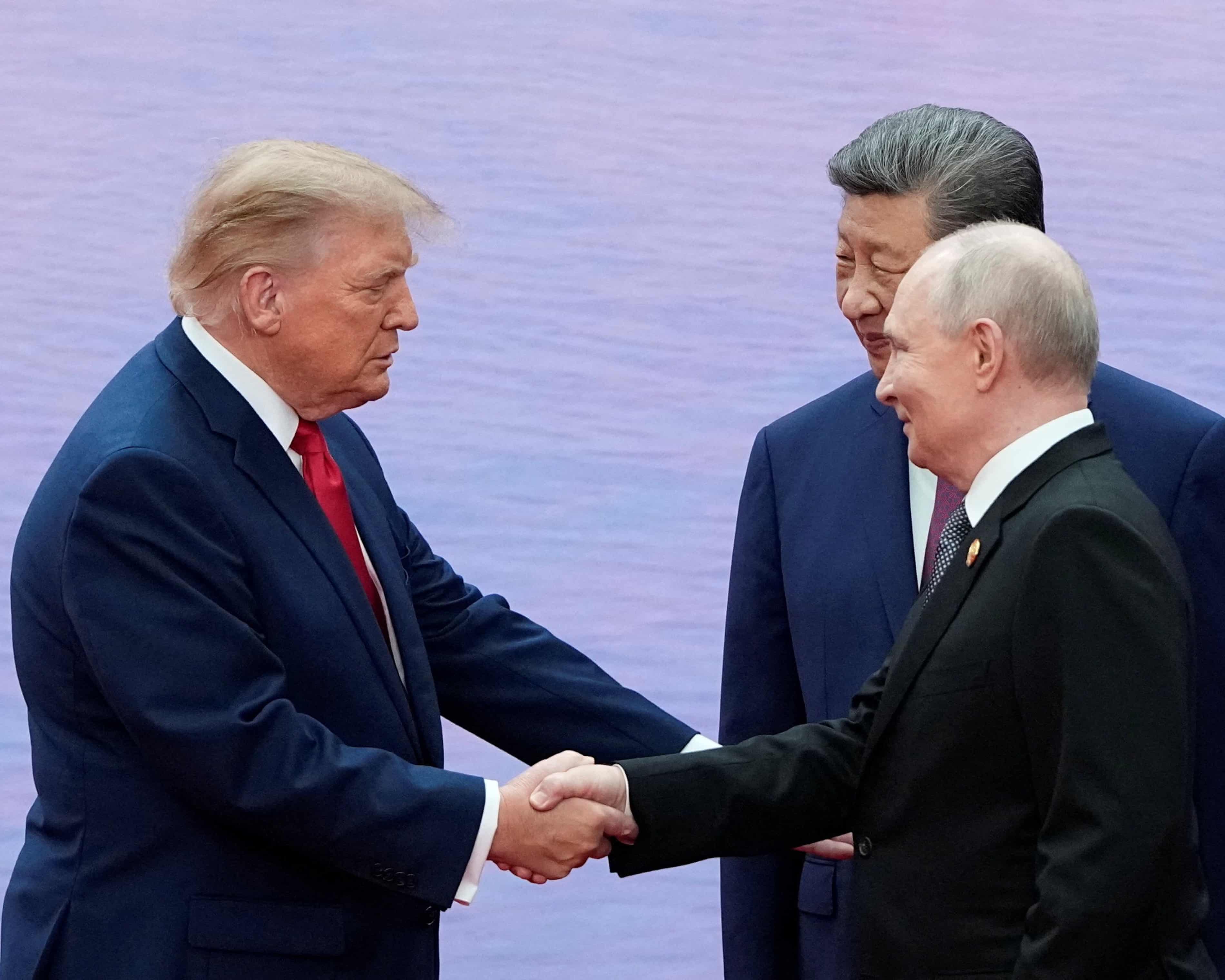
Despite the media fanfare over the Shenzhen summit between the Felon, Vladimir Putin and China's Xi, the summit seemingly accomplished nothing - other than Putin likely reminding the Felon during their private talks of all the blackmail materials Putin has on the Felon and China showcasing its answer to Silicon Valley.  While the Felon talked about reducing nuclear arms, he ignored the reality that (i) there has already been a huge reduction in such weapons and (ii) Putin will never give up nuclear arms since that is perhaps the only thing that allows Russia to pose as a "super power."  Indeed, Russia's inability to defeat Ukraine has shown the world that Russia's military is nowhere near as powerful as Putin postures. In addition to mentioning nuclear disarmament seemingly no agreements were reached on the Iran war or the war in Ukraine. Meanwhile, both Russia and China are aiding Iran which underscores the stupidity of the Felon calling Putin and Xi "friends." Overall, the summit was an embarrassment on steroids for America and the Felon, although the latter is too stupid to realize he looked the fool as he said nice things about two dictators one of whom has war crimes charges against him for atrocities against civilians in Ukraine. A piece at The New Republic looks at the summit's failure and how the Felon relies on the stupidity and/or uninformed nature of too many Americans.  Here are highlights:

One of the most maddening things about Donald Trump over these last 10 or so years is his patented combination of cynicism and stupidity, which can actually come off to people who don’t know any better as sincerity. That is, he says things that sort of sound like common sense to your average uninformed person, but they are one thousand percent false. Still, millions of people believe him. In turn, it just destroys any attempt to have any kind of serious political debate. This may be the single worst thing he’s done to the country, which I know is saying something, but hear me out.

Take the Iran war. This totally unnecessary conflict is one of the most hideous things an American president has ever done: just starting a war out of nowhere on a Saturday morning. As he launched it, he fished around for various justifications. Finally, he settled on “Iran can’t have a nuclear weapon.” To your average uninformed person, that surely sounds right.

The part that Trump leaves out—and that he depends on the vast majority of the American public not knowing—is that Iran was close to nuclear capability only because Trump tore up the Obama-era JCPOA. But what percentage of Americans knows this? Twenty, thirty? In this way, Trump depends on the ignorance of most people to justify his actions. This is a less brutal form of fascism than throwing people in detention camps, but it’s fascism all the same—the manipulation of simplistic, fact-free mass sentiment toward antidemocratic ends.

I think of this because he did it again this week at his absurd “summit” in China with Xi Jinping and Vladimir Putin. In his opening remarks, he argued—and no doubt this was cast as unique bravery on Fox and Newsmax—that the three leaders should summon the rare courage to reduce their nuclear arsenals, and that doing so would render them uniquely selfless leaders in world history.

Again—to your average person who through no fault of their own doesn’t know anything about nuclear arsenals—which is to say, most people—this sounds like it makes sense. Of course. Who would give up a nuclear weapon, having secured it? No real man, that’s for sure.

But the actual facts of the matter are, well, just a little different. The United States and Russia (and the Soviet Union before) have spent the better part of the last half-century dismantling nuclear weapons. Yes, dismantling. By the thousands.

Since 1967, when America’s nuclear arsenal peaked at 31,255 weapons, we have destroyed 27,507 nuclear weapons, down to the current total of 3,748. This is an 88 percent reduction in the stockpile. With three or four exceptions, we have dismantled nuclear weapons—a few dozen to a few thousand—nearly every year since 1967. Russia today has an estimated 4,400 nuclear weapons. At its peak in 1986, the Soviet Union had around 40,000 such weapons. It, too, has been dismantling weapons nearly every year for the last 40 years.

Does Trump even know that this happened under his watch? Presidents get these reports. But of course, they’re supposed to read them. We have plenty of reason to think he has no idea—and certainly has no idea that the U.S. nuclear arsenal is about 10 percent of what it was at the height of the Cold War.

But off he goes to this bogus summit, touting the idea that reducing nuclear arsenals would be some unprecedented and amazing thing. China, by the way, has an estimated 620 nuclear weapons, which is presumably enough to turn the planet into a wasteland but is nothing compared to the U.S. and Russian arsenals.

I’ll grant you there are bigger things to worry about with respect to this summit. By public appearances, there seems to have been no purpose to it. Trump hugged Xi and glad-handed Putin. He called them his “friends.” From what we Americans could see, it was just another empty-calorie Trump circus show, where he got to hang out with murderers with whom he feels a kinship in fancy digs and eat good food in fancy surroundings.

We don’t know what was said behind closed doors. There is plenty of reason to worry about that. As the “trilat” ended, European leaders were meeting in Berlin to discuss Ukraine. Trump phoned into that meeting to tell them they’re throwing good money after bad in supporting Ukraine. U.S. officials scurried to clarify to reporters that, no, Trump wasn’t saying Europe should give up on Ukraine.

It’s impossible to imagine that any of the world leaders gathered in Berlin took Trump seriously. He lives in his own fantasy world. He shames the United States of America by sitting at a table with two of the world’s worst dictators and acting like they’re buds.

And his gibberish about nuclear arsenals, while maybe not the worst aspect of this summit, seems to me the most symbolic of everything about him that has so corroded our political discourse. Long-established facts are no longer facts. They’re fake news or socialistic drivel. It’s like having to argue over whether the ocean is wet. And it’ll never end.

Saturday Morning Male Beauty


Friday, November 20, 2026

More Friday Male Beauty


Trump’s Embarrassing, Inconsequential Summit

Much of the news media has bloviated about the "historic" meeting this week between the Felon, Vladimir Putin and Chinese dictator Xi.  While it is true that it was the first meeting of these three players, the reality is that seemingly nothing was accomplished other than to showcase China's growing power as America and Russia slide into decline, largely due to the bad decisions made by the Felon and Putin.  Of the three attendees, Putin leads a country most showing decline as Putin's war of choice against Ukraine has yielded huge military casualties, seen Ukraine damage half of the country's oil refining capacity, and everyday Russians suffer fuel shortages and an economy under strain. Indeed, Putin's war which was supposed to be over in three days is now in its fifth year.  Similarly, the Felon's war of choice against Iran has shown the limits of U.S. military power, especially under the incompetence of the Felon and his idiot Secretary of Defense. Chins - wisely, it must be noted - has to date avoided disastrous military adventures and has instead ploughed money into its economic development as showcased by the city of Shenzhen, a city of 18 million residents and China's Silicon Valley. A piece in The Atlantic looks at the inconsequential summit that only yielded the Felon prostituting himself to Putin and propaganda photo ops. Here are highlights: 

History does repeat itself—the first time as tragedy, the second time as farce.

The original Yalta summit took place in a rickety czarist palace on the Crimean Peninsula in February of 1945. Adolf Hitler’s troops were already in retreat when President Franklin D. Roosevelt, Prime Minister Winston Churchill, and the Soviet dictator Joseph Stalin met in cold, drafty rooms to discuss the end of the war.

Eight decades later, the Yalta summit is remembered mostly not for building peace, but for consigning Eastern Europeans, whose leaders were not in the room, to Soviet occupation and repression for the subsequent half century. In the name of ending a war against fascist totalitarianism, in other words, Yalta promoted the spread of communist totalitarianism and planted the seeds of the Cold War.

The inconsequential Trump-Putin-Xi summit in Shenzhen, pumped up by the gullible as a “Yalta 2.0,” was an event more suited for our sillier times. No serious agreements were signed. No country’s borders were redrawn on the edge of a paper napkin. . . . . the meeting was brief, almost substance-free, and carefully choreographed for the maximum benefit of the Chinese hosts. Its true purpose was not to end any wars—and certainly not to end Russia’s bloody invasion of Ukraine—but to produce propaganda photographs and video clips that each of the three leaders will now use to mask their political failures.

Certainly this was [the Felon's] President Trump’s main goal. Before the three leaders met, he actually told Fox News that the most significant moment was already over: “the greeting yesterday, which in the history of China has never happened.” Xi Jinping, aware of how easy it is to manipulate the American president, had met Trump at his airplane, on the tarmac.

He[the Felon] also spoke of “the fanfare, the beauty, the pageantry, the thousands of people, the young children, the soldiers, the whole thing,” adding, “That’s a big win for us. It’s a big win for China too.” The White House published a video clip, seemingly created to promote Chinese Communism, showing all of that fanfare and putting Trump at the center of it—a big win for China indeed, and maybe a big win for Trump’s post-midterm ego, although hardly a big win for the United States.

For Vladimir Putin, the meeting also created useful propaganda. Now almost five years into a war he believed he would win in three days, he is coping with 1.5 million war casualties; the loss, as of this week, of half of his country’s oil-refining capacity; and even, in the past few days, the destruction of the Kerch Strait Bridge, which links Russia to Crimea. Putin built that bridge and personally attended the opening ceremony, treating it as a major national event. In recent days, the Ukrainians have struck the bridge three times, totally destroying the road link and at least temporarily halting rail traffic too. Nevertheless, Putin will use the Shenzhen meeting to tell Russians that their country is still a superpower, still allowed to sit in the same room as the Americans and the Chinese, still important on the world stage even as Russian power, influence, and prosperity dramatically shrink.

For Xi, the meeting was useful because he was the host, he set up the photographs, and his propaganda was broadcast around the world. With Trump’s cooperation, he telegraphed American decline, Chinese power, and Russian subservience. Even as the Chinese economy is experiencing a real-estate slump, manufacturing losses, and chronic unemployment, he made China look like the only serious country in the room. The American president was babbling about airport greetings. Russia is bankrupt without Chinese support. But Xi, safe in the knowledge that he has successfully obtained the American chip technology his military and industry need, was the master of ceremonies.

Hidden inside this story of puffery and flattery is some good news. The leaders at the Yalta summit in 1945 really were able to decide the fate of smaller countries over their heads and against their wishes. The three leaders at Shenzhen don’t have that kind of power. Certainly the American president no longer has any cards, to use his own words, in Ukraine, which despite being cut off from all U.S. military and financial aid has continued fighting, with European backing and its own resources.

The world has moved on since 1945—and even since 2022. When the Ukrainians struck the Kerch Bridge, they did so using their own weapons systems, none of which existed at the start of the full-scale Russian invasion. Over the past several months, the Iranians have been able to hit U.S. bases and targets in the Gulf States using Russian drone technology of equally recent vintage. We now live in a world of asymmetric conflicts, where even powers that claim to represent allegedly great civilizations are discovering that they can lose battles to much smaller ones. If the summit in Shenzhen looked anachronistic and obsolete—a failed attempt to re-create the glamour of the Cold War past—that’s because it was.

Friday Morning Male Beauty


Thursday, November 19, 2026

More Thursday Male Beauty


The Likely Targets of Democratic Investigations

The Felon's regime is the most corrupt in history with the Felon, his family members, and sycophants all working to enrich themselves with sweetheart deals, insider stock trading, and receipt of payments that are little more than outright bribes for either excess or favorable treatment by regulators.  On top of the corruption, the regime - including cabinet members - is perhaps the most incompetent in American history as well with individuals appointed to positions for which they have no qualifications, among the worse perhaps being Pete Hegseth, Kash Patel, and RJK, Jr.  And then there is the deliberate and gratuitous cruelty that the regime and Stephen Miller/ICE seem to revel in that sees children separated from families, and those detained being held in concentration camp-like conditions, often at the hands of private prison operators.  Suffice it to say, incoming Democrats have much that needs to be investigated on numerous fronts while Democrats simultaneously need to deal with the affordability issues that motivated so many voters.  With some of the worse social program and healthcare spending cuts used to finance tax cuts for the very wealthy beginning to kick in - by GOP design after the mid-terms - Democrats cannot dilly dally and need to get results. A piece at The Atlantic looks at some of the first Democrat targets. Here are highlights:

Representative Robert Garcia, the likely incoming chair of the House Committee on Oversight and Government Reform, has spent months writing names on a whiteboard in his California home, tallying the figures in President Trump’s orbit he wants to investigate. Today, he reveals who tops the list.

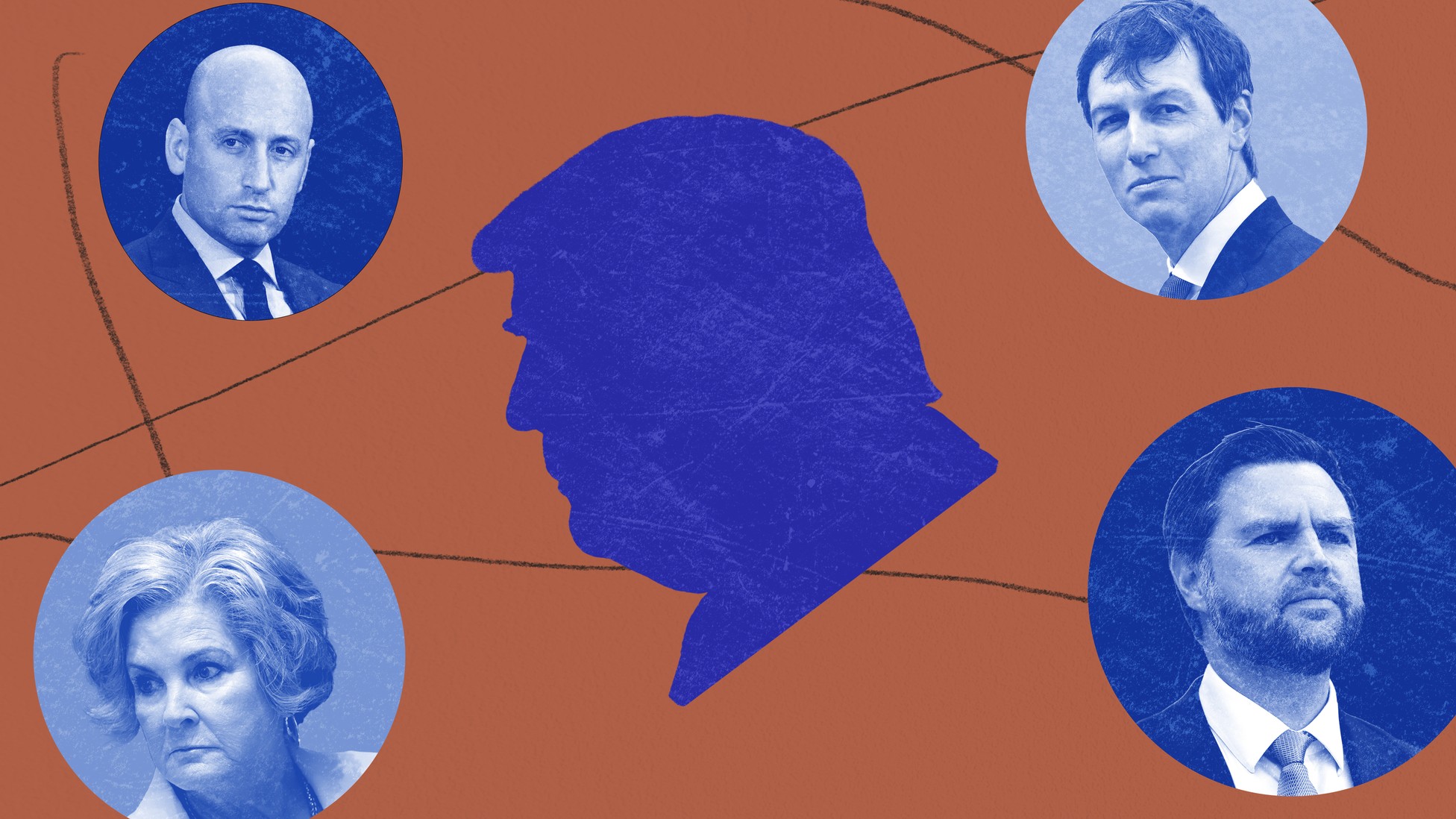
Garcia this morning sent a dozen letters to high-ranking Trump-administration officials and members of the president’s family, providing the clearest signal yet of which topics—and which people—will likely face the greatest scrutiny once Democrats take control of the House. His targets include two of the president’s sons (Donald Trump Jr. and Eric Trump) and his son-in-law Jared Kushner; his former White House chief of staff Susie Wiles and current one, Stephen Miller; Vice President Vance and Attorney General Todd Blanche, as well as the former Department of Homeland Security officials Kristi Noem and Corey Lewandowski. The letters inform their recipients of the need to preserve records, a common legal maneuver that usually precedes more aggressive action.

The letters mention the “sweeping mandate” from voters in the midterms and are largely focused on three areas: allegations of corruption against the Trump family, alleged misconduct at the Department of Homeland Security, and the White House’s decisions regarding the release of investigative files related to Jeffrey Epstein. Garcia is also asking the president of the nonprofit Trust for the National Mall to preserve records related to the funding and construction of the White House ballroom, suggesting that the committee might investigate whether special interests got anything in return for their hefty donations. Among those Garcia mentions specifically is Nvidia Corporation, which made its donation around the time that it received permission from the Trump administration to sell advanced microchips to China.

White House Counsel Will Scharf has already accused Garcia of “abusive and capricious threats” and warned that some of his investigations “may cross the line into blatant criminality.” News of the targets will likely also prompt renewed conversations within the Democratic Party over how to use their large majority. Democrats are weighing how to strike a balance between the affordability issues that motivated many voters across the political spectrum and the desire for accountability that animated much of the party’s base. “This corruption is totally out of control,” Hakeem Jeffries, who is likely to become House speaker, said yesterday afternoon during The Atlantic Summit. “And we’ve said we’re going to hold the crooks accountable.”

The letters sent today to the president’s sons cite their business pursuits in areas that overlap with entities that may be seeking preferential treatment from the White House. A letter sent to Kushner refers to his serving as an envoy in the Middle East, Russia, and Ukraine while also receiving “billions of dollars in fees and investments with particularly troubling ties to Middle East states where you also have a government role.”

“Americans should be secure in the knowledge that their government is focused on their best interests—not on making the President’s family richer,” Garcia writes in each of the letters. “The American people have spoken, and they demand accountability.”

Another letter went to Kimberly Guilfoyle, the former U.S. ambassador to Greece—and former fiancée to Don Jr. It accuses her of engaging in pay-to-play schemes and using her position to advance potential business ties, allegations that ultimately led to her firing. . . . . Ultimately, they can lay the groundwork for a subpoena—though whether the administration will be willing to cooperate is unclear.

A number of the letters that Garcia sent relate to immigration enforcement, especially controversies within the Department of Homeland Security. The letter to Miller, who is described as the “lynchpin” and “architect” of immigration policies, is the most direct. The letter accuses Miller, who was promoted to chief of staff just after the midterm election, of aggressively pursuing quotas, overseeing large sweeps of immigrants, and encouraging heavy-handed enforcement from ICE officers.

Garcia also sent letters to Noem, the former secretary of homeland security, and to Lewandowski, one of her top aides. Those letters accuse the two of steering lucrative government contracts to political allies and donors. They were both ousted from their roles amid scandals that the committee wants to explore. One that is mentioned in the letter is Noem’s decision on her last day as secretary to approve the multimillion-dollar purchase of five airplanes from a company chaired by a political donor.

Garcia also centers the lingering controversy and intrigue over Epstein. In letters sent to Vance and Wiles, he requests information about meetings held in the White House Situation Room concerning the release of Epstein-related investigative files. Vance and Wiles are asked to identify every meeting that administration officials held concerning the disgraced financier. In a letter sent to Blanche, Garcia asks him to preserve records concerning the decision to interview Ghislaine Maxwell while she was serving a prison sentence, and then to transfer her.

The letters make clear that Garcia is attempting to force top Trump-administration officials to answer potentially uncomfortable questions. Trump and his aides are unlikely to be cooperative witnesses, however, which could raise the prospect of using subpoena power to compel their testimony. Those who don’t comply with a subpoena could be referred to the Department of Justice—but a Blanche-led department is unlikely to take the matter any further, much less prosecute, for example, Blanche himself.

“This is just the beginning,” Garcia said in a statement accompanying the letters. With Democrats eagerly eyeing their expanded powers and Trump offering his political opponents no shortage of material to investigate, that much is surely true.