
Saturday, August 16, 2025


Trump's Failed Russia-U.S. Summit

So what was that all for? President Donald Trump emerged today from his summit with Russia’s Vladimir Putin without a deal and without much to say. Trump rarely misses a chance to take advantage of a global stage. But when he stood next to Putin at the conclusion of their three-hour meeting, Trump offered few details about what the men had discussed. Stunningly, for a president who loves a press conference, he took no questions from the reporters assembled at a military base in Alaska.
In his brief remarks, Trump conceded that he and Putin had not reached a deal to end the war in Ukraine or even pause the fighting. “There’s no deal until there’s a deal,” the president said. He characterized their three-hour meeting—vaguely—as “very productive.” Of the outstanding issues between the two sides, he admitted that “one is probably significant,” but he didn’t say what that was. “We didn’t get there but we have a very good chance of getting there,” Trump insisted. The Russian president, for his part, made mention of “agreements” that had been struck behind closed doors. Yet Putin also provided no elaboration, leaving the distinct impression that it was a summit about nothing.
If anything, Putin seemed to make clear that his demands regarding Ukraine haven’t changed. In his usual coded way, he said an agreement could be reached only once the “primary roots” of the conflict were “eliminated”—which means, basically, that Ukraine should be part of Russia. “We expect that Kyiv and European capitals will perceive that constructively and that they won’t throw a wrench in the works,” Putin said, in what sounded like a warning. “They will not make any backroom dealings to conduct provocations to torpedo the nascent progress.”
As Putin and Trump boarded their respective airplanes for their flights home, Ukraine and Europe were left guessing as to what the coming days will bring. Will more missiles fly toward Kyiv? Will a second meeting involving Ukrainian President Volodymyr Zelensky occur? Trump was equally as vague in a Fox News interview taped after the summit, though he did suggest that the next steps in the process would be up to Zelensky. What was clear today was that Trump, who had once promised to bring the war to a close within 24 hours, left the summit empty-handed.
“Summits usually have deliverables. This meeting had none,” Michael McFaul, an ambassador to Russia under President Barack Obama, told me. “I hope that they made some progress towards next steps in the peace process. But there is no evidence of that yet.”
That the summit happened at all was perceived by many as a victory for Putin, who, after years as an international pariah, was granted a photo with a U.S. president on American soil—on land that once belonged to Russia, no less. And he was greeted in an over-the-top, stage-managed welcome that involved a literal red carpet for a man accused of war crimes. Putin disembarked his plane this morning moments after Trump stepped off Air Force One, and the two men strode toward each other past parked F-22 fighter jets before meeting with a warm handshake and smiles. After posing for photographs, and quickly peering up at a military flyover that roared above them, the two men stepped into the presidential limousine, the heavily fortified vehicle known as “the Beast.” . . . . in the backseat of the Beast, Putin had his time alone with Trump. As the limousine drove off the tarmac to the summit site, Putin could be seen in a rear window laughing.
Putin and Trump were scheduled to have a formal meeting at Joint Base Elmendorf-Richardson, followed by lunch. But after the first meeting ran long, extending to more than three hours, reporters were abruptly rushed to the room where the press conference would be staged. The second meeting had been canceled. Had there been a breakthrough or a blowup? Putin sported the better body language: He almost glowed as he spoke to the press, offering a history lesson about Alaska, while praising the “neighborly” relations between the men. And, oddly, he got to speak first, even though Trump was the summit’s host. Trump, in contrast, seemed subdued, only perking up when Putin ended their media appearance by suggesting that their next summit be in Moscow.
“I think Trump did not lose, but Putin clearly won. Putin got everything he could have wished for, but he’s not home free yet,” John Bolton, who was a national security adviser in Trump’s first term, told me. “Zelensky and the Europeans must be dismayed. And I thought Trump looked very tired at the press event. Putin looked energetic.”
Putin seemed eager to broaden the conversation beyond Ukraine. He brought Russian business leaders to Alaska, hoping to play to Trump’s hopes of better economic relations between the two countries, and perhaps strike a rare-earth-minerals deal. He also suggested earlier this week that he would revisit a nuclear-arms agreement, perhaps allowing Trump to leave the summit with some sort of win that did not involve Ukraine. But nothing was announced on those fronts either.
The fear in Kyiv and across Europe was that Trump is so desperate for the fighting to stop, he might have agreed to Putin’s terms regardless of what Ukraine wants. That did not happen, which was cheered across the continent, and Trump said that he would soon consult with Zelensky and NATO. But Putin has shown no sign of compromising his positions. He wants Russia to keep the territory it conquered, and Ukraine to forgo the security guarantees that could prevent Moscow from attacking again. Those terms are nonstarters for Ukraine.
Summits, particularly those as high-stakes as ones between American and Russian presidents, usually take weeks if not months to plan. Everything is carefully choreographed: the agenda, the participants, the ceremony. Normally, the outcome is more or less predetermined. In the days before the actual summit, aides hash out some sort of agreement so the two leaders simply need to show up and shake hands to make the deal official. That was clearly not the case today—or in other Trump-Putin meetings.
Anchorage wasn’t Helsinki. For that, Europe can be grateful. Trump didn’t give away Ukrainian land to Russia or demand that Zelensky take a bad deal, at least immediately. But Putin did get much of what he wanted, including a high-profile summit and, most of all, more time to continue his war. When he boarded his plane to leave Alaska, he was spotted smiling again.

Friday, August 15, 2025

The Felon's Thirst for Crisis and Power

How did the president justify the “public safety emergency” he used to deploy the National Guard to Washington and seize control of its local police force?
He said there was crime — “bloodshed, bedlam and squalor and worse.”
“Our capital city has been overtaken by violent gangs and bloodthirsty criminals, roving mobs of wild youth, drugged-out maniacs and homeless people,” said President Trump in a stark attack on the nation’s capital. The solution? Military force. “We’re going to put it in control very quickly, like we did in the southern border.” The president later described Washington as more violent and dangerous than some of “the worst places on earth.”
None of this is true. The Justice Department itself announced in January that crime in the capital is, according to data from its Metropolitan Police Department, “the lowest it has been in over 30 years.” The M.P.D. cites a 26 percent decrease in total violent crime so far this year compared with the same period a year earlier. . . . . there is no evidence to support the president’s hellish depiction of the District.
But his claims are less reason than pretext. Trump is simply enthralled by the image of a crackdown, especially on those he’s deemed deviant. Recall that he wanted to use the Insurrection Act during the protests of the summer of 2020, asking his secretary of defense, Mark Esper, if soldiers could shoot protesters “in the legs or something.” In addition, and perhaps more than anything, he wants to appear in charge, whether or not he’s accomplishing his goals.
The president’s action in the capital — the first time a president invoked the D.C. Home Rule Act of 1973 to take over the city’s police — is just the latest in a long list of so-called emergencies he has conjured up to claim unilateral authority over the American people.
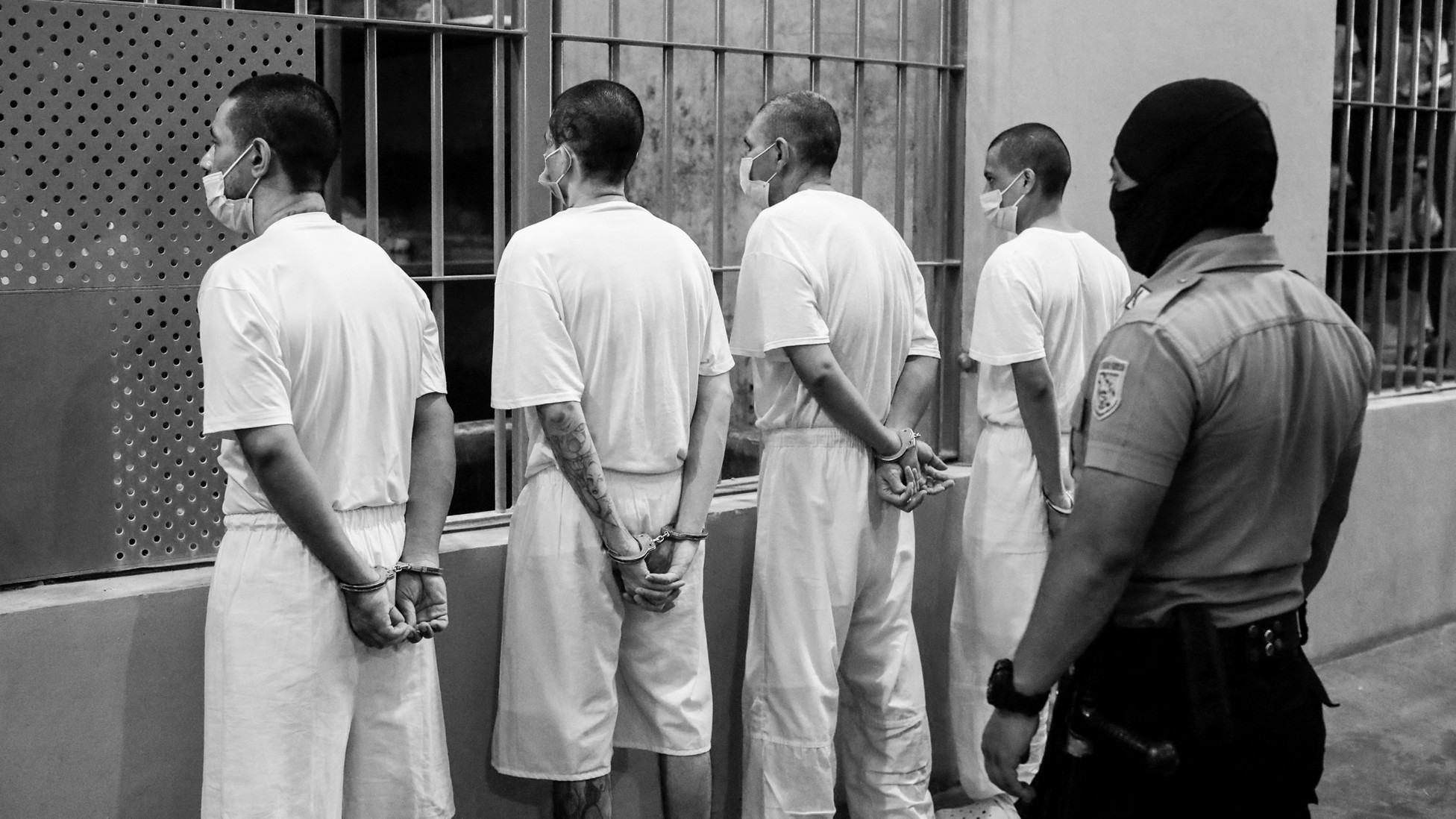
In January, alleging an “invasion” of the country, Trump declared an emergency on the border as pretext for the use of federal troops for immigration enforcement. In March, he invoked the Alien Enemies Act of 1798 with the claim that a Venezuelan gang, Tren de Aragua, was conducting “irregular warfare against the territory of the United States,” a definition of “warfare” that cuts against legal precedent and the plain meaning of the word. Trump used this emergency to unleash immigration authorities on anyone deemed a “gang member,” removing them to the brutal CECOT prison in El Salvador.
And in April, he announced a theretofore nonexistent national economic emergency, invoking the International Emergency Economic Powers Act of 1977 to “address the national emergency posed by the large and persistent trade deficit.” With this, Trump claimed the power to impose broad tariffs at his absolute discretion, beginning a trade war with much of the world.
None of these were real emergencies. There was, and is, no external crisis facing the United States. But for reasons of both personality and political ambition, Trump needs a crisis to govern — or rather, to rule. And if the actual conditions of reality will not give him a state of exception, he’ll create one himself.
Congress has, throughout the nation’s history, permanently vested the president with “vast discretionary powers to be exercised in time of war or other national emergency, usually to be determined and proclaimed by himself.”
This accretion of emergency powers continued well past the postwar period and into the present — a steady concentration of power in the person of the president. . . . By this view, Trump represents a difference of degree — albeit an extreme one — and not a difference of kind from predecessors who ignored the law, denied constitutional protections and abused presidential authority under the guise of national security.
To the extent there is a limiting force on the use of emergency or crisis powers — before, during or after the 20th century — it is a president’s commitment to the constitutional system itself.
In a nation made supposedly of laws, we have gambled on the discretion of men to keep the use of crisis authority in check. With Trump, we played a bad hand. Rather than treat emergency powers as a dangerous tool to be wielded with care and caution, this president has used them with reckless abandon as a toy — a means through which he can live his fantasies of strength, domination and authoritarian control.
Beyond the psychological impulse, there is a practical reason that Trump has embraced emergency powers and crisis government through pretense: He can’t do anything else. Look past his boastful claims of deal-making prowess and you’ll see a president who struggles to hold his own in a negotiation of equals and is too acutely solipsistic to persuade a skeptic of his own view. Even his much-vaunted (by subordinates and admirers) trade deals and agreements with institutions of higher education are less exchanges than a form of extortion, in which he uses threats of pain, punishment and legal action to impose a settlement.
The
president’s[the Felon’s]most famous attribute is that nothing, for him, is ever enough. He has never had enough real estate, or enough wealth, or enough praise, adulation and worship. We should have realized, after his attempt to overturn the results of the 2020 presidential election, that he couldn’t have enough power, either. He still can’t. And only time will tell what that means for our efforts to govern ourselves.I suspect that, as Trump inevitably works to extend his personal dominion over the entire country, we’ll find renewed value in the insights of our revolutionary forbearers. We may even decide to put them to use.
Thursday, August 14, 2025


The Trump Regime's Disturbing Definition of Human Rights
For nearly half a century, the State Department has reported annually on human-rights conditions in countries around the world. The purpose of this exercise is not to cast aspersions, but to collect and disseminate reliable information. Congress mandated the reports back in 1977, and since then, legislators and diplomats have used them to shape decisions about sanctions, foreign aid, immigration, and political asylum.
Because the reports were perceived as relatively impartial, because they tried to reflect well-articulated standards—“internationally recognized individual, civil, political, and worker rights, as set forth in the Universal Declaration of Human Rights”—and because they were composed by professionals reporting from the ground, the annual documents became a gold standard, widely used by people around the world, cited in court cases and political campaigns.
In past years, the reports were published in March or April. But this year they were delayed for several months while
PresidentDonald Trump’s political appointees, including Michael Anton, the MAGA intellectual who is now the State Department’s director of policy planning, rewrote the drafts.Some of the changes affect the whole collection of documents, as entire categories of interest were removed. The Obama administration had previously put a strong focus on corruption, on the grounds that kleptocracy and autocracy are deeply linked, and it started collecting information on the persecution of sexual minorities. Over the past few weeks, as the new reports were being prepared, I spoke with former officials who had seen early versions, or who had worked on the reports in the past. As many of them expected, the latest reports do not address systemic discrimination against gay or trans people, and they remove observations about rape and violence against women.
But the revisions also go much further than expected, dropping references to corruption, restrictions on free and fair elections, rights to a fair trial, and the harassment of human-rights organizations. Threats to freedom of assembly are no longer considered sufficiently important to mention. In a number of instances, criticism of Israel is classified, crudely, as “antisemitism.”
Along with the category changes, entries for 20 countries were also flagged for special consideration. These were sent for review to Samuel Samson, a political appointee in the Bureau of Democracy, Human Rights, and Labor. Dozens of professionals have been fired or removed from that office, widely known as DRL; Samson—who is, according to NPR, a recent college graduate and an alumnus of a program designed to put conservative activists into government jobs—remains. The end result of his and others’ efforts are reports that contain harsh and surprising assessments of democratic U.S. allies, including the U.K., Romania, Germany, and Brazil, and softer depictions of some dictatorships and other countries favored by Trump or his entourage. El Salvador and Israel, I was told, required so much rewriting that these two entries help explain the long delay in the reports’ publication.
The report on Germany, a highly functional democracy, is equally strange. The State report speaks of “significant human rights issues,” including “restrictions on freedom of expression.” One specific example: German law “required internet companies, including U.S. internet platforms, to take down hate speech within 24 hours or face stiff fines.” Germans, in other words, are being called human-rights abusers because they continue to outlaw Nazi propaganda, as they have done since 1945. The Trump administration’s motives are clear here too. The goal is to please U.S. tech companies, notably X, that find it convenient or profitable to spread Nazi propaganda, and perhaps to help the Alternative for Germany, the far-right party publicly praised and courted by J. D. Vance.
But the details of the reports are less important than the overall impact. Several former officials pointed out that the U.S. has not only abandoned internationally accepted definitions of what is meant by rights, but also any objectivity or consistency. . . . . None of them can now claim that the State Department Human Rights Report has any factual standing, or indeed that any U.S.-government document on human rights is an objective measure of anything.
In truth, some of the changes seem designed not so much to shape U.S. foreign policy as to shape U.S. domestic policy. Christopher Le Mon, a former DRL official, told me he thinks that “the domestic political agenda is really the organizing principle here.” He might be right. The administration is saying, after all, that it no longer finds electoral cheating or manipulation to be a problem; it doesn’t think the harassment of civic groups is a bad thing; it doesn’t object to discrimination against women or sexual minorities; and it will never demand transparency or accountability from the providers of internet algorithms, no matter what they choose to amplify or promote. The reports’ authors, who include some of the most ideological people in the administration, are also telling Americans what they think of the standards that both Republicans and Democrats have held up for years. Now, says Le Mon, “they’re making it that much easier to just erase human rights from what has been a long-standing, relatively bipartisan history in U.S. foreign policy.”
[T]his shift in American language puts the U.S. directly in alliance with China, whose diplomats have been campaigning for years to change the diplomatic discourse about human rights. . . . . “From Beijing’s point of view, the more such language is emasculated, the greater the CCP’s competitive advantage,” he said. Russians, North Koreans, Iranians, Cubans, and others will also find this shift an immense relief.
We knew this was coming. In a speech in Riyadh earlier this year, Trump flagged America’s new indifference to human rights, promising the Saudis and other Middle Eastern monarchs that America would stop “giving you lectures on how to live and how to govern your own affairs.” . . . . in a world of intense ideological competition, there is no such thing as neutrality. Debates about the definition of human rights will continue. The U.S. will simply play a different role in them. Tom Malinowski, a former congressman who once ran the DRL bureau, puts it best. The reports, he told me, show that the “U.S. still has a values-based foreign policy, but with twisted values.” Americans are giving plenty of lectures to other people on how to live, but to different people and with a different result.

Wednesday, August 13, 2025

Subscribe to:
Posts (Atom)