For nearly half a century, the State Department has reported annually on human-rights conditions in countries around the world. The purpose of this exercise is not to cast aspersions, but to collect and disseminate reliable information. Congress mandated the reports back in 1977, and since then, legislators and diplomats have used them to shape decisions about sanctions, foreign aid, immigration, and political asylum.
Because the reports were perceived as relatively impartial, because they tried to reflect well-articulated standards—“internationally recognized individual, civil, political, and worker rights, as set forth in the Universal Declaration of Human Rights”—and because they were composed by professionals reporting from the ground, the annual documents became a gold standard, widely used by people around the world, cited in court cases and political campaigns.
In past years, the reports were published in March or April. But this year they were delayed for several months while
PresidentDonald Trump’s political appointees, including Michael Anton, the MAGA intellectual who is now the State Department’s director of policy planning, rewrote the drafts.Some of the changes affect the whole collection of documents, as entire categories of interest were removed. The Obama administration had previously put a strong focus on corruption, on the grounds that kleptocracy and autocracy are deeply linked, and it started collecting information on the persecution of sexual minorities. Over the past few weeks, as the new reports were being prepared, I spoke with former officials who had seen early versions, or who had worked on the reports in the past. As many of them expected, the latest reports do not address systemic discrimination against gay or trans people, and they remove observations about rape and violence against women.
But the revisions also go much further than expected, dropping references to corruption, restrictions on free and fair elections, rights to a fair trial, and the harassment of human-rights organizations. Threats to freedom of assembly are no longer considered sufficiently important to mention. In a number of instances, criticism of Israel is classified, crudely, as “antisemitism.”
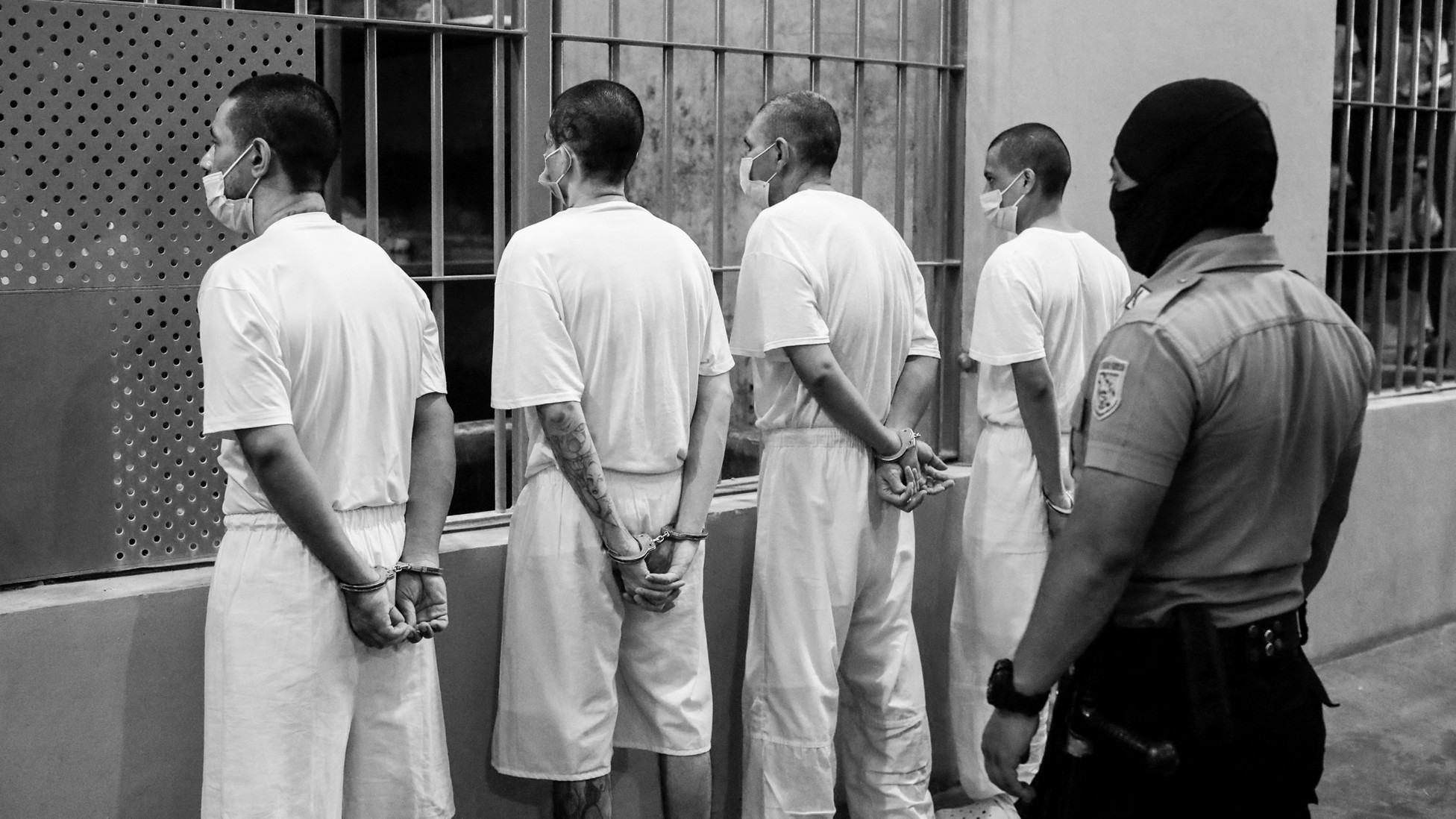
Along with the category changes, entries for 20 countries were also flagged for special consideration. These were sent for review to Samuel Samson, a political appointee in the Bureau of Democracy, Human Rights, and Labor. Dozens of professionals have been fired or removed from that office, widely known as DRL; Samson—who is, according to NPR, a recent college graduate and an alumnus of a program designed to put conservative activists into government jobs—remains. The end result of his and others’ efforts are reports that contain harsh and surprising assessments of democratic U.S. allies, including the U.K., Romania, Germany, and Brazil, and softer depictions of some dictatorships and other countries favored by Trump or his entourage. El Salvador and Israel, I was told, required so much rewriting that these two entries help explain the long delay in the reports’ publication.
The report on Germany, a highly functional democracy, is equally strange. The State report speaks of “significant human rights issues,” including “restrictions on freedom of expression.” One specific example: German law “required internet companies, including U.S. internet platforms, to take down hate speech within 24 hours or face stiff fines.” Germans, in other words, are being called human-rights abusers because they continue to outlaw Nazi propaganda, as they have done since 1945. The Trump administration’s motives are clear here too. The goal is to please U.S. tech companies, notably X, that find it convenient or profitable to spread Nazi propaganda, and perhaps to help the Alternative for Germany, the far-right party publicly praised and courted by J. D. Vance.
But the details of the reports are less important than the overall impact. Several former officials pointed out that the U.S. has not only abandoned internationally accepted definitions of what is meant by rights, but also any objectivity or consistency. . . . . None of them can now claim that the State Department Human Rights Report has any factual standing, or indeed that any U.S.-government document on human rights is an objective measure of anything.
In truth, some of the changes seem designed not so much to shape U.S. foreign policy as to shape U.S. domestic policy. Christopher Le Mon, a former DRL official, told me he thinks that “the domestic political agenda is really the organizing principle here.” He might be right. The administration is saying, after all, that it no longer finds electoral cheating or manipulation to be a problem; it doesn’t think the harassment of civic groups is a bad thing; it doesn’t object to discrimination against women or sexual minorities; and it will never demand transparency or accountability from the providers of internet algorithms, no matter what they choose to amplify or promote. The reports’ authors, who include some of the most ideological people in the administration, are also telling Americans what they think of the standards that both Republicans and Democrats have held up for years. Now, says Le Mon, “they’re making it that much easier to just erase human rights from what has been a long-standing, relatively bipartisan history in U.S. foreign policy.”
[T]his shift in American language puts the U.S. directly in alliance with China, whose diplomats have been campaigning for years to change the diplomatic discourse about human rights. . . . . “From Beijing’s point of view, the more such language is emasculated, the greater the CCP’s competitive advantage,” he said. Russians, North Koreans, Iranians, Cubans, and others will also find this shift an immense relief.
We knew this was coming. In a speech in Riyadh earlier this year, Trump flagged America’s new indifference to human rights, promising the Saudis and other Middle Eastern monarchs that America would stop “giving you lectures on how to live and how to govern your own affairs.” . . . . in a world of intense ideological competition, there is no such thing as neutrality. Debates about the definition of human rights will continue. The U.S. will simply play a different role in them. Tom Malinowski, a former congressman who once ran the DRL bureau, puts it best. The reports, he told me, show that the “U.S. still has a values-based foreign policy, but with twisted values.” Americans are giving plenty of lectures to other people on how to live, but to different people and with a different result.


No comments:
Post a Comment