
Monday, August 25, 2025


Sunday, August 24, 2025

The Felon and Project 2025 Push to Whitewash History
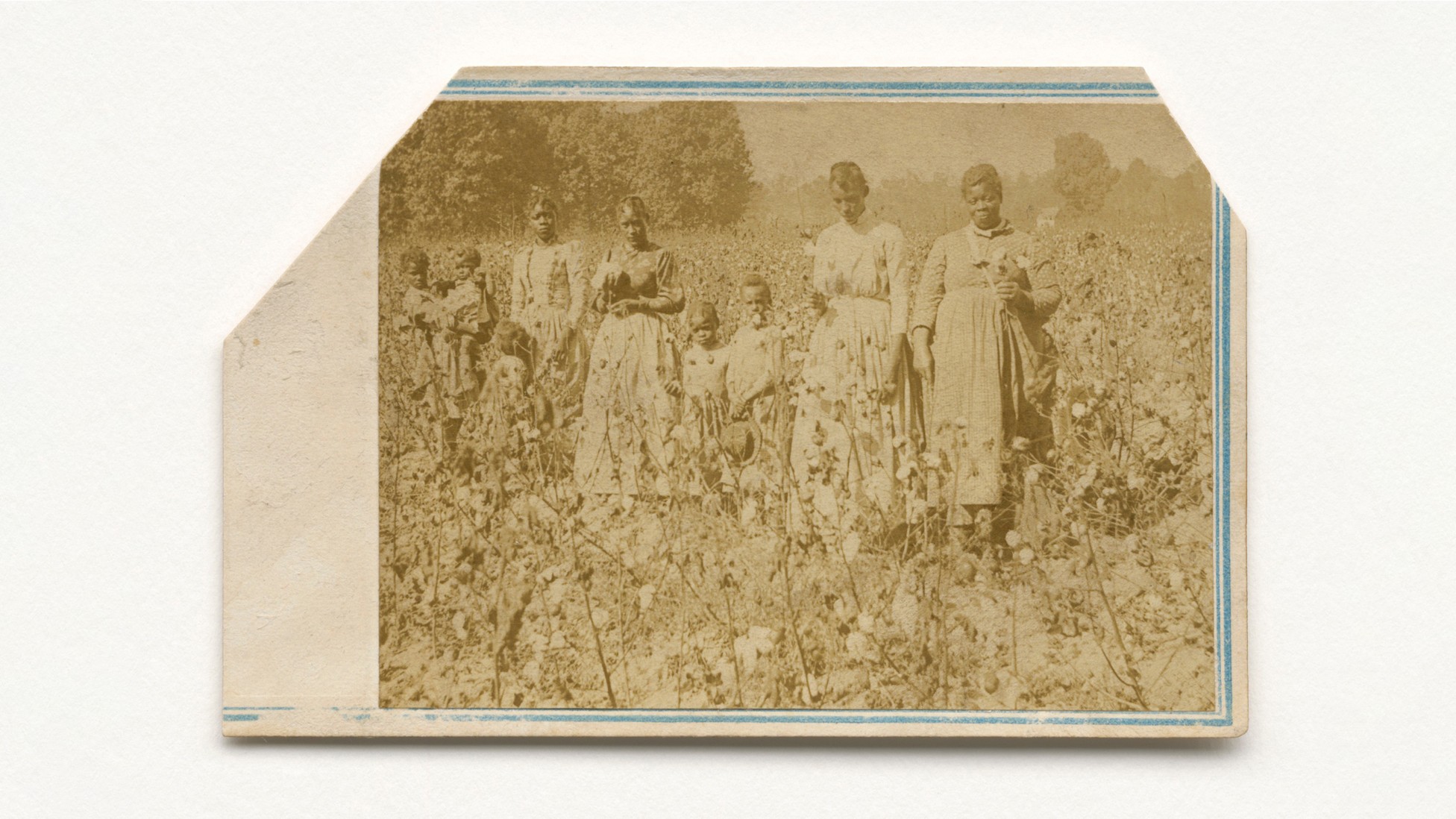
In what looks to be an intensifying quest to reshape American history and scholarship according to his own preferences,
President Donald Trump[the Felon] this week targeted the Smithsonian Institution, the national repository of American history and memory. Trump seemed outraged, in particular, by the Smithsonian’s portrayal of the Black experience in America. He took to Truth Social to complain that the country’s museums “are, essentially, the last remaining segment of ‘WOKE.’ The Smithsonian,” he wrote, “is OUT OF CONTROL.” Then Trump wrote something astonishing, even for him. He asserted that the narrative presented by the Smithsonian is overly focused on “how horrible our Country is, how bad Slavery was, and how unaccomplished the downtrodden have been.”After reading his post, I thought of the historian Lonnie Bunch, the current secretary of the Smithsonian—the first Black person to lead the institution since its founding in 1846—and the founding director of the Smithsonian’s National Museum of African American History and Culture. In his 2016 speech at the grand opening of the museum, Bunch thanked Barack Obama and George W. Bush for their support. “We are at this moment because of the backing of the United States Congress and the White House,” he said, turning to them both onstage. It’s sobering to consider how different things are today.
Bunch has been fighting efforts by the Trump administration to bring the Smithsonian into conformity with the MAGA vision of American history, and people familiar with his views say he is committed to protecting the intellectual integrity and independence of the Smithsonian. But how much longer, given Trump’s ever more antagonistic position, will Bunch be able to withstand the presidential pressure? . . . . A recent letter to the Smithsonian from the White House states that the review will be completed and a final report issued by early 2026, in time for the nation’s 250th anniversary, “to ensure alignment with the President’s directive to celebrate American exceptionalism.”
Trump’s Truth Social comment on slavery was unsettling for me not only because I am the descendant of enslaved people, and not only because I was born and raised in New Orleans, which was once the center of the domestic slave trade, but also because I am an American who believes that the only way to understand this country—the only way to love this country—is to tell the truth about it. Part of that truth is that chattel slavery, which lasted in the British American colonies and then the American nation for nearly 250 years, was indeed quite bad.
In 1789, Olaudah Equiano published The Interesting Narrative of the Life of Olaudah Equiano, or Gustavus Vassa, the African. His book was one of the first autobiographies ever published by a formerly enslaved person . . . Equiano had been kidnapped from what is now Nigeria and marched for several months to the coast of West Africa. One of the most devastating scenes in his book describes the sadism of the Middle Passage . . . . The conditions were so bad, he writes, that some of the captives flung themselves overboard . . . . Once they arrived on American shores, men, women, and children were forced onto auction blocks where families were broken apart. Once separated, most would never see one another again.
When the captives arrived at the home or plantation of their enslaver, many of them were forced to work in sweltering fields with hardly any respite. . . . . Enslaved Black women were particularly vulnerable to insidious and unrelenting sexual violence at the hands of their enslavers. . . . . The consequences of being caught in an attempted escape were so severe that most enslaved people never dared try.
None of us can imagine what it is like to be subjected to the unremitting physical, psychological, and social violence of chattel slavery. But museums such as the National Museum of African American History and Culture bring us closer to being able to do so by sharing first-person accounts of those who lived through that terrible violence. At these museums, we see the garments enslaved people wore, the tools they used, the structures in which they lived. We see their faces; we hear their voices.
The NMAAHC, in particular, is unflinching in its characterization of slavery as an unequivocally evil system, one whose impact continues to be felt across our society. In 1860, the 4 million enslaved Black people were worth more than every bank, factory, and railroad combined. Today, although they make up 14 percent of the population, Black people own less than 4 percent of the nation’s wealth.
Still, the museum also makes clear that the Black American experience is not singularly defined by slavery, but also by the art, literature, and cultural traditions that have emerged from, and in spite of, centuries of interpersonal and structural violence. These are not mutually exclusive, and the NMAAHC understands that Americans should learn about both.
And yet the MAGA movement wants to tell a story about America that is disproportionately focused on what its proponents perceive to be the exceptionalism of this country. They are invested in this story because having to look too closely at the disturbing parts of American history would mean having to look closely at the disturbing parts of themselves. But instead of ignoring the shameful parts of our past, shouldn’t we—as individuals and as a country—want to learn from aspects of our history that we are not proud of? What other way is there to become the version of ourselves that we aspire to be?
The Trump administration is, in both public discourse and public policy, arguably the most racist presidential administration in modern American history. Each week seems to bring a new example of its bigotry. I am sometimes tempted, upon encountering yet another instance of this omnipresent racial antagonism, to let it be. How many ways can you say the same thing over and over again? And yet, we must write it down, if for nothing else, then for the sake of those who will come after us.
We must make a record of those forces that seek to erase us and erase our histories so that future generations know we did not simply accept it. Our ancestors’ words remind us that we never have.

Saturday, August 23, 2025

The GOP’s Big Problem in Selling the "Big, Beautiful Bill"

Republicans are facing a major obstacle as they try to tout the potential benefits of
PresidentDonald Trump’s “big, beautiful bill:” They need voters to take their word on it for now.GOP lawmakers and top administration officials are using August to make a country-wide sales pitch for their crowning legislative achievement — a massive tax, spending and domestic policy package.
The party sees this month as crucial for gaining ground in the messaging war with Democrats over the new law, which pairs an extension of Trump’s 2017 tax cuts with some of his campaign promises like “no tax on tips,” plus more funding for immigration enforcement and the military. The White House is dispatching Vice President JD Vance to Georgia on Thursday, where he’ll talk about the megabill’s “working family tax cuts,” according to his spokesperson.
Republicans want to be the ones to define their megabill with voters ahead of next year’s midterms, where the GOP’s unified control of Congress is at stake. . . . But the GOP megabill is less than two months old, and many of its purported boons — like new and expanded tax cuts and savings accounts for children under 18 — won’t be fully felt by voters until 2026, making it harder for Republicans to reinforce what they see as the law’s advantages.
At the same time, Republicans are going up against Democrats embarking on their own nationwide tour to denigrate what they call the “big, ugly bill” and its dire shortcomings.
Sen. Tommy Tuberville (R-Ala.) . . . . acknowledged that his own state would “pay a little bit of a price” because of changes to the Supplemental Nutrition Assistance Program, which will force the state to cover more of the program’s cost. Yet the GOP’s efforts to preview the megabill’s forthcoming perks come as Democrats are also using August to flood the zone — including visiting red states and typically safe GOP districts — to warn about the law’s impending cuts to Medicaid and SNAP.
“House Republicans have betrayed their constituents in passing the Big, Ugly Law which benefits the wealthiest few and leaves everyday families behind,” Democratic Congressional Campaign Committee Chair Suzan DelBene said in a statement Wednesday.
Republicans are well aware that they are facing a tidal wave of Democratic criticism heading into a midterm election cycle, when the party in power typically loses seats. While Republicans still have an edge in the Senate map, Democrats have managed to score major recruiting wins in key races and are cautiously optimistic about their chances of flipping the House in 2026.
The House GOP’s campaign arm circulated a memo late last month with guidance for how to message about the law, calling the congressional August recess a “critical opportunity to continue to define how this legislation will help every voter and push back on Democrat fearmongering.”
Since then, House and Senate Republicans have, indeed, fanned out across the country to tout state-specific benefits from their megabill they pledge will come soon. Republican Rep. Mariannette Miller-Meeks, for instance, visited three Iowa manufacturers as part of a tour to highlight funding for workforce and trade school training.
William Martin, Vance’s communications director, called it an “absolute disgrace” that Ossoff voted against the bill and “that’s something Vice President Vance will be sure to emphasize during his visit to Peachtree City.”
Ossoff is already offering a pre-buttal of his own: “JD promised the new GOP would fight for working families,” he said in a statement. “Instead he’s defunding hospitals, nursing homes, and Medicaid to cut taxes for the wealthy.”
While CBO found that middle-income households will see their resources grow as a result of the megabill, it’s the wealthiest 10 percent that will get the biggest bump.
Another hurdle for Republicans? They are trying to get voters to focus on the yet-to-be-fully-seen wins of the megabill while voters are distracted by other, more tangible issues: the fight over the release of the Jeffrey Epstein files, recent developments in the Russia-Ukraine conflict and a move by at least two states to redraw their congressional maps mid-decade.
Rep. Don Bacon of Nebraska, one of the few Republicans from a district won by former Vice President Kamala Harris in 2024, said he’s also getting an earful about efforts by the Office of Management and Budget to freeze federal funding for widely-used government programs.
Bacon suggested Trump’s new domestic policy law is taking a backseat at home these days: “I hear more about all the grant money that is frozen by OMB,” he said.

Friday, August 22, 2025

Thursday, August 21, 2025

Subscribe to:
Posts (Atom)