In what looks to be an intensifying quest to reshape American history and scholarship according to his own preferences,
President Donald Trump[the Felon] this week targeted the Smithsonian Institution, the national repository of American history and memory. Trump seemed outraged, in particular, by the Smithsonian’s portrayal of the Black experience in America. He took to Truth Social to complain that the country’s museums “are, essentially, the last remaining segment of ‘WOKE.’ The Smithsonian,” he wrote, “is OUT OF CONTROL.” Then Trump wrote something astonishing, even for him. He asserted that the narrative presented by the Smithsonian is overly focused on “how horrible our Country is, how bad Slavery was, and how unaccomplished the downtrodden have been.”After reading his post, I thought of the historian Lonnie Bunch, the current secretary of the Smithsonian—the first Black person to lead the institution since its founding in 1846—and the founding director of the Smithsonian’s National Museum of African American History and Culture. In his 2016 speech at the grand opening of the museum, Bunch thanked Barack Obama and George W. Bush for their support. “We are at this moment because of the backing of the United States Congress and the White House,” he said, turning to them both onstage. It’s sobering to consider how different things are today.
Bunch has been fighting efforts by the Trump administration to bring the Smithsonian into conformity with the MAGA vision of American history, and people familiar with his views say he is committed to protecting the intellectual integrity and independence of the Smithsonian. But how much longer, given Trump’s ever more antagonistic position, will Bunch be able to withstand the presidential pressure? . . . . A recent letter to the Smithsonian from the White House states that the review will be completed and a final report issued by early 2026, in time for the nation’s 250th anniversary, “to ensure alignment with the President’s directive to celebrate American exceptionalism.”
Trump’s Truth Social comment on slavery was unsettling for me not only because I am the descendant of enslaved people, and not only because I was born and raised in New Orleans, which was once the center of the domestic slave trade, but also because I am an American who believes that the only way to understand this country—the only way to love this country—is to tell the truth about it. Part of that truth is that chattel slavery, which lasted in the British American colonies and then the American nation for nearly 250 years, was indeed quite bad.
In 1789, Olaudah Equiano published The Interesting Narrative of the Life of Olaudah Equiano, or Gustavus Vassa, the African. His book was one of the first autobiographies ever published by a formerly enslaved person . . . Equiano had been kidnapped from what is now Nigeria and marched for several months to the coast of West Africa. One of the most devastating scenes in his book describes the sadism of the Middle Passage . . . . The conditions were so bad, he writes, that some of the captives flung themselves overboard . . . . Once they arrived on American shores, men, women, and children were forced onto auction blocks where families were broken apart. Once separated, most would never see one another again.
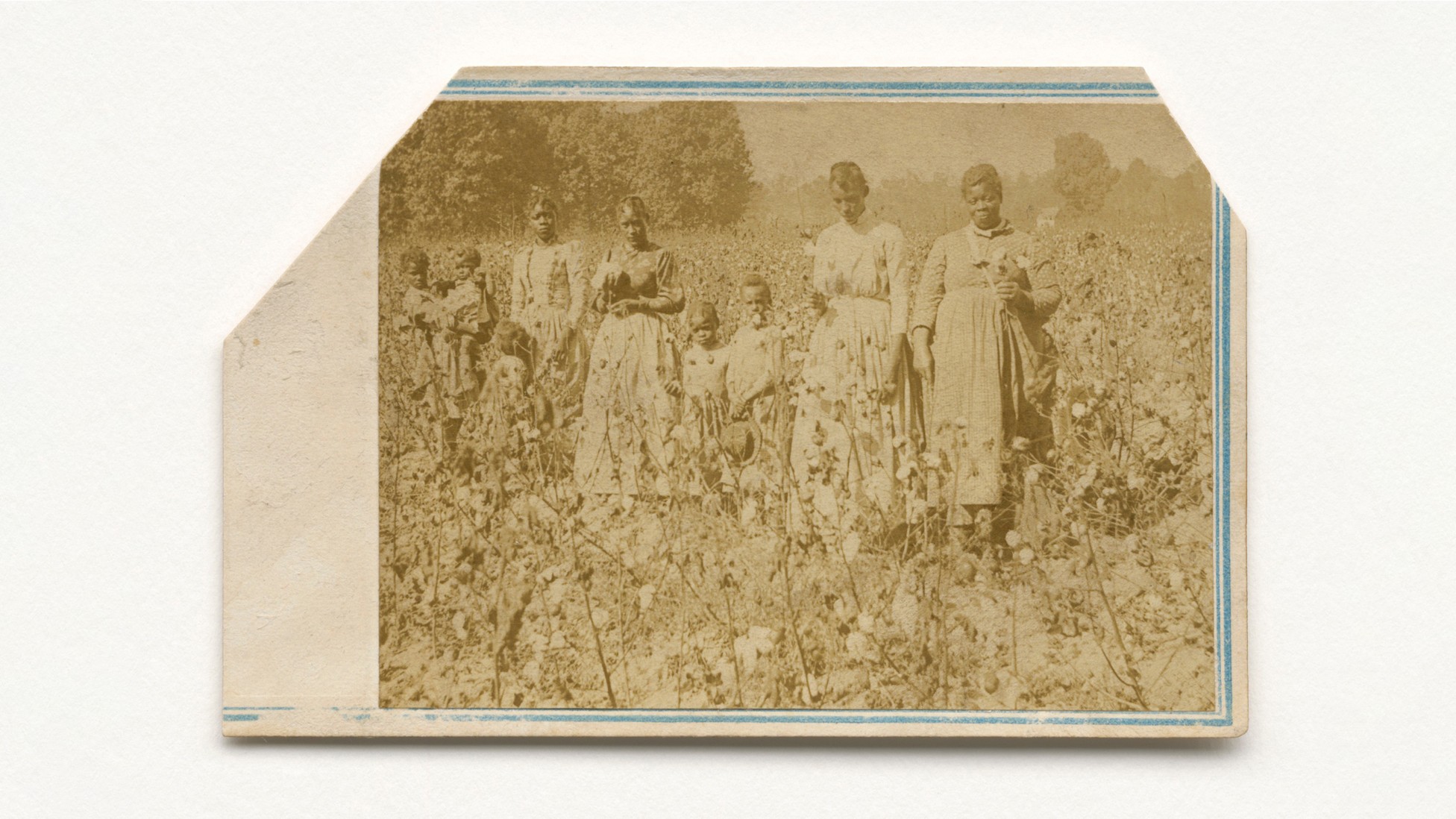
When the captives arrived at the home or plantation of their enslaver, many of them were forced to work in sweltering fields with hardly any respite. . . . . Enslaved Black women were particularly vulnerable to insidious and unrelenting sexual violence at the hands of their enslavers. . . . . The consequences of being caught in an attempted escape were so severe that most enslaved people never dared try.
None of us can imagine what it is like to be subjected to the unremitting physical, psychological, and social violence of chattel slavery. But museums such as the National Museum of African American History and Culture bring us closer to being able to do so by sharing first-person accounts of those who lived through that terrible violence. At these museums, we see the garments enslaved people wore, the tools they used, the structures in which they lived. We see their faces; we hear their voices.
The NMAAHC, in particular, is unflinching in its characterization of slavery as an unequivocally evil system, one whose impact continues to be felt across our society. In 1860, the 4 million enslaved Black people were worth more than every bank, factory, and railroad combined. Today, although they make up 14 percent of the population, Black people own less than 4 percent of the nation’s wealth.
Still, the museum also makes clear that the Black American experience is not singularly defined by slavery, but also by the art, literature, and cultural traditions that have emerged from, and in spite of, centuries of interpersonal and structural violence. These are not mutually exclusive, and the NMAAHC understands that Americans should learn about both.
And yet the MAGA movement wants to tell a story about America that is disproportionately focused on what its proponents perceive to be the exceptionalism of this country. They are invested in this story because having to look too closely at the disturbing parts of American history would mean having to look closely at the disturbing parts of themselves. But instead of ignoring the shameful parts of our past, shouldn’t we—as individuals and as a country—want to learn from aspects of our history that we are not proud of? What other way is there to become the version of ourselves that we aspire to be?
The Trump administration is, in both public discourse and public policy, arguably the most racist presidential administration in modern American history. Each week seems to bring a new example of its bigotry. I am sometimes tempted, upon encountering yet another instance of this omnipresent racial antagonism, to let it be. How many ways can you say the same thing over and over again? And yet, we must write it down, if for nothing else, then for the sake of those who will come after us.
We must make a record of those forces that seek to erase us and erase our histories so that future generations know we did not simply accept it. Our ancestors’ words remind us that we never have.


No comments:
Post a Comment