
Sunday, January 03, 2021


Saturday, January 02, 2021
Cowards Are Destroying the GOP
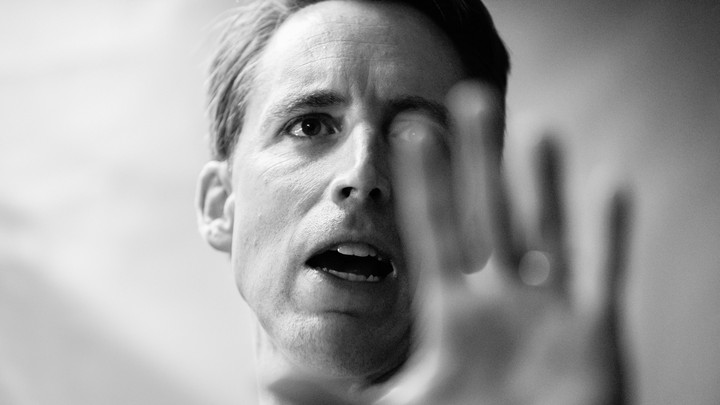
Those hoping for a quick snapback to sanity for the Republican Party once Donald Trump is no longer president should temper those hopes.
The latest piece of evidence to suggest the enduring power of Trumpian unreality is yesterday’s announcement by Senator Josh Hawley of Missouri that he will object next week when Congress convenes to certify the Electoral College vote.
Hawley knows this effort will fail, just as every other effort to undo the results of the lawful presidential election will fail. (A brief reminder for those with faulty short-term memories: Joe Biden defeated Trump by more than 7 million popular votes and 74 Electoral College votes.) Every single attempt to prove that the election was marked by fraud or that President-elect Biden’s win is illegitimate—an effort that now includes about 60 lawsuits—has flopped. In fact, what we’ve discovered since the November 3 election is that it was “the most secure in American history,” as election experts in Trump’s own administration have declared. But this immutable, eminently provable fact doesn’t deter Trump and many of his allies from trying to overturn the election; perversely, it seems to embolden them.
One such Trump ally is Tommy Tuberville, the newly elected senator from Alabama, . . . But what makes Hawley’s declaration ominously noteworthy is that unlike Tuberville—a former college football coach who owes his political career in a deep-red state to Trump’s endorsement in the GOP primary against Jeff Sessions—Hawley is a man who clearly knows better. . . .A former state attorney general, Hawley has litigated before the Supreme Court. He graduated from Stanford University in 2002 and Yale Law School in 2006. He has clerked for Chief Justice John Roberts; he taught at one of London’s elite private schools, St. Paul’s; and he served as an appellate litigator at one of the world’s biggest law firms.
“He surely knows this isn’t true,” this acquaintance continued, “and that the legal arguments don’t hold water. And yet clearly the incentives he confronts—as someone who wants to speak for those voters, and as someone with ambitions beyond the Senate—lead him to conclude he should pretend the lie is true. This is obviously a very bad sign about the direction of the GOP in the coming years.”
Think about this statement for a moment: The incentives Josh Hawley and many of his fellow Republicans officeholders confront lead them to conclude that they should pretend the lie is true.
Those who have hoped that Republicans like Senator Hawley would begin to break free from Trump once he lost the election have not understood the nature of the change that has come over the party’s base.
Trump was the product of deep, disturbing currents on the American right; he was not the creator of them. Those currents have existed for many decades; we saw them manifested in the popularity of figures such as Sarah Palin, Patrick J. Buchanan, Newt Gingrich, Oliver North, and many others.
In 2016, Trump tapped into these currents and, as president and leader of the Republican Party, he channeled those populist passions destructively, rather than in the constructive ways that other Republicans before him, such as Ronald Reagan, had done. (Even if you’re a progressive who loathed Reagan, the notion that he was a pernicious and malicious force in American politics in the style of Trump is simply not credible.)
What is happening in the GOP is that figures such as Hawley, along with many of his Senate and House colleagues, and important Republican players, including the former United Nations Ambassador Nikki Haley, are all trying to position themselves as the heirs of Trump. None of them possesses the same sociopathic qualities as Trump, and their efforts will be less impulsive and presumably less clownish, more calculated and probably less conspiracy-minded. . . . But these figures are seismographers; they are determined to act in ways that win the approval of the Republican Party’s base. And this goes to the heart of the danger.
The problem with the Republican “establishment” and with elected officials such as Josh Hawley is not that they are crazy, or that they don’t know any better; it is that they are cowards, and that they are weak. They are far more ambitious than they are principled, and they are willing to damage American politics and society rather than be criticized by their own tribe.
The single most worrisome political fact in America right now is that a significant portion of the Republican Party lives in a fantasy world, a place where facts and truth don’t hold sway, where “owning the libs” is an end in itself, and where seceding from reality is a symbol of tribal loyalty, rather than a sign of mental illness. This is leading the party, and America itself, to places we’ve never been before, including the spectacle of a defeated president and his supporters engaging in a sustained effort to steal an election.
The tactics of Hawley and his many partisan confreres, if they aren’t checked and challenged, will put at risk what the scholar Stephen L. Carter calls “the entire project of Enlightenment democracy.” This doesn’t seem to bother Hawley and many in his party. But what he should know—and, one hopes, does know, somewhere in the recesses of his heart—is that he has moved very far away from conservatism.
Whether the Republican Party can be salvaged is very much an open question. I don’t know the answer. But here is what I do know: Patriotic Republicans and conservatives need to fight for the soul of the Republican Party, for its sake and for the sake of the nation.
Trump’s departure on January 20 should open up space for at least a few brave and responsible figures to arise, to help ground the GOP in truth rather than falsehoods, reality instead of fantasy, and to use the instruments of power for the pursuit of justice.
Their task won’t be easy; right now the political winds are in their face rather than at their back. Trump’s hold on the GOP remains firm, and separating from Trump and Trumpism will trigger hostility in an often angry and radicalized base. The right-wing ecosystem is in a mood to find and (figuratively) hang traitors, whom it defines as anyone in the Republican Party who doesn’t acquiesce to Trump’s indecency and paranoia.
Our collective hope should be that principled Republicans will find their voice and prevail—one courageous step at a time, one act of decency at a time, one year at a time.

The Case for Optimism in 2021

The next few months will be hell in terms of politics, epidemiology and economics. But at some point in 2021 things will start getting better. And there’s good reason to believe that once the good news starts, the improvement in our condition will be much faster and continue much longer than many people expect.
OK, one thing that probably won’t get better is the political scene. Day after day, Republicans — it’s not just Donald Trump — keep demonstrating that they’re worse than you could possibly have imagined, even when you tried to take into account the fact that they’re worse than you could possibly have imagined. One of our two major political parties no longer accepts the legitimacy of elections it loses, which bodes ill for the fate of the Republic.
But on other fronts there’s a clear case for optimism. Science has come to our rescue, big time, with the miraculously fast development of vaccines against the coronavirus. True, the United States is botching the initial rollout, which should surprise nobody. But this is probably just a temporary hitch, especially because in less than three weeks we’ll have a president actually interested in doing his job.
And once we’ve achieved widespread vaccination, the economy will bounce back. The question is, how big will the bounce be?
Our last economic crisis was followed by a sluggish recovery. Employment didn’t return to 2007 levels until 2014; real median household income didn’t regain the lost ground until 2016. And many observers expect a replay of that story, especially if Republicans retain control of the Senate and engage, once again, in economic sabotage under the pretense of being fiscally responsible.
This 2020 crisis, by contrast, was brought on by a headwind out of nowhere, in the form of the coronavirus. The private sector doesn’t seem to have been particularly overextended before the pandemic. And while we shouldn’t minimize the hardships faced by millions of families, on average Americans have been saving like crazy, and will emerge from the pandemic with stronger balance sheets than they had before.
So I’m in the camp that expects rapid growth once people feel safe going out and spending money. Mitch McConnell and company will, no doubt, do what they always do when a Democrat occupies the White House, and try to sabotage the recovery. But this time the economy won’t need support as badly as it did during the Obama years.
And I suspect, although with less confidence, that the boom will go on for a long time. Why? Because like a number of other people, I’m getting optimistic about the future of technology.
Lately, however, I’ve been hearing a lot of buzz around new physical technologies that reminds me of the buzz about information technology in the early 1990s, which presaged the productivity surge from 1995 to 2005. Biotechnology finally seems to be coming into its own — hence those miraculous vaccines. There has been incredible progress in renewable energy; I’m old enough to remember when solar power was considered a hippie fantasy, and now it’s cheaper than fossil fuels.
This new wave of innovation doesn’t have much to do with policy, although progress in renewables can be partly attributed to the Obama administration’s promotion of green energy. But the Biden administration, unlike its predecessor, won’t be anti-science and won’t try desperately to preserve the coal-burning past. That will help us take advantage of progress.
I’m less confident in my techno-optimism than I am in my expectations for a rapid employment recovery once we’ve been vaccinated. But all in all, there’s a pretty good chance that Joe Biden will preside over an economy that surprises many people on the upside. Happy New Year.

Study: Fifty Years of GOP Trickle Down Economics Has Only Benefitted the Rich

Tax cuts for the wealthy have long drawn support from conservative lawmakers and economists who argue that such measures will "trickle down" and eventually boost jobs and incomes for everyone else. But a new study from the London School of Economics says 50 years of such tax cuts have only helped one group — the rich.
The new paper, by David Hope of the London School of Economics and Julian Limberg of King's College London, examines 18 developed countries — from Australia to the United States — over a 50-year period from 1965 to 2015. The study compared countries that passed tax cuts in a specific year, such as the U.S. in 1982 when President Ronald Reagan slashed taxes on the wealthy, with those that didn't, and then examined their economic outcomes.
Per capita gross domestic product and unemployment rates were nearly identical after five years in countries that slashed taxes on the rich and in those that didn't, the study found.
[T]he analysis discovered one major change: The incomes of the rich grew much faster in countries where tax rates were lowered. Instead of trickling down to the middle class, tax cuts for the rich may not accomplish much more than help the rich keep more of their riches and exacerbate income inequality, the research indicates.
"Based on our research, we would argue that the economic rationale for keeping taxes on the rich low is weak," Julian Limberg, a co-author of the study and a lecturer in public policy at King's College London, said in an email to CBS MoneyWatch. "In fact, if we look back into history, the period with the highest taxes on the rich — the postwar period — was also a period with high economic growth and low unemployment."
[T]he research doesn't include President Donald Trump's massive tax overhaul, which he signed into law in late 2017 and which slashed taxes for the rich and corporations while providing a moderate cut for the middle class. But Limberg, who co-authored the study with David Hope, a visiting fellow at the London School of Economics' International Inequalities Institute, said that he wouldn't expect the results of that tax cut to be much different.
Already, Mr. Trump's tax cuts have lifted the fortunes of the ultra-rich, according to 2019 research from two prominent economists, Emmanuel Saez and Gabriel Zucman of the University of California at Berkeley. For the first time in a century, the 400 richest American families paid lower taxes in 2018 than people in the middle class, the economists found.
The "careful" new research from the London School Economics "suggests indeed that tax increases on the wealthy should be considered post-COVID," Berkeley's Zucman said in an email to CBS MoneyWatch.
To be sure, the economy was humming along before the pandemic struck the nation in March . . . Yet even so, millions of American families struggled to find jobs that paid living wages, while the cost of essentials such as health care, housing and education increased at far faster rates than the typical income. Even before the pandemic, income inequality had reached its highest point in 50 years, according to Census data.
Since the pandemic began, the combined wealth of America's 651 billionaires has jumped by more than $1 trillion, reaching $4 trillion in early December, Americans for Tax Fairness said earlier this month.
Meanwhile, almost 8 million Americans have fallen into poverty since the start of the pandemic through November, according to new data released by the University of Chicago and the University of Notre Dame.
Rebuilding the economy and household wealth for low- and middle-class families are among the issues facing President-elect Joe Biden after he's inaugurated next month. Raising taxes on the rich and corporations could provide trillions of dollars in resources for helping the economic recovery, Zucman told CBS MoneyWatch.
"This is not only a viable option, but also a fair option, because some of the wealthiest taxpayers have benefited from the pandemic — for instance large corporations such as Amazon and their shareholders," he noted.
Friday, January 01, 2021

2020 Shattered the Myth of American Exceptionalism

Throughout history various nations and their populations have viewed themselves as exceptional and superior to other nations: e.g., the Persian empire, ancient Athens at the height of the Delian League, the Roman Republic, France under Louis XIV and Napoleon, Tsarist Russia, the British Empire at the turn of the 20th century - the list goes on. All ultimately lost their dominance either from defeat in war, internal strife and revolution, or a failure to see shortcomings that ultimately eroded national strength and unity. Like nations before it, America and far too many Americans have drunk the myth of American exceptionalism and those on the right now threaten American democracy. Unfortunately, this myth too often prevents much needed self-assessment, an honest view of history and needed problem solving. If there is any positive from the year 2020 it may be that this myth - which can have positive aspects at times - has been shattered, particularly in the face of the nation's spectacular failure in the face of the Covid-19 pandemic. A piece in Politico looks at this phenomenon with a focus on Minnesota, but that state's history and experience parallels that of other states, merely the details vary. This coming year, Americans need to strive to make the myth reality. Here are article excerpts:
In a non-pandemic year, a combination of vacation and personal commitments would take me to the state [Minnesota] perhaps four or five times in a year. People here are solid, sensible, a bit stoical, emphatically decent — the Minnesota of myth.
As it happens, this year I did don my mask for a daylong work trip to the Minnesota of reality. That’s the state with Derek Chauvin’s knee on George Floyd’s neck. I spent 12 hours on the ground for an interview with Gov. Tim Walz about how he was managing the twin traumas of racial unrest and the coronavirus. Walz, an earnest and amiable fellow who is the first governor in 40 years not to come from the Twin Cities metropolitan area, is trying to lead a once-placid state that now vividly highlights the raw, pus-seeping, I-can’t-stand-you-either sores of the Trump Era.
Before we delve into that reality, let’s linger a bit longer on myth. A myth is not synonymous with fiction. Those loons on the lake, and those nice people I encounter, actually exist. A myth is more like a distillation of reality, with the uncomfortable and unattractive parts filtered out. This leaves the pleasing and affirming parts in pure form, to lodge deeply in imagination and memory.
Most people, in my experience, hold close some mythical destination that is similar to what Minnesota is to me. . . . . This is about the crossroads of physical place with internal values, where it is possible to conceive and experience some better version of ourselves.
The great national story of 2020, wherever one lives, was the collision of myth and reality. The American mythology is of an exceptional leader among nations. This year’s reality was exceptionalism of the wrong kind, leading in absolute terms in coronavirus infections and deaths, and with a deplorable record even in relative terms as a percent of population. Our shared story, taught to children and commonly embraced by adults, is that we are on the surface a nation of ornery individualists but underneath are the kind of people who put differences aside and pull together when it really matters. Hmm ... Do you think so?
This points to what one hopes will be the great story of 2021. That is to prove that our national myths, while plainly not fully real, are at least not fully fraudulent. How does a country recover from lost innocence? A good place to start is to recall that innocence was never really there to be lost.
It is on this point that Minnesota is a fine case study. This is true in part because — unlike many Southern states, which were stained from the start by slavery — it is not immediately obvious that this Northern state, with a reputation for Scandinavian-influenced progressivism and civic virtue, might have historic stains of its own.
In 1973, Time Magazine immortalized the state’s romantic conception of itself with a cover that proclaimed, “The Good Life in Minnesota.” It featured the ruddy-faced Democratic governor, Wendell Anderson, in a flannel shirt, holding a freshly caught northern pike. Time’s writer declared, “Some of the nation's more agreeable qualities are evident there: courtesy and fairness, honesty, a capacity for innovation, hard work, intellectual adventure and responsibility.”
How does one go from this version of Minnesota to the version of 2020, when Floyd’s killing on May 25 produced spasms of protests and rioting that left large swaths of Minneapolis boarded up for months after? The answer is with far more continuity in the threads of history than one might suppose.
The state, like most places in the United States, was built in part on a foundation of violence and racial animus. My cousins grew up in the small southern Minnesota town of Mankato — where in 1862, the federal government carried out the largest single-day mass execution in American history. The hangings of 38 Native Americans were approved by none other than President Abraham Lincoln, as part of the conflict between the U.S. Army and the Dakota tribe in the state, then four years into statehood.
In Northfield, the town celebrates its brave 1876 defeat of the Jesse James Gang with a campy festival and reenactment. But as my college classmate, historian T.J. Stiles, illuminated in an acclaimed biography of James, the story of the James-Younger gang shouldn’t be understood through a prism of Old West romanticism. Though sometimes sentimentalized as a plucky American Robin Hood, James was motivated not just by greed but also by racial hatred and fury over the North’s victory in the Civil War.
Nor would the Minnesotans who engaged in, or helped suppress, violent labor unrest in Minneapolis in the 1930s, or racial unrest in the 1960s. These people may not have recognized Donald Trump as a political type— his personality is a product of modern media — but they would not have been shocked by what now is called “polarization,” or the reality of pervasive malice, identity politics or contempt for the established order that now often defines public life.
There are times, as in 2020, when events shine a glaring light on the gap between professed ideals and life as it is really lived. One response to this exposure is to conclude that the ideals were always a fraud and the mythologies that sustained them are a part of the problem. Another response is to accept paradox as part of our national character, and try anew to narrow the gap between aspiration and achievement. In Minnesota, as in America, myths can serve a useful purpose.

Josh Hawley’s Ambition is a Threat to the Republic

The announced intention of Sen. Josh Hawley (R-Mo.) to object to certification of Joe Biden’s electoral college victory is a particularly bad omen for the GOP’s future. Unlike, say, Sen. Rand Paul (R-Ky.) — who has an ideological commitment to public chaos and the humiliation of the U.S. government — Hawley has often tried to offer a constructive vision of conservative populism. As a former clerk to Chief Justice John G. Roberts Jr., Hawley surely possesses a serious understanding of the constitutional order. He is, on personal acquaintance, a talented, knowledgeable, ambitious young man.
The problem with political decadence is not what it does to those who are already disordered. The primary problem is what it does to talented, knowledgeable, ambitious young leaders who can be warped toward a destructive influence. Ambition can lead men and women to say things they don’t believe, to the detriment of their character. The worse problem comes when it leads politicians outside the boundaries of democracy, which is where Hawley now finds himself. In the cause of his own advancement, the senator from Missouri is willing to endorse the disenfranchisement of millions of Americans — particularly voters of color — and justify the attempted theft of an election. He is willing to credit malicious lies that will poison our democracy for generations. The fulfillment of Hawley’s intention — the ultimate overturning of the election — would be the collapse of U.S. self-government. The attempt should be a source of shame.
The ultimate responsibility lies with Hawley himself. But his temptation also represents the more general triumph of a dangerous type of politics — the politics of delegitimization. We have seen hints of this over the years. Jerry Falwell Sr. hawked videotapes on television accusing President Bill Clinton of murder. Some on the far left charged President George W. Bush with complicity in the 9/11 attacks.
Yet the greatest practitioner and innovator of political cancel culture has been Donald J. Trump. This may be his largest influence on the practice of U.S. politics. He rose to prominence in the GOP by spreading racist lies about President Barack Obama’s birthplace. Now, he is making the acceptance of conspiratorial myths about Biden’s legitimacy into a test of GOP fidelity. And Trump has made room in his party for even more extreme versions of his method, involving the accusations that Democratic leaders are pedophiles: “Stop the steal” and QAnon are on the same spectrum of vile lunacy.
This is the type of politics that Hawley is enabling — a form of politics that abolishes politics. A contest of policy visions can result in compromise. The attempt to delegitimize your opponent requires their political annihilation. And a fight to the political death is always conducted in the shadow of possible violence.
Trump has brought these trends into a dangerous new phase. As president, he is attempting to deconstruct American institutions from the top down. He intuitively grasps — like many authoritarians before him — that the biggest lies motivate the most abject servility.
What can be done? We can refuse to inhabit the lie. We can praise and support Republican politicians such as Sens. Mitt Romney (R-Utah) and Ben Sasse (R-Neb.), and Govs. Larry Hogan (Maryland) and Brian Kemp (Georgia) who are standing in the gap. And we must ensure that the aspirations of people such as Hawley — who has made the madness more mainstream — come to nothing. This begins with a simple and sad recognition: The ambitions of this knowledgeable, talented young man are now a threat to the republic.
Subscribe to:
Posts (Atom)