
Saturday, March 29, 2025


Tariffs, Totalitarianism, and America’s Entrepreneurs

I thought I’d say something brief today about the auto tariffs. There’s lots of economic analysis out there (spoiler: they’re bad). Let me add two observations: what these tariffs say about America as an ally (worthless) and what the response to criticism says about the Trump administration’s mindset (totalitarian).
On the first point, I’ve seen surprisingly little discussion of the legal basis for these tariffs. U.S. law gives the president a lot of discretion to impose tariffs without prior legislative approval, but the process is still supposed to be constrained by rules. There are, or are supposed to be, specific situations in which the president is allowed to impose tariffs, beyond “he feels like it.”
Trump seems determined to treat our allies as enemies, with a special animus toward Canada. And this systematic destruction of any credibility America might have as a trusted partner is a even bigger story than the impact of tariffs on consumer prices or real GDP.
On the second point, the other day Larry Summers declared that administration claims that foreigners will absorb the entire cost of tariffs are “ludicrous.” I’m not sure why this declaration was considered newsworthy; Larry was only echoing what every economic principles textbook and 95 percent of economists say . . .
Still, Larry’s statement did inspire some headlines, and got a response from Scott Bessent, the Treasury secretary. Did Bessent explain why he thinks the administration is right and almost the entire economics profession is wrong? No: he immediately accused Summers of being, in effect, a paid protestor . . . .
This isn’t how democratic governments respond to criticism. Even if you’re sure you’re right, you’re supposed to acknowledge the possibility that critics are sincere unless there’s clear reason to believe otherwise. But Trump and his minions already have a totalitarian mindset, in which there is no such thing as legitimate skepticism of the Leader’s proclamations. Anyone who expresses doubt, whether it’s Larry Summers or the Wall Street Journal editorial page, must be a corrupt globalist, or a woke radical left-wing Marxist, or maybe both. . . . . Do people in the business world still think Bessent is a sensible guy who will exert a stabilizing influence on Trump policies?
A piece in The Atlantic looks at the real harm many businesses now face as they are caught between the prices of tariffs and American consumers. Here are excerpts:
Over the past two months, Stuart and Susan Rosen say they have paid nearly $30,000 in tariffs to the American government. Their Burbank–based small business designs costume jewelry, manufactures it in China, imports it to the United States, and sells it to department stores and online boutiques. When Donald Trump took office, he slapped a 10 percent tariff on their imports, and then another 10 percent.
Tariffs cause “a little disturbance” and require “a little bit of an adjustment period,” the president has conceded—and the Rosens confirmed. Their retail partners have declined to increase in-store prices for their necklaces and earrings, leaving their business with no choice but to eat the cost of the levy. “Trump gets online and says, This is great! These tariffs, we’re going to make a lot of money,” Susan told me. “Well, you’re stealing money from me.”
After this adjustment period, Trump has promised, the tariffs will “protect our businesses and our people.” Business owners will dump their foreign trading partners and foreign firms will invest in the United States. Companies will hire American workers, open American factories, and buy American goods. The trade deficit will decline and employment will go up.
It sounds great. But it is not happening. Many entrepreneurs, such as the Rosens, have no practical way to onshore their supply chain. If they managed to do so, their jewelry would cost more than imported jewelry, making their business uncompetitive. If the tens of thousands of American firms relying on imported goods did the same, the country’s rate of productivity growth and consumers’ purchasing power would go down. “If we try to make every damn thing here, it’s a road to poverty,” Kimberley Clausing, an economist at UCLA, told me. “The idea that there’s going to be some sort of long-term benefit is hogwash.”
The White House is not creating a little disturbance in service of making America rich again; it’s creating a huge disturbance in service of making America poor again.
This 21st-century push for 19th-century industry is about hope for the future and, perhaps even more so, fears from the past. From the 1970s to the 2000s, deindustrialization and globalization eviscerated the country’s heartland, the Steel Belt corroding into the Rust Belt. It would be hard to overstate the financial and social ramifications: persistent depopulation, permanent income loss, severe regional inequality, increasing drug overdoses, rising political polarization, ascendant right-wing populism.
A self-proclaimed “tariff man,” Trump has taken these arguments to extremes, bellowing that foreign countries are ripping off Americans and promising to eliminate the country’s trade deficit.
But there is a difference between using trade policy to generate new jobs and to restore old ones, as Trump wants to do, promising to take the country back and make it great again. “Rectifying the bad things we went through in the past—and I am not minimizing that there were costs—this is not going to fix that, and I fear that it’s holding out false promise,” Chad Bown of Peterson Institute for International Economics told me. Tariffs aren’t reparations.
Trump’s nostalgia notwithstanding, the American economy was not more prosperous when a large share of its workers were toiling on assembly lines. Fifty years ago, the middle class was larger and inequality was lower. But wages and household incomes were smaller, and consumer goods were much more dear.
Trade liberalization and automation made most Americans better off.
Trump’s crackbrained understanding of trade economics threatens to reverse those welfare gains, and without aiding the Rust Belt. He insists that tariffs are paid by foreign exporters, when they are paid by domestic businesses and consumers, as the Rosens show. He argues that the United States’ trade imbalances indicate that other countries are taking advantage of us, when it simply means that we sell fewer goods and services to foreign nations than we buy from them.
China’s ascension to the World Trade Organization and decades of automation beforehand did damage the Rust Belt economy. But economists told me that trade policy has no way to reverse the phenomenon. Washington cannot dictate where business executives choose to build new plants; those decisions take into account not just tariffs but tax incentives, labor rules, the location of ports and highways, and local employment conditions.
When companies build plants in the United States today, they look nothing like the Manhattan garment factories and Big Three assembly lines of yore. Automation has diminished the number of manufacturing positions globally; countries such as Ethiopia and Bangladesh have seen most of their job growth in the service sector. Given the high cost of labor in the United States, manufacturing firms tend to invest heavily in robotics, machine tools, and AI systems. In the 1930s, the biggest Detroit auto plant employed more than 100,000 workers. Hyundai’s new electric-vehicle plant outside Savannah is expected to employ 8,500.
Modern factories tend to be not unitary production facilities but nodes in complex, globe-spanning networks. A car finished in Illinois might contain components from Mexico, Canada, Japan, and Germany, with parts crossing in and out of the United States multiple times during assembly. “If you don’t have tariff-free access to those parts, your car is going to be more expensive than the same-quality car made in South Korea or Germany,” Clausing told me. Tariffs would make it “harder to make things in America, not easier,” . . . . multiple rounds of tariffs on a vehicle produced inside and outside the United States. Tariffs, she told me, “could decimate the U.S. auto industry.”
Trump’s proposed tariffs do not emphasize strategically important or high-tech industries, as prior administrations have done. As a result, “we’re going to reallocate production away from stuff we were good at making and towards stuff that we’re not good at making,” . . . . Other countries that have engaged in this kind of autarky have generally given up, Clausing noted. “You realize that you can’t make everything yourself and it ultimately makes your citizens poor.”
Trump’s enormous tariffs would increase consumer prices and limit the quantity and quality of goods available for American households to purchase. The policies would kill off firms reliant on imported goods or parts. The misallocation of investment capital would make the country less vibrant in the long term.
The Rosens were looking into getting an exemption from Trump’s tariffs, on the basis that they could not find a domestic fabricator for their jewelry. I asked what would happen if the exemption did not come through. “That’s the question,” Stuart told me. “We’re very loyal to our employees. I mean, we’re stupid! What can you do?” They hope that their retailers would agree to raise retail prices. If they don’t, the Rosens might not make it through Trump’s adjustment period. They would go out of business again.

Friday, March 28, 2025

Thursday, March 27, 2025

Team Trump Enables Foreign Spies

If you’re running the security directorate of a hostile nation, savor this moment. It’s never been easier to steal secrets from the United States government. Can you even call it stealing when it’s this simple? The Trump administration has unlocked the vault doors, fired half of the security guards and asked the rest to roll pennies. Walk right in. Take what you want. This is the golden age.
In its first two months, the Trump administration has made move after move that exposes the government to penetration by foreign intelligence services. It’s not just the group chat about forthcoming military strikes that The Atlantic revealed on Monday — although that was, to be clear, as audacious and ridiculous a security breach as there has been in decades. The administration short-circuited the process for conducting background checks on top officials, turned tens of thousands of people with access to government secrets into disgruntled ex-employees and announced it was lowering its guard against covert foreign influence operations. It installed one of Elon Musk’s satellite internet terminals on the roof of the White House, seemingly to bypass security controls, and gave access to some of the government’s more sensitive systems to a teenager with a history of aiding a cybercrime ring, who goes by the nickname Big Balls.
In his first term,
PresidentTrump caused an uproar by revealing intelligence to the Russian ambassador that was routinely withheld from America’s actual allies. This is something different: the erosion of America’s ability to keep any secrets at all. The second Trump administration is treating security like just another stale Washington convention, an annoying impediment to its ambitions to move fast, break the bureaucratic state and replace it with an all-powerful executive.Major adversaries pray for this level of chaos, confusion and opportunity. A secretive Chinese network is trying to recruit fired U.S. government workers. The Naval Criminal Investigative Service states with “high confidence” that foreign adversaries are trying to “capitalize” on the Trump administration’s mass layoffs. But the Chinese Ministry of State Security or the Russian Main Intelligence Directorate aren’t the only ones who stand to profit from the Trump administration’s disregard for even minimal operational security. Intelligence gathering has become easier for everyone.
A program from a single Israeli spyware maker, the NSO Group, has been deployed in Saudi Arabia, Spain, Hungary, India, Mexico and Rwanda. “Now the junior varsity countries can come in and succeed,” Frank Figliuzzi, the F.B.I.’s former assistant director for counterintelligence, told me. “You don’t need to be very sophisticated.”
This should be the time to batten down the hatches. But the Trump administration has other priorities. Around 1,000 F.B.I. agents have been diverted from their regular duties to scrub the case files of Jeffrey Epstein. (Even in New York City — a hotbed of foreign intelligence activity — the F.B.I. field office is “all hands on deck” on the Epstein review.) Meanwhile, the Justice Department stopped its investigations into the possible compromise of New York City’s Mayor Eric Adams by foreign governments. A seven-agency effort to counter Russian sabotage and cyberattacks has been put on hold. Personnel from the bureau’s counterterrorism division have been newly asked to pursue those who vandalize Teslas, while the new Joint Task Force Oct. 7 investigates “illegal support of Hamas on our campuses.”
As for that mortifying incident in which a journalist was invited into a supposedly super-triple-extra-confidential conversation with top military and intelligence leaders, it’s hard to know what’s worse: not being aware who was in the group chat or conducting the chat on mobile phones.. . . . A chat, however, is only as secure as the people using it. Just a few days ago, the Pentagon issued a warning that Russian hackers were tricking people into mirroring their Signal group texts to a second device. Steve Witkoff, a special envoy, joined a chat anyway — and he did it from Moscow.
Mr. Witkoff has since said that he was using a secure, government-issued device. But there’s no way to make a phone completely unhackable. . . . . The people at the center of Signalgate — the national security adviser, Michael Waltz; the defense secretary, Pete Hegseth; the director of national intelligence, Tulsi Gabbard; to name a few — all know this. They all served in the military. They no doubt heard innumerable lectures from counterintelligence experts about all the different ways an adversary can make off with sensitive data. But this is an administration that actively, proudly rejects expertise. It casts those who have it as the corrupt old guard, the real enemy, the “deep state,” and it touts its own refusal to heed them as proof of its legitimacy and righteousness.
This is an administration that makes a weekend Fox News host the leader of the world’s largest military, puts a conspiracy-minded podcaster in charge of the F.B.I., and has at its pinnacle a reality star turned president. Blunders like this are an inevitable consequence.
“Of course they have their WhatsApp groups and their Signal groups,” Matt Tait told me. Mr. Tait is a well-connected cybersecurity consultant and a former analyst at GCHQ, the British signals intelligence service. “Fundamentally, they don’t really trust the civil service that are working for them, and don’t really see any of the constraints that traditionally people would follow as applying to them at all.”
So if you’re running a foreign intelligence service, relax. You’ve got time. This fiasco could’ve been a wake-up call to the Trump team, an opportunity to overhaul their security procedures and maybe stop courting disaster on quite so many fronts. This administration has decided to go hard in the other direction. “Nobody’s texting war plans,” Mr. Hesgeth told reporters, after being exposed for doing just that. “I know exactly what I’m doing.”
Wednesday, March 26, 2025


Trump 2.0: Not Ready for Prime Time
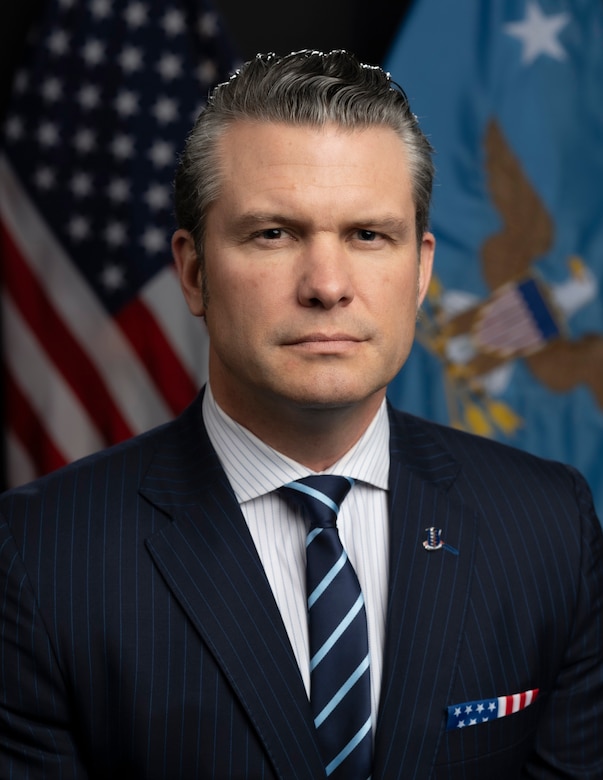
I don’t know how Pete Hegseth can look service members in the eye. He’s just blown his credibility as a military leader.
On Monday, The Atlantic’s Jeffrey Goldberg published one of the most extraordinary stories I’ve ever read. President Trump’s national security adviser, Michael Waltz, apparently inadvertently invited Goldberg to join a Signal group chat (Signal is an encrypted messaging app) that seemed to include several senior Trump officials, including Stephen Miller, JD Vance, Marco Rubio and Pete Hegseth.
A National Security Council spokesman told The Atlantic that the chat “appears to be authentic.”
No one apparently noticed Goldberg’s presence, and he had a front-row seat as they debated Trump’s decision to attack the Houthi rebels, an Iran-backed militia that had been firing on civilian shipping in the Red Sea.
Then, at 11:44 a.m. on March 15, the account labeled “Pete Hegseth” sent a message that contained “operational details of forthcoming strikes on Yemen, including information about targets, weapons the U.S. would be deploying and attack sequencing.”
This would be a stunning breach of security. I’m a former Army JAG officer (an Army lawyer). I’ve helped investigate numerous allegations of classified information spillages, and I’ve never even heard of anything this egregious — a secretary of defense intentionally using a civilian messaging app to share sensitive war plans without even apparently noticing a journalist was in the chat.
There is not an officer alive whose career would survive a security breach like that. It would normally result in instant consequences (relief from command, for example) followed by a comprehensive investigation and, potentially, criminal charges.
Federal law makes it a crime when a person — through gross negligence — removes information “relating to the national defense” from “its proper place of custody or delivered to anyone in violation of his trust, or to be lost, stolen, abstracted or destroyed.”
It’s way too soon to say whether Hegseth’s incompetence is also criminal, but I raise the possibility to demonstrate the sheer magnitude of the reported mistake. A security breach that significant requires a thorough investigation.
What example has Hegseth set? That he’s careless, and when you’re careless in the military, people can die. If he had any honor at all, he would resign.
A full description of what happened can be found at The Atlantic in a piece by Goldberg. Here are some excerpts:
The world found out shortly before 2 p.m. eastern time on March 15 that the United States was bombing Houthi targets across Yemen.
I, however, knew two hours before the first bombs exploded that the attack might be coming. The reason I knew this is that Pete Hegseth, the secretary of defense, had texted me the war plan at 11:44 a.m. The plan included precise information about weapons packages, targets, and timing.
On Tuesday, March 11, I received a connection request on Signal from a user identified as Michael Waltz. Signal is an open-source encrypted messaging service popular with journalists and others who seek more privacy than other text-messaging services are capable of delivering. I assumed that the Michael Waltz in question was President Donald Trump’s national security adviser. I did not assume, however, that the request was from the actual Michael Waltz. I have met him in the past, and though I didn’t find it particularly strange that he might be reaching out to me, I did think it somewhat unusual, given the Trump administration’s contentious relationship with journalists—and Trump’s periodic fixation on me specifically. It immediately crossed my mind that someone could be masquerading as Waltz in order to somehow entrap me.
I accepted the connection request, hoping that this was the actual national security adviser, and that he wanted to chat about Ukraine, or Iran, or some other important matter.
Two days later—Thursday—at 4:28 p.m., I received a notice that I was to be included in a Signal chat group. It was called the “Houthi PC small group.”
A message to the group, from “Michael Waltz,” read as follows: “Team – establishing a principles [sic] group for coordination on Houthis, particularly for over the next 72 hours. . . . . The term principals committee generally refers to a group of the senior-most national-security officials, including the secretaries of defense, state, and the treasury, as well as the director of the CIA. It should go without saying—but I’ll say it anyway—that I have never been invited to a White House principals-committee meeting, and that, in my many years of reporting on national-security matters, I had never heard of one being convened over a commercial messaging app.
The principals had apparently assembled. In all, 18 individuals were listed as members of this group, including various National Security Council officials; Steve Witkoff, President Trump’s Middle East and Ukraine negotiator; Susie Wiles, the White House chief of staff; and someone identified only as “S M,” which I took to stand for Stephen Miller. I appeared on my own screen only as “JG.”
I had very strong doubts that this text group was real, because I could not believe that the national-security leadership of the United States would communicate on Signal about imminent war plans. I also could not believe that the national security adviser to the president would be so reckless as to include the editor in chief of The Atlantic in such discussions with senior U.S. officials, up to and including the vice president.
It was the next morning, Saturday, March 15, when this story became truly bizarre.
At 11:44 a.m., the account labeled “Pete Hegseth” posted in Signal a “TEAM UPDATE.” I will not quote from this update, or from certain other subsequent texts. The information contained in them, if they had been read by an adversary of the United States, could conceivably have been used to harm American military and intelligence personnel, particularly in the broader Middle East, Central Command’s area of responsibility. What I will say, in order to illustrate the shocking recklessness of this Signal conversation, is that the Hegseth post contained operational details of forthcoming strikes on Yemen, including information about targets, weapons the U.S. would be deploying, and attack sequencing.
According to the lengthy Hegseth text, the first detonations in Yemen would be felt two hours hence, at 1:45 p.m. eastern time. So I waited in my car in a supermarket parking lot. If this Signal chat was real, I reasoned, Houthi targets would soon be bombed. At about 1:55, I checked X and searched Yemen. Explosions were then being heard across Sanaa, the capital city.
I went back to the Signal channel. At 1:48, “Michael Waltz” had provided the group an update. Again, I won’t quote from this text, except to note that he described the operation as an “amazing job.” A few minutes later, “John Ratcliffe” wrote, “A good start.” Not long after, Waltz responded with three emoji: a fist, an American flag, and fire. Others soon joined in, including “MAR,” who wrote, “Good Job Pete and your team!!,” and “Susie Wiles,” who texted, “Kudos to all – most particularly those in theater and CENTCOM!
The Signal chat group, I concluded, was almost certainly real. Having come to this realization, one that seemed nearly impossible only hours before, I removed myself from the Signal group, understanding that this would trigger an automatic notification to the group’s creator, “Michael Waltz,” that I had left. No one in the chat had seemed to notice that I was there. And I received no subsequent questions about why I left—or, more to the point, who I was.

Subscribe to:
Posts (Atom)