
Saturday, July 23, 2022


Liz Cheney’s Revenge on Donald Trump and the GOP

So now we can answer the question: How does democracy die? It dies not in darkness, as the Washington Post’s Trump-era slogan would have it, but in the White House itself, in the private dining room off the Oval Office, with the sound of Fox News blaring in the background.
That private dining room was Donald Trump’s de-facto headquarters for much of his Presidency. It was where he watched television and where he tweeted about what he watched on television—two of the activities that, perhaps more than any others, defined his tenure. It was also where Trump, on January 6, 2021, remained holed up for a hundred and eighty-seven minutes, as his followers stormed the U.S. Capitol, until he finally, reluctantly, released a video urging them to go home and telling them that he loved them.
On Thursday night, the House select committee charged with investigating January 6th concluded a two-month run of blockbuster hearings with a searing, minute-by-minute account of what Trump did—and didn’t do—in the dining room that awful afternoon. The words “dereliction of duty” came up a lot, as did phrases like “stain on our history” and “betrayed his oath of office.” It all added up to a portrait of something that the United States has not seen in its more than two hundred and forty years: a President who abdicated his role as Commander-in-Chief, having unleashed a violent mob of his own making and then chosen to sit by and do nothing as his nation’s Capitol was besieged and overwhelmed by that mob.
As unbelievable as it still seems, a year and a half later, America had a President who was willing to burn down democracy itself rather than admit he lost an election.
Of course, the hearing started out with a built-in problem: we already knew that Trump did not do a damn thing to stop the attack on January 6th, and that he had, in fact, incited and encouraged it. It is hard to produce a season-ending cliffhanger when the conclusion is never in doubt. And yet it was still transfixing, and terrifying, to listen as the committee played newly revealed audio and video detailing how Vice-President Mike Pence’s security detail feared they were about to be overrun by the mob—fears so acute, the committee revealed, that some even called their loved ones to say goodbye.
When the hearings began, in June, Representative Liz Cheney started them out with a rousing admonition to her Republican colleagues, almost all of whom have refused to join her and Kinzinger in robustly and publicly condemning Trump for the disaster that he brought on himself and the nation. “There will come a day when Donald Trump is gone, but your dishonor will remain,” she warned then.
Much of Thursday’s session was about forcing her fellow-Republicans to wallow in that dishonor, and this is why the hearing both began and ended with clips of the Senate Republican leader Mitch McConnell condemning Trump’s actions. Cheney and Kinzinger, of course, are both G.O.P. outcasts now. . . . Unshackled from any further demands of partisan loyalty, they were both unsparing in reminding their prime-time national-television audience of the perfidy of their own party.
Both seemed to take particular delight in tweaking House Minority Leader Kevin McCarthy, who initially blamed Trump for January 6th and then, weeks later, abjectly sought his favor once again. Kinzinger seemed almost gleeful as he recounted how, during the riot, McCarthy was “scared and begging” Trump to call off the mob. As for Josh Hawley, the young Republican senator from Missouri, who led the objections to the electoral count on January 6th, the committee showed him pumping his fist in support of the mob—followed by a shot of Hawley fleeing for his life from the rioters down a Capitol hallway. This was the congressional hearing as revenge play, an epic troll of the trolls.
But the real villain of the hearing, as in all the others, was the former President. Cheney and the other committee members went to great lengths, in fact, to repeatedly point out that Trump did nothing to stop the mob despite the pleadings of his own aides, advisers, and family members—all loyal Trumpists who had stuck with him to the very end of his disastrous four years in office.
“The case against Donald Trump in these hearings is not made by witnesses who were his political enemies,” Cheney pointed out—it came instead in the form of “confessions” by his own team. The committee brought two members of that team into the hearing room in person—Matthew Pottinger, Trump’s former deputy national-security adviser, and Sarah Matthews, his former White House deputy press secretary—to testify how they were so disgusted by the President’s refusal to take action on January 6th that they quit in protest that same afternoon.
I’ll leave the final word, though, to Cheney, who as a direct consequence of her insistence on not shutting up about Trump and the tragedy of January 6th will likely lose her House seat in Wyoming’s Republican primary next month, before the House committee convenes again, in September. “We must remember that we cannot abandon the truth and remain a free nation,” Cheney said. And yet Republicans—the vast majority of them—have chosen Trump’s Big Lie over the hard truths that would enable our democracy to endure. For now. So there is a cliffhanger ending to the committee’s work after all.
Abortion Was the Beginning: Religion, Not the Constitution Motivates SCOTUS
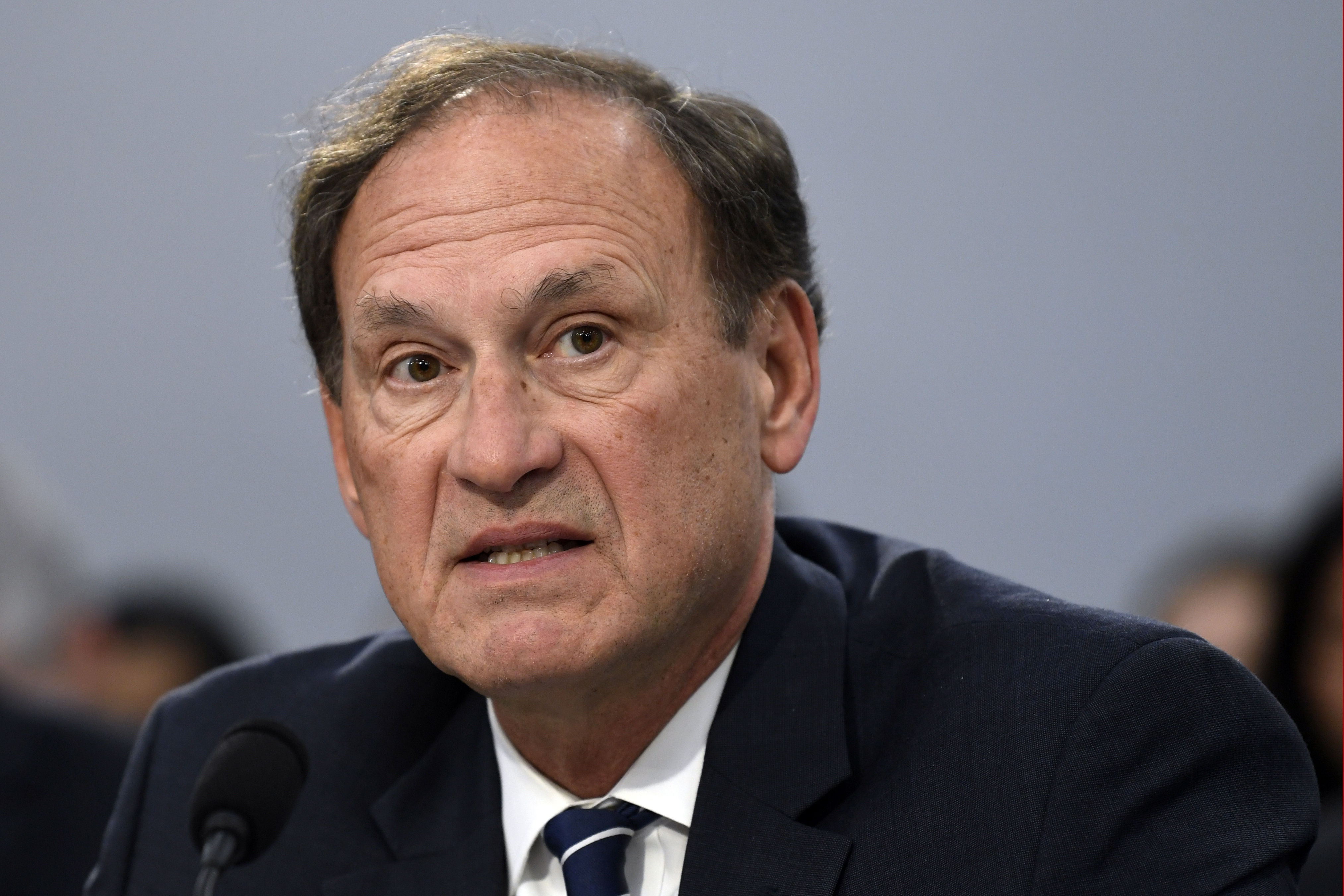
My own way of keeping track of a Supreme Court term is to log each of the term’s decisions on a chart labeled by category: criminal law, administrative law, speech, federalism and so on. . . . the other day, going over my charts before filing them away to prepare for the next term, a realization struck me. I had put Dobbs in the wrong place. Along with the decision about the praying football coach and the one requiring Maine to subsidize parochial school tuition, Dobbs belongs under “religion.”
[S]tep back from today’s artificial arguments about originalism and history, and consider the powerful social movement that led consecutive Republican presidents to appoint anti-abortion justices and that then drove the abortion issue through the Supreme Court’s open door.
Does anyone really think it was motivated by disapproval of the court’s reliance in Roe v. Wade on substantive due process, an interpretation of the 14th Amendment that accords meaning to the word “liberty” in the due process clause? Is there anyone who believes that if only the Constitution had included the word “abortion,” the anti-abortion movement would have failed to gain political traction?
No one really buys the argument that what was “egregiously wrong” with Roe v. Wade, to quote the Dobbs majority, was the court’s failure to check the right analytic boxes. It was not constitutional analysis but religious doctrine that drove the opposition to Roe. And it was the court’s unacknowledged embrace of religious doctrine that has turned American women into desperate refugees fleeing their home states in pursuit of reproductive health care that less than a month ago was theirs by right.
[D]uring the nearly two months between the leak of his Dobbs draft on May 2 and the release of the official opinion on June 24, it became painfully obvious to all that if Roe fell, abortion would soon be illegal or all but inaccessible in about half the states. That was the point, after all.
Not only did that prospect make no difference to the Dobbs majority — the official opinion was essentially unchanged from the leaked draft except for added sections that responded to, and distorted, the dissenting opinion — but Justice Alito actually had the gall to write that “we do not pretend to know how our political system or society will respond to today’s decision.” Polls conducted before the opinion’s release showing that upward of two-thirds of Americans wanted to retain a right to abortion . . . .
Justice Alito took pains to present the majority’s conclusion as the product of pure legal reasoning engaged in by judges standing majestically above the fray of Americans’ “sharply conflicting views” on the “profound moral issue” of abortion . . . . yet that very framing, the assumption that the moral gravity of abortion is singular and self-evident, gives away more than members of the majority, all five of whom were raised in the Catholic Church, may have intended.
[T]he justices, in their “concern for the lives of fetuses,” overlooked the “lived experience” of women. “To show no regard for a lived experience is immoral,” he wrote.
Indeed, the fetus is the indisputable star of the Dobbs opinion. That is not necessarily obvious at first reading: The opinion’s 79 pages are larded with lengthy and, according to knowledgeable historians, highly partial and substantially irrelevant accounts of the history of abortion’s criminalization. In all those pages, there is surprisingly little actual law.The Casey decision was five days shy of 30 years old when the court overturned it, along with Roe v. Wade, on June 24. Given that this was their goal from the start, the justices in the Dobbs majority really had only one job: to explain why. They didn’t, and given the remaining norms of a secular society, they couldn’t.
There is another norm, too, one that has for too long restrained the rest of us from calling out the pervasive role that religion is playing on today’s Supreme Court. In recognition that it is now well past time to challenge that norm, I’ll take my own modest step and relabel Dobbs for the religion case that it is, since nothing else explains it.
Turning to Texas, just as the Mississippi case that lead to Roe's demise was carefully plotted by far right activists, case are pending in Texas that will position SCOTUS to strip away LGBT rights and same sex marriage based again on religious belief, not the U.S. Constitution. Here are article excerpts:
In the wake of the toppling of Roe v. Wade and with Justice Clarence Thomas urging the U.S. Supreme Court to revisit rulings on gay sex and marriage, Texas is the stage for several lawsuits dealing with LGBT rights.
Right now, a half dozen cases on everything from insurance coverage for HIV prevention to employment discrimination and same-sex marriage are wending their way through state and federal courts here. Their outcomes could radically alter rights for lesbian, gay, bisexual and transgender people in Texas and across the country.
The lawsuits all have one thing in common: former Texas solicitor general Jonathan Mitchell. . . . .Mitchell opened up a law firm in Austin four years ago with the goal of systematically dismantling decades of court rulings he believes depart from the U.S. Constitution.
The Dallas Morning News is tracking six of his cases that originated in Texas and deal with LGBT rights. Here’s a summary of each case.
Gay Marriage
Dianne Hensley vs. State Commission on Judicial Conduct (Third Court of Appeals) and Brian Keith Umphress vs. David Hall, et al. (Northern District of Texas). Summary: Both of these cases were brought by Texas officials with the authority to perform weddings but who do not want to offer marriages to same-sex couples because they say it violates their religious beliefs.
One case in state court, filed by McLennan County Justice of the Peace Dianne Hensely, argues that marriage officiants who are government officials should be able to recuse themselves from performing ceremonies for gay couples if the couples have a viable alternative option to be wed. The other case, in federal court and filed by Jack County Judge Brian Keith Umphress, makes a similar argument.
But the Umphress case goes further, arguing that the U.S. Supreme Court erred when it declared gay marriage bans unconstitutional in 2015. It urges the court to revisit that decision. “There is no constitutional right to same-sex marriage,” the Umphress. “The federal judiciary has no authority to recognize or invent ‘fundamental’ constitutional rights.”
Umphress’ case is awaiting a decision from the federal appeals court. Hensley’s case is before a state appeals court in Austin. Other actors: Chad and Dusty Fillmore of Fort Worth are also listed as lawyers for Umphress, as are lawyers from the Plano-based Christian nonprofit law firm First Liberty Institute and Jacksboro-based firm Spiller & Spiller.
Potential effects: If Mitchell wins either case, governmental officials who are marriage officiants would be able to wed only opposite sex couples. If the Umphress case proceeds, the question of same-sex marriage could again end up before the Supreme Court. In his concurring opinion in the decision overturning Roe last month, Clarence Thomas urged his fellow justices to take up the issue if a case questioning the constitutional right to gay marriage presents itself.
Insurance Mandates
John Kelley, et al., vs. Xavier Becerra (Northern District of Texas). Summary: Plaintiffs in this federal lawsuit argue that insurers or self-insured employers should not have to cover certain kinds of preventive medical care because that would force them “to underwrite coverage that violates their religious beliefs.” The suit also targets the Affordable Care Act’s mechanisms for deciding which care private insurers must cover, arguing it gives the federal agencies and other unelected bodies undue control over decisions that should remain with Congress.
The suit specifically mentions contraception and the HIV prevention drugs known as PreP, which the plaintiffs say “facilitate and encourage homosexual behavior, prostitution, sexual promiscuity, and intravenous drug use.”
The plaintiffs include Tarrant County residents Joel Starnes and John Kelley, who runs Kelley Orthodontics, and Braidwood Management, a business owned by anti-LGBT activist Steven Hotze. Mitchell is the lead lawyer representing the plaintiffs.
Employment Discrimination
Braidwood Management v. EEOC (Fifth Circuit Court of Appeals), Summary: The case in federal court, filed on behalf of Hotze’s Braidwood Management and the Keller-based Bear Creek Bible Church, argues that religious employers should be able to hire and fire workers based on their sexuality and gender identity.
The plaintiffs in these cases argue faith-based organizations and companies should be exempt from these protections. Mitchell represents the plaintiffs.
A federal judge in North Texas agreed with Mitchell. The U.S. Equal Opportunity Commission, the defendant, is fighting that decision at the federal appeals court. Mitchell’s response is due Aug. 1.
LGBT Library Books
Leila Green Little, et al. vs. Llano County (Western District of Texas). Summary: The federal lawsuit, filed by citizens of Llano County, argues their First and Fourteenth Amendment rights were violated when local leaders pulled certain titles from the library’s child and teen sections that they deemed “pornographic.”
Other actors: Texas Attorney General Ken Paxton has filed a motion to intervene on behalf of the state, which the plaintiffs oppose. Several other lawyers are also representing some of the same officials, as well as other defendants, as Mitchell.
Potential effects: If they win, the plaintiffs could force local Llano leaders to replace titles they pulled from library shelves and discourage similar efforts in future.
‘Save Chick-fil-A’
Patrick Von Dohlen, et al. vs. city of San Antonio (438th District Court in Bexar County). Summary: This state lawsuit, filed by a handful of would-be Chick-fil-A customers, argues San Antonio violated a state’s so-called Save Chick-fil-A law by booting the fast food chain Chick-fil-A from the local airport based on its charitable donations to Christian groups that oppose LGBT rights. The law, which Gov. Greg Abbott signed in 2019, prohibits governmental entities from taking “adverse actions” against a business or person for their contributions to or memberships in religious organizations, and allows citizens to sue over apparent violations.
In April, the Texas Supreme Court sided with the city, saying the plaintiffs didn’t have enough proof of a violation of the law, and sent the case back to the trial court. Mitchell represents the plaintiffs who sued the city. Mitchells plans to file an amended petition in the San Antonio trial court.
Potential effects: While supporters of the “Save Chick-fil-A” law said it was written to uphold religious freedom, advocates for the LGBT community called it a thinly veiled attempt to justify discrimination in the name of faith. If the plaintiffs win, the law will have survived its most serious challenge in court and advocates worry it could embolden other citizens to bring similar suits.
As with the Dobbs case, these suits are designed to allow the U.S. Supreme Court to roll back LGBT rights to appease Christofascists who want their alleged "religious beliefs" to override the rights of others.

Friday, July 22, 2022

Trump's Guilt: the Inescapable Conclusion From the January 6 Hearings

Americans aren’t the most attentive political observers. But thanks in part to Hollywood, they have a pretty clear vision of what they expect their president to do in an unfolding crisis, especially an attack on U.S. citizens at home or abroad. He (or she, in the movies at least) will march down to the Situation Room, confer with advisers, and at some point address the nation in a sober televised speech.
During the crucial afternoon hours of January 6, 2021, as a mob of protesters stormed and briefly occupied the Capitol, then-President Donald Trump did none of those things.
Trump spent the afternoon sitting in his private White House dining room, staring for hours at a television tuned to Fox News. He made no effort to quell the violence or protect congressional leaders under threat, and when he was told the rioters were chanting that they wanted to “hang” Trump’s vice president, Mike Pence, Trump said that Pence deserved it. The mob came so close to Pence that, the committee revealed tonight, the Secret Service agents protecting him [Pence] feared for their lives and wanted “to say goodbye” to their families.
Trump ignored pleas from his staff, his allies in Congress, and even his own daughter Ivanka. Many of those around the president wanted him to forcefully call off the mob and deliver a national address to denounce the violence. All he would do was film and tweet out a short video in which he gently asked his supporters to “go home in peace.” “He refused to defend our nation and our Constitution,” Representative Liz Cheney, the Republican of Wyoming, said. “He refused to do what every American president must.”
Trump’s leadership—or lack thereof—during the Capitol riot was the focus of tonight’s prime-time hearing, the ninth hearing that the committee has held and, for now, the final one scheduled. There will be more, however, committee leaders announced tonight.
The presentation filled in an aspect of the day about which relatively little had been known, because the Trump White House kept incomplete logs of the president’s activities and phone calls. The Secret Service deleted the majority of texts that its agents sent on January 6, a potential violation of federal law that the National Archives is now investigating.
The committee established that Trump was told within 15 minutes of ending his rally speech that the Capitol was under attack. After the Secret Service rebuffed his demands to join the crowd himself, the president settled into his seat at the head of the dining-room table. . . . Trump interrupted his Fox viewing to make phone calls—not to help stop the riot but to urge Republican senators to hold strong in their planned objections to the certification of the election.
[S]enior administration officials testifying that they were aware of no Trump calls to the secretary of defense, the attorney general, or the secretary of homeland security. Sarah Matthews, a former deputy press secretary who testified at the hearing, told the panel that Trump could have delivered live remarks to the nation “within a matter of minutes” simply by walking down a hallway to the White House press-briefing room. He did not.
The committee juxtaposed descriptions of the president’s quiet afternoon in the White House with the growing terror at the Capitol. A White House national-security employee, whose identity was obscured by the committee, testified about how scared Pence’s security detail became as they tried to rush him past rioters to safety. Viewers saw footage of Senator Josh Hawley of Missouri scurrying out of danger just hours after he’d raised his fist to encourage the throng that would ultimately force him to flee.
This was Trump’s 3 a.m. moment, except it occurred during the middle of the president’s notoriously short workday. It would be easy to say Trump was a mere spectator, choosing to sit out an attempted coup and arguably derelict in his sworn duty to “preserve, protect, and defend the Constitution.” But the January 6 committee has accused the former president of being far more than a passive observer who fiddled while the Capitol nearly fell.
Again and again, the panel has asserted that Trump was an instigator and a would-be participant in the charge, an unhinged leader who literally lunged for the wheel of the car that would take him to the Capitol. “The mob was accomplishing President Trump’s purpose,” Representative Adam Kinzinger said tonight. “So of course he didn’t intervene.” In the committee’s telling, [Trump] the president watched his legion of supporters attack the seat of American government not only with glee but also with envy, and it is sheer folly to have expected him to try and stop the riot he had fomented.
At best, Trump belongs in prison although I would prefer a far harsher penalty.

Thursday, July 21, 2022

Climate Disaster Approaches and Feckless Politicians Do Nothing

The evidence that a climate crisis is well underway appears to be everywhere: the Great Salt Lake in Utah drying up, severe weather regularly imperiling the electric grid in Texas, wildfires scorching the drought-plagued West, “climate refugees” seeking higher land in Louisiana and tidal floods swamping the streets of Miami.
In 2020, Mr. Biden campaigned on a transformative, $2 trillion program to wean the nation from fossil fuels.
By this week, what remained of that program — mainly clean energy tax breaks and subsidies to purchase electric vehicles — appeared dead, killed by Mr. Manchin, who fretted that it could exacerbate inflation. The bipartisan infrastructure bill signed by Mr. Biden did include $2.5 billion to help communities install charging stations, but consumers appeared to be on the hook for the full cost of the cars and trucks that need the juice.
Much of Democrats’ frustration surrounding Congress’s climate failures has been directed not toward Republicans, but toward Mr. Manchin, who said repeatedly that even a stripped-down budget bill should address the issue — only to pull the plug last week on any climate provisions.
We are quickly passing the point of no return and as a piece in The Atlantic lays out, we may soon learn that worse case senarios will be arriving far sooner than previously predicted. Here are highlights:
In September 2020, the United Kingdom’s Meteorological Office published a hypothetical weather forecast for a mid-July day in the year 2050. Forty degrees Celsius in London. (That’s 104 degrees Fahrenheit.) Thirty-eight in Hull (100 degrees F). Thirty-nine in Birmingham (102 degrees F). These were preposterous numbers, never before seen in U.K. weather forecasts, much less felt in reality—until last week. On Friday, the Met Office published an actual forecast for Tuesday that, as several observers noted, looked scarily similar to its 2050 projections. And today, as predicted, the U.K. smashed its previous heat record, registering a provisional reading of 40.3 degrees C, or 104.5 degrees F, in a small village near the eastern coast. From speculative fiction to nonfiction in less than two years.
It’s not just the U.K. Now everywhere is hot. More than 100 million Americans are currently under heat advisories or warnings. In India, a record-breaking heat wave has only recently given way to the monsoon. Parts of Central Asia are still seeing temperatures as high as 115 degrees Fahrenheit. And the damage done by overlapping disasters doesn’t merely accrete linearly; it compounds. Over time, climate change has made these concurrent extremes more and more common, Kai Kornhuber, a climate scientist at Columbia, told me. Since the late ’70s, concurrent major heat waves have grown six times more frequent in the Northern Hemi sphere, . . . .
There is also the possibility, Kornhuber said, that beyond simply warming the planet as a whole, climate change could be changing the way weather systems move around the globe, so as to make concurrent heat waves more likely. Under one hypothesis, the rapid warming of the poles compresses the temperature gradient between the poles and the equator. This, in turn, slows the equatorial jet stream (which you can basically think of as the giant wind highway along which lots of weather travels), causing heat waves to linger longer than they otherwise would.
At some level, the mechanics don’t really matter. Whatever they are, the story is this: Heat waves are getting hotter and longer and more frequent, and that is very bad news indeed. For anyone who aspires to be alive for several more decades, “the simple laws of physics mean this will likely be one of the cooler summers of our lifetime,” Daniel Horton, a climate scientist at Northwestern University, told me.
In a scenario in which we limit warming to 1.5 degrees Celsius, we could expect to see a heat wave that would have occurred once every 50 years in the late 1800s climate happen about nine times as often. That scenario is pretty much already an optimistic fantasy. In the worst-case scenario the report considered, we would see a once-every-50-years heat wave 40 out of every 50 years. . . . . those new extremes could approach 10 degrees Fahrenheit hotter than they are at present.
More than 1,700 heat-related deaths have been reported this month in Spain and Portugal alone. Runways are melting and delaying planes. Tracks are warping and delaying trains. Surgical procedures are being canceled because of overheated operating rooms. Also, sharks.
When we note the eerie resemblance between this week’s U.K. weather forecast and the hypothetical 2050 forecast published two years earlier and say that the current heat wave is a glimpse of the future, we are in a way eliding the real question. Which is: What part of the future are we glimpsing? A true outlier? Or a pretty hot summer? Or four years out of every five? “The answer,” Ruane said, “is, it depends on what we as a society choose to do.” That could be heartening. But the way things are going, it’s not very heartening at all.
Be very afraid for the future.

Subscribe to:
Posts (Atom)