
Saturday, March 26, 2022


White Christian Nationalists and the January 6th Insurrection

We haven’t paid enough attention to the role of right-wing Christian nationalism in driving Trump’s effort to destroy our political order, and in the abandonment of democracy among some on the right more broadly.
In invoking Jesus’ support for Trump’s effort to overturn the election, [Trump aid Mark] Meadows — who handled evangelical outreach in the White House — was not merely making an offhand comment. He was speaking in a vein that has held wide currency among the Christian nationalist right throughout the Trump years, right through the insurrection attempt.
Sarah Posner, a scholar of the Christian right, has extensively documented the role of that movement in supporting and lending grass-roots energy to the effort to overturn the election procedurally, and even in fomenting the insurrection itself.
The rhetoric from the Christian right about Trump has long sounded very much like that exchange between Meadows and [Ginni] Thomas. In a piece tracing that rhetoric, Posner concludes that for many on the Christian right, Trump was “anointed” by God as “the fulfillment of a long-sought goal of restoring the United States as a Christian nation.”
In this narrative, Trump — despite his glaring and repugnant personal imperfections — became the vessel to carry out the struggle to defeat various godless and secularist infestations of the idealized Christian nation, from the woke to globalists to communists to the “deep state.”
This culminated with the effort to overturn the election and the lead-up to the Jan. 6 rally that morphed into the mob assault. As Posner documents, Christian-right activists developed a “bellicose Christian narrative in defense of Trump’s coup attempt,” investing it with biblical significance and casting it as “holy war against an illegitimate state.”
That illegitimate state, of course, is our democracy. And so, when Thomas and Meadows text about the religious dimensions of the coup attempt, they’re echoing much of what we’ve long heard from the Christian right about it.
To be fair, some Christian voices roundly condemned the Jan. 6 violence. But on the day itself, there were many Christian symbols of various kinds visible throughout the “Stop the Steal” rally crowd, as Robert Jones, the founder and CEO of Public Religion Research Institute, has documented.
“The evidence for White Christian nationalism’s importance to the effort to overthrow the election was right before our eyes on Jan. 6,” Jones told me. “It was in the signs that were carried. It brought a veneer of divine blessing on the violence and the insurrection.”
Christian nationalism has at different times focused on varying enemies of its vision of a Christian nation. But the through line here is that multidenominational, multiracial democracy is producing a country that is unacceptable to the Christian nationalist vision, Jones notes.
Which is why reckoning with the role of this movement in the turn against democracy is important. “It is a violent reclamation movement,” Jones told me. “If we’re going to move into the promise of a multi-religious, multiethnic democracy, these forces are going to have to be confronted.”
In his diatribe about Meadows’s invocation of Jesus, [Joe] Scarborough said: “He’s right — it was a fight between good and evil. He’s just got the jerseys mixed up.” Scarborough repeated that this is a “sickness.”
But this movement runs a whole lot deeper than Meadows and Thomas. And it isn’t going anywhere.
These people are a clear and present danger. People need to understand the viciousness of members of this movement and their mindset that the end goal justifies the means regardless of the harm done to others. These are not you church bake sale ladies - they are armed and dangerous.

Friday, March 25, 2022

Ginni Thomas Is Destroying the U.S. Supreme Court

Virginia Thomas, a conservative activist married to Supreme Court Justice Clarence Thomas, repeatedly pressed White House Chief of Staff Mark Meadows to pursue unrelenting efforts to overturn the 2020 presidential election in a series of urgent text exchanges in the critical weeks after the vote, according to copies of the messages obtained by The Washington Post and CBS News.
The messages — 29 in all — reveal an extraordinary pipeline between Virginia Thomas, who goes by Ginni, and President Donald Trump’s top aide during a period when Trump and his allies were vowing to go to the Supreme Court in an effort to negate the election results.
When Meadows wrote to Thomas on Nov. 24, the White House chief of staff invoked God to describe the effort to overturn the election. “This is a fight of good versus evil,” Meadows wrote. “Evil always looks like the victor until the King of Kings triumphs. Do not grow weary in well doing. The fight continues. I have staked my career on it. Well at least my time in DC on it.”
Thomas replied: “Thank you!! Needed that! This plus a conversation with my best friend just now… I will try to keep holding on. America is worth it!”
It is unclear to whom Thomas was referring.
The messages, which do not directly reference Justice Thomas or the Supreme Court, show for the first time how Ginni Thomas used her access to Trump’s inner circle to promote and seek to guide the president’s strategy to overturn the election results — and how receptive and grateful Meadows said he was to receive her advice. Among Thomas’s stated goals in the messages was for lawyer Sidney Powell [now facing possible disbarment], who promoted incendiary and unsupported claims about the election, to be “the lead and the face” of Trump’s legal team.
The content of messages between Thomas and Meadows — 21 sent by her, eight by him – has not previously been reported. They were reviewed by The Post and CBS News and then confirmed by five people who have seen the committee’s documents.
Meadows’s attorney, George Terwilliger III, confirmed the existence of the 29 messages between his client and Thomas. In reviewing the substance of the messages Wednesday, he said that neither he nor Meadows would comment on individual texts.
Ginni Thomas did not respond to multiple requests for comment made Thursday by email and phone. Justice Thomas, who has been hospitalized for treatment of an infection, did not respond to a request for comment made through the Supreme Court’s public information office.
Shortly after providing the 2,320 messages, Meadows ceased cooperating with the committee, arguing that any further engagement could violate Trump’s claims of executive privilege. Committee members and aides said they believe the messages may be just a portion of the pair’s total exchanges.
The revelation of Thomas’s messages with Meadows comes three weeks after lawyers for the committee said in a court filing that the panel has “a good-faith basis for concluding that the President and members of his Campaign engaged in a criminal conspiracy to defraud the United States” and obstruct the counting of electoral votes by Congress.
Trump spoke publicly during this period about his intent to contest the election results in the Supreme Court.
Justice Thomas, 73, is the Supreme Court’s longest-serving current justice and has missed oral arguments this week because of his hospitalization. He has made few public comments about the 2020 election. In February 2021, when the Supreme Court rejected election challenges filed by Trump and his allies, Thomas wrote in a dissent that it was “baffling” and “inexplicable” that the majority had decided against hearing the cases because he believed the Supreme Court should provide states with guidance for future elections.
In her text messages to Meadows, Ginni Thomas spread false theories, commented on cable news segments and advocated with urgency and fervor that the president and his team take action to reverse the outcome of the election. She urged that they take a hard line with Trump staffers and congressional Republicans who had resisted arguments that the election was stolen.
Here are excerpts from the Post column that looks at Justice Thomas' glaring conflicts of interest due to his wife's uncontrolled activities:
Ginni Thomas’s name stood out among the signatories of a December letter from conservative leaders, which blasted the work of the House committee investigating the Jan. 6 insurrection as “overtly partisan political persecution.”
One month later, her husband, Supreme Court Justice Clarence Thomas, took part in a case crucial to the same committee’s work: former president Donald Trump’s request to block the committee from getting White House records that were ordered released by President Biden and two lower courts.
That vote has reignited fury among Clarence Thomas’s critics, who say it illustrates a gaping hole in the court’s rules: Justices essentially decide for themselves whether they have a conflict of interest, and Thomas has rarely made such a choice in his three decades on the court.
While the Supreme Court is supposed to operate under regulations guiding all federal judges, including a requirement that a justice “shall disqualify himself in any proceeding in which his impartiality might reasonably be questioned,” there’s no procedure to enforce that rule. . . . Thomas has never bowed out of a case due to alleged conflicts with his wife’s activism, according to Roth. . . . In a number of instances, her activism has overlapped with cases that have been decided by Clarence Thomas.
“It doesn’t get more partisan than sending a letter to the Republican caucus” criticizing the Jan. 6 committee, said Rep. Hank Johnson (D-Ga.), author of several bills that would require an independent review to determine when Supreme Court justices should recuse. He said in an interview that Clarence Thomas’s conflicts with his wife’s work make him “the poster child” for passing the ethics legislation.
Caroline Fredrickson, a Georgetown University law professor who served on the White House commission, said that she could think of no precedent for Thomas’s decision to rule on issues closely linked to his wife’s activism.
“In every case that has come up, he has shown no interest in recusal and has in fact seemingly been defiant,” Fredrickson said. “To be a Supreme Court justice and to be married to a firebrand activist who’s trying to blow things up” is unique. “It’s so out of bounds that if it weren’t so frightening, it would be comical.”
Ginni Thomas’ claim in 2000 that she doesn’t talk to her husband about Supreme Court business now seems laughable. Is there a single opinion that Justice Thomas has ever written that is inconsistent with his wife’s far right-wing views?”

Thursday, March 24, 2022
Americans Are Leaving Church and Not Coming Back

In the report, Generation Z and the future of faith in America, Daniel A. Cox, senior fellow in polling and public opinion at the American Enterprise Institute, who also serves as director of the Survey Center on American Life, paints a complicated and diminished view of religion in American life.
Much of the disaffection for religion today is largely driven by people who were once religious. There is a growing population of the religiously unaffiliated whose once religious parents raised them without religion.
“Young adults today have had entirely different religious and social experiences than previous generations did. The parents of millennials and Generation Z did less to encourage regular participation in formal worship services and model religious behaviors in their children than had previous generations,” Cox wrote. “Many childhood religious activities that were once common, such as saying grace, have become more of the exception than the norm.”
With more parents raising their children with weak or no bond to a faith community, it’s a lot more difficult for them to be converted in adulthood.
For nearly 30 years, notes Cox, research shows the share of Americans who identify as religious has consistently declined with each new generation.
“This pattern continues with Generation Z demonstrating less attachment to religion than the millennial generation did,” he said.
Generation Z, born in the late 1990s and early 2000s, is now the least religious generation yet, with 34% of them identifying as religiously unaffiliated. Among millennials, 29% identify as religiously unaffiliated, while Generation X stands at 25%. Only 18% of baby boomers and 9% of the silent generation identify as religiously unaffiliated.
“It’s not only a lack of religious affiliation that distinguishes Generation Z. They are also far more likely to identify as atheist or agnostic,” Cox said, noting that some 18% of the cohort identified as either atheist or agnostic.
Cox pointed to a number of factors that have impacted a diminished view of organized religion, including a breach of trust.
“Gallup has found that trust and confidence in organized religion have plummeted over the past two decades. In 2021, only 37% of the public reported having a great deal or quite a lot of confidence in religious institutions, a massive decline since 2001 when 60 percent reported feeling confident,” he said.
He further added that while only 35% of Americans overall believe religion causes more harm than good, among the disaffiliated who were raised in religious homes, 69% say religion causes problems more than it provides solutions. Some 63% of Americans who have always been religiously unaffiliated also believe religion causes more problems in society than it solves.
Only 40% of Gen Z see raising children with religion as a good thing.

Why It Is Crucial Ukraine Wins
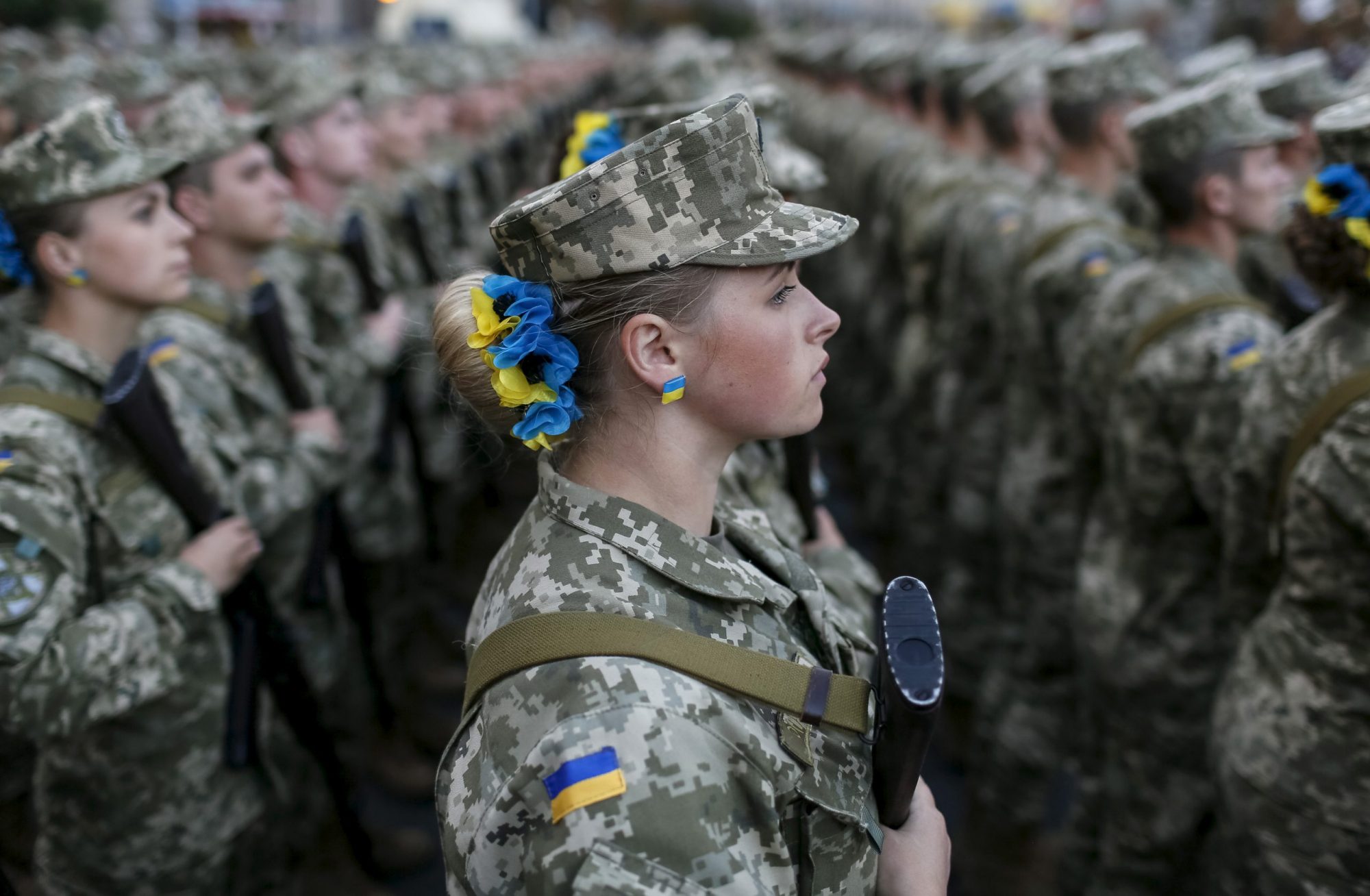
The war in Ukraine has reached a turning point. The Russian troops that invaded the country from the north, south, and east are now scarcely moving. They have targeted schools, hospitals, apartment buildings, and a theater sheltering children, but they are not yet in control even of the places they occupy. And no wonder: Few Ukrainians are willing to collaborate with the occupiers. The overwhelming majority, more than 90 percent, believe they will defeat them. The Ukrainian army refuses to surrender, even in cities badly damaged by bombardment.
Russian planners expected the entire war, the conquest of Ukraine, to last no more than six weeks. More than half that time has already passed. There must be an endgame, a moment when the conflict stops. The Ukrainians, and the democratic powers that support Ukraine, must work toward a goal. That goal should not be a truce, or a muddle, or a decision to maintain some kind of Ukrainian resistance over the next decade, or a vow to “bleed Russia dry,” or anything else that will prolong the fighting and the instability. That goal should be a Ukrainian victory.
[I]n this war, victory can be imagined without difficulty. It means that Ukraine remains a sovereign democracy, with the right to choose its own leaders and make its own treaties. There will be no pro-Russian puppet regime in Kyiv, no need for a prolonged Ukrainian resistance, no continued fighting. The Russian army retreats back over the borders. Maybe those borders could change, or maybe Ukraine could pledge neutrality, but that is for the Ukrainians to decide and not for outsiders to dictate. Maybe international peacekeepers are needed. Whatever happens, Ukraine must have strong reasons to believe that Russian troops will not quickly return.
Imagine, too, the consequences of such a victory. In Washington, most people have long believed that Ukraine is part of a regional conflict, and that Ukraine is a piece of territory that the Russians care more about than we do and always will. But this is no longer true. The Ukrainians, and especially their president, Volodymyr Zelensky, have made their cause a global one by arguing that they fight for a set of universal ideas—for democracy, yes, but also for a form of civic nationalism, based on patriotism and a respect for the rule of law; for a peaceful Europe, where disputes are resolved by institutions and not warfare; for resistance to dictatorship.
This language is effective because it evokes the principles that bind together the majority of Europeans, Americans, and many other people around the world, reminding them of how much worse the world was in the bloodier past, and how much worse it could be in the future if those principles no longer matter. The words Zelensky uses also reverberate because they are true. A victory for Ukraine really will be a victory for all who believe in democracy and the rule of law. Citizens of existing democracies and members of the democratic opposition in Russia, Cuba, Belarus, and Hong Kong will all be emboldened. . . . The institutions protecting the states that embody those ideas, most notably the European Union and NATO, will be strengthened too.
Zelensky’s words resonated further because the Russians have also given this conflict enormous significance. The Russian foreign minister has just declared that this war will change global politics: “This is not about Ukraine at all, but the world order. The current crisis is a fateful, epoch-making moment in modern history. It reflects the battle over what the world order will look like.” . . . Vladimir Putin had planned for the Russian army to impose Russia’s autocratic, kleptocratic political system on all of Ukraine. Already, the Russian occupation of some eastern-Ukrainian towns resembles the Soviet occupation of Central Europe at the end of World War II. Public officials and civic leaders—mayors and police but also members of Parliament, journalists, museum curators—have been arrested and not seen since. Civilians have been terrorized at random.
In the case of a Russian victory, these tactics would be applied all over Ukraine, creating mass terror, mass violence, and instability for years to come. And, yes, if we accept that outcome, autocrats from Minsk to Caracas to Beijing will take note: Genocide is now allowed.
Precisely because the stakes are so high, the next few weeks will be extremely dangerous. Putin will do what he can to create fear. The extraordinary speech he made last week, describing Russian critics of the war as “scum,” “traitors,” and “gnats,” had exactly that purpose. He spoke of Russia’s need for “self-purification” using a word with the same root as purge, the term that Stalin used when ordering the liquidation of his enemies. Putin is deliberately evoking the worst and bloodiest era of Soviet history to avoid even a hint of domestic opposition. He has just thrown away 30 years of economic gains . . . He seems to believe that only elevated levels of fear will prevent them from protesting, once they understand what has happened to their country. He may be right.
Putin and his propagandists are dropping hints about chemical and nuclear weapons for the same reason. They want outsiders, and especially Americans, to fear the consequences of helping Ukraine. . . . all of that has a purpose. So does the strange, ranting, anti-Polish letter issued by Dimitri Medvedev, the Putin crony who briefly served as president of Russia before Putin decided he wanted the job back again. This screed contained insults, veiled threats, and an old Soviet-era complaint that the Poles were “ungrateful” that the Red Army pushed Hitler out of Poland, and then established a brutal new occupation regime in Hitler’s wake. Among other things, Medvedev was sending a reminder: Poland could be next. The recent Russian strike on a base near the Polish border sent the same message.
How should the West respond? There is only one rule: We cannot be afraid. Russia wants us to be afraid—so afraid that we are crippled by fear, that we cannot make decisions, that we withdraw altogether, leaving the way open for a Russian conquest of Ukraine, and eventually of Poland or even further into Europe. Putin remembers very well an era when Soviet troops controlled the eastern half of Germany. But the threat to those countries will not decrease if Russia carries out massacres in Ukraine. It will grow.
Instead of fear, we should focus on a Ukrainian victory. Once we understand that this is the goal, then we can think about how to achieve it, whether through temporary boycotts of Russian gas, oil, and coal; military exercises elsewhere in the world that will distract Russian troops; humanitarian airlifts on the scale of 1948 Berlin; or more and better weapons.
[T]he strategy has to be clear. A month ago, nobody believed this war would matter so much, and I’m sure many people wish it did not. But it does. That’s why every move we make must have a single goal: How does it help Ukraine win?
“It’s not our war” was something we might have been able to say three weeks ago. Not now.
I agree with the author's analysis.

Subscribe to:
Posts (Atom)