
Sunday, December 17, 2023


Sex Scandals and the Hypocrisy of the Far Right
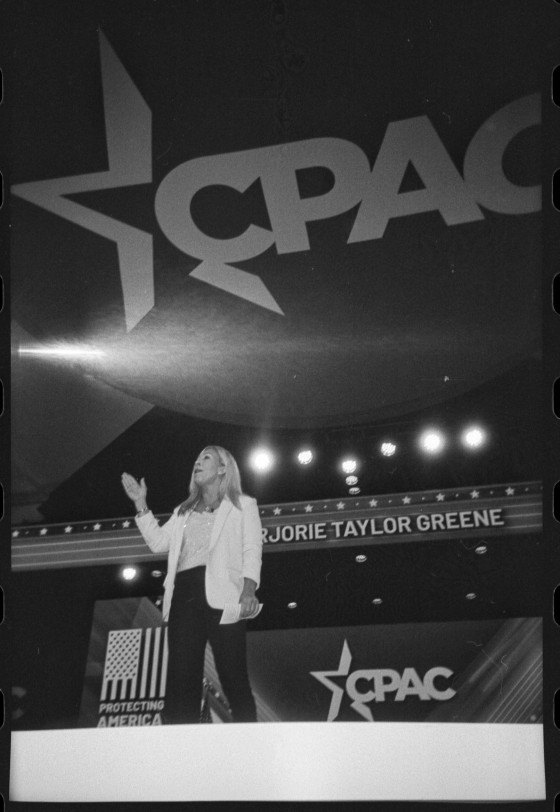
Officials overseeing the Conservative Political Action Conference knew about past accusations of sexual misconduct by chairman Matt Schlapp but failed to investigate or remove him from his powerful post, an amended sexual battery and defamation lawsuit claims.
In one alleged incident, during a fundraising trip to South Florida in early 2022, Schlapp was accused of stripping to his underwear and rubbing against another person without his consent, according to the filing. In 2017, at a CPAC after-party, Schlapp attempted to kiss an employee against his wishes, the lawsuit claims.
In both cases, according to the suit, the alleged victims reported the unwanted advances to staffers at CPAC’s parent organization, the American Conservative Union, but no action was taken against Schlapp, a longtime Republican power broker and prominent backer of former president Donald Trump.
The new allegations were added one week ago to a lawsuit filed in January by a former Republican campaign staffer, Carlton Huffman, who accused Schlapp of groping him in October 2022. The alleged additional victims are not identified and are not joining the suit; the court filing says their allegations were obtained through the discovery process.
Schlapp’s attorney, Benjamin Chew, did not respond to requests for comment on Friday.
The amended lawsuit adds to the financial and political pressures on the ACU, a standard-bearer of the conservative movement that has endured an exodus of board members, staffers and corporate sponsors amid mounting concerns about Schlapp’s leadership and financial stewardship. Schlapp and the ACU have not responded to the amended complaint in court yet.
The new complaint in Alexandria Circuit Court adds the American Conservative Union as a defendant and asks for an additional $3.7 million in punitive damages and costs. Previously, only Schlapp and his wife were named as defendants in the $9.4 million suit. ACU had paid more than $1 million in legal fees as of August, as the discovery process was in the early stages, according to a former board member’s resignation letter.
The lawsuit began in January when Huffman, a staffer on Herschel Walker’s U.S. Senate campaign in Georgia, alleged that Schlapp groped his crotch during a campaign trip to Atlanta last fall. Call logs, texts and videos provided by Huffman and his confidants to The Post and in his lawsuit broadly matched his account of quickly sharing the allegation with six family members and friends, and three Walker campaign officials confirmed to The Post that he told them about the alleged incident that night or the next day.
Schlapp, 55, has acknowledged going to two bars with Huffman that night but has denied any wrongdoing. Huffman initially filed the suit anonymously, and Schlapp’s allies accused him of trying to avoid scrutiny of his own record, which includes expressing extremist views on a white-supremacist blog and radio show more than a decade ago.
Meanwhile, the scandal and reaction against Bridget Ziegler and Moms for Liberty continues with Ziegler's hypocrisy being a target of constituents' wrath. The New York Times looks at this scandal and hopefully the implosion of Moms for Liberty. Here are article highlights:
Moms for Liberty, a national right-wing advocacy group, was born in Florida as a response to Covid-19 school closures and mask mandates. But it quickly became just as well known for pushing policies branded as anti-L.G.B.T.Q. by opponents.
So when one of its founders, Bridget Ziegler, recently told the police that she and her husband, who is under criminal investigation for sexual assault, had a consensual sexual encounter with another woman, the perceived disconnect between her public stances and private life fueled intense pressure for her to resign from the Sarasota County School Board.
“Most of our community could not care less what you do in the privacy of your own home, but your hypocrisy takes center stage,” said Sally Sells, a Sarasota resident and the mother of a fifth-grader, told Ms. Ziegler during a tense school board meeting this week. Ms. Ziegler, whose husband has denied wrongdoing, said little and did not resign. Ms. Sells was one of dozens of speakers who criticized Ms. Ziegler — and Moms for Liberty — at the meeting . . . .
Perhaps no group gained so much influence so quickly, transforming education issues from a sleepy political backwater to a rallying cry for Republican politicians. The organization quickly became a conservative powerhouse, a coveted endorsement and a mandatory stop on the G.O.P. presidential primary campaign trail.
Yet, as Moms for Liberty reels from the scandal surrounding the Zieglers, the group’s power seems to be fading. Candidates endorsed by the group lost a series of key school board races in 2023. The losses have prompted questions about the future of education issues as an animating force in Republican politics.
John Fredericks, a Trump ally in Virginia, said the causes that Moms for Liberty became most known for supporting — policies banning books it deemed pornographic, curtailing the teaching of L.G.B.T.Q. issues and policing how race is taught in schools — had fallen far from many voters’ top concerns.
“You closed schools, and people were upset about that. Schools are open now,” he said. “The Moms for Liberty really have to aim their fire on math and science and reading, versus focusing on critical race theory and drag queen story hours.” He added: “It’s nonsense, all of it.”
Nearly 60 percent of the 198 school board candidates endorsed by Moms for Liberty in contested races across 10 states were defeated in 2023, according to an analysis by the website Ballotpedia, which tracks elections.
Jon Valant, the director of the Brown Center on Education Policy at the Brookings Institution, a left-leaning think tank, found in a recent study that the group had an outsize presence in battleground and liberal counties. Yet in those areas, the policies championed by Moms For Liberty are broadly unpopular.
“The politics have flipped on the Moms for Liberty, and they’re turning more people to vote against them than for them,” Mr. Valant said.
In November, the group announced that it had removed the chairwomen of two Kentucky chapters after they had posed in photos with members of the Proud Boys, a far-right group with a history of violence. That came several months after a chapter of Moms for Liberty in Indiana quoted Adolf Hitler in its inaugural newsletter. The year before, Ms. Ziegler publicly denied links to the Proud Boys after she had posed for a photo with a member of the group at her election night victory party.
Anne Pogue Donohue, who ran for a school board seat in Loudoun County, Va., against a candidate endorsed by the group, said she saw a disconnect between the cause of Moms for Liberty and the current concerns of voters.
“There is a pushback now,” she said. “Moms for Liberty focuses heavily on culture-war-type issues, and I think most voters see that, to the extent that we have problems in our educational system that we have to fix, the focus on culture-war issues isn’t doing that.”
[O]pponents have started showing up to school board meetings in force, trying to counter the group’s message — including in Sarasota, where Ms. Ziegler’s critics turned out to try to push her out.
The school board, which includes several conservatives who have aligned with Ms. Ziegler before, voted 4 to 1 on Tuesday for a nonbinding resolution urging her to resign; Ms. Ziegler was the only one on the board to vote against it.
One has to wonder why "conservatives" follow leaders who by their personal lives - think Jerry Falwell, Jr. - make a mockery of the causes they claim to support. More impotently, they show their followers to be easily duped fools.

Saturday, December 16, 2023

Optimism: Why Trump Won’t Win

Over the past few weeks, warnings about the threat posed by Donald Trump’s potential reelection have grown louder, including in a series of articles in The Atlantic. This alarm-raising is justified and appropriate, given the looming danger of authoritarianism in American politics. But amid all of the worrying, we might be losing sight of the most important fact: Trump’s chances of winning are slim.
Some look at Trump’s long list of flaws and understandably see reasons to worry about him winning. I see reasons to think he almost certainly won’t.
Yes, recent polls appear to favor him. Yes, Joe Biden is an imperfect opponent. And yes, much could change over the next 11 months, potentially in Trump’s favor. But if Biden’s health holds, he is very likely to be reelected next year. It’s hard to imagine any Republican candidate galvanizing Democrats, independents, and even some Republicans to vote for the current president in the way that Trump will.
I’m not arguing that anyone who wants President Biden to win—and, more important, anyone who wants Trump to lose—should relax. To the contrary, Democrats, and any other sensible voters who oppose Trump, need to forcefully remind the American people about how disastrous he was as president and inform them of how much worse a second term would be. Thankfully, that is not a hard case to make.
The former president enjoys some clear advantages. About a third of Republicans are fiercely loyal to him, meaning that he has the unwavering support of a small but potent segment of the broader electorate. . . . Large numbers of Americans will vote for anyone running as a Republican against a Democrat.
Trump’s media supporters, above all at Fox News, will offer support, propagating a set of myths about his record in office, particularly the supposedly great economy over which he presided. Trump will be able to run as both an incumbent, because he’s a former president, and an “outsider,” as in 2016, because he is out of office. That will make his attacks on the “deep state” and his own persecution narrative more convincing. . . . . A certain segment of the public will buy into these messages.
Trump might also enjoy a relative advantage in the Electoral College because of the counter-majoritarian aspects of the U.S. political system. . . . if the race is close enough in the right places, the undue power of rural voters in smaller or less populated states could tilt the outcome in his favor.
Finally, Biden is not the candidate Trump ran against four years ago. He is older, his approval rating is suffering, and, during his four years in office, he has given certain segments of the public reasons to be dissatisfied with him.
All of that notwithstanding, when the general election gets under way, and presuming that Americans are faced with a binary choice between Trump and Biden, Trump’s chances will start to look much worse. Even if most Republicans unite behind him, a significant portion of both Republicans and independents will have a hard time pulling the lever for him. Some Republican voters might well stay home.
Trump’s flaws look far worse today than they did eight years ago. To take one example that should concern conservative voters: his behavior toward and views of service members. In the 2016 campaign, Trump’s attacks on Senator John McCain and on the Gold Star Khan family were bad enough. Now we have a litany of testimonies that he expressed contempt and disgust for wounded veterans . . . describing them as “suckers” and marveling, “What was in it for them?” According to an Atlantic report, when he was scheduled to visit a World War I–era American cemetery in France in 2018, Trump complained, “Why should I go to that cemetery? It’s filled with losers.” Trump has always posed as a patriot, but he has proved himself unpatriotic, anti-military, and ignorant of the meaning of sacrifice.
Now he has been held civilly liable by a New York jury for sexually abusing the advice columnist E. Jean Carroll in 1996. A federal judge has said that the jury concluded that what Trump did to Carroll was rape in the common sense of the term. Some Americans will shrug that off, but many won’t be able to.
Trump hopes that his legal troubles will prove a boon to his campaign, allowing him to paint both law enforcement and the judicial system as part of a massive conspiracy against him. . . . . but many other Americans simply won’t be impressed, inspired, or persuaded by someone who faces 91 felony counts, in addition to civil cases. Trump already has been found liable for fraud and sexual abuse in New York. To that may well be added a criminal conviction at the federal level. Even if none of the trials has concluded by next fall, much of the evidence that prosecutors have accumulated is already in the public record and will be powerful fodder for anti-Trump attack ads. And Democrats will benefit from the attention Trump draws to the election-subversion cases.
On top of all this, Trump has a strong record of electoral losses, with his 2016 upset, which apparently surprised even him, as the lone exception. His party suffered the standard midterm defeat in 2018. Then he lost the 2020 election. Then Republicans lost control of the Senate after Georgia’s runoff in early 2021. Then his party was denied the standard midterm victory in 2022, barely eking out a four-vote House majority . . . . There is no obvious reason that 2024 should constitute a sudden break from this pattern of MAGA defeat.
Presidential elections are usually decided by a relatively small group of swing voters in six or seven swing states. The most important are independent voters and suburban voters, two groups that appear to have turned away from Trump since 2016. He hasn’t done anything to win them back since 2020, instead running in recent months on a platform that’s more radical, extreme, and openly authoritarian than ever
With Trump promising vengeance, retribution, and dictatorship, at least on “day one,” as he recently told Sean Hannity, will these swing voters be wooed back into his camp? Are Americans so fed up that they will want to elect someone who has advocated for the “termination” of the Constitution in order to keep himself in power?
Biden has a strong record to run on. In his first two years, with a tiny House majority and only a tiebreaker in the Senate, he managed to pass more progressive, consequential economic legislation than, arguably, any president since Lyndon B. Johnson. Unemployment is low, and inflation is cooling. Perhaps the public has not fully felt these positive developments yet, but they will almost certainly have registered by next November.
Americans have reported to pollsters that although they believe that the economy is bad for others, they themselves feel economically secure. Biden should ask voters Ronald Reagan’s classic question: Are you better off today than you were four years ago? The answer can only be yes, given the dire situation the nation found itself in during the early months of the coronavirus pandemic
The abortion issue, opened up by the Supreme Court’s overturning of Roe v. Wade, has consistently played in Democrats’ favor, and that’s unlikely to change next November. . . . . Trump claims responsibility for the decision overturning Roe by virtue of his Supreme Court appointees. That, plus Trump’s treatment of women, gives Biden a huge opportunity with female voters.
Biden’s pro-Israel policies during the ongoing war in Gaza might cost him support from Arab and Muslim Americans, but probably not enough for him to lose Michigan, for example, to Trump. Voters in those groups seem unlikely to support the author of the “Muslim ban,” who is threatening to reimpose similar restrictions . . .
The 2024 election will be a referendum on democracy, with both candidates claiming to stand for freedom and American values. On this matter, Biden’s claims are obviously stronger: He has been governing as a traditional president, whereas Trump promises authoritarianism and openly says he wants to be dictator . . .
Biden is old, but so is Trump. Biden has grown unpopular, but so has Trump. Biden has liabilities, but Trump’s are considerably worse. Biden has lost the backing of plenty of voters, but the results of the past few elections suggest that Trump has lost more. Meanwhile, Trump’s record as president and since—January 6, the devastating testimony from his former senior officials, the ongoing trials, and whatever additional self-inflicted wounds he delivers—will contrast very poorly with Biden’s track record and steady leadership. By November, enough Americans will surely understand that they aren’t voting for Biden over Trump so much as voting for the Constitution over a would-be authoritarian.
The case against Trump’s reelection is obvious and damning. As long as his opponents prosecute that case—and they will—Trump isn’t going to win.

Friday, December 15, 2023

Republicans' Christmas Gift to Putin

A year ago, when Volodymyr Zelensky received a hero’s welcome in Washington, Joe Biden stood beside him and promised to be with Ukraine “as long as it takes” to beat back Russia’s invasion. Biden promised this again in February, when he made a dramatic visit to wartime Kyiv to mark the first anniversary of the invasion. Over the summer, as Zelensky ordered an ambitious counter-offensive against Vladimir Putin’s forces, boosted by billions of dollars in military assistance from the U.S. and other Western allies, Biden repeated his pledge. He said it again—in June, in July, and in August. In September, when both the counter-offensive and continued U.S. aid to fund it began to look wobbly, Zelensky flew to Washington to try to convince wavering Republicans—and Biden once again reiterated America’s commitment to standing with Ukraine for the duration of its war against Russian aggression.
Which made what Biden had to say this week—when Zelensky returned to the U.S. capital to try to break loose more than sixty billion dollars in emergency assistance for Ukraine, currently being held hostage in Congress by Republicans demanding sweeping changes to border and immigration policy—all the more striking. This time, Biden stood alongside a visibly weary Zelensky but did not muster the formulaic words of reassurance. Instead, he said, “We’ll continue to supply Ukraine with critical weapons and equipment as long as we can.” As long as we can. What a comedown. Both the U.S. President and his Ukrainian counterpart warned of the dangers of congressional inaction, while essentially acknowledging that there was little they could do to prevent it. If lawmakers left for congressional recess without approving additional money for Ukraine, Biden said, they would be giving Putin “the greatest Christmas gift.”
By Thursday, as the House headed out of town and the Senate, despite ongoing talks, seemed far from a deal, Putin was ready to collect his present. “There will be peace when we achieve our goals,” he said at his annual press conference, a four-hour extravaganza of anti-Ukraine propaganda and bluster.
His stated goals, it should be noted, remain what they were when he invaded—the evisceration of Ukraine as an independent state. He also seemed well aware of what was happening on Capitol Hill. “Ukraine produces almost nothing today—everything is coming from the West,” he said. “But the free stuff is going to run out someday, and it seems it already is.” Conventional wisdom has held that Putin would push to keep his war going until at least next November, given the increasingly real prospect of victory by the Putin-admiring, Ukraine-skeptic Donald Trump. Instead, the unravelling is happening faster than anyone anticipated.
If Putin’s strategy has been to wait out the West until its commitment to Ukraine wavers, the week’s events in Washington suggest that it is working—and is even, quite possibly, ahead of schedule.
And yet, to a remarkable degree, this is a story not about Russia’s war on its neighbor so much as it is about America’s internal battles over what kind of superpower it wants to be. Even Republicans who say they are staunch supporters of Ukraine—and of Israel, for that matter, which is also part of the emergency supplemental bill—now say they will not relent unless Biden agrees to demands about the border.
For Ukraine, it’s only the latest terrible twist of fate that has linked its seemingly popular cause with the U.S. border debate—perhaps the single most toxic, Trumpified issue in American politics today.
Alina Polyakova, who, as head of the Center for European Policy Analysis, attended the session, told me that Zelensky had a deep and “nuanced” understanding of the “minefield of U.S. politics” in which Ukraine finds itself. “I would venture to guess there’s no better analytical lens on our domestic politics right now than the Ukrainians,” she said. “This is life-and-death for them.”
A few weeks ago, Biden’s advisers were insisting that the bipartisan backing for aid in both chambers meant that, somehow, it would get to a vote before year’s end—a prospect that, on Thursday, the Republican Senator Marco Rubio, of Florida, laughed off as “delusional.” That’s because this is not just about Ukraine, of course. It’s about the weakness of the Republican leadership in Congress . . . .
Should Trump win next year, there are many more unravellings to be expected. After his unlikely election in 2016, much of Trump’s first two years in office was about undoing commitments made by his predecessor—most notably, withdrawing from the Paris climate accord and blowing up the Iran nuclear deal. Trump threatened even more disruptive actions, including pulling U.S. troops out of South Korea and exiting NATO altogether. Few expect him to have advisers who will try to stop him from carrying through on such threats in a second term. As far as Ukraine goes, there is not even a formal treaty or agreement to withdraw from.
Throughout his tenure, and especially since Russia’s unprovoked aggression against Ukraine, Biden has periodically issued stentorian calls for the democracies of the West to rally against the dangers posed by revisionist authoritarian powers such as Russia and China. But, with American democracy so threatened from within, such rhetoric has often sounded discordant, implying a resolve and unity that the West simply does not possess. Biden . . . . now offers a more realistic—and chilling—assessment. “The world is watching what we do,” he said at his White House press conference with Zelensky, “which would send a horrible message to an aggressor and allies if we walked away at this time.” On Thursday, listening to as much of Putin’s press conference as I could take, it seemed fair to conclude that the message had already been received.
The Republican Party has become the party of betrayal and treason.

Thursday, December 14, 2023

Subscribe to:
Posts (Atom)