
Monday, May 29, 2023


American Religion: Becoming Less Exceptional

WHAT IS a shepherd without a flock? Many of America’s pastors may soon have to answer. In 2014, 3,700 Protestant churches closed, by 2019 that figure was 4,500, according to Lifeway Research, a non-profit organisation that provides resources for ministry. Many parishes simply do not have enough congregants to pay the bills. In 1972, 90% of Americans called themselves Christians; now just 64% do. The waning of religiosity in America is not new, of course. But newly released data shed light on where religious adherence has dropped most, and among which Christian denominations.
Every ten years the Association of Statisticians of American Religious Bodies (ASARB) attempts a tally of membership for every church in the country. It is a monumental feat of data-gathering, covering hundreds of religions and thousands of congregations. Figures for the 2020 census are now finally available. They issue a stark warning to the country’s “mainline” Christian denominations: membership of these old churches, such as the Methodists, Lutherans and Episcopalians, is shrinking at an alarming rate. . . . the number of Episcopalians and Methodists dropped by 19% each, and the Lutherans plunged by 25%. Presbyterians, a Protestant group characterised by disdain for flashy ceremony, lost nearly 1m (40%) of their members over the same period—the largest drop of the major denominations.
Catholics claim they gained nearly 3m members (a 5% increase) despite closing over 1,100 churches. Geographically, the states with the highest shares of Catholics and mainline Protestants have seen the biggest drop in religious adherence . . . . .
What has gone so wrong for America’s oldest churches? One answer is age. According to data from the Pew Research Centre, a think-tank, a majority of mainline Christians are over 50 and one-third are older than 65. Only about one in ten are under the age of 30. For many churches, older congregants are simply dying too quickly to be replaced by new members.
Another explanation is conversion. Pew finds that just over one-third of Americans between the ages of 30 and 39 who were brought up in Christian households no longer identify with that faith. But only 20% of young adults brought up outside the church have travelled in the opposite direction, making far more leavers than joiners. The problem has become even worse in recent years. According to Pew, in 1990 only one in ten Christian-raised adults between the ages of 30 and 34 became “switchers”. Rates have more than tripled since then.
Pew reckons that if these trends continue, the non-religious could become the dominant group in American society as soon as 2055. One concern is what the shepherds will do next. A deeper one is what happens to a wandering flock.

Exodus From Religion Correlates to Evangelicals/The Political Right
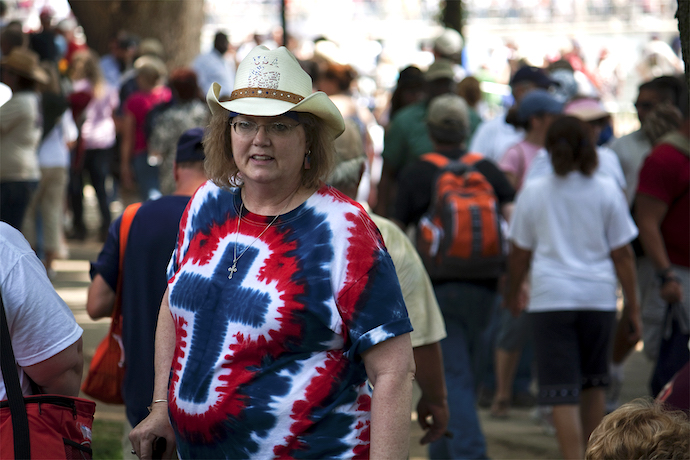
For centuries, American evangelical Protestants have been obsessed with religious ‘revival.’ Fear of ostensible societal, moral, and religious ‘decline’ is the other side of the same paranoid Christian coin.
The United States, deeply influenced by early Puritan settlers and other assorted Christian fanatics, has been slow to secularize relative to European countries. In fact, the rapid increase in the proportion of religiously unaffiliated Americans at the expense of Christianity—a trend that has generated significant buzz in recent years—can be traced back only to the 1990s. Since then, however, the shift has been stunning.
I’ll put my cards on the table here: I consider that a good thing, given that frequent church attendance consistently correlates with voting Republican, especially among White Americans. At the same time, I understand that religion is far more diverse than Christianity alone, and that even Christianity—despite its heavy imperialist baggage—comes in pro-social forms.
In order to understand American secularization, however, it is necessary to understand that because of Christian dominance and pervasive Christian privilege, many Americans’ primary association with religion is Christianity, and that shapes their responses to the questions about ‘religion’ they encounter in public opinion polls.
Some polling over recent years has suggested the trend toward disaffiliation might be slowing down or leveling off, but its continuation seems highly likely given that more and more children are growing up in non-religious families. And one of the primary factors driving the secularizing trend—the close association of Christianity with the cruel and anti-democratic politics of the Republican Party—is still very much in play, with intriguing findings about American attitudes toward religion and secularism from the latest Ipsos Global Religion report suggesting that this association continues to have an impact.
I’ll get to the details, but first, some context. Decades before the phenomenon we’ve come to call Christian nationalism became a defining feature of the Republican Party, the U.S. Christian Right’s push for political power was part and parcel of its members’ faith. As someone who was raised evangelical in the 1980s and 1990s, I know this all too well. . . . In our milieu, ‘liberal’ was a synonym for ‘godless’ that was frequently pronounced with a sneer; and supporting Republican politics, with a focus on banning abortion and ‘getting prayer back in schools,’ was an extension of our Christian practice.
[I]n the summer of 1980, the now highly organized Christian Right was denouncing abortion as ‘murder’ and using the goal of overturning Roe v Wade to win elections. That autumn, Republican Ronald Reagan’s landslide victory in the presidential election, with the crucial support of White evangelicals, cemented that demographic’s place in the reactionary GOP coalition they’ve now come to dominate. . . . led many more moderate Americans to associate Christianity with meanness, hypocrisy, and reactionary politics.
In 2002, sociologists Michael Hout and Claude S Fischer first floated the thesis that politics was playing a key role in the religious disaffiliation that was by then showing up in surveys every year. They noted that religious affiliation was holding steady among American conservatives but declining among American moderates and liberals, and argued that “this political part of the increase in ‘nones’ can be viewed as a symbolic statement against the religious right.”
Subsequent events seem to have borne the thesis out, with the American population becoming more politically and religiously polarized. Since the early 21st century, the Christian Right—a mostly White coalition of evangelicals, traditionalist Catholics and Mormons—has fought vigorously (and increasingly successfully) to assert dominance and control over the rest of the population, abusing state law and the court system to do so. They made major gains under Donald Trump’s presidency, when the Supreme Court was stacked with the right-wing Catholic ideologues that made possible the dramatic step of actually overturning Roe.
Ipsos finds that since 2017, when Trump came into office, Americans’ attitudes about religion have shifted in ways that to me look telling. According to the new Global Religion report, the proportion of Americans who agree with the statement “people with a religious faith are better citizens” has fallen six points, to 39%. The percentage who “lose respect for people when I find out that they do not have a religious faith” also dropped six points, to 14%. Further, the proportion of Americans who agree with the statement “my religion defines me as a person” is down a full eight points and now stands at 41%.
One should always be wary of drawing sweeping conclusions from such bird’s eye view data, but given that these shifts took place between the beginning of Donald Trump’s Christian nationalist presidency and the present, they certainly look like confirmation of Hout and Fisher’s thesis. That is, since the proportion of Americans who see religious faith as important for good citizenship and for their own identity declined across this period along with religious affiliation, the decline likely has something to do with rising identitarian Christian nationalist politics. Christian nationalism has become increasingly explicit among Trump supporters and the Republican Party’s base over the past few years, as Trump and other Republican leaders like Florida governor Ron DeSantis have shattered political norms and vigorously pursued the culture-warring objectives of the raging Christian Right.
That marriage between conservative, mostly White Christianity and a Republican Party gleefully trampling the rights of queer people and women seems unlikely to end any time soon. And so long as that continues, we will probably continue to see empathetic Americans who grew up Christian deciding they no longer care to be religious in increasing numbers.
Meanwhile, I find myself part of the 39% of Americans who view religion as causing more evil than good in the world.

Sunday, May 28, 2023

DeSantis Is Destroying Education In Florida, Now He Wants to Ruin Your State
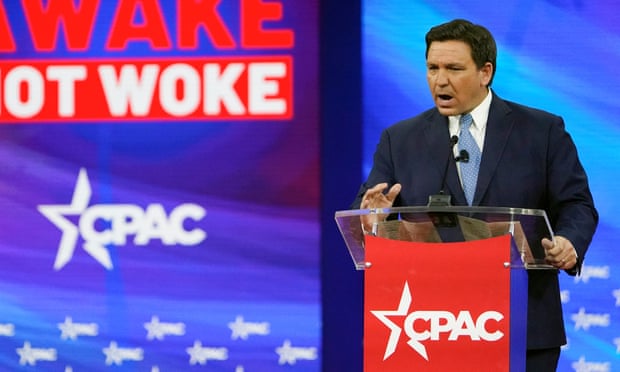
The presidential hopeful isn’t the first Republican governor to embrace “parental rights” or limit how race and gender are discussed in schools. But DeSantis has built a long legislative record as an “education governor” amid battles with Democrats and civil rights groups that endeared him to rank-and-file GOP voters. Now he’s planning to pitch that record across the nation in a bid to become the new leader of the Republican Party.
Since becoming governor in 2019, DeSantis earned the nickname among conservatives by codifying a “Parents Bill of Rights,” vastly expanding school choice, allowing for armed teachers, and advocating for new workforce education. He has also rolled back higher education diversity programs, engaged in a high-profile feud with the College Board over its African American studies course and worked with other Republicans to reshape higher education in Florida by installing key allies in statewide posts. “In Florida, we say we’re the state where woke goes to die,” he later added. “As president, I’m going to make sure woke ideology ends up in the dustbin of history.”
DeSantis’ moves are similar to Gov. Glenn Youngkin (R-Va.), who won election in a battleground state by emphasizing parental rights in education as Covid-driven school closures frustrated families across the political spectrum.
But Florida now has the most sweeping set of restrictions on classroom discussions about race and gender in the nation. It’s also inspired conservatives in dozens of states, including Texas, Tennessee, Alabama and Arkansas, to duplicate these laws.
The Florida Parental Rights in Education Act that took effect last year and was billed as an effort to give parents more control over what their children learn at school after the pandemic increased scrutiny of K-12 education.
Opponents of the measure have dubbed it the “Don’t Say Gay” law because it bars educators from teaching lessons on sexual orientation and gender identity. This legislative session, GOP lawmakers bolstered the law by including restrictions on using a student’s pronouns if they “do not correspond” with their sex assigned at birth. Schools are also now required to pull books that are challenged within five days of someone flagging it.
DeSantis pushed the Individual Freedom Act — referred to as the Stop-WOKE Act — in 2022 which limits the way gender and race are discussed in classrooms and workplaces. Under the Individual Freedom Act, teachers are barred from teaching lessons that would make students “feel guilt, anguish, or any other form of psychological distress” due to their race, color, sex or national origin.
Specifically requested by DeSantis, the law prohibits instruction on issues like “white privilege.” Critics of the legislation argued that the policy attempts to reframe or “whitewash” history.
While the law has been mired with legal challenges, the DeSantis administration has been using its law to reject the College Board’s new AP African American studies course. DeSantis has pushed for the changes in the course after slamming the nonprofit testmaker for including lessons on queer theory and intersectionality.
DeSantis’ latest feat is barring Florida colleges and universities from spending on most diversity, equity and inclusion programs under a slate of higher education reforms.
Florida is purging subjects like critical race theory and “DEI-infused” coursework from its schools, and university leaders are primed to take on a wide-scale review of courses and majors offered to students with lessons that assert “systemic racism, sexism, oppression and privilege.”
The legislation has influenced Republican Gov. Greg Abbott and Lt. Gov. Dan Patrick in Texas who have been shepherding legislation to require public universities to shutter their DEI offices and ban diversity training and hiring statements.
Be very afraid and be sure to vote a straight Democrat ticket in every election. Boycotting Florida is also a good idea.

The Scourge of White Christian Nationalism

CASPER, Wyo. — I first saw it while working the rope line at a monster-truck rally during the 2016 campaign by my husband, Tim, for Wyoming’s lone congressional seat. As Tim and I and our boys made our way down the line, shaking hands and passing out campaign material, a burly man wearing a “God bless America” T-shirt and a cross around his neck said something like, “He’s got my vote if he keeps those [epithet] out of office,” using a racial slur. What followed was an uncomfortable master class in racism and xenophobia as the man decanted the reasons our country is going down the tubes. God bless America.
I now understand the ugliness I heard was part of a current of Christian nationalism fomenting beneath the surface. It had been there all the time. The rope line rant was a mission statement for the disaffected, the overlooked, the frightened. It was also an expression of solidarity with a candidate like Donald Trump who gave a name to a perceived enemy: people who do not look like us or share our beliefs. Immigrants are taking our guns. They’re bringing drugs. They’re bringing crime. They’re rapists. You are not safe in your home. Religious freedom is on the gallows. Vote for me.
The messages worked. And in large part, it’s my faith community — white, rural and conservative — that got them there. I am a white conservative woman in rural America. . . . I’ve straddled both worlds, faith and politics, my entire adult life. Often there was very little daylight between the two, one informing the other.
What’s changed is the rise of Christian nationalism — the belief, as recently described by the Georgetown University professor and author Paul D. Miller, that “America is a ‘Christian nation’ and that the government should keep it that way.” Gone are the days when a lawmaker might be circumspect about using his or her faith as a vehicle to garner votes. It’s been a drastic and destructive departure from the boring, substantive lawmaking to which I was accustomed. Christian nationalists have hijacked both my Republican Party and my faith community by blurring the lines between church and government and in the process rebranding our state’s identity.
Rural states are particularly vulnerable to the promise of Christian nationalism. In Wyoming, we are white (more than 92 percent) and love God (71 percent identified as Christian in 2014, according to the Pew Research Center) and Mr. Trump (seven in 10 voters picked him in 2020).
The result is bad church and bad law. “God, guns and Trump” is an omnipresent bumper sticker here, the new trinity. The evangelical church has proved to be a supplicating audience for the Christian nationalist roadshow. Indeed, it is unclear to me many Sundays whether we are hearing a sermon or a stump speech. . . . Christian nationalism has nothing to do with Christianity and everything to do with control.
In last year’s elections, candidates running on a Christian nationalist platform used fear plus the promise of power to attract votes. Their ads warned about government overreach, religious persecution, mask mandates, threats from immigrants and election fraud. . . . None of those concerns were real. . . . . So what are we afraid of?
Yet fear (and loathing for Ms. Cheney, who voted to impeach Mr. Trump and dared to call him “unfit for office”) led to a record voter turnout in the August primary. The Trumpist candidate, Harriet Hageman, trounced Ms. Cheney.
Last year, maternity wards closed in two sparsely populated communities, further expanding our maternity desert. Yet in debating a bill to provide some relief to new moms by extending Medicaid’s postpartum coverage, a freshman member of the State House, Jeanette Ward, invoked a brutally narrow view of the Bible. “Cain commented to God, ‘Am I my brother’s keeper?’” she said. “The obvious answer is no. No, I am not my brother’s keeper. But just don’t kill him.”
This confusing mash-up of Scripture (Ms. Ward got it wrong: The answer is yes, I am my brother’s keeper) is emblematic of a Christian nationalist who weaponizes God’s word to promote the agenda du jour. We should expect candidates who identify as followers of Christ to model some concern for other people.
Rhetoric like Ms. Ward’s can have devastating implications when it results in policy change. Even though the Medicaid bill became law, the hospital in Rawlins no longer delivers babies, meaning Wyomingites about to give birth must now travel 100 miles over one of the nation’s most treacherous stretches of Interstate. Woe to those with a winter due date.
I am adrift in this unnamed sea, untethered from both my faith community and my political party as I try to reconcile evangelicals’ repeated endorsements of candidates who thumb their noses at the least of us. Christians are called to serve God, not a political party, to put our faith in a higher power, not in human beings. We’re taught not to bow to false idols. Yet idolatry is increasingly prominent and our foundational principles — humility, kindness and compassion — in short supply.
I recently attended a conference devoted to spiritual maturity. Of the attendees, a large percentage were pastors. Some had flown in, seeking anonymity for fear of job loss or reprisal. Many had dared to raise hard questions, challenging their congregation to think deeply about immigration, puzzle through the church’s treatment of the L.G.B.T.Q. community, to dive into Scripture and to find answers.
For some, just making the suggestion had put their neck on the line. One pastor was recently fired. Another, who was nearing the end of his career, lamented: Where did I go wrong in my teaching? Am I complicit in this movement? Have I created this monster? I have failed my flock.
I can think of no better illustration of the calamitous force of Christian nationalism than a room full of faith leaders, regret lined deep in their brows, expressing shame and disappointment in those they were called to lead.
Subscribe to:
Posts (Atom)